
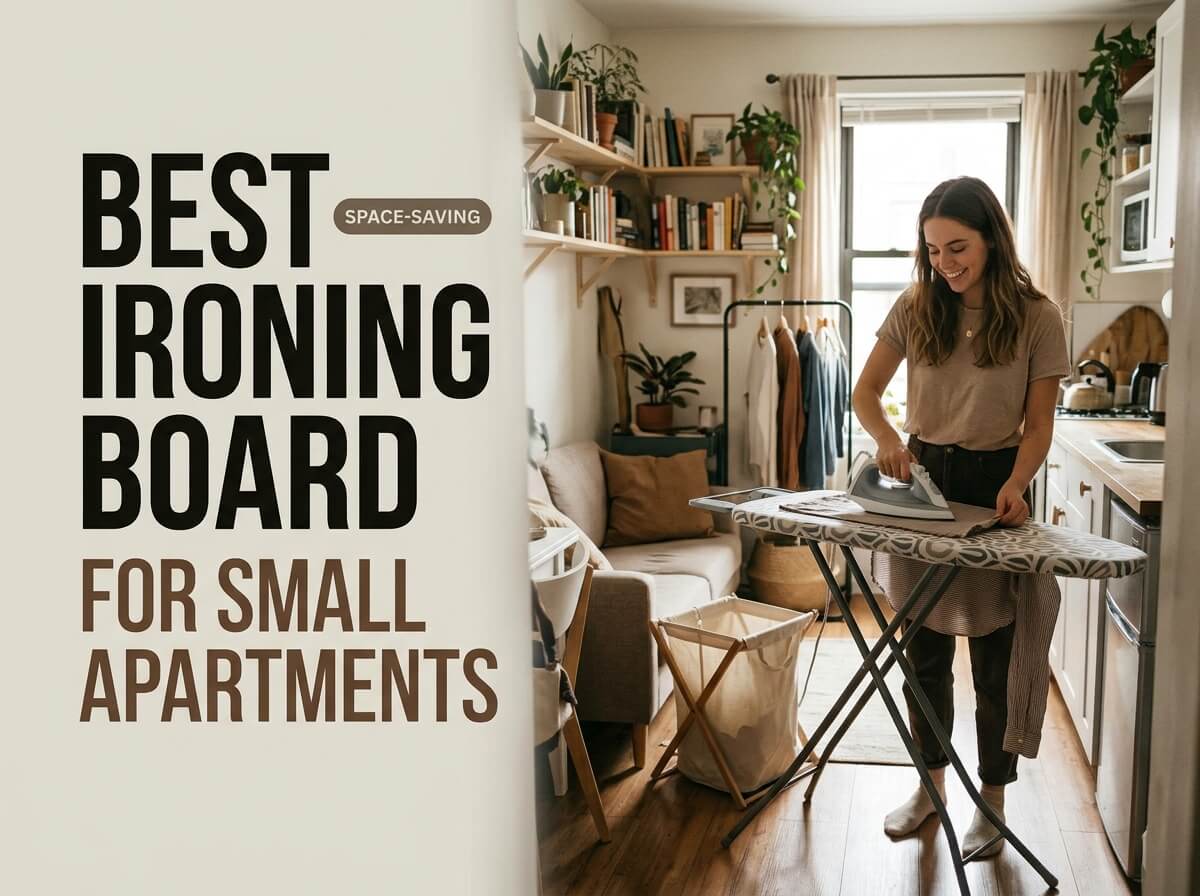
5 Best Ironing Board for Small Apartment In 2026
Living in a small apartment means every corner has a job. Your kitchen doubles as a dining spot, your bedroom closet holds more than clothes, and the floor space near the couch is probably the only open area you have. So when it comes to an ironing board, size matters more than most people expect. A full-size board that works great in a big laundry room can feel like a roadblock in a studio flat.
That’s why this roundup focuses on boards that work well in tight spaces. We looked at five popular options: two Bartnelli models, the RAINHOL compact board, the BKTD full-size board, and the ZOES HOMEWARE tabletop board. Each one has its own strengths. Some are slim enough to tuck behind a door. Others sit right on your table and never touch the floor. A few are wide enough to handle large shirts, pillowcases, and even bedsheets without too much fuss.
This article covers each board in plain language. You’ll see what it’s built for, what it does well, where it falls short, and who will probably like it most. We also include a simple buying guide, a list of mistakes to avoid, and a final verdict to help you narrow things down fast. The details here come from the product listings, the specs each brand publishes, and the general patterns people run into with boards like these. Where a detail isn’t listed, we say so instead of guessing.
Why Size Matters More in a Small Apartment
Most ironing board guides talk about surface size and height, and those things do matter. But in a small home, you also need to think about three other things: footprint, storage, and movement.
Footprint is how much floor space the board takes up while you use it. A board that’s 19 inches wide needs more room than one that’s 11.8 inches wide, and that gap can change how easily you walk around it. Storage is where the board lives when you’re done. Some boards fold flat and slide behind a door. Others need a closet with real depth. Movement is how often you pick up the board and carry it to another room. If you iron in the kitchen, then move the board to the bedroom, weight and handle design start to matter a lot.
Many people forget about the height of the board too. A board that goes up high enough to suit a tall person might be uncomfortable for someone shorter, and a board that sits too low can strain your back during long sessions. Look for a height range that matches the people who will actually use it.
What to Look for First
Before we get into the individual reviews, here are the basics to keep in mind. These points apply to almost any board you consider.
Surface size. A wider surface lets you iron big items faster, but it also takes more room. Narrow boards around 13 inches wide work well for shirts and pants. Wider boards help with dresses, bedding, and large tablecloths.
Length. Most full-size boards run around 54 inches long. Shorter boards, around 43 inches, can feel cramped if you iron long shirts or wide skirts. A longer board also gives you more room to work at the tip, where many people struggle.
Height adjustment. Look for a board that adjusts to several heights. Some boards go up to 36 inches. Others have a fixed or limited range. Adjustability helps if more than one person in your home irons.
Cover and pad. A heat-resistant cover keeps the surface from scorching under a hot iron. A thick pad gives you a softer, more even surface. Thin pads can make ironing feel bumpy and slow, especially with thick fabrics.
Iron rest. A built-in iron rest gives you a safe spot to set the hot iron between passes. Without one, you’ll need a separate heat-safe surface, which is awkward in a small space.
Legs and feet. Four legs usually feel more stable than three. Anti-slip feet are useful on hard floors, which are common in apartments, because they stop the board from sliding when you press down hard.
Weight and folding. A lighter board is easier to carry from room to room. A folding design that lays flat takes up less space in a closet.
Our Top Picks at a Glance
| Board | Type | Surface Size | Height Range | Best For |
|---|---|---|---|---|
| Bartnelli Pro Luxury | Full-size, floor standing | 51 x 19 inches | Adjustable | Large surface and premium build |
| Bartnelli by Rorets | Compact full-size, floor standing | 43 x 13 inches | Up to 36 inches | Balanced small-space pick |
| RAINHOL Black | Narrow, floor standing | 54 x 13 inches | Listing details vary | Tight closets and slim spaces |
| BKTD Full Size | Full-size, floor standing | Full size | Adjustable | Stability and anti-slip feet |
| ZOES HOMEWARE Tabletop | Tabletop | 31.5 x 11.8 inches | Set by table height | Tiny kitchens and desks |
Use this table as a quick guide. The reviews below explain the details that matter for your home.
Product Reviews
1. Bartnelli Pro Luxury Ironing Board – Extra Wide 51×19 Ironing Surface
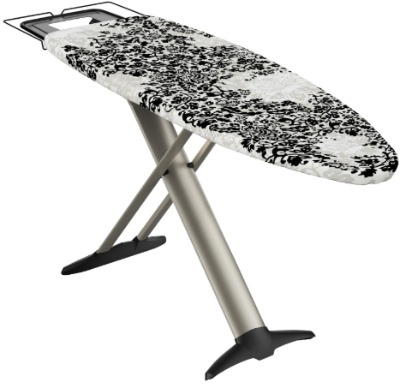
Product description. This is the largest board in our roundup, with a 51 by 19 inch ironing surface. It’s built from aluminum and comes with a steam iron rest, an adjustable height system, and a foldable frame. The listing describes it as European made and aimed at premium buyers. It’s the kind of board you pick when you want a big, smooth work area and a solid feel under your hands.
Best use cases. This board works best for people who iron a lot of large items. Think bedsheets, tablecloths, dresses, and button-down shirts for the whole family. It also suits people who iron for long stretches and want a steady surface that doesn’t wobble as much. If you have a small apartment but a spare corner near a closet or wall, this board can fit without blocking the path.
Key features explained simply. The wide surface means you can lay out a big piece of fabric and smooth it in fewer passes. The steam iron rest gives your iron a safe spot to sit, which matters when you’re working quickly. The aluminum build is a plus for strength and a clean look. The height adjustment lets you set the board to a comfortable working level, which helps reduce strain on your back and shoulders.
Real-life usage insight. In a small apartment, the main question is where this board will live. Because it’s a full-length board, it needs a clear spot when it’s folded. A hallway closet, a deep coat closet, or the space behind a bedroom door can work well. If your storage space is shallow, the board may stick out and become a tripping hazard. Plan your storage before you buy.
Pros:
- The large surface helps you finish big items faster.
- The steam iron rest is a useful safety feature.
- The aluminum build feels sturdy and polished.
- The height adjustment suits several users in one home.
Cons:
- The wide, long footprint takes up real space in tight rooms.
- Premium boards like this usually cost more than basic models.
- Metal frames add some weight, so moving it often can feel like work.
Performance discussion. A board this large gives you a lot of room to glide the iron. You can work across a full shirt back without flipping the fabric too many times. The surface size also helps when you iron pillowcases or wrinkled tablecloths, since you can spread them out instead of folding them into smaller sections. The steam iron rest supports a steady workflow, so you don’t have to keep stopping to set your iron down on the floor or a chair.
Ease of use. Setting up and folding the board is straightforward. The adjustment controls should feel familiar to anyone who has used a standard ironing board. The main challenge is handling the length when you carry it from one room to another. Two hands and a bit of care make it easier. If you’re short on space, ask someone to help you move it into the closet.
Value for money. This is a premium option, so the value depends on how much you iron. If you iron every week, the large surface and sturdy build can save time and effort. If you only iron now and then, a smaller board might give you more value for your money and your floor space.
2. Bartnelli by Rorets Ironing Board Made in Europe (43 x 13 inches)
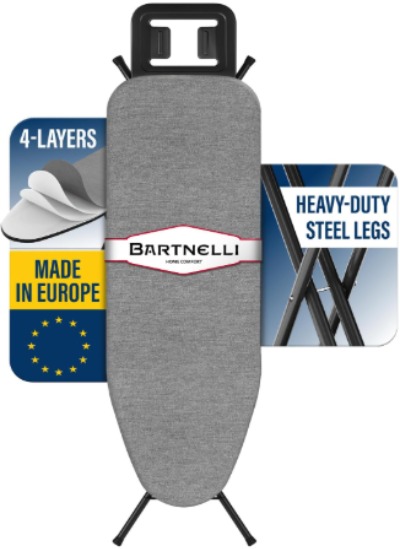
Product description. This board offers a 43 by 13 inch ironing surface with a four-layer cover and pad. It adjusts up to 36 inches tall and includes a safety iron rest. The frame uses four steel legs, and the listing says it’s made in Europe. It’s designed for laundry rooms, dorms, and small spaces where a standard board feels too big.
Best use cases. This board fits people who need a full-size feel without the full-size footprint. It works well for shirts, blouses, pants, and kids’ clothes. It’s also a good pick for a dorm room or a compact laundry nook. The four legs help keep it stable, which is useful if you iron with some force.
Key features explained simply. The narrower width of 13 inches keeps the board slim, so it slides into tight spaces more easily. The four layer cover and pad give you a comfortable, even surface. The safety iron rest helps keep your iron stable and off the cover when you pause. The four steel legs give the board a firm base, which many people prefer over three-legged designs.
Real-life usage insight. A 43-inch length is shorter than a standard board, so long items like dresses or wide pants might hang off the end. You’ll need to work in sections. For most everyday shirts and pants, though, this length is plenty. The narrow surface also means you’ll move the fabric around more often, so give yourself a little extra time.
Pros:
- The narrow width suits small closets, corners, and dorm rooms.
- The height goes up to 36 inches, which works for many users.
- The four legs make the board feel steady.
- The safety iron rest helps protect your cover and your floor.
Cons:
- The shorter length can be tight for long garments.
- The narrow surface means more repositioning on wide items.
- Smaller boards can feel less stable under heavy pressing if the frame is light, so check how the legs lock.
Performance discussion. For everyday work, this board performs well. The cover and pad give you a smooth finish on cotton and polyester blends. The narrow width works best for shirts, since you can work around the collar, cuffs, and sleeves with ease. Heavy linens and large tablecloths will take longer, but the board handles them fine if you work patiently.
Ease of use. Setup is simple, and the height adjustment works like most floor boards. You may want to test the height lock before each session, since a loose lock can shift the board mid-press. Folding it down is quick, which helps when you’re tidying up after a short ironing session.
Value for money. This board offers a strong mix of size, stability, and features for the space it takes up. If your apartment has tight corners and you iron mostly shirts and pants, it’s a practical choice. You get a lot of useful features without the extra bulk of a larger board.
3. Ironing Board Full Size, RAINHOL Black 54″x13″ Compact Ironing Board
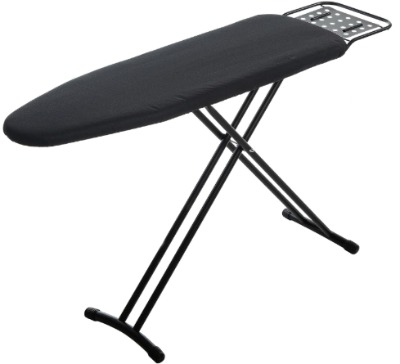
Product description. This board features a 54 inch length and a 13 inch width, with a black finish. The name says “compact,” which is a bit of a stretch for a full-length board, but the narrow width does make it slim. It’s aimed at people who want a long working surface without a wide frame.
Best use cases. This board is a good fit for narrow spaces, such as a closet with a shallow door, a gap between the fridge and wall, or a laundry corner with limited width. It works well for shirts, long skirts, and pants. The long length gives you room to smooth out longer garments without hanging them off the edge.
Key features explained simply. The 54 inch length gives you the same working room as most standard full-size boards. The 13 inch width keeps the footprint narrow, which matters in tight rooms. The black color hides small marks and goes with most apartment decor, so the board doesn’t stand out as much.
Real-life usage insight. Because the board is long but narrow, it can slide into spaces that wider boards can’t reach. That makes it useful for people who iron in a hallway or a small room. The downside is that the narrow top means you’ll need to turn the fabric more often. Work in short, steady passes to keep the fabric smooth.
Pros:
- The long length supports full-size garments.
- The narrow width fits tight closets and corners.
- The black finish looks clean and blends with most rooms.
- Good for everyday shirts, pants, and long skirts.
Cons:
- The narrow surface can make wide items harder to iron.
- The “compact” label may be misleading, since the board is still full length.
- Some features may vary, so check the listing before you buy.
Performance discussion. On shirts and pants, this board does a good job. The long top gives you room to move from the shoulders to the hem without too much stopping. Wide items like bedsheets are harder, since you’ll need to fold them into smaller sections. For most everyday clothes, though, the performance is solid.
Ease of use. The board sets up quickly and folds down into a slim shape. The narrow frame makes it easy to slide into a closet or behind a door. Just be sure the leg locks are fully engaged before you press, since a loose frame can wobble.
Value for money. This board suits people who need a long surface in a narrow space. If your apartment has a shallow closet or a tight nook, the slim profile can be worth more than a wider board’s extra surface.
4. BKTD Full Size Ironing Board
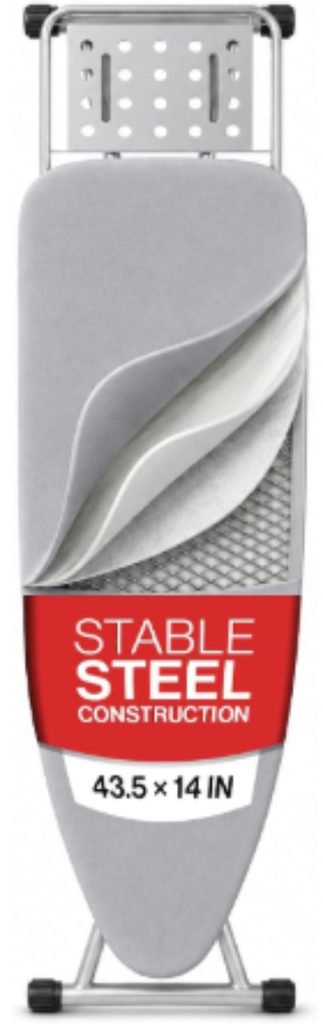
Product description. The BKTD board is a full-size, floor-standing model with a sturdy frame, heat-resistant cover, iron rest, stable steel construction, and anti-slip feet. It adjusts in height and folds for storage. The brand’s listing emphasizes stability and a wide ironing surface, which makes it a practical general-purpose option.
Best use cases. This board suits anyone who wants a traditional full-size board that feels stable on hard floors. It’s a good choice for families, people who iron daily, and anyone who wants a dependable board without premium pricing. The anti-slip feet help if you iron on tile, laminate, or wood floors, which are common in apartments.
Key features explained simply. The steel frame gives the board a solid feel. The heat-resistant cover protects the surface from high heat. The iron rest keeps your iron safe between passes. The anti-slip feet stop the board from sliding when you press down hard. The adjustable height lets you set the board to a comfortable level.
Real-life usage insight. Anti-slip feet are a real help in apartments. On a smooth floor, a regular board can slide when you lean into a seam or collar. These feet add grip, which gives you more control. Still, a full-size board needs a set storage spot, so measure your closet before you buy.
Pros:
- Anti-slip feet add stability on hard floors.
- The steel frame feels sturdy.
- The heat-resistant cover and iron rest support safe ironing.
- The height adjustment suits several users.
Cons:
- As a full-size board, it needs a real storage spot.
- The listing details can be hard to compare with other brands, so check dimensions carefully.
- Steel frames can be heavier to carry from room to room.
Performance discussion. The BKTD board gives you a steady, predictable surface. The stable frame keeps the board from rocking, which helps with firm pressing on collars and cuffs. The heat-resistant cover handles most everyday fabrics well. For heavy items, the steel frame should hold up without flexing too much.
Ease of use. Setup is familiar and simple. The height controls work like most standard boards. Folding it down takes a few seconds, but you should check that the legs lock before ironing. The anti-slip feet are a nice touch that makes the board feel safer during long sessions.
Value for money. This board offers a solid set of features for a full-size model. It’s a good middle ground for people who want stability and a traditional feel without paying for extras they won’t use. If you have room for a full-size board, it’s a dependable pick.
5. ZOES HOMEWARE Metal Mesh Panel Tabletop Ironing Board
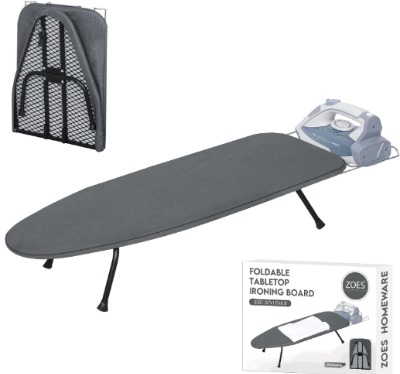
Product description. This is a tabletop ironing board with a metal mesh panel, a heat-resistant cover, and a 100% cotton 8mm thick pad. The listing gives the size as 31.5 by 11.8 by 6.2 inches. It’s foldable and designed to sit on a table or counter rather than the floor.
Best use cases. This board fits people with very small living spaces. It works well in a tiny kitchen, a dorm desk, a studio apartment, or a small counter area. It’s a good choice for quick touch-ups, such as collars, cuffs, handkerchiefs, and small shirts. It’s also handy for travelers who want a small board for short stays.
Key features explained simply. The tabletop design means you don’t need floor space at all. The metal mesh panel keeps the board light and breathable. The heat-resistant cover protects your surface, and the 8mm cotton pad gives you a cushioned top. The foldable design makes it easy to store in a drawer or cabinet.
Real-life usage insight. In a small apartment, the big advantage is that you can put the board away in seconds. Once it’s folded, it can sit in a kitchen drawer or a shelf. The trade-off is that you need a sturdy table to work on. A wobbly table can make ironing frustrating, so test it before you start. A tabletop board also limits the size of what you can iron, since the surface is small.
Pros:
- Tabletop design saves a lot of floor space.
- Easy to fold and store in drawers or cabinets.
- The 8mm cotton pad offers good cushioning.
- Light and simple to carry around the home.
Cons:
- The small surface is not ideal for large items.
- It needs a stable table, so it isn’t a full standing option.
- Height depends on your table, which can be uncomfortable for some users.
Performance discussion. For small jobs, this board works well. Collars, sleeves, and small garments are easy to press, and the cotton pad gives you a firm, smooth surface. Larger shirts and pants are harder, since you’ll need to move the fabric around more. Heavy linens are not a good match for this board.
Ease of use. Setup takes seconds. Place it on a sturdy table, open the top, and you’re ready to iron. Folding it back down is just as quick. The main thing to watch is the height. If the table is too low or too high, your wrists and back can feel the strain during longer sessions.
Value for money. This board is a smart pick if your home is very small and you iron only occasionally. It saves space and gives you a basic but useful surface. For people who iron full shirts and large items often, a floor-standing board will feel more practical.
Comparison Insights
Once you look at all five boards side by side, a few patterns stand out.
Width is the biggest difference. The Bartnelli Pro Luxury board, with its 19 inch width, gives you the most room to work. The Bartnelli by Rorets and RAINHOL boards are much narrower at 13 inches, which helps in tight spaces but means more fabric handling. The ZOES tabletop board is the narrowest overall, which suits small jobs better than full garments.
Length changes how you iron. The 54 inch RAINHOL and the full-size BKTD and Bartnelli Pro boards give you enough length for long shirts and dresses. The 43 inch Bartnelli by Rorets board is shorter, so you’ll work in sections on longer items.
Floor or table makes a big difference. Four of the five boards stand on the floor. The ZOES board sits on a table. A floor board offers more comfort for long sessions, while a tabletop board saves space and works well for quick jobs.
Stability depends on the frame and feet. The four-leg designs, along with the anti-slip feet on the BKTD, feel steadier on hard floors. Tabletop designs depend on the table itself, so a wobbly surface can cause problems.
Storage needs vary. The Bartnelli Pro and BKTD boards need a dedicated closet or corner. The RAINHOL board’s slim profile makes it easier to hide. The ZOES board can live in a drawer.
Price and build. The Bartnelli Pro Luxury sits at the top of the group, with an aluminum build and premium feel. The others offer a range of features at more moderate levels, though exact prices change often, so compare current listings before you decide.
Buying Guide for Small Apartments
Buying an ironing board for a small home is a different task from buying one for a big house. Here are the steps that help the most.
Start with a tape measure. Measure the spot where the board will live when folded. Check the depth, width, and height of the closet, corner, or wall space. Leave a few extra inches so you can pull the board out and put it back without a struggle.
Measure your walkway too. When the board is open, it shouldn’t block a hallway, doorway, or kitchen path. In a small apartment, a board that sticks out by just a few inches can cause bumps and frustration every day.
Think about how you iron. Do you iron shirts for work every morning, or only handle a pile of laundry once a month? Daily ironing calls for a stable floor board with a good height range. Occasional ironing might work fine with a tabletop or slim board.
Check the surface size against your clothes. If you mostly iron shirts and pants, a 13 inch width is usually enough. If you iron bedsheets, curtains, or tablecloths, a wider surface will save you time.
Look at the height range. Make sure the board goes low and high enough for everyone who will use it. A board that’s too low causes back pain, and one that’s too high can strain your arms.
Consider the cover and pad. A heat-resistant cover protects your fabrics and the board. A thick pad, such as the 8mm cotton pad on the ZOES board, gives you a softer, more even surface. Thin pads can make ironing feel stiff.
Test the iron rest. A built-in iron rest is a real help. Make sure it’s easy to reach and sturdy enough to hold your iron without tipping.
Check the legs and feet. Four legs and anti-slip feet add stability. Wobbly legs are annoying and can make ironing less accurate.
Look at weight and carrying. If you move the board often, weight matters. A lighter board is easier to carry from room to room, while a heavier one may feel more solid under pressure.
Confirm the folded size. The folded dimensions tell you how much space the board will take in storage. Some boards fold flat and slim, while others stay bulky even when folded.
Read the listing carefully. Product listings can use different measurements, so make sure you know what the numbers mean. Check whether the stated size refers to the surface, the overall board, or the folded frame.
Who Should Buy Each Board
The Bartnelli Pro Luxury board is for people who want a premium, wide surface. If you iron big items often and have a spot for a larger board, this one is a strong pick. It suits busy households and people who want a sturdy, polished board that feels solid.
The Bartnelli by Rorets board is for people who need a balanced, compact option. If your apartment is tight but you still want a full-size feel with four legs and a good height range, this board makes a lot of sense. It’s a practical choice for daily shirts and pants.
The RAINHOL board is for people with narrow closets or corners. If you need a long surface but have very little width, this slim board fits where wider models won’t. It works well for everyday clothes and a single person’s laundry.
The BKTD board is for people who want stability and anti-slip feet. If your floors are slippery or you iron with firm pressure, the stable frame and grippy feet will feel reassuring. It’s a dependable choice for families and daily ironers.
The ZOES tabletop board is for people with very small spaces or occasional ironing needs. If you live in a studio, have a tiny kitchen, or only iron small items now and then, this board saves a lot of room. It’s also handy for dorm rooms and travel.
Common Mistakes to Avoid
Even a good board can disappoint if you use it the wrong way. Here are the mistakes that come up most often in small apartments.
Buying too wide for the space. A large surface looks appealing in a store, but it can block your path at home. Measure first and leave room to move around.
Ignoring the folded size. Some people focus on the open size and forget that the folded board still needs a home. Check the closet depth and width before you buy.
Skipping the height check. A board that doesn’t suit your height will tire you out fast. Make sure the height range works for everyone in the home.
Using a thin pad on thick fabrics. A thin pad makes ironing feel bumpy and can leave marks on the fabric. Look for a thicker pad, or add a cotton cover over a thin one.
Leaving the iron on the cover. Even a heat-resistant cover can scorch if the iron sits still for too long. Always use the iron rest or set the iron on a heat-safe surface.
Ironing on an unstable table. The ZOES tabletop board needs a sturdy table. Wobbling can cause uneven pressing and can even tip the board.
Forgetting about floor grip. On hard floors, a board without anti-slip feet can slide when you press down. Add rubber pads or choose a model with grippy feet.
Ironing too many items at once. A small board fills up fast. Work in batches so the fabric stays flat and the board stays stable.
Storing the board in a damp spot. Moisture can damage the cover and the frame over time. Keep the board in a dry closet or corner.
Buying based only on price. A cheap board with a thin pad or a wobbly frame can cost you more in frustration. Think about how you’ll use it every day.
Final Verdict
After comparing all five boards, the best pick depends on your space and your ironing habits. There isn’t one perfect board for every small apartment, but a few stand out.
Best overall for small apartments: Bartnelli by Rorets. This board offers a good balance of size, stability, and features. The 43 by 13 inch surface fits tight spaces, the four steel legs add steadiness, and the height reaches up to 36 inches. It’s a practical choice for everyday shirts and pants.
Best premium option: Bartnelli Pro Luxury. If you have room for a large board and iron big items often, this model offers the widest surface and a polished, sturdy build. It costs more, but the extra work area can save time for busy households.
Best for very narrow spaces: RAINHOL Black. The slim 13 inch width fits closets and corners that wider boards can’t reach. The long 54 inch length keeps it useful for full-size garments, though wide items will take more effort.
Best for stability on hard floors: BKTD Full Size. The steel frame and anti-slip feet give this board a steady, confident feel. It’s a dependable full-size option for daily ironing, especially on tile or wood floors.
Best for tiny kitchens, desks, and quick jobs: ZOES HOMEWARE Tabletop. If your home is very small or you only iron now and then, this tabletop board saves a lot of space. It’s perfect for collars, cuffs, and small items, but it’s not built for heavy, full-size ironing.
Before you buy, measure your space, think about your ironing habits, and check the current listing for price and details. A little planning now can save you a lot of frustration later, and the right board can make small-apartment laundry feel much easier.
Frequently Asked Questions
What size ironing board is best for a small apartment?
A board around 13 inches wide is usually the most practical for tight spaces. Narrow boards fit closets and corners more easily, while still giving you enough room for shirts and pants.
Is a tabletop ironing board good enough for daily use?
It can be, but it depends on what you iron. Tabletop boards work well for small items and quick touch-ups. For full shirts, pants, and bedding every day, a floor-standing board is usually more comfortable.
Do I need anti-slip feet?
They help a lot on hard floors like tile, laminate, and wood. Anti-slip feet keep the board from sliding when you press down, which makes ironing safer and more accurate.
How high should an ironing board be?
Your comfort matters most. Try to set the board so your elbows bend slightly when you iron. A board that goes up to 36 inches can suit many users, but check the height range against your own height.
Should I buy a board with a steam iron rest?
A built-in rest is helpful because it gives your iron a safe place to sit between passes. It’s especially useful if you iron often or work quickly.
Hi, I’m Mary, the founder of Homygear.com. I’m passionate about creating a comfortable, smart, and beautiful home. I share practical insights and real-world experience on home gear that makes everyday life easier. Behind the scenes, my dedicated research team studies products in depth, and our writers craft honest reviews using trusted, authentic sources—so you can choose home gear with confidence.