5 Best Utensil Organizer For Deep Drawers In 2026
As an Amazon Associate we earn from qualifying purchases.
Finding the best utensil organizer for deep drawers can feel confusing at first. Many organizers are sold as “expandable” or “extra high,” but they do not all fit the same drawers. This guide helps beginners who want to keep forks, knives, spoons and kitchen tools neat in a tall, deep drawer.
The five products covered here share a few traits. Each one is built to hold cutlery and utensils, and each one can adjust in width to suit different drawer sizes. This review rests on the listed features and typical use of each product, not on personal testing, so buyers should still check the details before ordering. Reading the listed dimensions carefully will save time and prevent returns.


1. Umilife Extra Large Expandable Kitchen Siverware: best for large, deep drawers
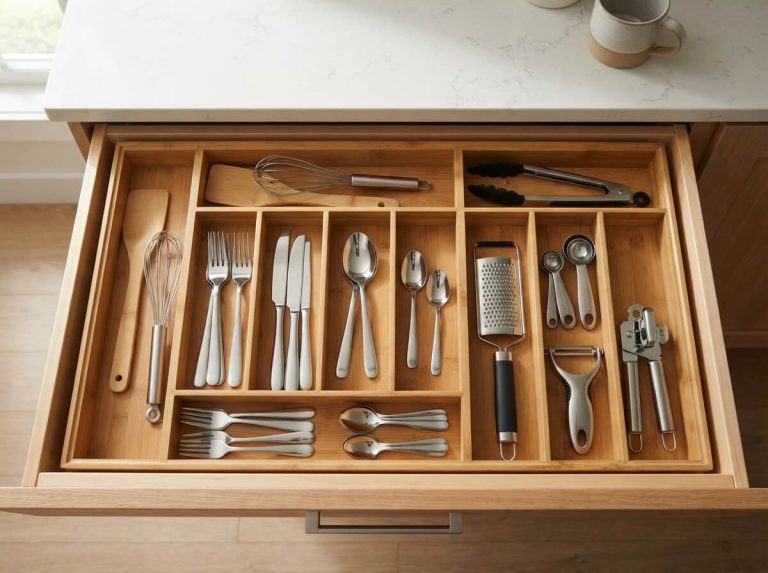
This is the largest organizer in the group. It is built for wide, deep drawers and can stretch to fill a big space. It suits people who want to store a full set of flatware along with large kitchen tools in one tray.
What it is and who it suits
The organizer is made of bamboo and measures 19 inches deep. Its width can grow from 17 inches to 28 inches. Because of its size, it suits a large kitchen drawer rather than a small utensil drawer. A household that owns a full place setting for several guests will likely find the most value here.
Key features in plain words
The tray is 2.5 inches high, which is taller than many standard caddies. That extra height gives room for tall items such as steak knives and large spoons. The compartments come in different sizes, so forks, spoons and bigger utensils each have a place. Sorting items by type before placing them can make the layout easier to keep tidy.
Daily use and fit
Measuring the drawer first matters most with this model. Because it is so large, a drawer that is even slightly too small will not work. Measure the inside width at the front and back, since some drawers narrow slightly. Once it fits, the wide grid makes it easy to see and reach each utensil.
Build and stability
The bamboo frame is thick, and the corners use a mortise and tenon joint, a traditional wood joint that adds strength. Eight silicone feet grip the drawer base so the tray stays put when the drawer opens and closes. A tray that slides during use can scatter utensils, so this grip is a useful detail to look for.
Value for money
At $59.97, this is the most expensive option in the group. The price reflects its size and sturdy build. Buyers with a small drawer will not get the full benefit, so the value depends on drawer size. For a smaller kitchen, a compact organizer from this list may be the better choice.
Pros
- Very large size suits big, deep drawers
- Adjustable width gives a flexible fit
- Thick bamboo frame with reinforced corners
- Silicone feet help keep it in place
Cons
- Too big for small or shallow drawers
- Highest price in this group
- Requires careful measuring before buying
2. 4 Pack 6″ Deep Bamboo Drawer Dividers: best for flexible, multi-use sections
This set uses four separate dividers instead of one tray. It works well for people who want to split a drawer into custom sections. It also suits those who want to organize more than just utensils.
Separate dividers let you decide where each section begins and ends. You can place them to fit a drawer’s exact width, or leave gaps for items of different sizes. This makes the set a practical choice for mixed drawers that hold tools, office supplies, or kitchen gadgets.
What it is and who it suits
These are tension dividers that press against the drawer walls. Each divider is 6 inches high and adjusts from 17 inches to 22 inches. They suit people who prefer to build their own layout.
Because nothing is fixed in place, the dividers work in drawers of different shapes. They are a good fit for someone who reorganizes often or who wants to change the layout as their needs shift.
Key features in plain words
The dividers use a spring mechanism to hold their position. Foam pads on each end grip the drawer wall and help protect the cabinet from scratches. The bamboo is polished for a smooth finish.
Bamboo is a grass that is often used for household goods because it is hard and fairly light. The polished surface wipes clean easily. The spring and foam ends work together, so the divider stays in place without screws or adhesive.
Setup and ease of use
The listing describes a tool-free setup. The shipping pin releases when the divider is compressed, so no prying or tools are needed. Because the dividers are separate, arranging them takes some trial and error.
A simple approach is to start with the largest items and place their dividers first. Then fill the remaining space with smaller sections. Checking each divider after the first day of use helps you spot any that have moved.
Holding power and w ork
Because each divider is separate, it can slide if the spring is not set well. The listing says the tension is reinforced to reduce sliding. Buyers should still check that each divider sits firmly before loading heavy items.
Heavier objects, such as a full set of metal tools, put more pressure on the dividers. Spreading weight evenly across sections helps keep each piece steady. Light items like cutlery or small pens are less likely to shift the dividers.
Value for money
At $39.99, this set costs less than the largest tray in the group. It gives a lot of flexibility for the price. Its value is strongest for people who want custom sections rather than one fixed tray.
The price covers four pieces, so buyers who need only one or two dividers may find the set more than they require. For drawers that need several separate zones, the set can be a sensible investment.
Pros
- Four dividers allow custom layouts
- Tool-free setup with an auto-release pin
- Foam pads help protect drawer surfaces
- Works for utensils and other drawer items
Cons
- Separate pieces take longer to arrange
- Less of a unified tray look than a single organizer
- Tension dividers may need adjusting over time
3. Homecor Silverware Organizer: best for adjustable size and knife storage
This organizer adjusts in both width and depth, which gives it more fitting options than many trays. It includes two removable knife blocks. It suits people who want a single unit for cutlery and knives.
A tray that adjusts in two directions can fill an odd-shaped drawer more completely. This reduces wasted space and keeps utensils from sliding into gaps. Removable knife blocks let you store blades separately from forks and spoons.
What it is and who it suits
The tray has nine compartments and expands in width from 13.2 inches to 22 inches. Its depth adjusts from 14.5 inches to 19 inches, and its height is 2 inches. It suits drawers that are not a standard shape.
Many standard organizers are sized for typical kitchen drawers. If your drawer is narrower, wider, or shallower than average, an adjustable tray is easier to fit. It is a practical choice for older cabinets and custom installations.
Key features in plain words
The knife inserts provide protected slots for eight blades. This keeps knife edges from knocking against other items. The tray is made of BPA-free plastic, which means it does not contain bisphenol A, a chemical some people prefer to avoid.
Separating knives from other cutlery reduces the chance of dulled edges and minor cuts when reaching into the drawer. The compartments also make it easy to find a specific utensil without searching through a pile.
Fit and daily use
The listing asks buyers to measure the drawer before ordering. The drawer should be at least 13.2 inches wide, 14.5 inches deep and 2 inches high. Anti-slip pads should be installed before use.
Measuring the inside of the drawer, not the cabinet opening, gives the most accurate result. Once the tray is sized to the drawer, the anti-slip pads help it stay put when the drawer opens and closes.
Cleaning and care
Plastic trays are usually simple to wipe clean. The listing says the tray can be rinsed with water to remove stains. This makes everyday upkeep straightforward.
Removing the knife blocks before washing makes it easier to reach every corner. Drying the tray fully before returning it to the drawer helps prevent moisture from collecting underneath.
Value for money
At $19.94, this is the lowest-priced option in the group. It offers adjustability and knife storage at a modest cost. Buyers who want budget-friendly flexibility may find it the most practical choice.
The low price makes it an easy option for a first organizer or a replacement tray. Buyers who prioritize a heavier, more durable material may prefer to spend more on wood or metal.
Pros
- Adjusts in both width and depth
- Two removable knife blocks protect blades
- Lowest price in this group
- Simple to rinse and wipe clean
Cons
- Plastic may feel less sturdy than wood
- Anti-slip pads must be installed before use
- Shallow two-inch height limits tall items
4. OXO Good Grips Adjustable Deep Drawer Organizer: best for a two-section layout
This organizer is designed to split a deep drawer into two sections. It suits people who want a clear divide between large and small items. The OXO name is well known in kitchen tools, though the listing does not give detailed specifications.
If your drawer already has a mix of tall and short items, a two-section divider can reduce the pile-up. Large tools sit on one side and small gadgets on the other. Many people find this simpler than managing a tray with lots of tiny slots.
What it is and who it suits
The product uses two compartments to hold larger and smaller items. It is aimed at people who want a simple, two-part layout. Because the listing gives few measurements, buyers should check the drawer size carefully.
It may suit a household with a few larger utensils, such as spatulas and whisks, plus a handful of smaller tools. It is less of a match for someone who wants to sort cutlery into many separate groups. Think about what you store most before you decide.
Key features in plain words
The organizer uses the full depth of the drawer, which helps make use of vertical space. A shallow tray sits on top of the organizer, creating a second level for smaller items. The listing describes the fit as close and tidy.
A second level is useful for items that would otherwise get lost at the bottom of a deep drawer. Small measuring spoons or a few peelers can sit there where you can see them. Keep the top tray for lighter items so it stays easy to lift out.
Daily use and organization
Two sections can be easier to manage than many small slots. Larger items sit on one side, while smaller items stay separate. This layout suits people who prefer fewer, larger sections because it is simpler to keep tidy each day, since everything has a clear home.
Because the design is broad rather than finely divided, it may suit mixed drawers better than a drawer full of many small utensils. Items can still slide around if they are not packed snugly. Placing heavier tools toward the back helps keep the arrangement steady.
Build and stability
The listing does not give a detailed description of the materials or feet. Buyers who need a firm, non-slip base should check this point before ordering. Because the product is listed as adjustable, it should be measured against the drawer before buying.
Measure the inside width, depth and height of the drawer, then compare those figures with the listed adjustment range. Check the drawer for any rails or lips that could block the organizer from sitting flat. A quick measurement now can prevent a return later.
Value for money
At $39.99, this organizer costs the same as the bamboo divider set. Its value depends on if a two-section layout suits the drawer. Buyers who want a single, simple division may find it fair value.
If you need many small compartments, a multi-slot tray may give you more use for the same money. A two-section design makes the most sense when your utensils naturally fall into two groups. Compare the number of compartments against the way you actually use the drawer.
Pros
- Two sections separate large and small items
- Uses the full depth of the drawer
- Shallow tray adds a second level
- Recognized kitchen brand name
Cons
- Listing gives limited measurements and materials
- Fewer compartments than multi-slot trays
- Fit should be checked carefully before buying
5. Umilife Large Expandable Kitchen Silverware: best for a mid-size drawer
This is a smaller sibling of the first Umilife tray. It has the same bamboo build and extra-high design, but in a more compact size. It suits people with a standard kitchen drawer who still want a sturdy, tall organizer.
Standard drawers vary in size, so a tray that fits a range of widths can save you from guessing. This model is built for that middle ground. It is a practical choice when a very wide tray would not fit your drawer.
What it is and who it suits
The tray measures 17 inches deep and expands in width from 13.3 inches to 20.2 inches. It offers seven to nine compartments, depending on the width. It suits standard drawers rather than oversized ones.
Before buying, check that your drawer is within that width range and that it is at least 17 inches deep. If your drawer is wider than 20.2 inches, this tray will leave gaps. In that case, look at a larger option instead.
Key features in plain words
Like the larger model, this tray is 2.5 inches high. That extra height gives room for knives and tall utensils. The frame is thick, which the listing says helps keep knives from sliding through the dividers.
Tall grooves are useful for items like ladles and tongs, which can tip over in a shallow tray. Keeping knives upright also makes them easier to grab safely. The thicker frame adds stiffness, so the dividers hold their shape better over time.
Fit and daily use
Because the width range is narrower, this tray fits a wider range of standard drawers than the larger model. Measuring the drawer is still important. Once in place, the grooves help keep utensils upright and easy to find.
Expanding the tray to the right width is usually a quick adjustment. Push the sides until the tray fills the drawer without forcing it. A snug fit reduces movement when you open and close the drawer.
Build and stability
The bamboo frame uses the same reinforced corners and mortise and tenon joints as the larger model. Eight silicone feet help the tray stay still when the drawer moves. The listing describes the tray as quiet in use.
Bamboo is a natural material, so it can respond to moisture. Wipe the tray dry after washing and avoid soaking it. Gentle care helps the joints and finish last longer.
Value for money
At $33.95, this is the second-lowest price in the group. It gives the same bamboo build and tall design at a lower cost. For a standard drawer, it may offer better value than the largest tray.
You pay less for a tray that is sized for typical kitchens. If your drawer is larger, the savings may not be worth the gaps it leaves. Match the tray to your drawer, not to the price alone.
Pros
- Sturdy bamboo build with reinforced corners
- Extra-high design for tall utensils
- Silicone feet keep the tray steady
- Lower price than the largest bamboo tray
Cons
- Narrower width range than the larger model
- Not suitable for very large drawers
- Bamboo needs gentle care to stay in good shape
Comparison insights: how these utensil organizers differ
The five organizers differ mainly in size, layout and price. The two Umilife trays are bamboo and tall, while the Leafory set uses separate dividers. The Homecor tray is plastic and adjusts in two directions, and the OXO organizer splits the drawer into two sections.
Each design suits a different kind of kitchen. Some buyers want one large tray with many slots, while others prefer to build their own layout from loose pieces. Knowing which approach fits your habits makes the choice easier.
In performance, the larger trays hold more items but need more space. The divider set and the Homecor tray offer more flexibility in layout. The OXO organizer focuses on a simple two-part division, which works well for a drawer that holds only a few utensil types.
Ease of use varies as well. The tool-free setup of the divider set is easy to start with, though arranging the pieces takes some care. The Homecor tray needs anti-slip pads, and the Umilife trays are straightforward once measured and placed.
On value, the Homecor tray costs the least, while the largest Umilife tray costs the most, so its price is the highest. Its value depends heavily on drawer size. Buyers with a large drawer may find it fair value, while others may prefer a smaller, lower-cost option that fills the space without leaving gaps.
Buying guide: key factors to check before you buy
Drawer size is the first thing to check. Measure the width, depth and height of the drawer, not just the cabinet. Each product in this guide lists a range, so the drawer must fall within it.
Material affects both look and care. Bamboo feels natural and sturdy, but it prefers gentle cleaning and should not sit in standing water. Plastic is easy to rinse, though it may feel lighter in the hand.
Layout is the next factor. A single tray with many slots suits people who want order for every utensil. Separate dividers or a two-section organizer suit people who want a more flexible or simpler layout.
Height matters for tall items. Standard two-inch trays suit forks and spoons, while taller organizers hold steak knives and large spoons more comfortably. Check the listed height against the items you plan to store, and remember that tall utensils can catch on a drawer front if the organizer sits too high.
Stability is important in a deep drawer. Look for silicone or rubber feet, anti-slip pads or foam ends that grip the drawer walls. A tray that slides can make noise and spill its contents when the drawer opens, so a stable base is worth more than a few extra slots.
Finally, consider price in relation to use. A lower price helps when you need a basic solution. A higher price may be justified when a larger, sturdier organizer fits the drawer well and will be used every day.
Who should buy these products: matching each buyer to a choice
People with a large, deep kitchen drawer and a full flatware set may find the largest Umilife tray the best fit. Its size and tall design suit big collections. It works best when the drawer is measured carefully first, because a tray that is even slightly too large will not sit flat or close properly.
Those who want a custom layout may prefer the Leafory divider set. Four separate dividers let you build the sections you need. For example, you can give forks their own lane, group spoons together and leave a wider gap for spatulas or whisks. This suits people who also want to organize clothes, baby items or bathroom goods, since the dividers can be moved to fit different drawers.
Buyers on a tight budget who need knife storage may like the Homecor tray. It adjusts in two directions and includes two removable knife blocks. That flexibility helps when a drawer is not a standard shape. It is a practical option when cost is a main concern, though buyers should still check the fit range before ordering.
People who prefer a simple, two-section split may find the OXO organizer suitable. It separates larger and smaller items with a clear divide, so a tray of cooking utensils can sit on one side and small tools such as peelers and measuring spoons on the other. Because the listing gives few details, measuring the drawer first is especially important. Compare the listed dimensions with your drawer before you buy.
Those with a standard-size kitchen drawer who still want a tall, sturdy tray may choose the smaller Umilife model. It keeps the bamboo build and extra height at a lower price than the largest tray. Tall sides help keep long handles, such as ladles and tongs, from tipping over. It suits most common drawer sizes, but the drawer should still be measured before purchase.
Final verdict: which utensil organizer for deep drawers should you choose?
No single organizer suits every drawer. The right choice depends on drawer size, the items you store and your budget. The five options here cover a wide range of needs, from large bamboo trays to adjustable dividers and simple two-part splits. Each one solves a slightly different problem, so it helps to start with what you actually need to store.
For a large, deep drawer and a full set of utensils, the largest Umilife tray is the strongest fit. For a standard drawer, the smaller Umilife model offers a similar build at a lower price. The Homecor tray is a sensible low-cost option with knife storage, especially for buyers who want blocks included in the purchase.
Buyers who want custom sections may prefer the Leafory dividers, while those who want a simple two-part split may consider the OXO organizer. In short, measure the drawer first, then match the layout and price to how you plan to use it. A careful measurement is the step that most often decides if an organizer will work well in daily use.
Frequently Asked Questions
What size drawer do I need for a deep drawer organizer?
Measure the width, depth and height of the drawer before ordering. Each product lists a fit range, so the drawer must fall within it. Measuring also prevents buying a tray that is too big or too small. Write the numbers down and compare them with the listing before you check out.
Is bamboo better than plastic for a utensil organizer?
Neither material is better for every buyer. Bamboo feels natural and sturdy but needs gentle care. Plastic is easy to rinse and often costs less, so the choice depends on your preference. Consider how you clean your drawers and how much care you are willing to give the material.
Do drawer dividers stay in place?
Tension dividers press against the drawer walls to stay put. Foam pads and spring mechanisms help them grip. Check that each divider sits firmly, especially in a drawer that opens often. If a divider slides, adjust its position and test it by opening and closing the drawer a few times.
Can a utensil organizer hold knives safely?
Some organizers include knife inserts or tall slots that keep blades upright. Knife blocks help protect edges, but buyers should still check that each knife fits its slot without forcing it. Handle sharp items with care when loading and unloading. Storing knives with the blade facing up or in a dedicated slot reduces the chance of cuts when reaching into the drawer.
Are these organizers easy to clean?
Plastic trays can usually be rinsed with water and wiped dry. Bamboo should be wiped rather than soaked, and it should dry fully after cleaning. Removing items and checking the drawer from time to time keeps everything tidy. Wiping the drawer liner and the tray edges every few weeks helps prevent crumbs and grease from building up.
Frequently Asked Questions
Each answer above is short and based on the product data and general use. Buyers should always confirm measurements and features on the product listing before buying. Product details can change, so the listing remains the most reliable source for current specifications.

Hi, I’m Mary, the founder of Homygear.com. I’m passionate about creating a comfortable, smart, and beautiful home. I share practical insights and real-world experience on home gear that makes everyday life easier. Behind the scenes, my dedicated research team studies products in depth, and our writers craft honest reviews using trusted, authentic sources—so you can choose home gear with confidence.