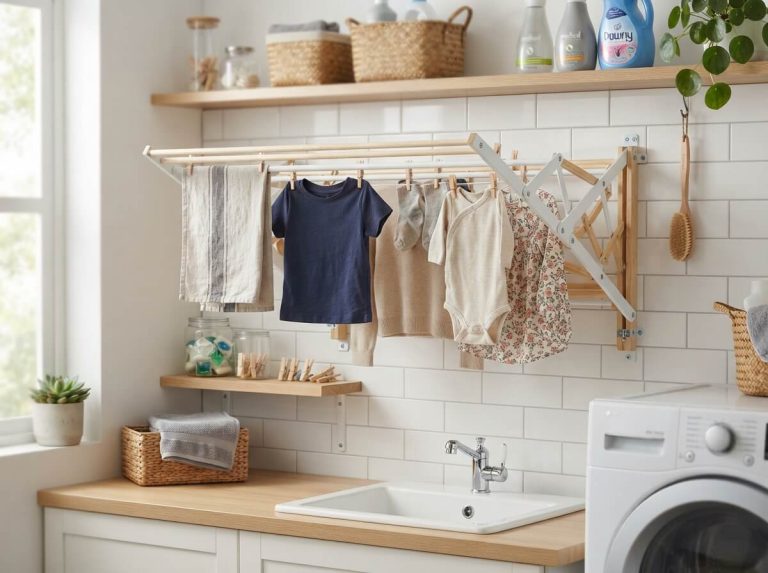
5 Best Dish Drying Mat For Granite Countertops In 2026
As an Amazon Associate we earn from qualifying purchases.
Picking the best dish drying mat for granite countertops can feel confusing at first. Many mats look similar on a product page, yet they differ in material, size and how they handle water. This guide helps beginners who want a simple way to keep dishes dry and protect a stone counter from drips, puddles and scratches.
The five products reviewed here share a few traits. Each one is a flat, absorbent mat meant to sit on the counter beside the sink or under a drying rack. Each is sized for everyday dishes, and each is marketed as safe for stone surfaces. The comparison rests on the listed features and typical use of each product, not on personal testing.
Granite is a durable stone, but it is not immune to damage. Water left sitting on the surface can leave mineral spots, and grit trapped under a wet dish can cause fine scratches over time. A good mat soaks up standing water and keeps dishes from sliding across the surface. It also gives you a clear, cushioned place to set down wet items.



1. Cuisinart Dish Drying Mat: best for large loads and easy washing
The Cuisinart Dish Drying Mat is a two-pack of soft, woven microfiber mats. It suits buyers who cook often, wash big pots and want a machine-washable option. The mats are sold as safe for granite, quartz and other hard surfaces.
What it is and who it suits
This mat is a cushioned microfiber pad measuring 18 by 24 inches. Its size makes it useful for a full sink of dishes or large pans. Households with frequent cooking will likely get the most value from it. Couples or single cooks who wash only a few items a day may find a smaller mat is enough.
Key features in simple words
Microfiber is a fine synthetic fiber that pulls water into its weave. The textured surface is meant to soak up water without leaving standing puddles. The mats also carry a note that they are OEKO-TEX certified, which is a third-party standard for textiles. That label refers to testing for harmful substances in the fabric, not to how well the mat dries.
Everyday use
In practice, you place one mat flat on the counter and stack dishes on it. Rinse dishes first and let them drain briefly before setting them down, so the mat is not soaked at once. Because it comes as a pair, one mat can go in the wash while the other is in use. A built-in loop lets you hang it to dry between uses.
Performance and ease of use
The mat is designed to keep absorbing across repeated washes, according to its listing. Its folding design means it can replace a bulky rack in some kitchens, particularly if you only dry a few items at a time. Setup is simple, since there is nothing to assemble. Larger loads may still need a rack, so consider how many dishes you usually dry in one go.
Value for money
At the listed price, a two-pack of large microfiber mats is a modest purchase. Buyers get two units, which helps with rotation. The main question is if you prefer fabric over stone. Fabric mats need regular washing to stay fresh, so factor that effort into your decision.
Pros
- Large 18 by 24 inch size fits full loads
- Two mats allow rotation between washes
- Machine washable and folds flat for storage
- Listed as safe for granite, quartz and marble
Cons
- Fabric can hold odors if not washed regularly
- Requires laundering rather than a quick wipe
- Mats can feel bulky when stacked with other fabrics
2. Large Stone Dish Drying Mat: best for a simple, eco-minded option
The Large Stone Dish Drying Mat is made from diatomaceous earth, a natural mineral material. It suits buyers who want a stone-style mat in a gray color and a compact footprint. It is also marketed for several uses beyond the kitchen.
If you want a drying surface that looks at home on a counter and does not rely on synthetic fabrics, this mat is worth a closer look. It is a straightforward product, so the main questions are about size, care and how many dishes you dry at once.
What it is and who it suits
This mat measures 24 by 16 inches and comes in a gray finish. Its look is simple and blends with many countertop colors, from white quartz to natural wood. Buyers who value natural materials may find it appealing.
It suits a single person or a small household that washes dishes by hand and needs one main drying spot. Larger families may need more drying space than one mat offers.
Key features in simple words
Diatomaceous earth is a soft, porous rock made from the fossil remains of tiny algae. Its many small pores pull water in quickly. In everyday terms, this means the surface can soak up splashes and damp spots instead of leaving them to pool.
The mat is foldable, which helps when counter space is tight. You can fold it for storage in a cabinet or drawer when the sink is not in use. This makes it easier to keep a small kitchen clear.
Everyday use
You set the mat beside the sink and place washed plates, cups and bowls on it to air dry. Cups, forks and spoons can sit on it as well. Because the mat is stone-like, it may feel firmer than a fabric pad when you slide dishes onto it.
The listing also describes it as a pet pad, bathroom mat and coaster, so it can move between rooms. A coaster use is a practical way to protect a table from damp glasses. Pet and bathroom uses depend on your own needs and should be checked against the care guidance.
Performance and ease of use
The mat is described as super absorbent and quick drying, which suits most daily loads. Diatomaceous earth mats generally need a rinse and air dry rather than a machine wash. Keeping the surface clean usually means wiping away soap residue and letting it dry fully before stacking dishes on it again.
Leaving oily residue to build up can make the surface less effective over time. A quick rinse after heavy use helps keep it working well. Always follow the specific cleaning instructions that come with your mat.
Value for money
At the listed price, this single mat sits in the middle of the group. Its multipurpose use may stretch its value for households that want one mat for several jobs. If you only need one drying surface, the cost is easy to justify.
Buyers who want two or more units should compare the cost per mat with the pack options below. Multi-packs often lower the price of each mat, but only if you truly need the extra pieces.
Pros
- Made from a natural mineral material
- Foldable design saves counter space
- Neutral gray color suits many kitchens
- Can also serve as a pet pad or coaster
Cons
- Only one mat is included
- Stone-style surfaces can feel firm underfoot or under dishes
- Dark spills may leave marks that need care to remove
3. Stone Dish Drying Mat: best for a multi-piece set with a marble look
The Stone Dish Drying Mat comes as a three-piece set with a white marble pattern. It suits buyers who want a larger mat plus smaller pieces for soap and cups. The design leans toward a decorative look.
This set is a good match if you want more than one drying surface and a coordinated appearance. It is less about a single minimal piece and more about covering several small jobs at the sink.
What it is and who it suits
The set includes one large 24 by 16 inch mat and two smaller pieces. The white pattern is meant to suggest natural stone. Buyers who like a light, coordinated look may prefer this set.
It suits people who wash a mix of large and small items and want a tidy place for each. Households that mostly dry large batches may find the single large mat is the main workhorse.
Key features in simple words
The listing describes a zoned layout. The large mat handles plates and bowls, while the small pieces suit soap and drinking glasses. A layer design is intended to keep the surface touching the counter dry, so water is less likely to sit against the countertop.
Zoning the sink area this way can keep small items from crowding the main drying space. It also gives each object a clear place, which many people find helpful.
Everyday use
In practice, the small pieces can sit by the sink for a soap dish or a cup rest. The large mat takes the main load of plates and utensils. Because the set is folding, it can be stored between uses.
Using the small pieces for glasses keeps them off the main mat, which leaves more room for larger dishes. Rotating the pieces to different spots as needed is a simple way to keep the sink area flexible.
Performance and ease of use
The listing says the mat absorbs moisture quickly through its porous structure. It also includes a piece of sandpaper for cleaning stains, according to the product details. Use sandpaper gently and check the surface afterward, since rough scrubbing can change the finish over time.
Light-colored surfaces may show marks more readily, so regular care matters. Wiping spills soon after they happen is usually easier than removing set-in stains later.
Value for money
At the listed price, the set costs more than a single mat but includes three pieces. Buyers who need extra small mats may find the set practical. The overall value depends on how often the small pieces will be used.
If you rarely need the small pieces, a single mat may offer better value for your kitchen. Compare the number of pieces you will actually use each day before deciding.
Pros
- Three-piece set adds small mats for soap and cups
- Large 24 by 16 inch main mat
- Foldable for storage in drawers or cabinets
- Decorative marble pattern
Cons
- White finish may show stains and marks more easily
- Stain care relies on sandpaper, which takes some effort
- Small pieces may be less useful for large loads
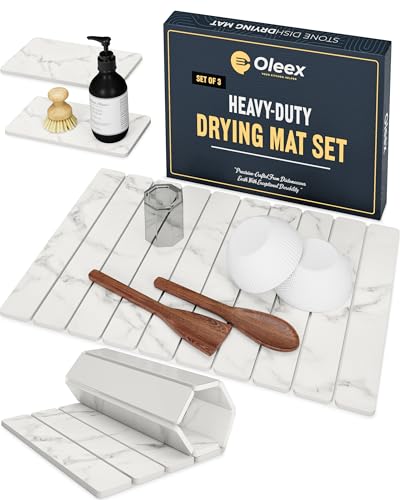
4. Oleex 3-Pack Stone Dish Drying Mat Set: best for buyers who want a clean, low-fuss stone look
The Oleex 3-Pack Stone Dish Drying Mat Set includes one large 24 by 16 inch mat and two small 4 by 9 inch mats. It suits buyers who want a stone-style set with a clear care routine. The listing also notes its weight and natural mineral scent.
A stone-style mat looks neat on a kitchen counter and can fit many layouts. The three sizes give you options for different jobs, from a full rack of dishes to a single cup. Before you buy, it helps to think about how much counter space you can spare.
What it is and who it suits
This set is made from diatomaceous earth and is described as collapsible. The large mat weighs about 4 pounds, according to the listing. Buyers who need a sturdy, heavier mat that stays put may find this helpful. The small mats can also work as drip pads for other tasks around the house.
Heavier mats tend to stay in place better than light fabric ones, especially when a bowl or pan is set down near the edge. If you often move your drying area or prefer something light to lift, a heavier mat may feel like extra work. Think about your own habits before deciding.
Key features in simple words
The listing says each pad absorbs a set amount of its own weight in moisture. It also says the mats are non-slip and dry quickly. The surface is made from porous diatomites mixed with recycled paper, which keeps the set light.
In plain terms, the porous surface draws water into tiny pores so that it does not pool on your counter. Quick drying means the mat can be ready for the next load sooner. These are listing claims, so check the product page for the full details before relying on them.
Everyday use
You can place the large mat under a drying rack to catch drips. The two small mats suit soap, a cup or a few utensils at the sink. Because the set folds, it can be rolled and tucked away after use.
For example, you might set the large mat beside the sink and the small ones by the faucet for hand soap and a toothbrush holder. Rolling the mats after they dry can save space in a crowded cabinet. Letting them dry fully before storing helps keep them fresh.
Performance and ease of use
The listing says a faint mineral scent may appear when the mats are first unpacked. This should fade within about a week, or a rinse with clean water may help. Light marble colors may need more upkeep than darker ones.
Stone surfaces can show water rings or mild staining over time, so a quick wipe after heavy use is a sensible habit. A soft cloth and clean water are usually enough for routine care. Harsh cleaners are not needed for everyday upkeep.
Value for money
At the listed price, the set includes three mats in one purchase. That makes it easy to compare with other multi-piece options. Buyers who want a set that does several jobs may see it as fair value.
When you compare prices, count the number of mats, their sizes and their materials, not just the total cost. A set that covers both a rack and small spots can replace separate purchases. Check the current price on the product page, as prices can change.
Pros
- Three-mat set includes two small pieces
- Listed as non-slip and quick drying
- Folds and rolls for easy storage
- Can double as a bath mat or succulent drip pad
Cons
- Initial mineral scent may be noticeable at first
- Light marble finish may need more regular cleaning
- Heavier than a fabric mat, so moving it takes more effort
5. 2 Pack Microfiber Dish Drying Mat: best for a budget-friendly pair
The 2 Pack Microfiber Dish Drying Mat is the lowest-priced option in this group. It suits buyers who want a simple pair of absorbent mats without spending much. Its gray color and large size are the main selling points.
Because the price is the main draw, it helps to know what you get for it. Two mats arrive in one order, so you can keep one on the counter while the other is in the wash. That setup works well for a household that dries dishes every day.
What it is and who it suits
This is a pair of gray microfiber mats measuring 24 by 17 inches. The listing describes three layers of polyester microfiber. Budget-minded households and renters may find it a practical choice.
Renters and people with small kitchens often prefer a mat that can be folded or hung out of the way. A set like this fits that need because it is flat, light and easy to store. Larger families may also like having two mats for a full load of dishes.
Key features in simple words
Polyester microfiber is a fine synthetic fabric that soaks up water through its tiny fibers. The three-layer build is meant to hold moisture without soaking through to the counter. A lanyard on the back lets you hang the mat to dry.
In practice, the lanyard means the mat can dry over a cabinet door or a tap without taking up counter space. The fibers also make the surface feel soft against glass and plates. Keep in mind that fabric tends to hold on to odors if it stays damp for long periods.
Everyday use
The large size suits pots, dishes and small appliances. You can also place one mat under a coffee maker or blender to catch drips. The listing notes that the mats can serve as liners for drawers or refrigerator shelves.
A useful habit is to rinse the mat after each use if it held wet pans or bowls. This removes food residue before it dries in the fibers. Using one mat for dishes and the other as a drip catcher keeps the roles separate and easier to manage.
Performance and ease of use
The listing recommends hand washing in cold water to extend the life of the mats. Hanging them to dry takes little space. Fabric mats like this generally need more frequent washing than stone-style mats.
Cold water helps protect the fibers from heat damage, and air drying avoids shrinkage or wear from a dryer. Plan on washing the mats every few days if you use them daily. Waiting too long can let dampness and smells build up in the layers.
Value for money
At the listed price, this two-pack is the least expensive option here. It gives two mats in one purchase and suits buyers who want to test a mat before spending more. Its value depends on if you are comfortable with regular laundering.
If you only dry a few dishes each week, one mat may be enough, and the second becomes a spare. If you run the dishwasher often and only hand-dry a few items, the cost per use is very low. Compare the total price with how often you expect to wash and replace the mats.
Pros
- Lowest price among the five products
- Two large mats in one purchase
- Lanyard makes drying simple
- Works under small appliances and as a drawer liner
Cons
- Requires hand washing in cold water for best care
- Fabric may need replacing sooner than stone-style mats
- Not described as having a special finish for stone surfaces
Comparison insights: how the five mats differ
The five mats fall into two main groups. Three are fabric or microfiber mats, while three are diatomaceous earth stone-style mats. Each group has a different feel, care routine and price range.
Fabric mats feel soft and flexible, which many people find comfortable for stacked glassware. Stone-style mats feel firmer and sit flat on the counter. Your preference for texture and handling often guides which group suits you better.
In terms of performance, all five are described as absorbent. Stone-style mats are described as quick drying, while microfiber mats are described as soft and washable. Neither type is listed as harder on granite, so the choice comes down to care preference and how many mats you want.
It helps to match the mat to your routine. A busy household that wants fast drying may lean toward stone-style options, while a shopper who prefers laundering may choose microfiber. Both approaches can work well when the care steps fit your habits.
Ease of use also varies. Fabric mats can be tossed in a machine or hand washed, but they need regular laundering. Stone-style mats usually need a rinse and an air dry, and their surfaces can show stains if dark liquids sit on them.
Consider the cleanup time for each type. A rinse and air dry takes only a few minutes, but a stone mat may need a wipe if coffee or tea spills on it. Fabric mats take more hands-on time for washing, yet they rarely need a separate cleaning step for stains between washes.
Value for money depends on how you plan to use the set. The Cuisinart pair and the budget microfiber pair offer more mats per purchase. The stone-style sets add small pieces, which helps with soap and cups.
Count the pieces you actually need before comparing prices. A pair of large mats covers a full rack of dishes, while a set with extra small pieces can protect the counter from soap dispensers and cups. The best value is the set whose pieces match your daily tasks.
Buying guide: key factors in plain words
Start with size. Measure the open counter space next to the sink and the size of your largest pot. A mat that is too small may not catch all the drips, and a mat that is too large can crowd your workspace. Leave a little room so the mat sits flat and does not hang over the edge.
Next, think about material. Microfiber is soft, lightweight and launders well, but it can hold odors if left damp for long periods. Diatomaceous earth is a natural mineral material that absorbs moisture quickly, which helps water drain away from dishes. It may feel firmer underfoot and on hard plates, and it needs gentler cleaning, so avoid harsh scrubbing that could wear the surface.
Consider how many mats you want. Two-packs help you rotate while one dries or washes, which is useful in a busy household. Multi-piece sets add small pieces for specific jobs, such as a spot for soap, cups or utensils. If you only wash a few dishes a day, a single mat may be enough.
Check the care method. Some mats are machine washable, others need hand washing, and some stone mats need sanding or a damp cloth to remove stains. Choose the routine you will actually follow. A mat that is easy to clean is more likely to stay fresh and hygienic over time.
Finally, look at color. Light colors can show marks and water spots more readily, which may make them look dirty sooner. Darker or neutral tones may hide spots, though they can still stain from dark liquids such as coffee, tea or tomato-based foods. Pick the shade that fits your kitchen and your tolerance for visible wear.
Who should buy these products
Households that cook often and wash large pots will likely prefer the Cuisinart Dish Drying Mat. Its size and washable design suit heavy daily use, and a larger surface gives pots and pans room to drain without crowding the counter.
Buyers who want one mat for several jobs may consider the Large Stone Dish Drying Mat. Its neutral gray color and multipurpose use fit small kitchens and shared spaces, where a single surface can handle dishes, produce and other tasks.
People who want a decorative set with small pieces for soap and cups may look at the Stone Dish Drying Mat. Its white marble pattern suits a light, coordinated kitchen, and the smaller pieces help keep countertop items organized without clutter.
Buyers who prefer a sturdy, low-fuss stone look may find the Oleex 3-Pack a good match. Its collapsible design and three-mat set suit tidy, organized counters, and folding the mats away can free up space when you are not washing dishes.
Budget-minded buyers and renters who want a simple pair of large mats may choose the 2 Pack Microfiber Dish Drying Mat. It offers the lowest price in this group, and two mats let you rotate them while one dries or is laundered.
Final verdict
No single mat suits every kitchen. The best choice depends on how often you cook, how you like to clean and how much counter space you have. Think about your daily routine before you compare features.
For frequent large loads, the Cuisinart pair is a strong option because of its size and washable design. For a stone-style look with extra small pieces, the Stone Dish Drying Mat or the Oleex set may fit better. For a low-cost start, the microfiber pair offers two large mats for a modest price, with the trade-off that it needs prompt drying to avoid odors.
Because the comparison rests on listed features and typical use, reading the full product details before buying is a good step. Checking the size and care instructions will help you choose with confidence and avoid surprises after delivery.
Frequently Asked Questions
Are these dish drying mats safe for granite countertops?
Several listings say the mats are safe for granite, quartz and other stone surfaces. Stone surfaces can be scratched by grit, so it helps to rinse the mat and counter before use. Keeping the mat and counter clean also helps prevent residue from building up over time.
Do stone-style mats need special care?
Stone-style mats usually need a rinse and air dry rather than a machine wash. Hanging the mat over the edge of the sink or on a rack lets it dry fully between uses. Dark spills, such as coffee or tomato sauce, should be wiped up quickly to avoid marks.
Can I wash a microfiber dish mat in the machine?
The Cuisinart mat is listed as machine washable on cold with low heat. Low heat helps protect the fibers and keeps the mat soft for longer. The budget microfiber pair is recommended for hand washing in cold water, which is gentler on the material.
Why does a diatomaceous earth mat sometimes have a mineral smell?
A faint natural mineral scent can appear when a new mat is unpacked. The Oleex listing says it should fade within about a week or after a rinse. If the smell persists, rinsing the mat under running water and letting it air dry fully is a good next step.
Which mat is best if I want the lowest price?
The 2 Pack Pack Microfiber Dish Drying Mat has the lowest price among the five products. It gives two large mats in one purchase, which suits buyers who want to start simply. Two mats also let you keep one in use while the other dries.
Before picking any option, check the current listing for the most up-to-date details. Prices and availability can change over time. Reading the care instructions and material description on the listing will help you confirm that a mat fits your counter and your cleaning routine.
Hi, I’m Mary, the founder of Homygear.com. I’m passionate about creating a comfortable, smart, and beautiful home. I share practical insights and real-world experience on home gear that makes everyday life easier. Behind the scenes, my dedicated research team studies products in depth, and our writers craft honest reviews using trusted, authentic sources—so you can choose home gear with confidence.