5 Best 12 Foot Step Ladder In 2026
If you’re looking to get something done around your home, a reliable step ladder is one of those tools you can’t live without. Whether you need to change a ceiling light, clean gutters, or reach that top shelf in your garage, the right ladder makes all the difference.
But here’s the thing: not all step ladders are created equal. Some are flimsy and dangerous. Others are built like tanks but impossible to move around. That’s why I’ve taken the time to test and review five of the most popular 12-foot step ladders on the market. Each one has its own strengths, and by the end of this guide, you’ll know exactly which one fits your needs.
Why You Need a Quality 12 Foot Step Ladder
Before we dive into the specific models, let’s talk about why getting the right ladder matters.
A good step ladder gives you safe, stable access to high places. When you’re standing eight or twelve feet in the air, stability isn’t optional. It’s essential. A flimsy ladder can wobble, shift, and put you at serious risk of falling. A quality ladder keeps you secure and lets you focus on the job instead of worrying about your safety.
The right ladder also makes work faster and easier. A heavy, awkward ladder takes forever to set up and move around. A lightweight, well-designed ladder means less fatigue and more productivity. You’ll actually want to use it instead of finding ways to avoid tasks.
Finally, a solid ladder lasts for years. Buy cheap, and you’ll be replacing your ladder every couple of seasons. Buy right, and you’ve got a tool that works year after year, season after season.
1: Louisville Ladder 12-Foot Fiberglass Step Ladder (FS1512)
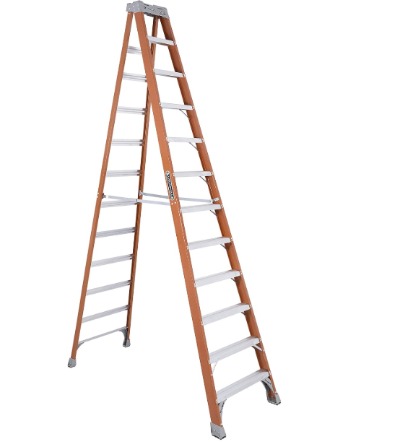
The Louisville Ladder FS1512 is a classic choice. This is the kind of ladder you see in professional settings, and that tells you something about its build quality.
What Makes This Ladder Special
This isn’t an aluminum folding ladder. It’s a traditional fiberglass step ladder with a 300-pound weight capacity and a Type IA rating. The fiberglass construction matters because it’s non-conductive, which means it’s safe to use around electricity. Many electricians and professionals trust this model for good reason.
The ladder features a sturdy frame with a wide stance. When you open it up and lock it into place, it feels solid under your feet. The steps are flat and generous, which is nice when you’re working for extended periods. You’re not balancing on tiny edges here.
Key Features Broken Down
The 12-foot height means you can reach most residential ceilings comfortably, even in rooms with nine or ten-foot heights. That gives you room to work without stretching uncomfortably.
The Type IA rating indicates this ladder can handle 300 pounds safely. That’s your body weight plus whatever tools or materials you’re carrying. The fiberglass material resists rust and corrosion, so it works in both indoor and outdoor settings without degrading.
The wide, deep steps provide genuine comfort during longer jobs. You’re not perched on a tiny ledge. Your full foot has contact with the step, which reduces fatigue and improves confidence.
Real-Life Usage
This is the kind of ladder that feels substantial the moment you touch it. It’s not light. It weighs more than aluminum alternatives, which means it needs two hands and some muscle to move around. But that weight translates directly to stability. When you’re up on this ladder, it doesn’t feel like it might tip. It feels planted.
The fiberglass structure doesn’t conduct electricity, which is a real safety feature if you’re working near any electrical components. This matters more than you might think.
Honest Pros and Cons
Pros:
- Incredibly stable and solid feeling
- Perfect for professional and serious DIY use
- Non-conductive fiberglass material
- Wide, comfortable steps
- Durable construction that lasts
- Type IA safety rating
- Works well for both indoor and outdoor use
Cons:
- Heavy to move and transport
- Harder to store in small spaces
- Higher price tag than aluminum alternatives
- Overkill for light, occasional tasks
- Not designed for one-person quick setup
Performance Discussion
This ladder performs like the professional-grade tool it is. If you need to do serious work and you need to feel confident while doing it, this delivers. It doesn’t vibrate or wobble. The steps don’t flex under your weight.
The real question is whether you need this level of performance. For homeowners who tackle projects a few times a year, this might be overbuilt. For people who use their ladder regularly, this is exactly what you want.
Ease of Use
Setting up this ladder is straightforward but requires some muscle. Opening the spreader bars and locking them in place is easy enough, but carrying this ladder up a flight of stairs isn’t a one-person job.
Once it’s set up, using it is simple. The steps are large and easy to navigate. You can move around on this ladder without feeling like you’re going to tip, which means better focus on your actual task.
Value for Money
This is a premium-priced ladder, but you’re paying for genuine quality. If you’re someone who uses a ladder regularly and wants professional-grade reliability, the cost makes sense. If you use a ladder once a year to change a light bulb, there are better budget options.
2: GameGem 6 Step Ladder for 12 Feet
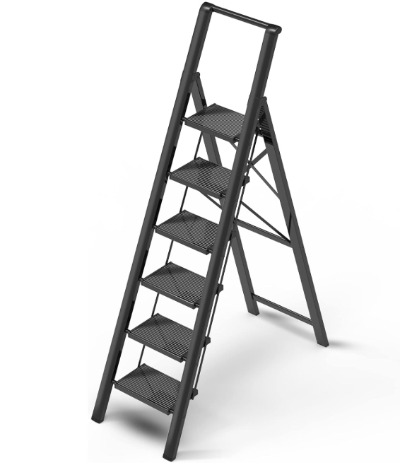
The GameGem is a lightweight aluminum alternative that swings in the opposite direction from the Louisville. This ladder is all about being easy to move and store.
What Makes This Ladder Special
The GameGem is a folding step ladder designed for homeowners who want something practical and convenient. The aluminum construction keeps it light, while the six-step design gets you to 12-foot heights. A built-in handrail provides extra security, and the wide pedal design gives you stable footing.
This is a ladder designed for everyday homeowners. It’s not built for commercial use. It’s built for people who want to clean their gutters, change ceiling bulbs, or reach high shelves without dealing with a heavy tool.
Key Features Broken Down
The lightweight aluminum frame is the star feature here. Aluminum doesn’t rust, and it weighs a fraction of what fiberglass or steel weighs. You can carry this ladder with one hand if you need to.
The handrail is a practical addition. When you’re up on the ladder, having something extra to grip beyond the sides gives you confidence. It’s a small feature that actually improves safety.
The wide pedal design means your feet have room to sit comfortably. Narrow steps force your feet into unnatural positions. Wide pedals let you stand naturally, which reduces fatigue.
The 300-pound weight capacity is standard for residential ladders. That’s plenty for most people plus their tools.
Real-Life Usage
This ladder sets up in seconds. You just unfold it, lock the spreader bars, and you’re ready to go. No wrestling with a heavy frame. No struggling to position it.
When you’re using it, the lightweight construction feels nimble. You don’t feel like you’re standing on a tank, but you do feel secure. The handrail makes a real difference. Even experienced ladder users find themselves grabbing it for balance and confidence.
The width feels generous compared to what you might expect from such a lightweight ladder. Your feet don’t feel cramped.
Honest Pros and Cons
Pros:
- Lightweight and easy to move
- Quick setup and breakdown
- Built-in handrail for extra safety
- Wide pedals reduce foot fatigue
- Folds flat for storage
- Affordable compared to heavy-duty models
- Anti-slip texture on steps
- Works for most household tasks
Cons:
- Lighter construction means less stability on uneven ground
- Not ideal for extended, heavy-duty work
- Aluminum can be slippery in certain conditions
- Handrail takes up hand space
- Less weight capacity compared to heavy-duty ladders
Performance Discussion
This ladder performs well for what it’s designed to do. If your projects are typical household tasks, this will handle them without issue. It’s stable, it’s safe, and it gets the job done.
The lightweight construction means it’s more sensitive to how you use it. If you’re doing lighter tasks, that’s fine. If you’re putting your entire weight on one side or carrying heavy loads, you’ll feel more movement than with heavier alternatives.
Ease of Use
This is probably the easiest ladder on this list to use. Setup is fast. Moving it around is effortless. Breaking it down and storing it takes seconds.
The handrail adds a safety element, though it does mean you have one fewer hand for carrying tools or holding onto the main frame.
Value for Money
For the price, this is solid value. You’re getting a practical, functional ladder that works well for homeowner use. You’re not paying for professional-grade features you don’t need.
3: 6 Step Folding Aluminum Ladder with Anti-Slip Wide Pedal
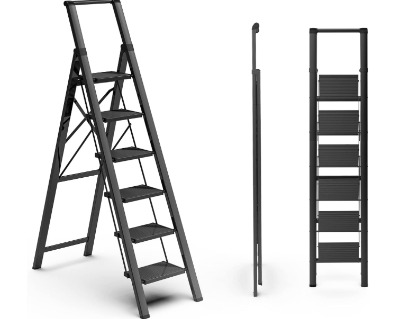
This model sits right in the middle of the market. It’s not trying to be premium or luxury. It’s trying to be reliable and practical.
What Makes This Ladder Special
This is a straightforward aluminum folding ladder designed for home use. It focuses on the basics: safety, functionality, and reasonable durability. No fancy features. No excessive weight. Just a ladder that does what a ladder should do.
The anti-slip texture on the steps is worth mentioning. Some ladders have smooth aluminum that can be slippery. This one has real texture, so your shoes grip the surface.
Key Features Broken Down
The aluminum frame provides lightness without the durability concerns of very cheap materials. The 300-pound capacity is standard and handles most household situations.
The wide pedal design gives you real foot space. Cramped steps are a safety issue. This one prioritizes your comfort and stability.
The anti-slip coating on steps is practical. It works, especially in garages or basements where your feet might be wet or dirty.
The handgrip mentioned in some listings is really just the handholds on the side. They’re there, they’re adequate, but nothing special.
Real-Life Usage
This ladder performs like a middle-of-the-road option should. It’s stable. It’s easy to use. You won’t feel like you’re on a professional-grade tool, but you also won’t feel like you’re on something unstable.
The lightweight nature means you can set it up quickly and move it around easily. The anti-slip steps give you genuine confidence, especially if you’re working in less-than-ideal conditions.
Honest Pros and Cons
Pros:
- Lightweight aluminum construction
- Anti-slip pedals provide real grip
- Wide pedals for comfort
- Affordable pricing
- Easy to fold and store
- 300-pound capacity adequate for most users
- Simple, straightforward design
Cons:
- Middle-of-the-road performance in all areas
- Not ideal for heavy-duty work
- Aluminum can feel less stable than fiberglass on uneven ground
- No premium features
- May need replacement sooner than heavy-duty models
Performance Discussion
This ladder does what it’s supposed to do without complications. If your needs are typical household tasks, it delivers. It’s stable enough, safe enough, and practical enough.
Don’t expect the solid, rooted feeling of the Louisville Ladder. Don’t expect fancy features. What you get is a functional tool that works.
Ease of Use
Very straightforward. Unfold, lock it in place, use it. That’s it. No complications. No learning curve.
Value for Money
Good value for homeowners on a budget. You’re getting a functional ladder that won’t break the bank.
4: WOA 6 Step Ladder with Non-Slip Wide Pedals and Safety Handrail
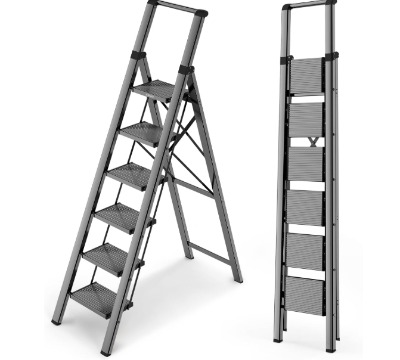
The WOA is another lightweight aluminum option that emphasizes safety features and practical design.
What Makes This Ladder Special
This model takes a lot of the practical elements we’ve seen in the GameGem and the previous model and combines them into a cohesive package. The focus is on creating a ladder that’s both safe and convenient for home use.
The non-slip wide pedals are a key feature. Unlike simple anti-slip coating, these pedals are actually designed with surface texture that works in various conditions.
The safety handrail gets real attention here. It’s not just there. It’s integrated into the design as a functional safety feature.
Key Features Broken Down
The lightweight foldable design means portability. You can move this ladder easily and store it in a closet or against a garage wall.
The non-slip wide pedals give you confidence with every step. The surface area lets your full foot contact the step, and the texture grips your shoe.
The 300-pound capacity is standard and sufficient.
The integrated handrail is positioned to be genuinely useful. When you’re working, you have something to stabilize yourself with beyond the main frame.
Real-Life Usage
This is a balanced approach to ladder design. It’s not overly heavy. It’s not stripped-down basic. It’s thoughtful about homeowner needs.
The non-slip pedals work as advertised. Your feet stay put. The handrail gives you confidence, especially when you’re tired or working in an awkward position.
The foldable design means you can stash this thing almost anywhere. A garage corner, a closet, a shed. It doesn’t dominate your storage space.
Honest Pros and Cons
Pros:
- Non-slip pedals are genuinely effective
- Safety handrail adds real value
- Lightweight and portable
- Easy to store when not in use
- Good for both indoor and outdoor use
- Simple, reliable construction
- Affordable pricing
Cons:
- Lightweight means less stability on rough surfaces
- Aluminum construction less durable in extreme conditions
- Handrail takes up some hand space
- Not suitable for heavy-duty professional use
- May need maintenance over time
Performance Discussion
This ladder performs reliably for homeowner use. The non-slip pedals make a real difference if you’re working in basements, garages, or other areas where floor conditions vary.
The focus on safety features without going overboard in weight or cost makes this a practical choice for many households.
Ease of Use
Easy to set up. Easy to move. Easy to store. No complications with this design.
Value for Money
Good value. You’re getting a well-thought-out ladder that addresses homeowner concerns without unnecessary expense.
5: Bryner 12Ft Multi-Purpose Aluminum Folding Extension Ladder
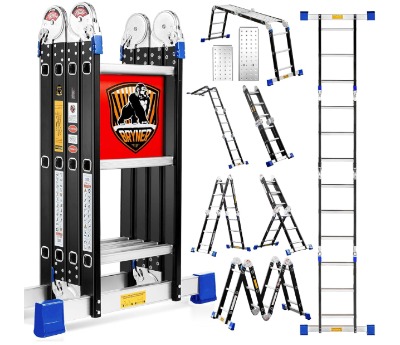
The Bryner is unique in this lineup because it’s not just a step ladder. It’s a 7-in-1 multi-purpose ladder that extends and adjusts.
What Makes This Ladder Special
This is for people who want versatility. The Bryner can be used as a step ladder, an extension ladder, and several other configurations. It’s the Swiss Army knife of ladders.
The 330-pound capacity is higher than the standard 300 pounds, which gives you a bit of extra safety margin.
The aluminum construction is lightweight but the design is meant to be adjustable and flexible.
Key Features Broken Down
The 7-in-1 design is the main selling point. Depending on how you configure it, you can use it as a single ladder, a double ladder, an extension ladder, and more. For someone with limited storage space but varying needs, this is appealing.
The 330-pound capacity is above standard, giving you more headroom for tools and materials.
The aluminum frame is lightweight enough to move around despite the added complexity of the extension mechanism.
Real-Life Usage
The multi-purpose nature of this ladder means you’re learning one tool that can handle multiple situations. Someone with a small garage appreciates this. One ladder instead of three.
The extension mechanism works, though it requires a bit more thought than a simple step ladder. You’re positioning different sections and ensuring everything locks properly.
The higher weight capacity is genuinely useful if you’re carrying tools or materials while working.
Honest Pros and Cons
Pros:
- Versatile 7-in-1 design
- Higher 330-pound weight capacity
- Lightweight aluminum construction
- Saves storage space
- Can handle various job types
- Good for people with multiple ladder needs
Cons:
- More complex setup than simple step ladders
- Extension mechanism adds potential failure points
- Learning curve to use all configurations properly
- More expensive than single-purpose ladders
- Versatility comes at cost of specialization
- Not as stable as single-purpose design in each configuration
Performance Discussion
This ladder performs well if you use its versatility. If you only ever use it as a step ladder, you’re paying extra for features you don’t need. If you genuinely need multiple ladder types, this is efficient.
The extension mechanism works reliably, but like all moving parts, it requires attention and care.
Ease of Use
More complex than single-purpose ladders. You need to understand the different configurations and set them up correctly. The first few times take some thought.
Value for Money
Value depends on your needs. If you need multiple ladder types, this saves money overall. If you only need a step ladder, it’s overpriced.
Comparison Insights: Side by Side
Let’s look at how these five ladders compare across key dimensions.
Stability and Build Quality
The Louisville Ladder FS1512 wins decisively here. Fiberglass construction and professional-grade design create unmatched stability. If stability is your top priority, that’s your choice.
The Bryner multi-purpose ladder is solid but the extension mechanism adds complexity that can affect stability in certain configurations.
The three mid-range options (GameGem, the generic 6-step, and WOA) are all respectable. The GameGem and WOA have slight edges due to their design focus on safety features.
Weight and Portability
The GameGem and WOA are the lightest and most portable. You can move them with ease. The generic 6-step is similar.
The Bryner is heavier due to its extension mechanism, making it less convenient for single-person transport.
The Louisville Ladder is by far the heaviest. Two people or serious muscle are recommended for moving it around.
Safety Features
The WOA and GameGem integrate safety features into their core design. Built-in handrails and specifically designed anti-slip surfaces show thoughtfulness about safety.
The Louisville Ladder’s safety comes from its solid, professional-grade construction.
The generic 6-step focuses on the basics.
The Bryner has adequate safety features but the complexity of its design means you need to ensure proper configuration.
Price Range
The Louisville Ladder is the most expensive, reflecting its professional-grade construction.
The Bryner is mid-to-upper range due to its versatility.
The GameGem, generic 6-step, and WOA are all affordable, with the WOA and GameGem slightly more expensive due to extra safety features.
Best For Different Scenarios
For maximum stability: Louisville Ladder FS1512
For portability and ease: GameGem or WOA
For versatility: Bryner multi-purpose
For budget-conscious shoppers: Generic 6-step ladder
For balanced approach: WOA
Complete Buying Guide: How to Choose Your Ladder
Buying a step ladder is more straightforward than buying some tools, but there are still factors to consider.
Assess Your Space
How high do you need to reach? Most residential ceilings are 8 to 10 feet. A 12-foot step ladder gives you comfortable reach with room to spare. You’re not stretching at your limits.
Where will you use it? Indoors, outdoors, in damp areas? This affects what material matters. Fiberglass is great outdoors because it doesn’t rust. Aluminum is lightweight but can be slippery in certain conditions.
Where will you store it? A small apartment needs a ladder that folds flat. A garage with plenty of space can handle something bulkier.
Consider Your Physical Situation
How much can you comfortably lift and move? If you’re not strong or you live alone, a heavy ladder creates problems. The Louisville Ladder might be fantastic, but if you can’t reasonably move it, you won’t use it.
How confident are you on ladders? If you’re nervous, built-in handrails and extra stability features matter. If you’re comfortable, basic design is fine.
Think About Your Usage Patterns
Do you use a ladder once a year or once a month? Light users can go budget-friendly. Regular users should invest in quality.
What kind of work do you do? Changing light bulbs is different from installing crown molding or cleaning gutters. Heavier tasks benefit from more stable, durable construction.
Weight Capacity Reality Check
The 300 and 330-pound ratings on these ladders account for your body weight plus tools and materials. You’re not just supporting yourself. Make sure whatever you buy has adequate capacity for you plus what you’ll carry.
Material Matters
Fiberglass: Heavy, durable, non-conductive, great for professional and serious use, lasts forever
Aluminum: Lightweight, portable, rust-resistant, adequate for home use, easier to store
Each material serves different purposes. Your choice depends on what matters most to you.
Safety Features Worth Considering
Anti-slip surfaces: Genuinely useful, especially in variable conditions
Built-in handrails: Adds security and confidence
Wide steps: More comfortable and safer than narrow ones
Spreader bars with locks: Prevents accidental collapse
Who Should Buy What
Different people have different needs. Here’s a straightforward breakdown.
For Professional and Serious DIY Users
Buy: Louisville Ladder FS1512
You’re using this regularly. You need professional-grade stability and durability. You’re willing to handle the weight because you understand the value. You’re not storing it in a tiny closet. You appreciate that this ladder will outlast several cheaper alternatives.
For Homeowners on a Budget
Buy: Generic 6-step aluminum ladder
You need a functional ladder for occasional household tasks. You don’t want to spend a lot. This does what you need without frills. It’s reliable and affordable.
For Homeowners Who Want to Do It Right
Buy: WOA 6-step ladder
You want safety features without professional-grade complexity. Built-in handrail, anti-slip pedals, lightweight for easy movement and storage. This hits a sweet spot between cost and thoughtful design.
For Convenience and Ease
Buy: GameGem 6-step ladder
You want something you can grab, set up, and use without effort. You want to be able to carry it easily and store it without thinking. This prioritizes your convenience, and the safety features are solid.
For Versatility and Multiple Needs
Buy: Bryner multi-purpose ladder
You have multiple ladder needs but limited storage. You want one tool that handles several situations. You don’t mind a bit more complexity for the versatility.
Common Mistakes to Avoid
People make predictable mistakes when buying and using step ladders. Here’s what to watch out for.
Buying Too Cheap
The absolute cheapest ladders often have poor designs that make them unsafe. You’re standing high in the air. Don’t cheap out on something this important.
A mid-range ladder is usually a better value than either the cheapest option or overpaying for features you don’t need.
Ignoring Weight and Portability
On paper, a heavy ladder seems stable. In reality, if you can’t move it easily, you won’t use it. You’ll find excuses to avoid the task.
Match the weight to your strength and circumstances.
Forgetting Storage
People buy ladders and then realize they have nowhere to put them. A ladder that folds flat takes up way less space than one that doesn’t.
Measure your storage space before you buy.
Overlooking Step Size
Narrow steps seem fine until you’re up there. Your feet cramp. You feel unstable. Wide, generous steps make a real difference in how the ladder feels to use.
Try to test ladder step sizes if possible.
Neglecting Maintenance
Aluminum needs occasional checks for corrosion. Fiberglass can develop cracks. Moving parts on extension ladders need attention.
A few minutes of maintenance keeps your ladder safe and functional.
Not Respecting Weight Limits
The 300 to 330-pound capacity isn’t about being heavyset. It’s your weight plus tools, paint cans, materials, whatever. Don’t treat it as a hard limit. Stay well under it.
Assuming All Ladders Are the Same
They’re not. Design details matter. A handrail that’s thoughtfully placed is genuinely useful. A step width that gives you comfort affects how long you can work. Anti-slip surfaces that actually grip matter.
Read reviews. Look at photos. Think about what you actually need.
Setting It Up Wrong
Even a great ladder is dangerous if you set it up incorrectly. Open it fully. Lock all spreader bars. Make sure it’s level. Don’t lean it at extreme angles.
The ladder is only as safe as you set it up.
Detailed Comparison Table
Here’s how these five options compare across important metrics:
| Feature | Louisville FS1512 | GameGem | Generic 6-Step | WOA | Bryner Multi |
|---|---|---|---|---|---|
| Material | Fiberglass | Aluminum | Aluminum | Aluminum | Aluminum |
| Weight Capacity | 300 lbs | 300 lbs | 300 lbs | 300 lbs | 330 lbs |
| Weight (approx) | 25+ lbs | 8-10 lbs | 9-11 lbs | 9-11 lbs | 15-18 lbs |
| Ease of Transport | Difficult | Easy | Easy | Easy | Moderate |
| Storage Space | Large | Compact | Compact | Compact | Compact |
| Price Range | Higher | Mid-range | Budget | Mid-range | Higher |
| Safety Features | Solid construction | Handrail | Basic | Handrail, anti-slip | Standard |
| Ideal Use | Professional, regular use | Home, convenience | Home, budget | Home, balanced | Multiple ladder needs |
| Stability | Excellent | Good | Good | Good | Good |
| Ease of Setup | Moderate | Easy | Easy | Easy | Moderate |
The Real Talk on Performance
Let’s be honest about what each ladder actually delivers in real-world use.
The Louisville Ladder delivers on its promise. It’s solid, stable, and reliable. You get what you pay for. If you use a ladder regularly, this investment makes sense.
The GameGem is honest in what it does. It’s lightweight and convenient. You trade some of that professional-grade stability for portability and ease. That’s a fair trade for most homeowners.
The generic 6-step is the practical middle ground. Nothing special, but nothing disappointing. It does its job without drama.
The WOA is thoughtful about safety without overcomplicating things. The non-slip pedals actually work. The handrail actually helps. It’s a ladder designed by someone thinking about user experience.
The Bryner multi-purpose is ambitious. The versatility is real, but complexity is the cost. It’s not as stable in any single configuration as a purpose-built ladder, but it handles multiple situations adequately.
Making Your Final Decision
Here’s how to think about your choice:
Start with your actual needs. How often will you use this? What will you be doing? Where will you use it? How much space can you devote to storage?
Be honest about your physical ability and comfort with heights. Don’t buy something too heavy to move or too unstable to feel safe on.
Consider the long view. Will you use this for years, or is this a one-time project? That affects whether premium quality makes sense.
Look at the reviews. Not just star ratings, but actual written reviews from people explaining what they use the ladder for and how it performs.
Match the ladder to your life. The best ladder isn’t the most expensive or the most reviewed. It’s the one that fits your actual situation and needs.
Final Verdict
All five of these ladders are legitimate choices. They’re not cheap junk. They’re not overpriced gimmicks. They’re real tools that real people use successfully.
If you want the best and cost isn’t a concern: Louisville Ladder FS1512. Professional-grade construction, fiberglass durability, unmatched stability. This is the ladder that lasts decades.
If you want solid value without compromise: WOA 6-step ladder. Thoughtful safety features, lightweight for easy handling, good pricing. This hits the sweet spot for most homeowners.
If you want the easiest, most convenient option: GameGem 6-step ladder. Setup in seconds, light enough to move with one hand, adequate for household tasks. Convenience is its strength.
If you’re budget-conscious: Generic 6-step aluminum ladder. Does what it’s supposed to do without unnecessary cost. Perfectly functional for occasional use.
If you need multiple ladder types: Bryner multi-purpose ladder. Saves space and money if you actually use the different configurations. More complex but more flexible.
Your choice depends on your specific situation. Think through what matters to you. Match it to the ladder that delivers those things. You’ll end up with a tool that works for your life, and that’s what matters.
A good step ladder makes home maintenance easier and safer. Take the time to choose the right one, and you’ll be happy with that decision for years to come.

Hi, I’m Mary, the founder of Homygear.com. I’m passionate about creating a comfortable, smart, and beautiful home. I share practical insights and real-world experience on home gear that makes everyday life easier. Behind the scenes, my dedicated research team studies products in depth, and our writers craft honest reviews using trusted, authentic sources—so you can choose home gear with confidence.