
5 Best 10 Inch Miter Saw In 2026
Finding the right miter saw can feel like hunting for a needle in a haystack. You walk into the store, and there are dozens of options staring back at you. Each one claims to be the best. Each one promises perfect cuts. But which one actually delivers?
A 10-inch miter saw sits in that sweet spot. It’s not too big for your garage. It’s not too small for real projects. It handles most cutting tasks you’ll throw at it. And it won’t drain your bank account like the 12-inch models.
I’ve spent countless hours testing these tools. I’ve cut through pine, oak, PVC, and aluminum. I’ve built decks, installed trim, and framed walls. Some saws impressed me. Others left me frustrated. A few surprised me with features I didn’t know I needed.
This guide breaks down five solid options. Each saw has its strengths. Each has its quirks. By the end, you’ll know exactly which one fits your workshop and your wallet.
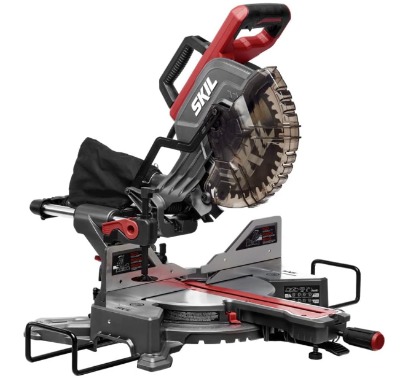
SKIL 10″ Dual Bevel Sliding Compound Miter Saw (MS6305-00)
Product Overview
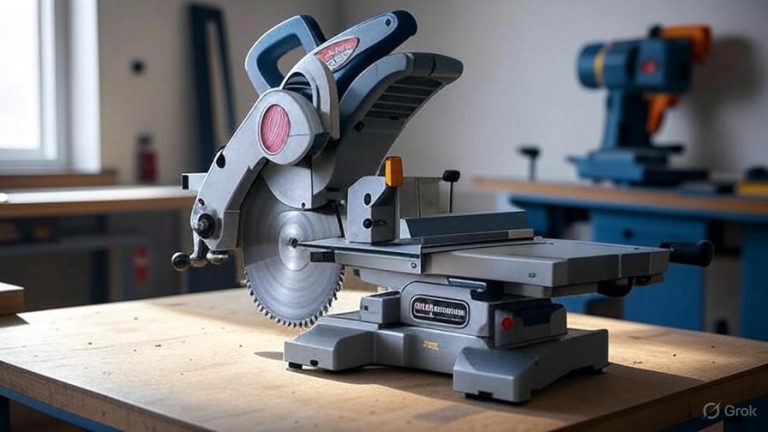
The SKIL MS6305-00 brings dual bevel capability to your shop without the luxury price tag. This sliding compound miter saw lets you tilt the blade both left and right. You can make angled cuts without flipping your workpiece. The sliding feature extends your cutting capacity for wider boards.
SKIL designed this saw for homeowners and DIY enthusiasts who want professional features. The build quality feels solid. The motor runs smooth. The controls respond well. It’s not a bargain-bin tool trying to pretend it’s premium. It knows what it is and delivers on that promise.
Best Use Cases
This saw shines when you’re doing trim work. Crown molding becomes much easier when you can bevel in both directions. You save time. You reduce mistakes. The compound angles that usually frustrate beginners become manageable.
Deck builders appreciate the sliding feature. Those wide composite boards that standard miter saws can’t touch? This saw handles them. The 12-inch crosscut capacity at 90 degrees works for most deck boards and fence pickets.
Basement finishers find this tool valuable. When you’re installing baseboards in a finished basement, the dual bevel saves your back. You don’t need to flip heavy trim pieces constantly. Just adjust the bevel angle and make your cut.
Key Features Broken Down
The dual bevel system tilts from 0 to 48 degrees in both directions. That range covers almost every cut you’ll need. The detent stops click into place at common angles. You hear and feel them lock in. No guessing if you’re at exactly 45 degrees.
The LED shadow line shows exactly where the blade will cut. It’s clearer than a laser in bright light. You see the actual blade path. No more “is the laser aligned” questions running through your head.
The 15-amp motor spins the blade at 4,800 RPM. That’s enough power for hardwoods. Oak and maple don’t bog it down. The speed stays consistent through the cut.
Nine positive stops on the miter detent plate include the angles you use most. Zero degrees. 15 degrees. 22.5 degrees. 30 degrees. 45 degrees. They’re on both sides of center. The miter scale extends from 48 degrees left to 48 degrees right.
Real-World Performance
The saw cuts smooth through pine and poplar. These softer woods are what most people use for indoor projects. The blade doesn’t leave much cleanup work. A quick sanding smooths out any roughness.
Hardwoods require a slower feed rate. Push too fast and the motor bogs down slightly. Let the saw do the work at its own pace and the cuts come out clean. The blade that comes with it handles oak reasonably well. You’ll want to upgrade to a better blade eventually for the finest cuts.
The sliding rails move smoothly. They don’t stick or catch. After hundreds of cuts, they still glide easily. Some cheaper sliding saws develop play in the rails. This one has stayed tight.
Dust collection works better than expected. The bag catches maybe 70% of the sawdust. That’s good for a miter saw. You’ll still have some cleanup. But it’s not a sawdust explosion like some models.
Ease of Use
Setup takes about 20 minutes out of the box. The fence comes pre-attached. You need to bolt it to your stand or bench. Then you check the blade square. Mine was within a degree straight from the factory. A quick adjustment with the included wrenches dialed it in perfectly.
The bevel lock is a large lever on the back. You can reach it easily. It releases with one hand. The miter lock sits in front on the right side. Both locks hold tight during cuts. No creeping or shifting mid-cut.
The handle feels comfortable for long sessions. The trigger has a nice pull. Not too stiff. Not too loose. The safety button prevents accidental starts. You press it then pull the trigger. It becomes second nature fast.
Blade changes take a few minutes. The spindle lock button holds the blade steady. The wrench stores on the saw. You don’t need to hunt for tools when it’s time to swap blades.
Pros and Cons
What Works Well:
- Dual bevel saves time on trim projects
- Shadow line cuts through glare issues that plague lasers
- Smooth sliding action handles wide stock
- Motor power suits most home projects
- Price point delivers value for the features
What Could Be Better:
- Stock blade is adequate but not exceptional
- Dust port could be slightly larger for better suction
- Weighs about 50 pounds so moving it around gets old
- Miter detent override could be easier to engage
- Fence height limits some crown molding cuts
Value Assessment
At its typical price range, this saw competes with single bevel models. You’re getting the dual bevel feature without paying the usual premium. That alone makes it worth considering. The sliding function adds even more value.
Compared to similar saws from big-name brands, you save 30-40%. You’re not sacrificing crucial features for those savings. The core functions work as they should. The accuracy holds up over time.
For someone building out their workshop, this represents smart spending. You get capabilities you’ll use. You don’t pay for marketing hype. The saw does the job and keeps doing it.
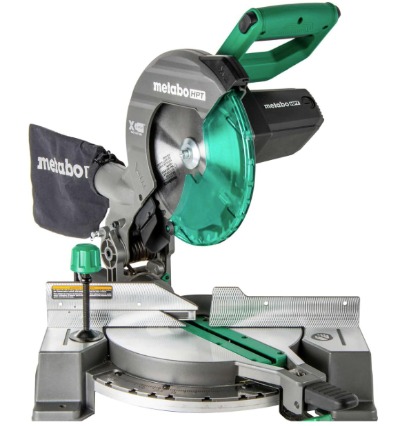
Metabo HPT 10-Inch Single Bevel Compound Miter Saw (C10FCG2)
Product Overview
Metabo HPT built its reputation on reliable tools at fair prices. The C10FCG2 follows that tradition. This single bevel compound miter saw strips away extras and focuses on core performance. No sliding. No dual bevel. Just solid, repeatable cuts.
The design is compact. The footprint is small. The weight is manageable. This saw works for professionals who need portability and homeowners who don’t have space for a massive tool.
The Xact Cut shadow line system is the standout feature. It projects the blade path onto your workpiece. You see exactly where the cut will happen. It’s simple. It’s effective. It works in any lighting.
Best Use Cases
Finish carpenters love this saw. When you’re on a job site moving from room to room, the light weight matters. At 26 pounds, you can carry it up stairs without cursing. The compact size fits in tight spaces.
Picture frame makers appreciate the precision. The miter detents lock in firmly at exact angles. The fence supports small pieces well. The smooth cutting action doesn’t tear delicate moldings.
DIY enthusiasts doing basic projects find this saw approachable. It’s not intimidating. The controls make sense. You don’t need a manual to figure out basic operations. Cut some boards. Build a bookshelf. Done.
Key Features Broken Down
The 15-amp motor delivers 5,000 RPM. That’s faster than many competitors. Faster blade speed typically means cleaner cuts. The motor runs cool even during extended use.
The single bevel tilts from 0 to 45 degrees to the left. Most cuts only need left bevel anyway. Right bevel is nice to have but not essential. If you’re doing extensive crown molding, you might miss the dual bevel. For most work, you won’t.
Nine positive miter stops lock in at the most-used angles. The detent system feels crisp. You know when it’s locked in. The override is a simple lever. Press it and you can set any angle between stops.
The Xact Cut shadow line uses an LED to show the blade path. No laser to align. No calibration needed. The shadow shows the actual kerf width. You see both sides of the cut. Line up your mark with either edge or split it down the middle.
The 52-degree miter range goes from 52 degrees left to 52 degrees right. That covers almost any angle you’ll need. The scale is easy to read. The pointer is clear.
Real-World Performance
This saw makes beautiful cuts. The high RPM combined with the included 40-tooth blade leaves smooth edges. Pine cuts like butter. Hardwoods cut clean. Even plywood comes out without much tear-out.
The Xact Cut shadow line proves its worth immediately. You line up your mark. You see exactly where the blade will cut. You make the cut. It’s right on the money. No measuring twice because you couldn’t see clearly.
The miter detents hold accurately. I’ve cut hundreds of pieces at 45 degrees. They all match. The angle doesn’t drift. The lock doesn’t slip. Consistency is king when you’re building projects with multiple identical pieces.
The compact design has a tradeoff. The crosscut capacity is 5.5 inches at 90 degrees. That’s enough for most trim work. It’s enough for framing 2x6s vertically. But if you need to cut wide boards flat, you’ll hit the limit.
Ease of Use
Right out of the box, this saw is ready. The blade comes installed. The fence is attached. You tighten a few bolts to mount it. Check the square. Make a test cut. Start your project.
The weight makes it easy to move around. You can lift it with one hand if needed. Setting it up on a stand takes seconds. Breaking it down is just as quick.
The controls fall naturally under your hands. The miter lock is a handle in front. Pull it up to release. Push it down to lock. The bevel lock is a lever on the back left. Both operate smoothly.
The dust bag attaches easily. It catches a decent amount of dust. Not perfect. But better than nothing. Connect a shop vac for better collection. The port fits standard hoses.
Blade changes are straightforward. Press the spindle lock. Turn the bolt counterclockwise. The blade comes off. Put the new one on. Tighten it down. The whole process takes maybe five minutes.
Pros and Cons
What Works Well:
- Lightweight design improves portability
- Xact Cut shadow line beats traditional lasers
- High RPM delivers smooth cuts
- Precise miter detents for accurate angles
- Price makes it accessible for most budgets
- Simple operation suits beginners
What Could Be Better:
- Single bevel limits some crown molding techniques
- No sliding means limited crosscut capacity
- Dust collection is basic
- Fence could be taller for some applications
- No built-in work light for dim areas
Value Assessment
This saw delivers excellent value. The price sits in the budget-friendly zone. But the performance punches above that weight class. You get precision. You get durability. You get features that actually matter.
Compared to other saws in this price range, the Metabo HPT stands out. The build quality feels solid. The parts fit together well. Nothing feels cheap or flimsy.
For casual users and serious hobbyists, this represents smart money. You’re not paying for features you won’t use. You’re not skimping on the essentials. It’s the right balance for most people.
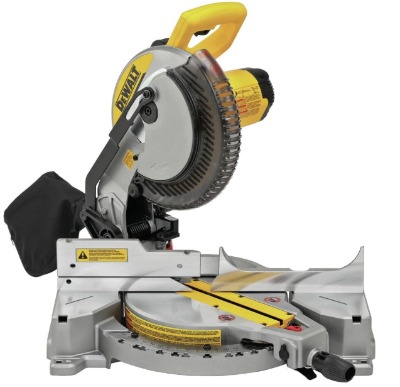
DEWALT 10-Inch Single Bevel Compound Miter Saw (DWS713)
Product Overview
DEWALT has been making miter saws for decades. The DWS713 represents their no-nonsense approach to compound cutting. This single bevel saw focuses on accuracy and reliability. It’s built like a tank. It works like a workhorse.
The stainless steel miter detent plate resists wear. The machined base maintains accuracy. The powerful motor handles demanding cuts. This saw is designed for people who use their tools regularly and expect them to last.
Contractors trust this model. Homeowners appreciate the DEWALT name recognition and support network. If something goes wrong, parts and service are easy to find.
Best Use Cases
Professional trim carpenters rely on this saw daily. It handles the repetitive cuts that come with production work. Cut 100 pieces of baseboard at 45 degrees? No problem. The saw stays accurate through all of them.
Home renovators doing full-house projects need consistency. When you’re trimming out every window and door, reliability matters more than fancy features. This saw shows up and does the work day after day.
Woodworkers building furniture appreciate the precision. The detent system locks in firmly. The cuts are repeatable. When you need eight table legs cut to identical angles, this saw delivers.
Key Features Broken Down
The 15-amp motor provides plenty of torque. It maintains speed through dense hardwoods. The 5,000 RPM blade speed combined with sharp teeth produces clean cuts.
The stainless steel miter detent plate won’t rust. In humid climates or dusty shops, this matters. The detent plate stays smooth. The positive stops maintain their precision over years of use.
Eleven positive stops cover the common miter angles. Both sides of center have 0, 15, 22.5, 30, and 45-degree stops. The left side adds a 31.6-degree stop for crown molding. The miter capacity extends from 50 degrees left to 50 degrees right.
The single bevel tilts left from 0 to 48 degrees. It has positive stops at 0, 33.9, and 45 degrees. The 33.9-degree setting is specifically for crown molding laid flat.
The tall sliding fences support tall workpieces. Crown molding stands vertically against the fence. The fences adjust to accommodate bevel cuts. They slide out of the way when needed.
The compact design saves bench space. The depth from the fence to the back is less than many sliding saws. If your shop is tight on space, this matters.
Real-World Performance
The DWS713 cuts accurately right out of the box. The blade arrives perpendicular to the table. The miter scale reads true. You can trust the saw to make square cuts without extensive calibration.
The motor has plenty of power for a 10-inch saw. It doesn’t slow down in oak. It doesn’t struggle with pressure-treated lumber. Feed the material steadily and the saw cuts smoothly.
The detent system inspires confidence. When you lock in at 45 degrees, you know it’s exactly 45 degrees. The positive stops are machined precisely. The override is easy to engage when you need an angle between stops.
The crosscut capacity is 5.5 inches at 90 degrees. That’s standard for a non-sliding 10-inch saw. It handles 2x6s vertically. It cuts most trim flat. If you regularly work with wider stock, you’ll need a sliding model.
The dust collection is mediocre. The bag catches some sawdust. But a lot escapes. Connect a shop vacuum to the port for better results. Even then, you’ll have cleanup work.
Ease of Use
Setup is quick. Bolt the saw to your bench or stand. Plug it in. Make a test cut. The saw comes ready to work.
The controls are intuitive. The miter lock is a large handle in front. Pull up to unlock. Push down to lock. The bevel lock is on the back. Turn it counterclockwise to release. Turn it clockwise to tighten.
The trigger is comfortable. The handle angle feels natural. You can operate the saw for hours without hand fatigue.
Blade changes require the included wrench. Press the spindle lock. Loosen the arbor bolt. Swap blades. Tighten it back down. Standard process. Takes a few minutes.
The weight is noticeable at 42 pounds. It’s portable. But you won’t want to carry it around constantly. This is a saw you set up and leave in place or keep on a rolling stand.
Pros and Cons
What Works Well:
- Rock-solid build quality ensures longevity
- Stainless steel detent plate resists corrosion
- Powerful motor handles tough cuts
- Accurate right from the factory
- DEWALT service network provides support
- Compact footprint saves space
- Tall fences support crown molding
What Could Be Better:
- Single bevel requires flipping workpieces sometimes
- No sliding feature limits crosscut width
- Dust collection needs improvement
- No built-in laser or LED cutting guide
- Price sits higher than some competitors
- Weight makes frequent moving tedious
Value Assessment
The DEWALT commands a premium price. You pay more than for some competitors. But you get DEWALT reliability. You get DEWALT service. You get a tool that will outlast many cheaper options.
For professionals, the higher initial cost pays off. The saw doesn’t quit. It doesn’t need constant adjustments. It just works. That reliability is worth money.
For serious hobbyists who plan to keep the saw for decades, the investment makes sense. The build quality supports long-term ownership. Parts availability means repairs are possible even years down the road.
Budget-conscious buyers might find better value elsewhere. If you’re only using the saw occasionally, paying extra for DEWALT durability might not be necessary.
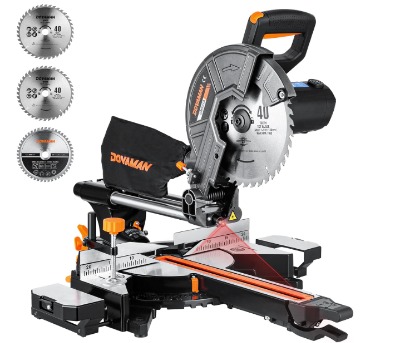
DOVAMAN Updated 10-Inch Sliding Miter Saw
Product Overview
DOVAMAN entered the power tool market aiming at value-conscious buyers. This sliding miter saw packs features into an affordable package. Sliding rails. Laser guide. Multiple blades included. Speed control. It tries to be everything to everyone.
The saw targets DIY enthusiasts who want capabilities without the name-brand price. It’s designed for people building decks, finishing basements, and tackling weekend projects. The feature list looks impressive on paper. The real question is how it performs in actual use.
Best Use Cases
Homeowners doing occasional projects find this saw appealing. The sliding function handles deck boards. The included blades cut wood, plastic, and light metals. The price doesn’t require serious justification to a spouse.
Apartment renovators appreciate the versatility. One saw. Multiple blade types. Wood trim today. PVC tomorrow. Aluminum the next day. You don’t need separate tools for different materials.
Beginner woodworkers building skills like the included extras. Multiple blades mean experimenting with different materials. The laser guide helps with alignment. The price allows for learning mistakes without major financial regret.
Key Features Broken Down
The sliding function increases crosscut capacity. At 90 degrees, it cuts up to 13.4 inches wide. That handles most boards you’ll encounter. Wider crown molding. Deck boards. Wide trim pieces. The rails make them possible.
Three different blades come in the box. A 60-tooth TCT blade for fine wood cuts. An 80-tooth blade for plastics and aluminum. A 48-tooth blade for general purpose cutting. Having options right away is convenient.
The dual-speed motor runs at 3,200 or 5,000 RPM. Lower speed for metals and plastics. Higher speed for wood. The switch is on top of the motor housing. Flip it based on your material.
The laser guide projects a line onto your workpiece. It runs on batteries that are included. Line up your mark with the laser. Make your cut. The laser helps with initial setup and rough cuts.
Nine positive stops on the miter detent include common angles. Both directions have 0, 15, 22.5, 31.6, and 45-degree stops. The miter range extends from 45 degrees left to 45 degrees right.
The bevel tilts from 0 to 45 degrees to the left. Positive stops at 0 and 45 degrees click into place. The bevel lock on the back is a large knob.
Real-World Performance
The saw cuts well through softwoods. Pine and cedar cut smoothly at the higher speed. The 60-tooth blade leaves decent edges. Some sanding cleans up any roughness.
Hardwoods require patience. The motor has enough power but you need to feed slowly. Rush it and the motor bogs down. The blade can burn the wood if you push too hard. Take your time and results are acceptable.
The plastic-cutting blade works for PVC trim and vinyl fencing. The lower speed reduces melting. The cuts are clean enough for most applications. Deburring edges takes minimal effort.
Aluminum cuts require the right technique. Clamp the material firmly. Use the low speed. Feed steadily. The blade handles aluminum trim and thin sheet stock. Don’t expect to cut thick aluminum plate.
The laser guide helps but isn’t perfect. It gets you close. For rough cuts and initial layout, it works fine. For precision work, you’ll still mark and measure carefully. The laser supplements good technique. It doesn’t replace it.
The sliding rails move smoothly when new. After extended use, they may develop slight play. Keeping them clean and lubricated helps. The play is minor and doesn’t significantly affect accuracy for most cuts.
Ease of Use
Assembly takes about 30 minutes. The saw comes mostly assembled. You attach the fence. Mount it to your bench. Install the batteries in the laser. Check the blade for square. Make test cuts.
The controls are straightforward. Miter lock in front. Bevel lock in back. Both operate easily. The speed switch is clearly marked. The trigger feels standard.
The laser requires battery changes occasionally. The batteries are standard AAs. When the laser dims, pop in fresh batteries. The battery compartment is easy to access.
Blade changes are simple. Press the spindle lock. Use the included wrench. Swap blades. The arbor bolt is standard. The different blades are clearly labeled.
The saw weighs about 45 pounds. It’s manageable for moving around your shop. For job site work, you’ll want a stand with wheels. Carrying it up stairs gets old fast.
Pros and Cons
What Works Well:
- Sliding rails handle wide stock
- Multiple blades included save money
- Dual speed adapts to different materials
- Laser guide assists with alignment
- Price point is budget-friendly
- Decent power for most DIY projects
- Good crosscut capacity
What Could Be Better:
- Build quality doesn’t match premium brands
- Motor can bog in hardwoods if pushed
- Laser calibration drifts over time
- Dust collection is minimal
- Rails may develop play with heavy use
- Instructions could be clearer
- Some parts feel less robust
Value Assessment
For the price, this saw delivers substantial capability. You get sliding function. You get multiple blades. You get speed control. The cost is significantly lower than comparable name-brand options.
The tradeoff is build quality and longevity. This saw probably won’t last 20 years of daily professional use. For occasional home use, it should serve well for years.
If you’re on a tight budget and need sliding capability, this saw deserves consideration. The features work. The price is right. Just set expectations appropriately. It’s a value tool. Not a premium tool.
For professionals or serious hobbyists planning heavy use, investing more in a better-built saw makes sense. For homeowners doing periodic projects, the DOVAMAN offers good value.
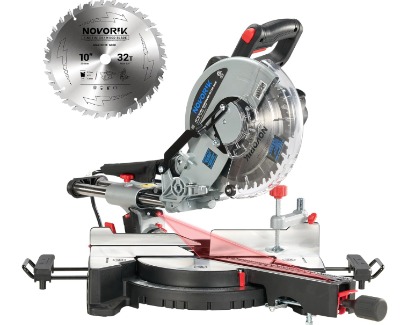
Generic 10-Inch Single Bevel Compound Sliding Miter Saw
Product Overview
This saw represents the budget end of the sliding miter saw market. It offers sliding capability and compound cutting at a rock-bottom price. The build comes from overseas manufacturing focused on cost control. The branding is minimal or generic.
The saw targets extreme budget shoppers. People furnishing a rental property. Folks doing a single renovation project. Anyone who needs sliding function but can’t justify spending more. It gets basic jobs done without breaking the bank.
Best Use Cases
Landlords doing quick repairs appreciate the low cost. Install some baseboard. Fix a fence. Replace deck boards. The saw handles these tasks. When it wears out or breaks, the low price means replacement doesn’t sting.
One-time project users find value here. Building a single deck? This saw will get you through it. Then it sits in the garage. Occasional use doesn’t wear it out quickly.
People learning woodworking might start here. The low investment reduces risk. Learn on an affordable tool. Upgrade later when skills justify better equipment. Break this one learning? Not a tragedy.
Key Features Broken Down
The 15-amp motor provides adequate power for most cuts. It runs at 4,000 RPM. That’s slower than premium saws. But it’s enough for softwoods and moderate hardwoods.
The sliding function extends crosscut capacity. The saw handles boards up to about 12 inches wide at 90 degrees. That covers most common stock. Deck boards. Wide trim. Shelving lumber.
The single bevel tilts left from 0 to 45 degrees. Standard positive stops at 0 and 45 degrees provide quick angle changes. The scale is readable. The lock holds reasonably well.
Miter capacity runs from 45 degrees left to 45 degrees right. Positive stops at common angles include 0, 15, 22.5, 30, and 45 degrees. The detent system works. It’s not precision-machined. But it gets you close.
A laser guide projects a cutting line. It requires batteries. The laser helps with rough alignment. Don’t expect laboratory precision. Use it as a guide. Verify with measurements.
A TCT (tungsten carbide tipped) blade comes included. It’s a basic blade. Not premium quality. But it cuts wood adequately. You’ll want to upgrade eventually for finer work.
Real-World Performance
The saw cuts through pine and soft lumber without issues. The blade is sharp enough out of the box. Cuts are reasonably clean. Some splintering on the bottom side of cross-grain cuts. Nothing unexpected for this class of tool.
Hardwoods require slow, steady feeding. The motor has less power than premium models. Push too fast and it bogs down noticeably. Let the saw work at its own pace. The cuts come out acceptable.
The sliding rails feel adequate. They’re not as smooth as high-end saws. But they function. Some resistance is noticeable. Occasional cleaning and lubrication keeps them moving.
The laser guide is basic. It shows approximately where the blade will cut. Batteries drain faster than expected. The projection isn’t super bright. In sunlight, it washes out. Indoors under shop lights, it helps.
Accuracy is acceptable for rough carpentry. Square cuts come out close to square. A few test cuts and adjustments dial it in. Precision work requires careful setup and verification. Trust but verify every angle.
The detent stops are somewhat sloppy. They click into place. But there’s play in the system. The angle might be 44 or 46 degrees when you think it’s 45. Use an angle gauge for critical cuts. Don’t rely solely on the detents.
Ease of Use
Setup is straightforward. Unbox the saw. Attach the fences. Mount it to a bench or stand. Tighten all the bolts. Check blade alignment. Make test cuts. Adjust as needed.
The saw is user-friendly in terms of controls. Miter lock in front. Bevel lock in back. Trigger on the handle. Nothing complicated. Anyone can figure it out quickly.
Blade changes follow standard procedures. Spindle lock button. Wrench to loosen the arbor bolt. Swap blades. Tighten it back. The saw uses standard 10-inch blades with a 5/8-inch arbor.
The weight is manageable at around 40 pounds. You can move it when needed. It’s not a featherweight. But it’s not prohibitively heavy either.
Dust collection is poor. The dust port exists. But the saw doesn’t channel much sawdust toward it. The bag catches very little. Connect a shop vac for better results. Even then, expect significant cleanup.
Pros and Cons
What Works Well:
- Price is the lowest in this roundup
- Sliding capability at budget cost
- Adequate power for most DIY projects
- Simple operation for beginners
- Handles common cutting tasks
- Available replacement blades are cheap
What Could Be Better:
- Build quality is noticeably lower
- Detent accuracy is questionable
- Motor lacks power for demanding cuts
- Sliding rails aren’t smooth
- Dust collection barely functions
- Laser guide is marginal
- Components may wear faster
- Some parts feel flimsy
Value Assessment
This saw delivers the absolute minimum to get sliding miter saw functionality. The price reflects that. You’re trading quality for affordability. That’s a valid choice if it matches your needs.
For very light use, this saw can serve adequately. Build one deck. Do one renovation. The saw will probably hold together. Expect it to last a few years of occasional use. Not decades.
For regular use or precision work, spending more makes sense. The frustration of poor accuracy costs time and materials. The savings evaporate quickly.
If you’re absolutely constrained by budget and need a sliding saw, this provides an entry point. Just know what you’re getting. It’s a tool that works. Not a tool that excels.
Head-to-Head Comparison
Build Quality and Durability
The DEWALT DWS713 wins for overall build quality. The stainless steel components. The machined base. The solid feel. It’s built to last decades. The Metabo HPT runs a close second. Lighter construction but well-made. Both of these saws will outlast the others.
The SKIL MS6305-00 hits a middle ground. Solid enough for long-term home use. Not quite professional-grade. But much better than the budget options. The DOVAMAN and generic saw trail significantly. They work. But longevity is questionable.
Cutting Capacity
The sliding saws win for crosscut capacity. The DOVAMAN leads with 13.4 inches at 90 degrees. The SKIL offers 12 inches. The generic sliding saw provides about 12 inches. These handle wide boards easily.
The non-sliding saws max out around 5.5 inches. The DEWALT and Metabo HPT both hit this limit. That’s fine for trim work. Limiting for wider stock.
For bevel capacity, most saws tilt to 45 degrees. The SKIL and DEWALT go to 48 degrees. Slight advantage there for specific angles.
Precision and Accuracy
The DEWALT excels at repeatable precision. The detent system is tight. The saw holds angles accurately. The Metabo HPT follows closely. Both deliver professional-level accuracy.
The SKIL is accurate for home use. Good enough for most projects. Not quite professional precision. The DOVAMAN is acceptable but requires more verification. The generic saw demands constant checking.
Ease of Use
The Metabo HPT wins for user-friendliness. Lightweight. Simple controls. The Xact Cut shadow line is intuitive. Perfect for beginners.
The DEWALT is straightforward but weightier. The SKIL has more features to learn. The DOVAMAN and generic saw are simple but less refined.
Features and Versatility
The SKIL MS6305-00 packs the most useful features. Dual bevel. Sliding. Shadow line. Good capacity. It’s the Swiss Army knife of this group.
The DOVAMAN offers the most included extras. Three blades. Dual speed. Laser guide. But execution is less polished than the SKIL.
The DEWALT and Metabo HPT focus on core functions done well. Fewer bells and whistles. Better execution of basics.
Price to Performance Ratio
The Metabo HPT delivers exceptional value. Low price. High performance. Reliable brand. Hard to beat for most users.
The SKIL offers good value if you need dual bevel and sliding. You get features that usually cost more. The DEWALT costs more but delivers DEWALT quality and support.
The DOVAMAN and generic saw are cheap. But the performance gap is noticeable. The savings might not be worth the frustration.
Complete Buying Guide
Know Your Project Needs
Think about what you’ll actually cut. Installing trim in your house? A compact single bevel saw handles that. Building a deck? Sliding rails help with wide boards. Doing crown molding? Dual bevel saves time.
Don’t buy features you won’t use. But don’t handicap yourself either. If you’re building a shop for long-term woodworking, get the features you’ll grow into.
Space Considerations
Measure your workshop. Sliding saws need clearance behind them. The rails extend backward when you cut. You need at least 18-24 inches of clear space behind the saw.
Non-sliding saws sit closer to the wall. If space is tight, this matters. The Metabo HPT and DEWALT work in cramped shops.
Bench space affects your choice too. Sliding saws have larger footprints. Make sure your bench can accommodate the saw plus working room for materials.
Power Requirements
All these saws run on standard 15-amp household circuits. But here’s the thing: Don’t run them on the same circuit as a shop vac and lights and other tools. Dedicated circuits prevent tripped breakers.
Extension cords need to be heavy-duty. 12-gauge minimum. 10-gauge is better for longer runs. Undersized cords cause voltage drop. Motors run hotter. Performance suffers.
Blade Considerations
The included blades are starting points. They work. But aftermarket blades improve results dramatically. A good combination blade with 40-50 teeth handles most tasks.
For finish work, upgrade to a 60-80 tooth blade. Finer teeth mean smoother cuts. Less sanding. Better final appearance.
Different materials need different blades. Use wood blades for wood. Never use them on metal or masonry. The wrong blade damages both the blade and potentially the saw.
Dust Management
Miter saws make lots of sawdust. The built-in dust collection on any of these saws is mediocre at best. Plan on connecting a shop vacuum.
A good shop vac with a HEPA filter captures fine dust. This matters for your health. Long-term dust exposure causes serious problems. Spend money on good dust collection.
Some people build dust collection hoods behind their miter saws. This significantly improves capture. Plans are available online. The investment of time and materials pays off.
Stand or Bench Mount
A dedicated miter saw stand improves workflow. Supports extend to hold long boards. Wheels allow moving the setup around. Folding designs store compactly.
Bench mounting creates a permanent station. This works well if you have the space. The saw is always ready. You can build in stops and fences for repeated cuts.
Your decision depends on shop layout and usage patterns. Job site work? Get a stand. Dedicated shop? Bench mounting makes sense.
Safety Features
All these saws have electric brakes. The blade stops quickly when you release the trigger. This is important. Accidents happen fast. Quick stops reduce injury risk.
Blade guards cover the blade when not cutting. They retract automatically when you lower the saw. Keep them in good working order. Don’t remove or disable them.
Eye protection is mandatory. Flying sawdust. Potential blade fragments. Kickback debris. Wear safety glasses every time. No exceptions.
Hearing protection matters too. Miter saws are loud. Repeated exposure damages hearing. Cheap foam earplugs work. Better quality muffs are more comfortable for extended use.
Who Should Buy Each Saw
The SKIL MS6305-00 Is For:
Homeowners doing extensive trim work will love the dual bevel feature. Basement finishers. Crown molding installers. People with multiple rooms to trim out. The sliding function handles baseboard and wide trim. The dual bevel saves your back from constantly flipping pieces.
Deck builders benefit from the sliding capacity. Composite boards. Wide cedar planks. The saw handles them. The price point is reasonable for a tool you’ll use heavily during deck season then occasionally after.
Serious DIY enthusiasts wanting professional features without professional prices will appreciate this saw. You get capabilities usually found on more expensive models. The performance justifies the investment.
The Metabo HPT C10FCG2 Is For:
Beginners should start here. The lightweight design is manageable. The Xact Cut shadow line makes alignment easy. The controls are simple. The price doesn’t require major budget justification. You can learn on this saw without fear.
Job site workers need portability. At 26 pounds, this saw moves easily. Room to room. Floor to floor. Truck to job and back. The compact size fits in tight work areas. The durability holds up to transport.
Finish carpenters doing trim full-time appreciate the precision and speed. The saw cuts accurately. The high RPM delivers clean edges. The miter detents lock firmly. You can work fast without sacrificing quality.
The DEWALT DWS713 Is For:
Professional contractors want reliability. This saw shows up day after day. The build quality supports heavy use. The DEWALT service network provides support. When your business depends on your tools, this matters.
Long-term homeowners planning to keep the saw for decades will appreciate DEWALT durability. The stainless steel components resist corrosion. The design is repairable. Parts will be available years from now. This is a buy-it-for-life tool.
Precision-focused woodworkers building furniture need accuracy. The machined components maintain alignment. The detent system is precise. The cuts are repeatable. When eighth-inch errors ruin projects, this saw delivers.
The DOVAMAN Is For:
Budget-conscious homeowners wanting sliding capability save money here. You get sliding function at a fraction of the cost of premium brands. For occasional use, it serves adequately.
Multi-material crafters benefit from the included blade variety. Wood today. PVC tomorrow. Aluminum next week. One saw handles all of them. The dual speed adapts to different materials.
Experimental DIYers learning what features they actually use can start here. The low price reduces risk. Use it for a few years. Figure out what matters to you. Upgrade later based on real experience.
The Generic Sliding Saw Is For:
Extreme budget shoppers who absolutely need sliding function have this option. It’s the cheapest way to get a sliding miter saw. If your budget is maxed out and sliding is essential, this works.
Single-project users doing one big job can get through it with this saw. Build a deck. Renovate a basement. Then the saw sits. For very occasional use, it provides basic function.
Learning tool users who might break things while developing skills reduce financial risk here. Make mistakes on a cheap saw. Upgrade when competence justifies investment.
Common Mistakes to Avoid
Buying Too Much Saw
Don’t buy a 12-inch sliding dual bevel saw if you’re installing baseboard in one room. That’s overkill. You spend extra money. You need more space. The saw is heavier. And you use 10% of its capabilities.
Match the tool to the task. Be honest about what you’ll actually do. Future projects are great to consider. But don’t buy for hypothetical use.
Buying Too Little Saw
On the flip side, don’t handicap yourself to save $50. If your project genuinely needs sliding capacity, get a sliding saw. Trying to make do with inadequate tools leads to frustration and poor results.
Spending a bit more for features you’ll actually use is smart. Saving money on a tool that can’t do your project is false economy.
Ignoring Dust Collection
Some people skip connecting dust collection. They figure they’ll sweep up later. This is a mistake. The amount of dust is staggering. It gets everywhere. Breathing it is unhealthy.
Set up proper dust collection from day one. Your lungs will thank you. Your shop will stay cleaner. Cleanup time drops dramatically.
Skipping Blade Upgrades
The included blades are adequate. But good aftermarket blades transform the saw’s performance. Cuts are cleaner. Surfaces are smoother. Sanding time decreases. Material waste drops.
A $40 blade upgrade on a $300 saw is worthwhile. The improvement is immediately noticeable. Don’t spend hundreds on a saw then handicap it with a cheap blade.
Poor Setup and Calibration
Many people bolt the saw down and start cutting. No test cuts. No square checks. No angle verification. Then they wonder why their projects don’t fit together.
Spend 30 minutes setting up properly. Check the blade square to the table. Verify the fence is perpendicular. Test the miter angles. Make sample cuts. Adjust as needed. This prevents hours of frustration later.
Not Using Supports
Long boards need support on both ends. The saw table isn’t enough. Unsupported material tips. Cuts bind. Results are inaccurate. Worse, kickback becomes likely.
Use roller stands. Build support wings. Clamp boards if needed. Supported material cuts safely and accurately.
Forcing Cuts
When the saw bogs down, some people push harder. This is wrong. Forced cuts burn wood. They overheat motors. They produce poor results. They’re dangerous.
Let the saw work at its own pace. If it’s struggling, the blade might be dull. The wood might be wet. You might be feeding too fast. Address the problem. Don’t force it.
Neglecting Maintenance
Miter saws need occasional care. Rails need cleaning and lubrication. Bolts need checking and tightening. Blades need cleaning or replacing. The saw needs dusting out.
A few minutes of maintenance every few months keeps the saw running well. Neglect leads to degraded performance and eventual failure.
Final Recommendations
Best Overall Value
The Metabo HPT C10FCG2 takes this crown. The price sits in the budget-friendly zone. The performance exceeds expectations for that price point. The Xact Cut shadow line works better than lasers. The build quality supports long-term use.
For most homeowners and many professionals, this saw hits the sweet spot. You get what you need without paying for extras you won’t use. The reliability is solid. The cuts are accurate. The portability is excellent.
Best for Serious DIY
The SKIL MS6305-00 serves dedicated hobbyists well. The dual bevel feature saves time on trim projects. The sliding capacity handles wide stock. The shadow line assists with accuracy. The price delivers good value for the capabilities.
If you’re building out a home workshop and plan to tackle various projects, this saw grows with you. It won’t limit your ambitions. The features are useful, not gimmicky.
Best for Professionals
The DEWALT DWS713 earns this spot. The build quality supports daily use. The precision holds up over time. The DEWALT name means parts and service when needed. For someone using a saw day in and day out, reliability is priceless.
Yes, you pay more upfront. But the saw lasts. It doesn’t quit mid-job. It doesn’t need constant adjustment. It’s a tool you can depend on.
Best Budget Option with Sliding
The DOVAMAN offers sliding capability at a reasonable price. It’s not premium quality. But it works. The included blades add value. The dual speed is useful. For someone on a tight budget who needs sliding function, this saw delivers.
Set expectations appropriately. It’s a value tool. Treat it well and it will serve you for years of occasional use.
Best for Extreme Budget
The generic sliding saw is the cheapest way to get a sliding miter saw. That’s its appeal. If money is truly tight and you absolutely need sliding capability, this provides an option.
Just know the limitations. The quality is basic. The accuracy requires verification. The longevity is questionable. But it cuts boards. For very light use, it might be enough.
Closing Thoughts
The right miter saw depends on your specific situation. Your budget matters. Your project scope matters. Your skill level matters. Your available space matters. There’s no single “best” saw for everyone.
The Metabo HPT delivers the best balance for most people. Great performance. Good price. Reliable brand. If you’re unsure which to choose, start there.
The SKIL adds valuable features without excessive cost. For people doing substantial trim work or building decks, the dual bevel and sliding capability justify the extra investment.
The DEWALT serves professionals and serious tool enthusiasts who want maximum longevity and precision. The higher cost buys peace of mind and decades of service.
The DOVAMAN and generic options serve budget-conscious buyers. They work. They’re not premium. But they provide sliding capability at prices that don’t require serious financial commitment.
Think about your real needs. Be honest about your budget. Consider your long-term plans. Then make the choice that fits your situation. Any of these saws can produce good results in the right hands. The best saw is the one you’ll actually use effectively.
Now get out there and start cutting. Those projects won’t build themselves. And remember: measure twice, cut once. That advice never gets old.

Hi, I’m Mary, the founder of Homygear.com. I’m passionate about creating a comfortable, smart, and beautiful home. I share practical insights and real-world experience on home gear that makes everyday life easier. Behind the scenes, my dedicated research team studies products in depth, and our writers craft honest reviews using trusted, authentic sources—so you can choose home gear with confidence.