Standing Desk vs Sitting Desk
If you spend most of your day working at a desk, you’ve probably thought about whether you should sit or stand. This isn’t a silly question. Where you work really does matter for your health, energy levels, and how you feel at the end of the day.
Both standing desks and sitting desks have real benefits and real drawbacks. The key is figuring out which one works best for your body, your job, and your daily routine. Let’s dig into what each style offers and help you make a smart choice.
What Is a Standing Desk?
A standing desk is a work surface that lets you stand while you work instead of sitting in a chair. Some standing desks are fixed at that height all the time. Others are adjustable, which means you can raise or lower them to switch between standing and sitting throughout the day.
The basic idea behind standing desks is simple: sitting for too many hours straight isn’t great for your body. By standing part of the time, you move more, burn more calories, and put less stress on certain muscles.
What Is a Sitting Desk?
A traditional sitting desk is what most of us grew up with. It’s a regular desk where you sit in a chair. These desks have been around for a long time and have proven benefits for focused work and comfort during long tasks.
Sitting desks work well because they let you relax while you work and put your weight on a chair instead of your feet and legs.
The Real Benefits of Standing Desks
You Burn More Calories
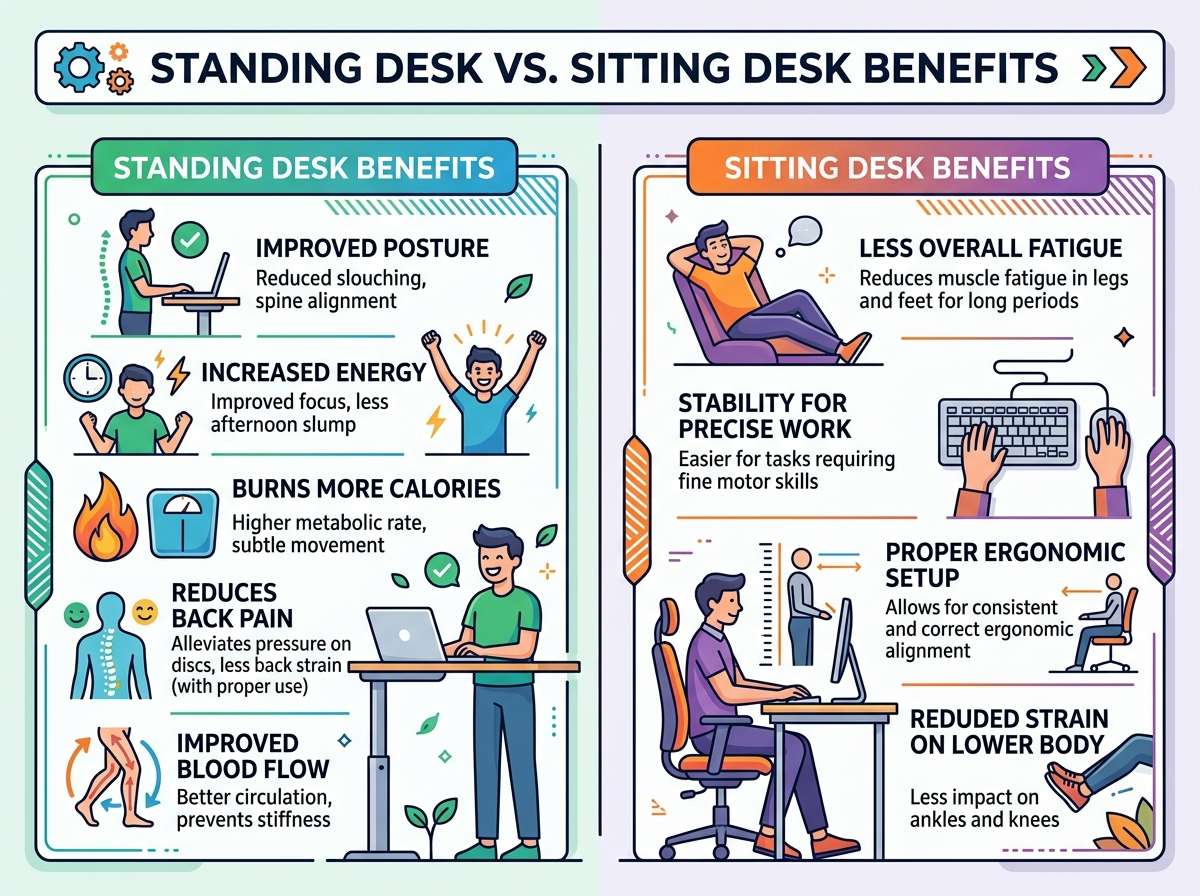
One of the biggest reasons people buy standing desks is to burn more calories throughout the day. When you stand, your body uses more energy than when you sit. Even small movements like shifting your weight add up over time.
If you stand for four hours while working, you might burn 50 to 100 extra calories compared to sitting the whole time. Over a week or a month, those calories add up.
This doesn’t mean a standing desk will make you lose weight by itself. You still need to eat well and exercise. But a standing desk is a small way to add more movement to your work routine.
Your Posture Can Get Better
Sitting in a bad position all day can hurt your back and neck. When you stand, you’re more likely to keep your shoulders back and your spine straight. Your body naturally wants to stand tall.
Better posture means less pain in your neck, shoulders, and lower back. Good posture also helps you feel more confident and can even improve your mood.
You Stay More Alert
Sitting for hours can make you feel tired and sluggish. Standing keeps your energy up. Your blood flows better, your mind stays sharper, and you feel more awake during the afternoon slump.
Many people who switch to standing desks say they feel less brain fog and can focus better on their work.
Your Legs and Feet Get Stronger
Standing uses your leg muscles all day long. Over time, this makes your legs and feet stronger. Better leg strength helps with balance, running, walking, and everyday activities.
You Move More Often
A standing desk naturally encourages you to shift your weight, stretch, and move around. You’re not stuck in one position. This constant small movement is good for your heart and helps prevent blood clots in your legs.
Your Blood Sugar Stays More Stable
Studies show that standing after meals helps control blood sugar levels better than sitting right after eating. This is especially helpful if you have diabetes or worry about blood sugar problems.
The Real Drawbacks of Standing Desks
Your Feet and Legs Get Tired
Standing all day can hurt. Your feet might ache, your legs can get sore, and your back might feel tired from holding yourself up. This is one of the biggest complaints from people who switch to standing desks too fast.
The pain usually happens when people go from sitting all day to standing all day with no break-in period. Your feet and legs need time to adjust.
You Might Get Swelling
Standing for too long in one spot can cause fluid to gather in your feet and legs. This leads to swelling and puffiness. People with circulation problems or certain health conditions are more likely to have this issue.
Long Meetings Are Harder
If you have video calls or meetings that last an hour or more, standing can become uncomfortable. Your legs might shake, and you might feel self-conscious about fidgeting.
It Takes Time to Get Used To
Your body needs time to adjust to standing all day. If you switch too fast, you might feel sore or uncomfortable for the first few weeks. Some people never get comfortable with standing desks.
Not Ideal for All Types of Work
Some jobs need you to type a lot and focus intensely. For these tasks, sitting might help you stay more comfortable and productive. Standing can distract you if you’re focused on detailed work.
The Real Benefits of Sitting Desks
Maximum Comfort for Long Periods
A good chair with back support lets you sit comfortably for hours. You can relax into your seat and focus on work without worrying about tired legs or feet.
Better for Detailed Work
If your job requires lots of typing, precise movements, or careful focus, sitting desks often work better. You can get into a groove and stay there.
Less Initial Adjustment
Your body is already used to sitting. There’s no break-in period or adjustment time. You can start working right away without soreness or discomfort.
Good for Physical Recovery
If you have an injury or health condition that makes standing painful, a sitting desk with proper chair support might be the right choice for you.
Easier on Your Legs and Feet
You won’t feel the ache and pain that can come from standing too long. Your feet stay happy, and you don’t get swelling in your legs.
The Real Drawbacks of Sitting Desks
You Sit Too Much
The biggest problem with sitting desks is that they make it easy to sit for 8, 9, or 10 hours straight. This is not healthy. Sitting for that long is linked to heart disease, weight gain, and poor circulation.
Bad Posture Becomes Habit
When you sit, it’s easy to slouch or lean forward. Over time, bad posture becomes your normal. This hurts your back, neck, and shoulders.
You Burn Fewer Calories
Sitting doesn’t burn as many calories as standing. If weight loss is a goal, sitting desks work against you.
Your Legs Get Weak
If you spend all day sitting, your leg muscles don’t get much work. Weak legs can affect your balance, your ability to exercise, and your everyday movement.
You Feel Sleepy
Sitting for hours can make you feel tired and sluggish, especially after lunch. Your blood isn’t flowing as much, and your body slips into a relaxed state.
Blood Clots Are More Likely
People who sit for very long periods have a higher risk of blood clots in their legs. This is a serious health concern for people with certain risk factors.
The Best Option: Alternating Between Both
Here’s the truth: the best desk setup for your health is probably using both a standing desk and a sitting desk during the day.
You can do this in a few ways:
With an adjustable desk: You raise the desk to stand for part of the day, then lower it to sit for other parts. Many people spend 2-3 hours standing and the rest of the time sitting.
With two desks: Some people have a sitting desk and a standing desk in their workspace. They move between them throughout the day.
With a convertible setup: There are desk risers and conversion kits that let you change your regular desk between sitting and standing heights.
The key is switching between positions. Moving around is what matters most for your health.
How to Use a Standing Desk the Right Way
If you decide to try a standing desk, here’s how to do it safely:
Start Slow and Build Up
Don’t jump from sitting all day to standing all day. Start with one hour of standing per day. After a week, add another hour. Keep adding time slowly until you find what feels right for you.
Most experts say standing for 4-6 hours total during the day is good. You don’t need to stand the whole time.
Get a Good Anti-Fatigue Mat
A thick mat under your feet makes standing much more comfortable. It cushions your feet and reduces the strain on your legs and back.
Wear Comfortable Shoes
Your shoes matter. Wear shoes with good support, not flat flip-flops or heels. Supportive shoes make a huge difference in how your feet feel.
Take Breaks to Sit
Even if you love standing, take breaks to sit down. Alternate between standing and sitting every 30 minutes or every hour.
Adjust Your Monitor Height
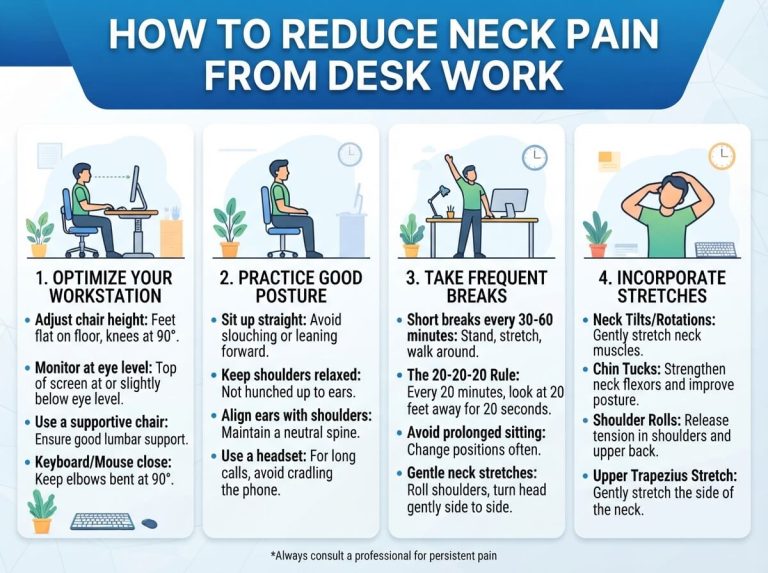
Your monitor should be at eye level when you stand. If you have to look down or up, you’ll hurt your neck. Most standing desks come with an adjustable monitor stand.
Keep Your Elbows at 90 Degrees
Your keyboard should be at a height where your elbows stay bent at about 90 degrees. This keeps your shoulders and arms relaxed.
How to Use a Sitting Desk the Right Way
If you choose a sitting desk, you can still be healthy by doing it right:
Get a Good Chair
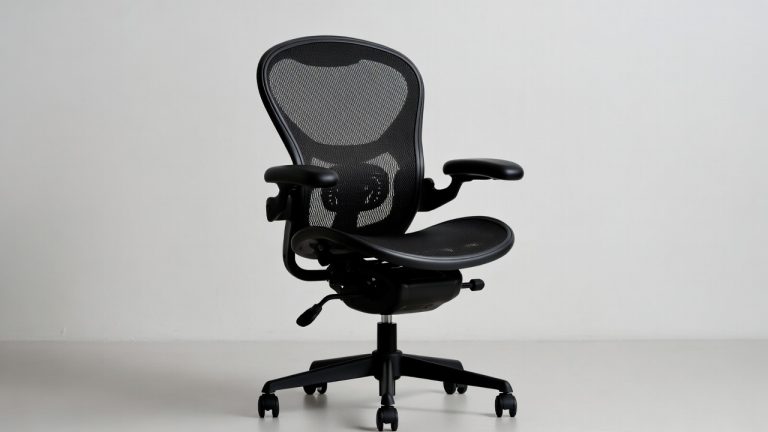
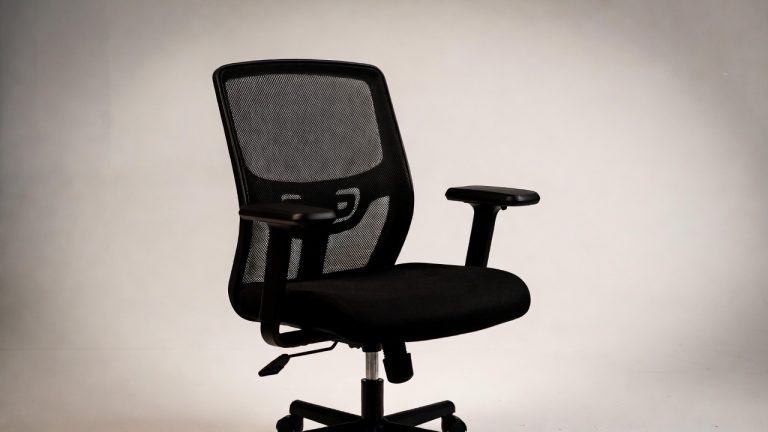
Invest in a chair with back support, arm rests, and cushioning. A cheap chair will hurt your back and neck over time.
Sit with Good Posture
Sit with your back straight, shoulders back, and feet flat on the floor. Keep your monitor at eye level.
Take Movement Breaks
Stand up and walk around every 30 to 60 minutes. Stretch your legs, shoulders, and back.
Adjust Your Desk Height
Your feet should rest flat on the floor or a footrest. Your desk should be at a height where your arms stay relaxed.
Exercise During Your Day
If you sit all day, make sure you exercise before or after work. Walk, run, do yoga, lift weights, or play sports. Movement outside of work is crucial.
What Does the Research Say?
Scientists have studied sitting and standing desks. Here’s what they’ve found:
Some studies show that standing desks help with weight and posture. Other studies say the benefits are small if you don’t exercise and eat well.
Most experts agree on one thing: moving more is always better than staying still. Whether you sit or stand, what really matters is not staying in one position for too long.
The healthiest work setup involves switching between sitting and standing multiple times during the day.
Price and Cost
Sitting desks are cheap. You can get a basic desk and chair for a few hundred dollars.
Standing desks cost more. A basic standing desk might cost $300-500. A good adjustable standing desk can cost $800-2000 or more.
If you’re on a budget, you can:
- Buy an adjustable desk riser that sits on top of your current desk (these cost $50-200)
- Get a keyboard and monitor on an adjustable stand
- Buy a desk converter that lets you switch between sitting and standing
These options cost less than a full standing desk and still let you alternate between positions.
The Space Question
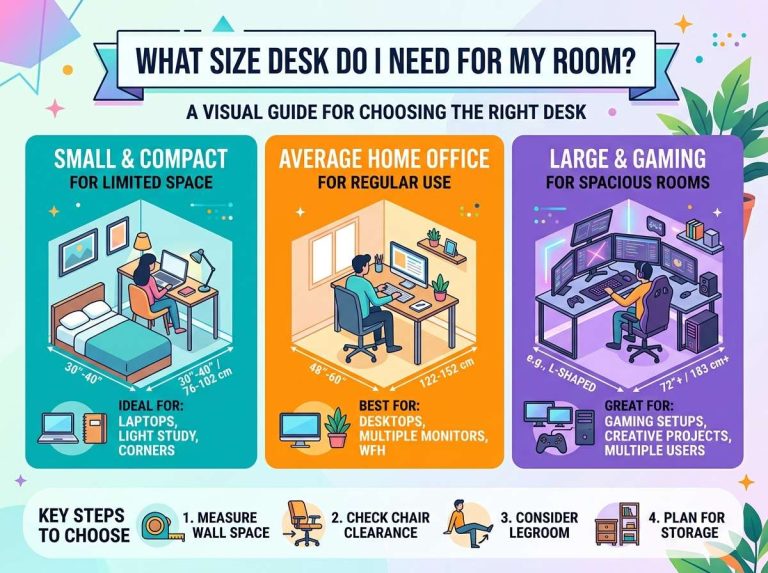
Standing desks need room. You need space in front of you to stand and work comfortably.
Sitting desks take up less space because you’re sitting down. If you have a small workspace, a sitting desk might work better.
Adjustable desks work in any space, though they do take up a bit more room than regular desks.
Who Should Use a Standing Desk?
Standing desks work best for:
- People who sit all day and want to move more
- People with a back pain problem that gets worse from sitting
- People who want to burn more calories
- People with jobs that let them stand (like teaching or presenting)
- People who have space for a standing desk
Standing desks don’t work as well for:
- People with leg or foot pain problems
- People who do very detailed or precise work that needs steady hands
- People with limited workspace
- People with certain health conditions that make standing hard
Who Should Use a Sitting Desk?
Sitting desks work well for:
- People doing detailed work that needs focus and a steady hand
- People recovering from injuries
- People with certain leg or circulation problems
- People on a tight budget
- People with very limited space
Sitting desks might cause problems for:
- People with a desk job who don’t get exercise outside of work
- People with back pain from bad posture
- People who tend to slouch when sitting
- People who want to be more active during the day
The Perfect Setup for Most People
For most people working at a desk, the ideal setup is an adjustable standing desk or a convertible desk riser. This lets you:
- Stand for part of the day (2-4 hours)
- Sit for the rest of the day
- Switch positions when you start to feel sore or tired
- Get the benefits of both styles
Add these things to make it even better:
- A good office chair for sitting times
- An anti-fatigue mat for standing times
- A desk that adjusts smoothly between heights
- A monitor stand that adjusts for both sitting and standing
This setup costs more upfront, but it’s the best for your health over the long term.
Common Mistakes People Make
People often mess up their standing desk setup by:
Going too fast: Jumping from sitting all day to standing all day causes pain and soreness. Start slow.
Ignoring posture: Standing doesn’t automatically mean good posture. You still need to stand tall and keep your shoulders back.
Wearing bad shoes: Flat or unsupportive shoes make standing uncomfortable. Invest in good shoes.
Not taking breaks: Standing all day is just as bad as sitting all day. Take breaks to switch positions.
Wrong monitor height: If your monitor is too low, you’ll hurt your neck. Keep it at eye level.
No anti-fatigue mat: Standing on a hard floor all day hurts your feet. Get a good mat.
Making the Transition
If you want to switch from a sitting desk to a standing desk:
Week 1-2: Stand for 1 hour per day Week 3-4: Stand for 2 hours per day Week 5-6: Stand for 3 hours per day Week 7+: Stand for 4-5 hours per day
Your body will adjust faster with a slow transition. Don’t rush it.
If standing starts to hurt:
- Take a break and sit for a while
- Wear better shoes
- Get an anti-fatigue mat
- Adjust your desk or monitor
- Talk to a doctor if pain continues
Final Thoughts
There’s no perfect desk for everyone. Some people thrive with standing desks. Others feel much better sitting. Most people do best with a mix of both.
The real key to desk health is not about sitting or standing. It’s about moving throughout your day. Don’t stay in one position for more than an hour or two. Switch between sitting and standing. Take walks. Stretch. Keep your body active.
If you have the budget and the space, get an adjustable desk that lets you do both. If you can only choose one, pick the one that matches your work style and health needs best. And no matter which you choose, make sure you move, stretch, and exercise outside of work.
Your desk is where you spend a lot of time, so it matters. But your desk is just one part of your health. The most important thing is staying active, eating well, and taking care of your whole body.
Start with what works for you right now, give it time to work, and be ready to change if you need to. Your body will tell you what it needs.

Hi, I’m Mary, the founder of Homygear.com. I’m passionate about creating a comfortable, smart, and beautiful home. I share practical insights and real-world experience on home gear that makes everyday life easier. Behind the scenes, my dedicated research team studies products in depth, and our writers craft honest reviews using trusted, authentic sources—so you can choose home gear with confidence.