
4 Best Cable Management Box For TV Stand In 2026
As an Amazon Associate we earn from qualifying purchases.
Messy cords behind a TV can make a living room look untidy and make it hard to find a charger. A cable management box for TV stand use is a simple answer. It hides power strips, adapters and extra cable length in one tidy spot. This guide helps beginners who want a clean setup but do not know where to start.
The four products below share one goal: keeping cords out of sight and off the floor. Some are closed boxes with a lid, some are decorative book shapes, one is a rolling TV stand with storage, and one is a small top shelf. The comparison rests on the listed features and typical use of each product, not on personal testing.



1. Extra Large Cable Management Box in Acacia: best for a large power strip and a natural wood look
This is a wooden cable management box made from acacia wood. It is designed to hold power strips, chargers and adapters while hiding the cords. It suits buyers who want a warm, natural look on a TV stand, desk or home office shelf.
What it is and who it suits
A cable management box is a closed container with openings for cords. This one has a fairly large interior, so it fits a long power strip with room for bulky plugs. It is a good match for people who have several devices plugged into one strip.
Best use cases
The box works well on a TV stand, under a desk or on a shelf near a wall outlet. It keeps the power strip hidden while the cords still reach the outlet and the devices. It also suits spaces where a plain plastic box would look out of place.
Key features in simple words
The base is ventilated and the box sits on raised feet. Air can move underneath and through the cable openings, which helps reduce heat around the power strip and chargers. The box has a top cable slot, side openings and a decorative access opening, so cords can leave in more than one direction.
The wood has a natural grain, so each piece looks slightly different. The lid uses four built-in magnets to stay closed. The listed overall size is 15.2 inches long, 6.4 inches wide and 7.6 inches high, with a usable interior of 13.4 by 5.1 by 5.9 inches.
Daily use
In everyday use, the lid is the main thing you open to reach the power strip or switch it on. The magnets hold the lid closed, so it should stay shut when you walk past. Because the box is fairly large, it takes some space on a small stand, so measure first.
Performance and ease of use
The ventilation and raised feet are designed to keep the inside airy, which is useful when several chargers run at once. Setup is simple: place the power strip inside, route the cords and close the lid. Access is easy because the lid lifts off or opens with little effort.
Value for money
At the listed price of $22.99, this box is priced in the middle of the four products. The solid wood look and large interior add to its appeal. Buyers who want a plain plastic organizer may find the price higher than they need.
Pros
- Large interior that fits a long power strip and bulky adapters.
- Ventilated base and raised feet support airflow around the power strip.
- Acacia wood with natural grain gives a warm, décor-friendly look.
- Four magnets keep the lid closed and help keep cords out of reach of children and pets.
Cons
- Its overall size may be too big for a very small TV stand or shelf.
- Natural wood varies in colour and grain, so it may not match every existing finish.
- The price is higher than basic plastic cord boxes.
2. LEIFEOSH Book Shape Decorative Cable Management: best for hiding cords as a book on a shelf
This box looks like a vintage hardcover art book. It hides cables inside while letting the box (the box blend into a shelf or stand as a decorative object). It suits buyers who want their cord hider to look like part of the room’s décor rather than a tech accessory.
What it is and who it suits
This is a cable management box shaped like a book. Its printed cover copies the texture of a real book, so it can sit on a TV stand, desk, bedside table or entryway.
It suits people who want to hide cords without adding a plain box to the room.
Best use cases
The book shape works well on a TV stand or shelf where the box is in plain view. It can also sit beside a bed or near a front door. Because it is smaller than the wooden box above, it suits compact spaces with a few devices.
Key features in simple words
The box has an interior of about 10.7 by 7.5 by 3.3 inches. That is enough room for a power strip and a few cables, though not a large one. The lid is magnetic and opens from the top, so you can reach the cables quickly.
The side and top openings are arranged to create airflow. This helps chargers stay cooler during long use, and cords can leave from several angles. The box is made from thick cardboard, which is designed to resist bending and damage.
Daily use
In daily use, you lift the cover to reach a charger or switch off a strip. The magnets keep the lid closed when it is not in use. This also helps keep dust out and makes it harder for small children or pets to reach the outlets.
Performance and ease of use
The box is simple to use. Place the power strip inside, route the cords through the openings and close the lid. Because the interior is smaller, bulky adapters may need careful placement.
Value for money
At $21.99, this box is priced slightly below the wooden option. Buyers get a decorative design and a practical hiding space at a similar price. Those who need a large interior may find it too small.
Pros
- The book design blends into a room and can double as a small decorative accent.
- Magnetic lid closes securely and helps keep dust and curious hands away.
- Openings on several sides allow cords to route from different angles.
- Thick cardboard body resists deformation and gives a smooth surface.
Cons
- The interior is smaller than the larger wooden box, so bulky plugs may be a tight fit.
- Cardboard feels less solid than wood or metal.
- The printed look may not suit buyers who prefer a plain, minimal finish.
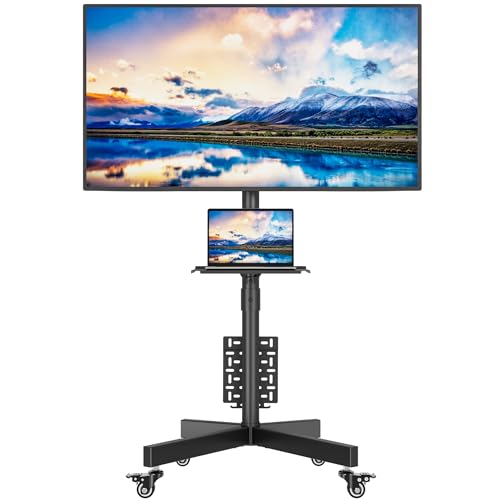
3. BONTEC Rolling TV Stand: best for a moveable setup with storage and cable clips
This is a rolling TV stand rather than a simple box. It has a pegboard for small accessories, a metal shelf, rear cable clips and lockable wheels. It suits people who need a mobile stand for a TV and want cords and small devices kept organized in one place.
What it is and who it suits
This product is a floor-standing TV stand on wheels. It fits TVs listed from 32 to 65 inches and can hold up to 88 pounds. It suits families, classrooms or offices where the TV may be moved from room to room.
Best use cases
The stand works well in a living room, bedroom, classroom or meeting room. The wheels let you move it when needed, and the four locks keep it still once in place. The pegboard and straps help keep remotes and game controllers within reach.
Key features in simple words
The pegboard has four adjustable straps for securing remotes, streaming boxes and cables. Hidden clips on the back column help hold wires out of sight. A metal shelf below gives space for a laptop, game console or streaming device.
Height can be adjusted without steps from 51.5 to 65.1 inches. The tilt mount is designed to reduce glare. The steel frame is described as rust-resistant, and the kit includes an illustrated manual and full hardware for assembly.
Daily use
In daily use, the stand is easy to roll to where it is needed. The straps hold small items, so they are less likely like to slide off the shelf. The rear clips keep cords tidy, though long cables may still need a bit of slack.
Because the stand has many parts, it stays easy to use once you know where things go.
Performance and ease of use
The metal wheels are described as smoother and quieter than plastic casters. Four lockable wheels help the stand stay in place once set.
Assembly uses a detailed manual and full hardware set, so most buyers can follow the steps without special tools.
Value for money
At $52.99, this stand costs more than the two box options. Buyers get a stand, storage and cable clips in one product. Those who only need a box to hide a power strip may find it more than they need.
Pros
- Lockable wheels make it easy to move and then hold steady in place.
- Pegboard straps keep remotes and small devices within reach.
- Adjustable height and tilt help with viewing comfort.
- Rear cable clips and a metal shelf help keep equipment organized.
Cons
- It is a larger, more complex product than a simple cable box.
- Assembly takes more time than placing a box on a shelf.
- It may look more technical than decorative, depending on the room.
4. 13 Inch Wide Platform TV Top Shelf: best for a small device shelf above a flat screen TV
This is a small shelf that sits on top of a flat screen TV. It creates space for a cable box, streaming device or router. It suits buyers with a lightweight setup and a TV that has enough clearance above it.
What it is and who it suits
The shelf is a platform that rests on the top edge of a flat screen TV. It is designed for light devices and includes a remote holder. It suits people with a small amount of equipment who want to free up space on the stand.
Best use cases
The shelf works best for a cable box, a media streamer or a small router placed above the screen. It is not meant for speakers, soundbars or heavy items. Check the TV type and clearance before buying.
Key features in simple words
The shelf supports up to 6.6 pounds and needs at least 6.3 inches of clearance between the top of the TV and the wall. It is designed for flat screen TVs only, not curved screens. Dual legs with silicone sleeves help grip the screen, and a raised front lip reduces sliding.
A cable slot helps route power cords behind the TV. The included remote holder keeps the remote in one easy place. No tools or wall drilling are needed for setup.
Daily use
In daily use, the shelf keeps small devices off the stand and within reach. The remote holder helps you find the remote without searching. Because the shelf sits high, check that it is level and secure after moving the TV.
Performance and ease of use
Setup is quick: open the legs, place the shelf on the TV, adjust the angle until it is level and use it. The anti-slip legs help hold it in place for light items. Because the load limit is low, heavier items should go elsewhere.
Value for money
At $11.99, this is the lowest-priced of the four products. It adds shelf space without tools or a wall mount. Its low weight limit and fit requirements mean it suits only certain setups.
Pros
- Low price makes it one of the simplest ways to add shelf space.
- No-drill setup requires no tools or wall work.
- Remote holder and cable slot help keep the area tidy.
- Anti-slip legs and a raised lip help keep light devices in place.
Cons
- The weight limit of 6.6 pounds rules out soundbars and heavier devices.
- It works only with flat screen TVs and needs enough clearance above the screen.
- It does not hide cords or power strips, so it solves a different problem than the boxes.
Comparison insights: how the four products differ
The four products solve the same basic problem in different ways. The two boxes hide cords and power strips. The rolling stand adds storage and mobility. The top shelf adds space above the TV. Comparing them by performance, ease of use and value shows where each one fits best.
Performance
The wooden box and the book-shaped box both focus on hiding cords. The wooden box has the larger interior, so it fits longer power strips and bulky plugs. The book-shaped box is smaller but offers multi-angle openings for cords and airflow.
The rolling stand performs a wider job. It holds a TV, offers storage on a pegboard and a metal shelf, and clips cords to the back. The top shelf performs a narrow job well, but only for light devices.
Ease of use
The two boxes are the simplest to use. You place the power strip inside, route the cords and close the lid. The rolling stand takes more effort to assemble, though its manual and hardware set are designed for a straightforward build. The top shelf is quick to set up, but its fit rules need checking first.
Value for money
The top shelf has the lowest listed price, at $11.99. The book-shaped box costs $21.99 and the wooden box $22.99. The rolling stand is the most expensive at $52.99, but it covers more needs in one product. Price alone does not decide the choice, because each product serves a different purpose.
Buying guide: key factors explained in plain words
Picking a cable management box or TV stand accessory becomes easier when you know what to check. Start with the problem you want to solve. Are you hiding a power strip, freeing up shelf space or moving a TV around the room?
Size and interior space
Measure your power strip before buying a box. The interior should be a little larger than the strip so that plugs and adapters fit without forcing them. Leave room for cords to bend without kinking.
Airflow and heat
Chargers and power strips can get warm when several devices run together. Look for openings or a ventilated base. Airflow helps keep the inside of the box from trapping heat, though it cannot replace good spacing.
Cord access and routing
Think about where the cords need to go. Some boxes have a top slot, side openings or a decorative access point. Choose a design that matches the way your cables reach the wall and devices.
Lid and closure
A lid that closes securely keeps dust out and helps block small hands and pets from the outlets. Magnetic closures are common and easy to open. Check that the lid lifts or opens in a way that suits your space.
Material and look
Wood looks warm and feels solid. Cardboard is lighter and often cheaper, though it feels less sturdy. Choose a finish that suits the room, because the box will be in plain view.
Weight limits and fit
Accessories placed on top of a TV or on a stand must hold the weight of your devices. Check the stated load limit and clearance. A shelf that is too light or too tall for the space will not work well.
Mobility and stability
If you move a TV often, wheels are useful. Lockable wheels keep a stand still once placed. Check the stability of the base, especially with a heavy screen.
Who should buy these products: matching buyers to a product
Each product suits a different kind of buyer. The right choice depends on how much equipment you have and how you use the space. Read the profiles below to find the best match.
If you want a large box with a natural look
The acacia wood box suits buyers with a long power strip and several chargers. It also fits people who want the cord box to match wooden furniture. It works best where there is enough room for its size.
If you want a decorative box that blends into a room
The book-shaped box suits buyers who want their cord hider to look like a décor item. It works well on a shelf, a bedside table or an entryway. It suits small setups with a few cables.
If you need storage and mobility for a TV
The rolling TV stand suits families, classrooms and offices that need a movable setup. It also suits people who want storage for remotes and small devices. It is the best choice when the st and is the best choice when the stand must move between rooms or hold more than cords alone.
If you need a little more space above the TV
The top shelf suits buyers with a cable box, a streaming device or a router and a flat screen TV with enough clearance. It works best for light items. Heavier speakers or soundbars need a different solution.
Final verdict: which product makes the best choice
No single product is right for every setup. The wooden box suits a large power strip and a warm look. The book-shaped box suits a decorative touch and a smaller set of cables. The rolling stand suits people who need storage and mobility. The top shelf suits light devices above a flat screen.
For most beginners who simply want to hide a power strip, a cable box is the most direct answer. Choose the larger wooden option if space allows, or the book shape if the box will sit in plain view. Consider the rolling stand only if you also need to move the TV or store accessories.
Frequently Asked Questions about cable management boxes and TV stands
Do cable management boxes make chargers overheat?
A box with ventilation can help air move around chargers and power strips. However, a box does not replace good spacing or safe use. Avoid covering devices tightly or stacking items on top of them.
How do I know if a power strip will fit in a box?
Measure the strip’s length, width and height, then compare those numbers with the box’s interior size. Leave some extra room for plugs and cables. A small margin makes it easier to close the lid.
Can a TV top shelf hold a soundbar?
The top shelf listed here is for lightweight devices only. Its weight limit is 6.6 pounds, and it is not designed for heavy speakers or soundbars. Choose a different support for larger items.
Is a rolling TV stand stable enough for a heavy screen?
The stand lists a load limit of 88 pounds and four lockable wheels. Locking the wheels before use helps keep it steady. Always check the screen size and weight against the stand’s stated limits.
Are cable boxes safe for homes with children and pets?
A closed box with a secure lid can make cords and outlets harder to reach. It reduces access but does not remove all risk. Keep cords tidy, avoid pulling on them and supervise young children near electrical items.

Hi, I’m Mary, the founder of Homygear.com. I’m passionate about creating a comfortable, smart, and beautiful home. I share practical insights and real-world experience on home gear that makes everyday life easier. Behind the scenes, my dedicated research team studies products in depth, and our writers craft honest reviews using trusted, authentic sources—so you can choose home gear with confidence.