How to Find the Perfect Desk for Your Home Office?
Your home office desk is where the magic happens. It’s the place where you sit for hours, tackle important projects, and get things done. So it makes sense to pick the right one. A bad desk can hurt your back, make you tired, and kill your productivity. A good desk does the opposite. It supports your work and makes you want to sit down and get busy.
This guide helps you find a desk that’s just right for you. We’ll talk about size, height, material, and all the other things that matter. By the end, you’ll know exactly what to look for.
Why Your Desk Matters More Than You Think
Before we dive into the details, let’s talk about why this decision is so important. Most people spend eight hours or more at their desk each day. That’s a huge chunk of your life. If your desk is the wrong size or height, your body pays the price.
Bad posture leads to back pain. Neck strain makes your headaches worse. Wrist pain can turn into something serious. These problems don’t happen overnight. They build up over time. One day you feel a little twinge. A few weeks later, you’re in real pain.
A good workspace setup keeps you healthy. It also helps you focus. When you’re comfortable, you work faster and think clearer. Your desk is the foundation of a great home office. Get this right, and everything else falls into place.
Size Matters When It Comes to Your Work Surface
The right size depends on what you do. Let’s break this down.
For light work like email and browsing. A small desk works fine. Look for something between 36 and 48 inches wide. This gives you enough room for your laptop and a few things around it. Small desks save space and money. They’re great if you have a tight room.
For medium work like writing or coding. You need more room. Aim for 48 to 60 inches. This lets you spread out. You can have your laptop on one side and reference materials on the other. Having enough space reduces reaching and stretching. Your arms won’t get tired.
For heavy work like design or video editing. Go big. Look for 60 to 72 inches or even larger. These desks hold multiple monitors, keyboards, and equipment. Designers and engineers need this extra real estate. It keeps tools within arm’s reach.
Don’t just think about width. Depth matters too. Most desks are 24 to 30 inches deep. Go with 30 inches if you can. This gives you room to move your chair back and still reach your keyboard. Shallow desks force you to sit too close to your work.
Height Is Critical for Comfort and Health
This is one of the biggest mistakes people make. They pick a desk by how it looks, not by how it fits their body.
The standard desk height is 30 inches. This works for many people. But not everyone. If you’re very tall or very short, standard might not be your friend.
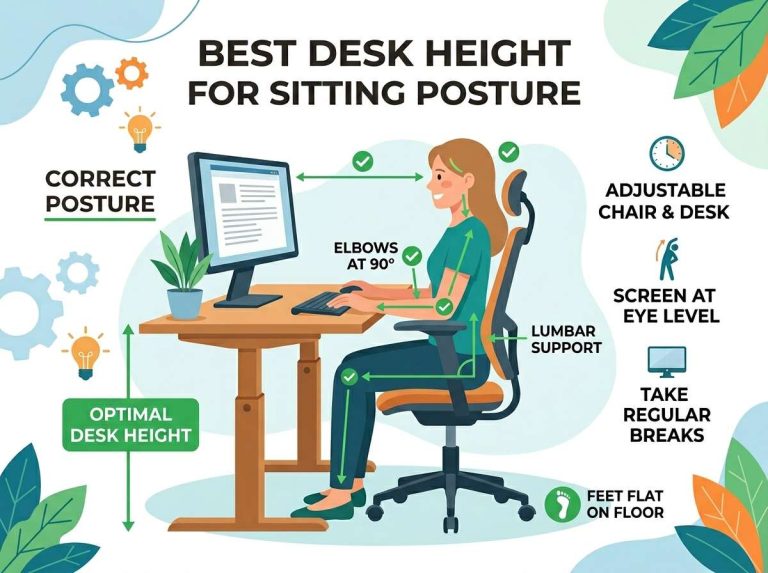
How to find your ideal height. Stand up with your arms at your sides. Let your arms relax naturally. Now bend your elbows to 90 degrees. The spot where your hands are is roughly where your keyboard should be when you sit. Your desk needs to be about that height.
Here’s a quick test. Sit at the desk you’re thinking about. Rest your hands on the surface. Your elbows should be at 90 degrees. Your shoulders should be relaxed, not shrugged up. Your wrists should be straight, not bent down.
If your elbows are above 90 degrees, the desk is too high. You’ll get shoulder and neck pain. If your elbows are below 90 degrees, the desk is too low. Your back will hurt, and you’ll find yourself hunching.
Don’t brush off this step. Bad height is the number one reason people hurt themselves at their desk.
Adjustable Desks Are Worth the Investment
Standing all day is bad. Sitting all day is bad too. The answer? Move between them.
A height-adjustable desk lets you switch from sitting to standing. You can change height in seconds. This keeps your blood flowing and prevents stiffness.
Studies show that switching positions helps you think better. It reduces pain. It might even help you live longer. You don’t need to stand half the time. Even standing 15 minutes per hour makes a real difference.
There are two main types of adjustable desks.
Electric desks use a motor to move. You press a button and the desk goes up or down. They’re smooth and fast. Some let you save preset heights. You can hit a button and the desk moves to your sitting height, then another button for standing height. The downsides? They cost more. They need electricity. They can be noisy, though modern ones are quieter.
Manual desks use a hand crank. You turn the handle to adjust height. They’re cheaper. They work without power. But they take longer to adjust. If you plan to switch positions often, a crank gets old fast.
Electric desks are better if money allows. The convenience means you’ll actually use them. That’s the real gain.
Think About Your Work Style and Desk Type
Different desk designs work for different needs.
Traditional rectangular desks are classic for a reason. They’re simple. They work with any room. They give you one main work surface. Most home office workers do well with this style.
L-shaped desks give you more space. They fit in corners. You can use one side for your computer and the other for paperwork or supplies. L-shaped desks are great if you need room to spread out but don’t have much wall space.
U-shaped desks are even bigger. They wrap around three sides. You get lots of surface area. But they take up a lot of room. Only go this route if you have the space and really need it.
Standing desks let you work on your feet. Some people swear by them. They work well if you move around a lot during your day. Others find standing tiring after a while. Most people do best with a desk that adjusts between sitting and standing.
Wall-mounted desks fold up or take up minimal space. These are perfect for tiny rooms. You get a desk when you need it and extra floor space when you don’t. The downside? They’re smaller and can feel cramped.
Console desks are narrow and deep. They look like furniture. They fit against a wall and take up less floor space than wide desks. They work for people who don’t need tons of surface area.
Material Makes a Real Difference
What your desk is made from affects how long it lasts and how it feels.
Solid wood is the premium option. Wood is beautiful. It feels nice. A good wood desk lasts for decades. The downside? Real wood is expensive. It can be heavy. Wood needs care to stay looking nice.
Laminate or particle board is budget-friendly. These materials are light and easy to move. They come in tons of colors and styles. The problem? They don’t last as long. Cheap particle board can sag over time, especially if you load it with gear. Laminate can peel at the edges.
Metal frames with wood or laminate tops are a solid middle ground. The metal frame is sturdy. The top gives you the look you want. These desks are durable and cost less than solid wood.
Glass tops look modern and sleek. They don’t take up visual space. Your room feels more open. But glass can be cold to the touch. It shows fingerprints and dust. It can be slippery too. Stuff slides around more easily.
Bamboo is eco-friendly and strong. It’s similar in price to wood. Bamboo desks look great. They’re sustainable. If you care about the environment, bamboo is a solid pick.
Think about what matters to you. Are you going to keep this desk for 20 years? Invest in good materials. Moving in a few years? Particle board is fine.
Cable Management and Cord Organization
This sounds boring, but it makes a huge difference in your daily life.
Cables are a mess. You’ve got power cords for your computer, monitor, lamp, and phone charger. Cables for monitors. USB cables. They pile up fast.
Look for desks with built-in cable management. Some have channels underneath to run cables. Others have holes in the top to thread cords through. A few even have cable boxes attached to the underside.
These features aren’t essential, but they’re nice. Good cable management means less clutter and an easier time moving things around later.
If your desk doesn’t have cable management, don’t panic. You can add it. Clips, cable boxes, and cord organizers are cheap. They solve the problem.
Storage Keeps You Organized and Focused
Think about what you need to keep at your desk. Pens, notebooks, files, headphones, chargers. Stuff piles up.
Desks with drawers give you hidden storage. Things stay out of sight. Your desk looks clean. Drawers are great for things you don’t need to see all the time.
Open shelves sit above or next to your desk. They’re accessible. You can grab things quick. But they make your desk look busier.
Hutches are cabinets on top of your desk. They give you tons of storage. The downside? They take up desk space. They can make your area feel cramped.
Think about your style. Do you like things hidden away and tidy? Go for drawers. Do you like seeing your stuff? Open shelves work better.
The key is having a home for everything. When things have a place, your desk stays cleaner. A clean desk helps you focus.
Budget and Where to Buy
Desks range from cheap to very expensive. You don’t need to spend a fortune.
Budget desks cost under $200. You get basic functionality. These are fine for short-term use. They might not last as long. They often feel flimsy. But they work if you’re just starting out.
Mid-range desks cost $200 to $500. This is the sweet spot for most people. You get decent quality and features. Your desk will last several years. You get good value.
Premium desks cost over $500. You get high-quality materials and design. These desks last a long time. Some even come with warranties.
Where you buy matters too. Big retailers like Ikea and Wayfair have tons of options and good prices. Office supply stores have desks geared for work. Online stores offer variety. Local furniture shops let you see and touch the desk before buying.
Buy in person if you can. Sit at the desk. Feel the materials. Check the height. Online shopping is convenient, but you can’t test the desk. Make sure the return policy is good just in case.
Your Setup Around the Desk Matters Too
The desk is just one piece of the puzzle. The rest of your setup affects your comfort and productivity.
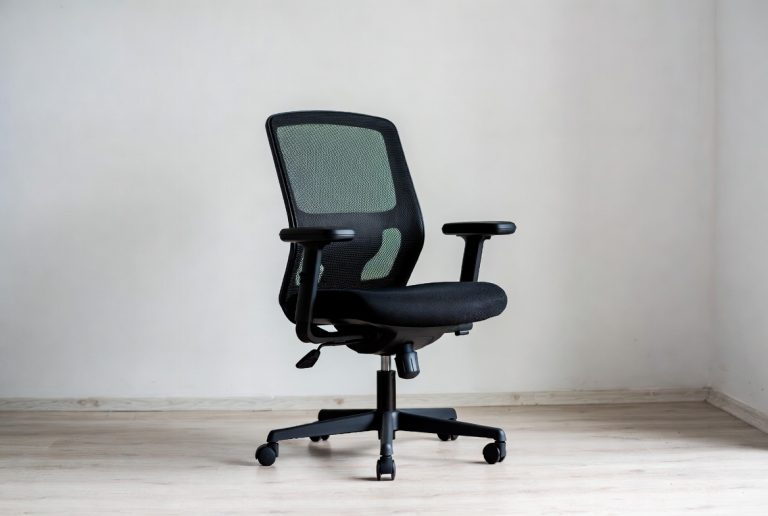
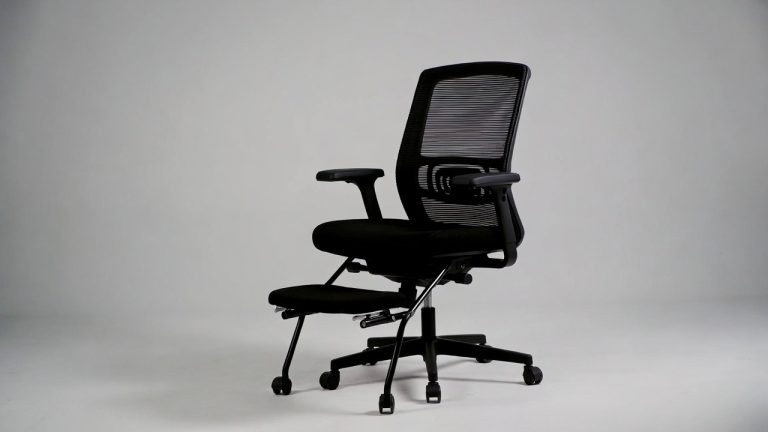
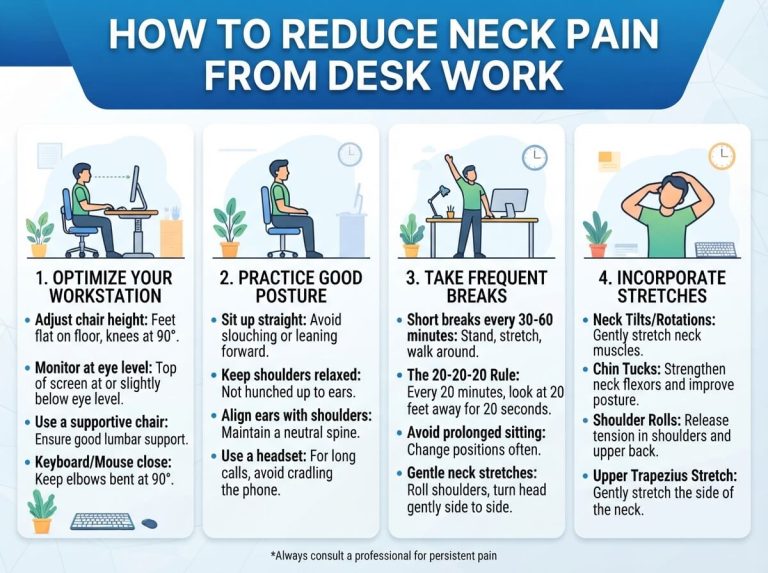
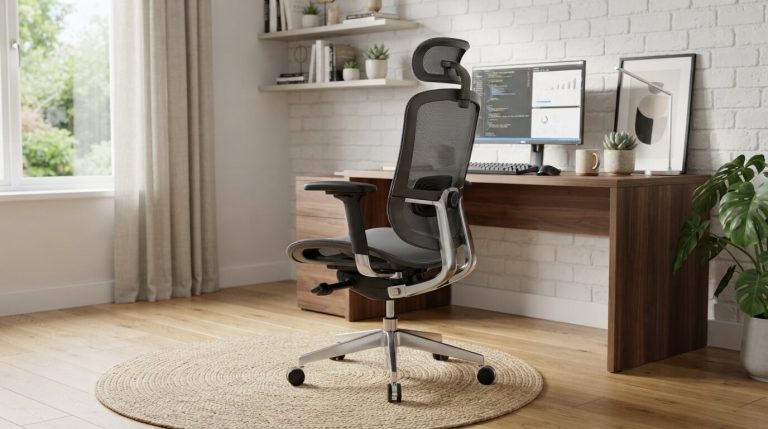
Your chair is as important as your desk. Get a good one. Your feet should touch the floor when you sit. Your thighs should be parallel to the ground. Your back should feel supported. A bad chair ruins a good desk.
Monitor height matters. Your eyes should look straight ahead at the top of your screen. If you look down, you strain your neck. If you look up, you strain your shoulders. Adjust your monitor with a stand or arm.
Keyboard and mouse should be close to you. Reaching too far causes arm pain. They should be at the same height as your hands when your elbows are at 90 degrees.
Lighting keeps you alert. Bad lighting causes eye strain and headaches. Natural light is best. If you can’t get natural light, use a desk lamp. Avoid glare on your screen.
Footrest helps if your feet don’t touch the ground. A small platform supports your feet and reduces pressure on your legs.
All these pieces work together. A great desk in a bad setup still causes problems.
Questions to Ask Before You Buy
Before you swipe your credit card, ask yourself these questions.
How much space do I have? Measure your room. Make sure the desk fits. Leave room to walk and move.
What do I actually do at this desk? Be honest. This tells you what size and features you need.
How long do I plan to keep this desk? If it’s temporary, don’t overspend. If it’s forever, invest more.
What’s my real budget? Don’t pretend. Figure out what you can actually spend. Then stick to it.
Will I adjust between sitting and standing? If yes, get an adjustable desk. If no, a standard desk is fine.
Do I need storage at my desk? Or can files and supplies go elsewhere?
What’s my style? A desk should fit your taste. You’re going to look at it every day.
Can I test it first? Always try to sit at a desk before buying.
What’s the return policy? Make sure you can send it back if it doesn’t work.
Does it come assembled? Some desks arrive ready to go. Others need assembly. Factor this in.
Common Mistakes to Avoid
People make the same mistakes over and over. Learn from them.
Buying based on looks alone. A pretty desk that’s the wrong height or size will make you miserable. Looks matter, but comfort matters more.
Going too cheap. The cheapest desk often falls apart. You end up replacing it sooner. Spend a bit more and keep it longer.
Getting too big. You don’t need a huge desk. A desk that’s too big wastes space and money. It’s also harder to keep organized.
Ignoring height. This is the biggest mistake. A desk that’s the wrong height causes real pain. Test the height before you buy.
Forgetting about cable management. Cords everywhere drive you crazy. Think about this from the start.
Not thinking about your chair. A great desk with a bad chair is a disaster. They have to work together.
Underestimating storage needs. You always need more storage than you think. Plan for extra.
Buying without measuring. Measure twice, buy once. A desk that doesn’t fit is useless.
How to Test a Desk Before You Buy
If you can try a desk in person, do this.
Sit down. Rest your hands on the surface. Are your elbows at 90 degrees? Good. Now type on your keyboard. Does your wrist feel straight? Is there pressure anywhere? Adjust the height if the desk is adjustable. Find what feels best.
Look at the space. Is there room for everything you need? Can you reach your monitor without leaning? Can you move your chair back without hitting a wall?
Check the quality. Feel the materials. Are edges smooth or rough? Does it feel stable? Try to wiggle it. A wobbly desk will drive you nuts.
Open and close any drawers. Do they glide smoothly? Are they deep enough? Think about what you’ll store.
If the desk is adjustable, test the adjustment. Press buttons or turn cranks. How fast does it move? Is it smooth? Is it loud?
All of this takes five minutes. It saves you from a bad purchase.
Online Shopping Tips
Sometimes you can’t test a desk in person. Here’s how to make smart choices online.
Read reviews carefully. Look for patterns. If ten people say something, believe it. Pay attention to complaints about height and durability.
Check the dimensions. Write them down. Measure your space. Make sure it fits. Check twice.
Look at photos from customers. Official photos show the best angle. Customer photos show real life. They’re more honest.
Watch for shipping costs. A cheap desk with expensive shipping might not be a deal. Calculate the total.
Check the return policy. Can you return it if you hate it? For how long? Do you pay for shipping back? These details matter.
Look for a warranty. A warranty means the company stands behind the product. Longer is better.
Buy from trusted retailers. Big names have good customer service. Small sites might not.
Ask questions in reviews. You can often ask sellers questions before you buy. Ask about height, materials, or assembly.
Making the Final Decision
You’ve read all this. You know what to look for. Now pick one.
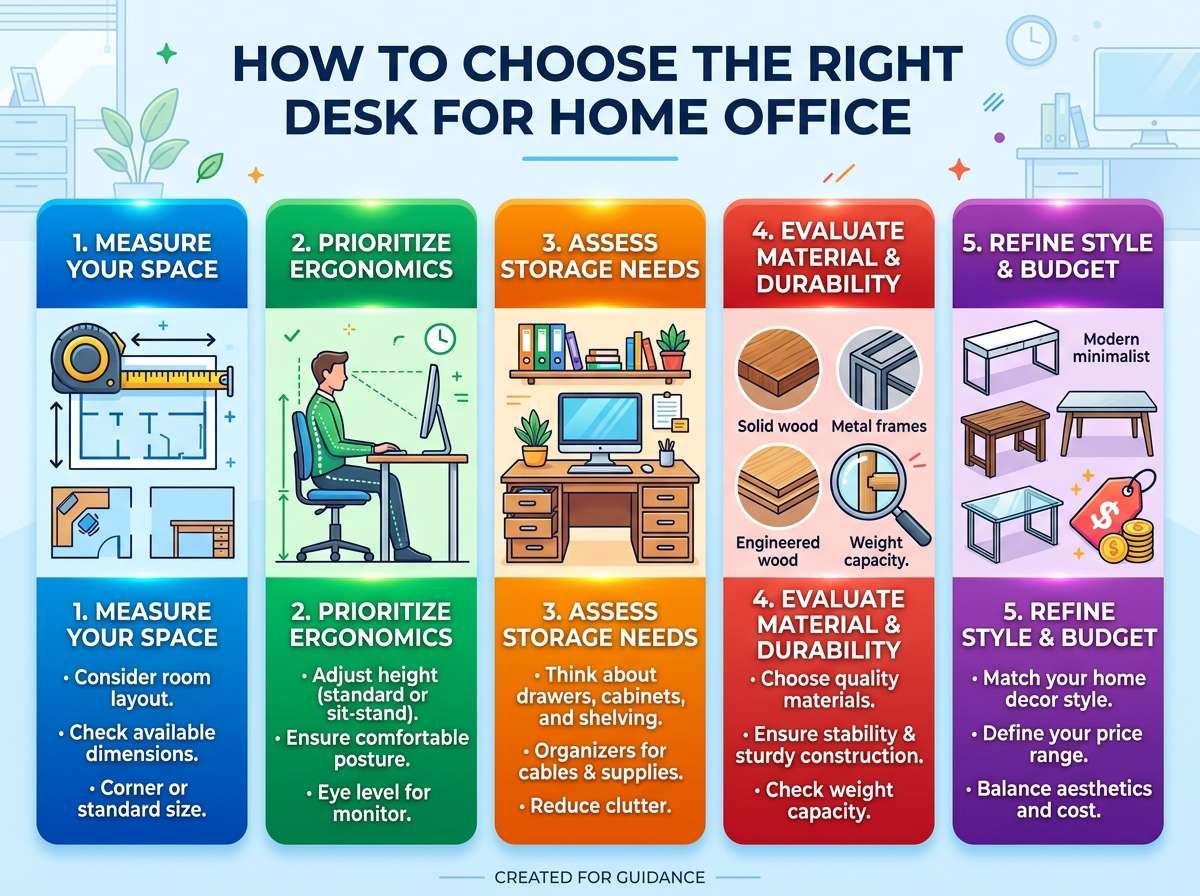
Here’s my process. First, decide on your budget. Next, think about what you do and what size you need. Then, figure out if you want adjustable height. Finally, find desks that match and read reviews.
Compare your top choices. Which one feels right? Which one matches your space and style? Which one can you actually afford?
Then buy it. Don’t overthink it. You can always try it out. Most places let you return stuff if it doesn’t work.
After You Get Your New Desk
Setting it up right is just as important as picking the right desk.
Place it in good light. Position your monitor at eye level. Keep your keyboard and mouse close. Put your chair at the right height. Keep cords organized.
Take breaks. Stand up every hour. Stretch. Move around. Even the perfect desk isn’t good if you sit in the same position all day.
Give it time. A new desk feels weird at first. Your body needs a week or two to adjust. Stick with it.
Final Thoughts
Finding the right desk is important. But it doesn’t have to be complicated. Think about your space, your work, and your budget. Test the desk if you can. Read reviews. Then make a choice.
A good desk makes work feel easier. It keeps you healthy. It makes you want to sit down and get things done. Your home office desk is a tool. Pick the right one and it pays for itself in comfort and productivity.
Take your time with this decision. It matters. But don’t stress too much either. There’s no such thing as a perfect desk. There’s just a desk that’s right for you. Find that one and you’re golden.

Hi, I’m Mary, the founder of Homygear.com. I’m passionate about creating a comfortable, smart, and beautiful home. I share practical insights and real-world experience on home gear that makes everyday life easier. Behind the scenes, my dedicated research team studies products in depth, and our writers craft honest reviews using trusted, authentic sources—so you can choose home gear with confidence.