2 Best Kitchen Sink Caddy For Sponge Storage In 2026
As an Amazon Associate we earn from qualifying purchases.
A kitchen sink caddy for sponge storage is a small tray or holder that sits by the sink. It keeps sponges, scrubbers and dish brushes off the counter and within easy reach. This guide helps beginners who want a tidy sink area but do not know where to start.
Many people keep sponges and brushes loose on the counter, where they can stay wet and collect crumbs. A caddy gives each tool a set place. It can also make the sink area look more organized, even in a small kitchen.
This round-up looks at two popular options: a large plastic organizer and a stainless steel caddy with a drip tray. Both aim to keep cleaning tools organized and help them dry. The comparison rests on the listed features and typical use of each product, not on personal testing.
When comparing caddies, it helps to think about how you clean. Some people rinse sponges and set them down right away, while others leave them soaking. The right caddy depends on if you need room for many items or a surface that drains well.

1. Amazon Basics Kitchen Sink Caddy Organizer: best for budget-friendly storage
What this caddy is and who it suits
The Amazon Basics Kitchen Sink Caddy Organizer is a large white plastic caddy made for the kitchen sink. It holds sponges, scrubbers, brushes, dish cloths and drain stoppers. It suits buyers who want simple storage at a low price.
It is a good fit for people with a busy sink area who need a lot of room. It also suits anyone who wants a basic tool that does one job well. Shoppers who prefer a premium look may want to compare it with the steel option.
Best use cases
The most common use is holding sponges and brushes beside the sink. The large main compartment can also take dish cloths and drain stoppers. Some owners place it in other rooms for small items, such as bathroom sponges or craft brushes, since the design is not tied only to the kitchen.
It can also work well for households that share one sink. Each person can keep a personal scrubber in a separate section, which reduces mix-ups. This is a practical use rather than a special feature, so results will depend on your routine.
Key features in simple terms
The caddy has one large storage compartment with a divider. The divider helps you separate sponges from brushes so they do not mix. A built-in platform gives you a place to set dishwashing detergent, which keeps the bottle off the sink edge.
The body is made of ABS plastic. ABS is a common, sturdy plastic that is resistant to cracking when dropped. The listed description calls it shatter-proof, which means it is built to hold up to knocks better than thin plastic would.
Because the storage is open rather than enclosed, air can reach the items inside. This matters because a damp sponge that stays closed in a container can develop odour sooner. Open designs are generally easier to keep dry.
Daily use and cleaning
In daily life, the caddy mainly sits on the sink edge or counter and gets used several times a day. Because the storage is open, sponges can be placed in the compartment and left to air out. Cleaning is simple, since the maker recommends wiping it down with a damp cloth.
Plastic caddies like this one can collect soap residue over time. A quick wipe after use helps keep it looking fresh. It is worth checking the sink area around the caddy from time to time as well.
Replacing sponges regularly also keeps the caddy cleaner. A worn sponge sheds fragments and holds more bacteria, so many people swap them out every few weeks. Your own schedule may differ depending on how often you cook.
Performance and ease of use
The caddy does its main job of keeping cleaning tools in one spot. Its large size makes it easy to fit many items at once. Setting it up needs no tools, so it is ready to use as soon as it is placed.
Because it is plastic and lightweight, it is easy to move when cleaning the sink. Still, a light caddy can shift when it is bumped. Placing it on a flat, dry surface helps keep it steady.
Some people find that a caddy with a wide base sits more firmly than a narrow one. Check the footprint against your sink or counter before buying, so it fits without crowding taps or the drain.
Value for money
At the listed price, this is one of the lower-cost options for sink storage. Many buyers look for this kind of value when they want basic organization without spending much. For beginners who are unsure how they will use a caddy, a low-cost choice is a sensible way to start.
Price alone does not tell the whole story. A cheaper caddy is only good value if it fits your space and holds the items you use. Compare the size and features with your own needs before deciding.
Pros
- Low price for a large sink caddy
- Roomy main compartment with a divider
- Built-in spot for dishwashing detergent
- Simple to clean with a damp cloth
Cons
- Plastic look may not suit every kitchen style
- Light weight means it can shift when bumped
- Plastic may show soap residue over time without regular wiping
- No built-in drip tray for draining wet sponges
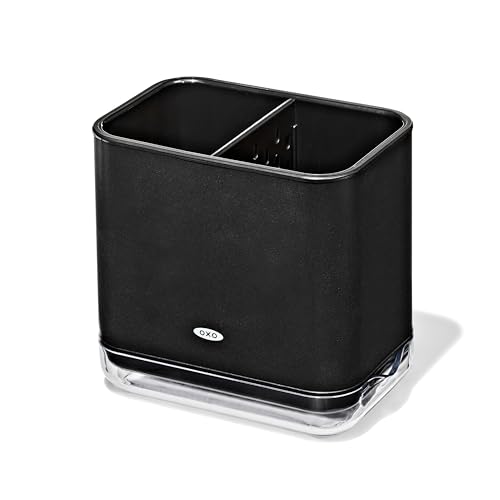
2. OXO Good Grips Stainless Steel Sink Caddy: best for drying and a sturdy look
What this caddy is and who it suits
The OXO Good Grips Stainless Steel Sink Caddy is a steel holder made for sponges and dish brushes. It includes a drip tray that catches water and sends it toward the pour spout. It suits buyers who want a tidy look and a focus on drying.
It is a good fit for people who keep wet sponges near the sink and want them to dry between uses. It also suits anyone who prefers a metal finish that matches other kitchen tools, such as a stainless steel faucet or appliances. Shoppers on a tight budget may find the price higher than the plastic option.
If you rinse your sponges and set them down without much thought, this type of caddy can add a simple habit that keeps the sink area more orderly. It works best for people who want their cleaning tools off the counter and out of the way.
Best use cases
The main use is holding sponges and brushes where they stay within reach. The divider can hold two sponges and two brushes, or it can be removed for one open space. This flexibility helps with larger items such as a scrub pad or a dish rack brush.
The caddy also works well in smaller kitchens where counter space is limited. Because it sits close to the sink, you can grab a tool without reaching far. Households that wash dishes by hand every day tend to get the most value from it.
Key features in simple terms
The divider separates cleaning tools so they do not sit in a pile. It also has ventilation holes that let air move through, which supports faster drying. In plain words, the holes help wet items dry instead of staying damp.
The drip tray is a shallow tray under the storage area. Its job is to collect water and guide it toward the pour spout. Because of this, water runs off in a direction that keeps the sink area cleaner.
The caddy is made of stainless steel. Stainless steel is a metal that resists rust and is easy to wipe clean. It gives the caddy a clean, modern look that many kitchens can match.
Daily use and drying
In daily use, the caddy often sits right beside the sink where sponges get wet. The ventilation holes and drip tray work together to help items dry faster. This can keep sponges from smelling stale, though results depend on how often they are rinsed and wrung out.
Steel can show water spots if it is left wet for long periods. A quick dry with a towel after cleaning helps keep the finish looking good. Regular wiping is usually enough to keep it in good shape.
For the best drying, squeeze out each sponge before placing it in the caddy. A sponge that is still dripping will take much longer to dry, even with good airflow. Placing the sponges so they do not touch each other also helps air reach every side.
Performance and ease of use
The caddy does its job by keeping tools organized and helping them dry. The removable divider makes it easy to change the layout when needed. Setting it up requires no tools, so it is ready to use right away.
Because steel is heavier than plastic, the caddy tends to stay in place more easily. Its drip tray also means water does not collect on the counter as much. Still, the tray needs to be emptied and rinsed now and then to avoid buildup.
Cleaning the caddy itself is simple. Remove the divider, rinse the tray and wipe the steel with a soft cloth and mild soap. Taking a minute each week to do this keeps the caddy looking new and prevents residue from building up in the corners.
Value for money
This caddy costs more than the plastic option, so it sits in a higher price range. Buyers who value drying features, a sturdy build and a clean look may feel the extra cost is worth it. Those who only need basic storage may find the plastic choice more practical.
When comparing prices, check if the listing includes the divider and drip tray, since these parts matter most for the drying benefit. A lower-priced option that lacks a drip tray may not offer the same daily convenience.
Pros
- Drip tray helps water drain toward the pour spout
- Ventilation holes support faster drying
- Stainless steel build is sturdy and easy to wipe clean
- Removable divider offers flexible storage layouts
Cons
- Higher price than the plastic caddy
- Steel can show water spots if left wet
- Drip tray needs regular emptying and rinsing
- Smaller storage space than a large plastic organizer may offer
Comparison insights: how the two caddies differ
The two caddies serve similar purposes but take different routes. The plastic option focuses on roomy storage at a low price. The steel option focuses on drying, draining and a sturdier look.
In terms of performance, the steel caddy has an edge for drying. Its ventilation holes and drip tray are features the plastic caddy does not list. The plastic caddy, however, offers a large open compartment that holds many items at once. That open space suits people who keep a wide mix of sponges, scrubbers and soap bottles in one place.
On ease of use, both are simple to set up and clean. The plastic caddy is lighter and easier to move, though it can shift more easily when bumped. The steel caddy stays steadier on the sink edge but needs its tray emptied and rinsed from time to time so water does not sit and collect.
For value, the plastic caddy costs less and suits buyers who want basic storage. The steel caddy costs more and suits buyers who want drying features and a metal finish. Neither is better in every case, so the right choice depends on what matters most to you, if that is low cost, roomy storage, or drying and a sturdier build.
Buying guide: key factors explained in plain words
Before you buy a sink caddy, it helps to know what features matter. The points below explain the most common factors in simple terms. Use them to match a caddy to your sink and habits.
Size and storage space
Size decides how much you can fit. A large caddy holds more sponges, brushes and small items. A smaller one takes up less room but may leave items crowded, especially if you keep a soap bottle and a scrubber in the same spot.
Measure the space beside your sink before you buy. Make sure the caddy will not block the faucet or the edge of the basin. Also check that you can reach your tools without leaning over other objects. A quick measurement avoids surprises.
Material and durability
Plastic is light, low cost and easy to shape. Stainless steel is heavier, usually sturdier and resists rust well. Each material has trade-offs, so think about how rough your daily use tends to be. A caddy that you move often may benefit from a lighter build, while one that stays in place may suit a heavier material.
A sturdy material handles knocks and frequent cleaning better. Thin or flimsy materials may crack or warp over time, especially when exposed to hot water. Look for a build that suits how often you plan to move or clean the caddy.
Drying features
Some caddies include ventilation holes or a drip tray. These features help wet sponges and brushes dry instead of staying soggy. Drying matters because damp sponges can develop odors if left wet for long periods. Air moving through the holes lets water drain away from the items you use most.
If you rinse and wring sponges often, a drying feature may be less critical. If you tend to leave them soaked, drying features can be a practical benefit. Think about your own habits before deciding, and remember that a drip tray only works well if you empty it regularly.
Ease of cleaning
A caddy that is easy to wipe down saves time and effort. Smooth surfaces collect less grime than surfaces with many crevices. Check if the caddy has parts that come apart or need extra care, such as small corners where soap residue can build up.
Cleaning needs differ by material. Plastic often needs a regular wipe to prevent soap buildup. Steel benefits from drying after cleaning to avoid water spots. In both cases, a quick rinse after each use keeps the caddy looking fresh with little extra work.
Layout and dividers
Dividers keep different tools separate, so sponges do not mix with brushes. A removable divider gives you the choice of one open space or several sections. Think about the items you plan to store most often, such as dish soap, scrubbers and a sponge for delicate glassware.
A simple layout is easier for beginners to keep tidy. Too many compartments can make the caddy harder to use and harder to clean. Choose the layout that fits your routine rather than the one with the most sections.
Price and value
Price should match how much you expect to use the caddy. A low-cost option works well for basic storage. A higher-priced option may suit buyers who want specific features such as drainage or a metal finish.
Compare features against cost rather than picking on price alone. A cheaper caddy that does not meet your needs may not feel like good value over time. Focus on the features you will really use, and skip the ones that will sit unused.
Who should buy these products
Each caddy suits a different type of buyer. The right match depends on budget, drying needs and how you like your kitchen to look. The points below help you decide.
It also helps to think about how often you do dishes by hand. A caddy that you use every day will need to hold up to frequent wetting and handling. A caddy for occasional use can be simpler.
Budget-focused buyers
Buyers who want basic sponge storage at a low price should look at the Amazon Basics organizer. It offers a large compartment, a divider and a detergent platform at a lower cost. It is a practical starting point for people who are unsure how much they will use a caddy.
A low-cost caddy is also a good way to test if a sink organizer fits your routine. If you find you rarely use it, you have not spent much. If you use it daily, you can later decide if a more durable model is worth the extra money.
Buyers who value drying and a sturdy finish
Buyers who want sponges to dry faster and prefer a metal look should consider the OXO caddy. Its drip tray, ventilation holes and steel build match these needs. It suits people who keep sponges wet near the sink and want a tidy, long-lasting option.
Drying matters because damp sponges can develop odors when they stay wet for long periods. A caddy with openings that allow air to move around the sponge can help them dry between uses. Water that drains into a tray also keeps the countertop drier.
Buyers with a small sink area
People with limited space may prefer a caddy that stays compact. The steel caddy’s removable divider can help you adjust the layout to fit. Measure the area first, whichever option you pick.
Measure the width of the space beside your sink and the depth from the wall to the sink edge. Compare these numbers with the product dimensions listed by the seller. Leave some room so you can lift the caddy out and clean behind it.
Final verdict
Both caddies do the core job of keeping sponges and brushes off the counter. The Amazon Basics organizer stands out for its large storage and low price. The OX O steel caddy stands out for drying, draining and a sturdier, metal finish at a higher price.
The right choice depends on your priorities. Buyers who want simple storage and a lower cost may prefer the plastic option. Buyers who want drying features and a steel look may find the OXO caddy better suited to their needs.
If you are still unsure, list the three things you care about most, such as price, drying or size. Then check each product against that list. The option that meets the most of your needs is usually the better fit.
Frequently Asked Questions
What is a kitchen sink caddy used for?
A sink caddy holds sponges, scrubbers, brushes and similar cleaning tools near the sink. It keeps them off the counter and within reach. Many caddies also give space for dishwashing detergent.
Keeping tools in one place can also make cleaning quicker. You know where your sponge is without searching, and the counter stays clear for food prep and dishes waiting to be washed.
Is a plastic or steel sink caddy better?
Neither is better in every case. Plastic is lighter and usually costs less. Steel is sturdier and often includes drying features, though it costs more.
Your sink area and habits should guide the choice. If you move the caddy often or want a simple, low-cost option, plastic may work well. If you want a longer-lasting piece with better airflow, steel is often the better match.
How do I keep a sponge caddy from smelling bad?
Rinse sponges well and wring them out before placing them in the caddy. Good airflow helps them dry faster. Wipe the caddy down regularly so residue does not build up.
Replacing sponges when they start to look worn or hold odors is also helpful. A sponge that stays damp for long periods is more likely to smell, so placing it where air can reach it makes a clear difference.
Do sink caddies need to be cleaned often?
Most caddies benefit from a quick wipe every few days, or whenever they look dirty. Plastic can collect soap residue, while steel can show water spots if left wet. A regular wipe keeps both in good shape.
Empty the caddy occasionally and check the bottom for standing water or food bits. Drying the caddy with a towel after cleaning helps prevent water spots and keeps the surface looking clean.
Can a sink caddy be used in other parts of the home?
Some caddies are designed for other uses, such as storing small items in a bathroom or workspace. Check the product features to confirm this. A caddy made mainly for the sink may work best in that area.
Moving a sink caddy to another room can be practical if it fits the space and holds the items you need. Confirm that the materials can handle the new environment, especially if the room is humid or has less airflow.

Hi, I’m Mary, the founder of Homygear.com. I’m passionate about creating a comfortable, smart, and beautiful home. I share practical insights and real-world experience on home gear that makes everyday life easier. Behind the scenes, my dedicated research team studies products in depth, and our writers craft honest reviews using trusted, authentic sources—so you can choose home gear with confidence.