5 Best Foldable Clothes Organizer In 2026
As an Amazon Associate we earn from qualifying purchases.
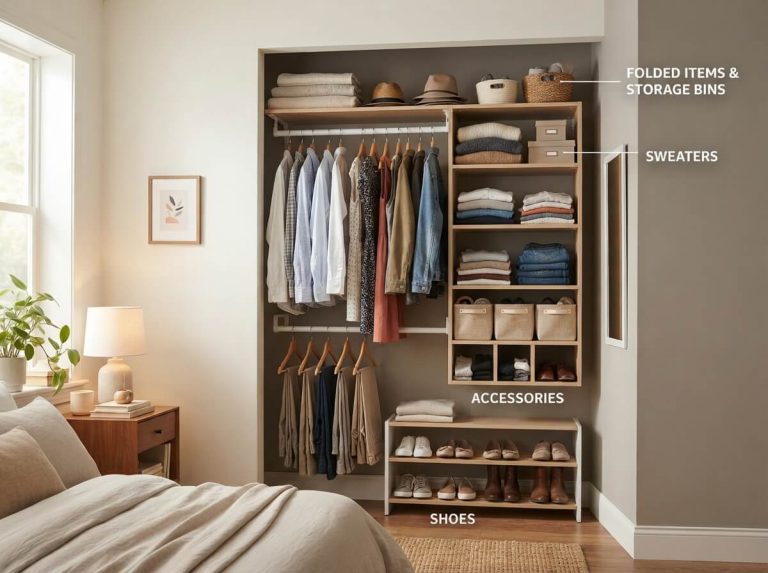
Shopping for a foldable clothes organizer can feel confusing at first. Many fabric and plastic bins look alike online, yet they differ in size, structure and purpose. Some are built to stand up on a shelf, while others are meant to slide into a drawer or sit on the floor of a closet. This guide helps beginners who want to tidy a closet, dresser, nursery or laundry room without buying the wrong thing.
The five products covered here share one basic idea: they fold flat when not in use and hold clothes or small items when set up. This comparison rests on the listed features and typical use, not on personal testing. Each review explains what the product is, who it suits and how it may perform day to day. Where a detail is not listed, the review says so rather than guessing.


1. 5 Pack Closet Organizers and Storage: best for stacking vertically
What this product is
The 5 Pack Closet Organizers and Storage set is a group of five rectangular bins made from PP plastic. PP is a common plastic used in storage containers, and it holds its shape better than soft fabric. The bins are designed to stack, so they suit people who want to use shelf height rather than floor space.
This set suits shoppers who want a sturdier option for shirts, pants, towels and everyday essentials. It fits bedrooms, bathrooms, laundry rooms and kitchens. A buyer with a small closet and little floor room may find the stacking design especially useful.
Best use cases
These bins work well on closet shelves, inside wardrobes and in storage cabinets. Because they stack, they can turn an empty upper shelf into useful storage. They also suit files and lightweight household items such as spare linens, toiletries or craft supplies.
They are less suited to heavy loads or to tight dresser drawers where the bin must fit a precise space. Measuring the drawer or shelf before ordering helps avoid a bad fit.
Key features explained
The bottom rail helps users grab items more easily. The bins pull out only about halfway, so they do not slide out like a full drawer. Leaning them against a wall can add support when using them in a drawer-like way.
Each bin measures about 16.73 by 13.11 by 7.28 inches. That size is large enough for folded clothes and towels. The plastic can be wiped clean with a damp cloth, which makes spills and dust easier to manage than with fabric.
Daily use feel
In everyday use, the bins usually feel firm when loaded. Plastic walls tend to stay upright, which helps keep folded items neat. Pulling a bin out halfway is simple, but users who expect full drawer access may find the limited slide frustrating. Checking how items are reached before buying avoids that surprise.
Performance and ease of use
Stacking is the main strength here. Once in place, the bins keep their shape and make shelves look orderly. Setup mostly involves unfolding and placing each bin, so the process is quick and needs no tools.
Value for money
At the listed price, the set sits in the mid-range for five bins of this size. The value depends on if vertical storage and sturdy walls matter more to the buyer than soft, flexible fabric. Comparing the total number of bins and their dimensions against other options gives a fairer sense of cost per bin.
Pros
- Sturdy PP plastic keeps its shape well
- Stacks vertically to use shelf height
- Easy to wipe clean with a damp cloth
- Foldable and light enough to move or rearrange
Cons
- Pulls out only about halfway, not like a full drawer
- Plastic is less soft and flexible than fabric
- Works best on shelves, less so inside tight dresser drawers
2. DIMJ Drawer Organizer Clothes 15 Pack: best for mixed-size drawer dividers
What this product is
The DIMJ Drawer Organizer Clothes 15 Pack is a set of fabric bins in three sizes. It includes large, medium and small bins, which makes it useful for sorting different types of items. The set is sold as a foldable option for drawers, shelves and closets.
It suits people who want to divide a dresser drawer into sections. It is also a practical choice for a nursery, where small clothing pieces such as socks, bibs and onesies need separate spaces that are easy to reach.
The grid of your previous text was cut off at the start of this section, so I will continue from that point.Best use cases
These bins work well as drawer dividers in dressers and as storage on closet shelves. The mix of sizes helps separate socks, underwear and bras from larger folded items like T-shirts or sweaters. Many buyers also use them in nurseries and bathrooms, where towels, washcloths and toiletries need a tidy home.
They are also useful for organizing a suitcase or a travel bag. Rolled clothing fits neatly into the bins, so each category stays together and is easy to find when unpacking.
Key features explained
The set includes five large bins, five medium bins and five small bins. The large bins measure about 11.8 by 11.8 by 3.54 inches, and the small bins measure about 5.9 by 5.9 by 3.54 inches. The fabric is described as breathable and odorless, which helps when storing delicate items. Breathable fabric allows some air to pass through, which many people prefer for clothing that may sit for a while.
When not in use, the bins fold flat for storage. This means you can keep spares tucked away in a closet without taking up much space. Their colors are described as neutral, so they blend with most room styles and do not draw attention in a bedroom or nursery.
Daily use feel
Because the bins are fabric, they feel soft and flexible when handled. They do not hold a rigid shape the way plastic does, so a fully loaded bin may sag a little. Users often find that the smaller bins are the easiest to lift and move around, especially when they need to reach items at the back of a drawer.
Softer bins also tend to be quieter when you open and close a drawer. Fabric does not knock against wood or other bins the way plastic can, which may matter in a shared bedroom or a sleeping baby’s room.
Performance and ease of use
Setup is simple: open the bin, place it in the drawer or on the shelf, and fill it. The variety of sizes gives flexible options for dividing space. For example, you might place the large bins for folded pants, the medium bins for shirts and the small bins for accessories. Keeping the bins evenly filled helps them look tidy over time and prevents one side from sagging more than the other.
Because the bins are not rigid, they work best when placed side by side inside a drawer that already has some width. Leaving a little room between bins makes it easier to pull out one section without disturbing the rest.
Value for money
At the listed price, the 15-piece set is among the lower-priced options in this round-up. Buyers who need many small compartments may find the number of pieces a practical benefit. Compare the price per bin if you are weighing this set against a smaller pack or a rigid plastic organizer, since the cost per compartment can differ a lot between products.
Pros
- Fifteen bins in three sizes offer flexible organizing
- Folds flat for compact storage
- Fabric is described as breathable and odorless
- Neutral colors suit many interior styles
Cons
- Soft fabric can sag when fully loaded
- Less rigid than plastic bins for shelf stacking
- Smaller bins may not hold bulky items
3. Vtopmart 18 Pack Baby Clothes Organizer: best for nursery drawers
What this product is
The Vtopmart 18 Pack Baby Clothes Organizer is a set of foldable fabric bins built for nursery drawers and closets. It includes three sizes, with six bins in each. The bins are sold as an organizing aid for baby clothes and small accessories.
This set suits parents who want to keep baby items sorted in a dresser or closet. It also works for adults who need small compartments for toiletries or accessories. Because the bins are soft and collapsible, they can be moved between rooms without much effort.
Best use cases
The bins are designed for dresser drawers, nursery shelves and closet storage. The largest bins suit diapers and clothing, while the mid-size bins can hold socks and shoes. Small bins work for bibs and little items.
A practical example is a nursery dresser with four shallow drawers. Each drawer can hold a few bins, so folded onesies, pajamas and burp cloths stay in their own sections instead of piling together. This makes it easier to find a clean outfit quickly during early morning changes.
Key features explained
The set includes six large square bins, six rectangular bins and six small square bins. All share a height of about 4.5 inches, which the listing says fits most closet drawers. The sides have plastic boards at four edges to add some stiffness.
The bins can be cleaned with a damp cloth. When not needed, they unzip and fold flat for compact storage. Flat storage can be useful for families who need to clear space in a closet or pack bins away once a child outgrows a size.
Daily use feel
In regular use, the bins feel light and easy to carry from room to room. The plastic edges help the walls hold their shape better than fully soft bins. Still, the base can soften under heavy loads, so lighter items usually work best.
Folded clothing and small accessories are the most suitable contents. Heavier items such as full packs of wipes or bulky blankets may cause the base to sag over time. Checking how the bin feels after a week of use can help you judge if it suits your load.
Performance and ease of use
Setup is quick, since the bins only need to be unfolded and placed. The consistent height across all sizes helps them sit neatly side by side in a drawer. Zipping and unzipping the covers adds a small extra step.
Because the covers open on one side, reaching items at the back of a bin can take a moment more than with an open-top basket. Many users find this a fair trade for the tidier look and added privacy the covers provide inside a closet.
Value for money
At the listed price, this 18-piece set is close to the other fabric options in this round-up. Its value is strongest for buyers who need many bins of matching height for a nursery.
If you only need a few bins for a single drawer, a smaller set may cost less overall. Comparing the number of bins and their sizes against your actual storage needs will show if the full set makes sense.
Pros
- Eighte ne pieces in three sizes suit many nursery needs
- Consistent 4.5 inch height fits most closet drawers
- Plastic edges add some stiffness to the walls
- Foldable and easy to wipe clean with a damp cloth
Cons
- Base can soften under heavy loads
- Fabric is less rigid than plastic for stacking
- Zipper covers add a small step to setup and access
4. Homsorout Clothes Organizers and Storage: best for folded jeans and sweaters
What this product is
The Homsorout Clothes Organizers and Storage set is a group of six foldable fabric organizers with grid dividers. Each organizer has a set of compartments for sorting folded clothing. The set is sold for closets, dorm rooms, RVs and offices.
It suits people who want to keep folded jeans, sweaters and t-shirts separated by type. It is a practical fit for anyone who prefers sorting by compartment rather than loose piles. Because each compartment holds one category, it is easier to find a specific item without unfolding a whole stack.
Best use cases
These organizers work well on closet shelves, inside wardrobes and under beds where space is tight. The larger compartments suit thick sweaters and jackets, while the smaller ones hold socks and ties. They are also useful for dorm rooms with limited storage, where a shelf can hold several organizers side by side.
Some people use them for non-clothing items as well, such as towels, bedding or kids’ toys. The fabric walls keep contents out of direct view, which can make a shelf look tidier. Results depend on how much each compartment holds and how the items are folded.
Key features explained
Each organizer measures about 14.17 by 10.62 by 6.69 inches. The set includes 32 grids in total, with three sizes: four-cell, five-cell and seven-cell compartments. The walls use a thicker non-woven material with cardboard support around the sides and base.
Two handles are stitched to the body. The listing describes them as comfortable for lifting and moving. A bottom zipper lets the organizer fold up when not in use, which helps when storage space is needed for something else.
Daily use feel
In daily use, the cardboard support helps the organizers keep a square shape when filled. The handles make it easy to pull a full organizer off a shelf. Because the compartments are fixed, sorting is more structured than with loose bins, and it is simple to see which slot is empty.
Folded items work best here. Bulky or rolled items can push against the walls and bow the sides over time, so it helps to fill each compartment to a comfortable level rather than packing it tightly.
Performance and ease of use
Setup takes only a moment, since the organizer opens and fills right away. The sides and base add stability, which helps when stacking several organizers. The fixed grid layout may feel limiting if an item does not fit a compartment size, so measuring a few favorite pieces before buying can prevent frustration.
Cleaning is usually a matter of wiping the fabric or spot-treating stains. Check the listing for specific care instructions before washing, since fabric and cardboard components can react differently to water.
Value for money
At the listed price, this six-pack sits in the middle of the range for fabric organizers in this round-up. Buyers who value structured compartments and sturdy handles may find the cost reasonable. Anyone who needs only one or two organizers may prefer to compare single-unit options first.
Pros
- Thirty-two compartments in three sizes help sort clothing
- Cardboard support keeps the sides and base stable
- Sturdy stitched handles make lifting easier
- Foldable for compact storage when not in use
Cons
- Fixed grid sizes may not suit every item
- Thicker walls make the organizer heavier when full
- Less flexible than open bins for odd-shaped items
5. Univivi Fabric Closet Storage Bins: best for covered storage with a window
What this product is
The Univivi Fabric Closet Storage Bins set includes four gray bins with lids. Each bin has a clear window so users can see inside without opening it. The bins are sold for shelves, bedrooms, offices and closets.
This set suits people who want covered storage for clothes or towels and prefer to see contents at a glance. The lids also help keep dust off folded items. Because the bins are fabric, they are lighter to lift than solid plastic containers of similar size.
Best use cases
These bins fit well on closet shelves, under beds and in office cabinets. The lids make them a good match for items stored for longer periods, such as off-season sweaters or spare bedding. The handles make it easy to move a bin from one spot to another, for example from a closet to a bed.
They also work in a home office for storing papers, cables or craft supplies. Anything that should stay out of sight but still be easy to find is a good fit.
Key features explained
Each bin measures 17 by 12 by 12 inches and holds about 40 liters, which the listing gives as 10 gallons. The walls use thick non-woven fabric, with hard cardboard inside the sides and base. This structure helps the bin keep its shape when full.
Two sturdy handles sit on the sides. The bins stack to save room and fold flat when not in use, which helps when storage space is needed only part of the year. The clear window lets users find items quickly without pulling out each bin.
Daily use feel
In daily use, the cardboard support keeps the bins firm, even when they hold a full load. The lids add a sense of tidiness, since items stay out of sight. The window reduces the need to open each bin to check its contents, which saves time when looking for a specific sweater or towel.
Because the bins are large, they take up more shelf space than smaller organizers. Users who need many small compartments may prefer a different style, such as a divided drawer organizer.
Performance and ease of use
Setup is simple: unfold the bin, place it on a shelf, and fill it. The lids open and close easily, and the handles make moving a full bin manageable. Stacking works well when the bins are evenly loaded, since an uneven load can make a stack lean.
The large open space suits bulky items, such as folded blankets or jeans, but it offers no internal dividers. Items can shift around if they are not packed carefully. Packing similar items together, such as socks in one corner and towels in another, can help keep the bin organized.
Value for money
At the listed price, this four-pack is among the higher-priced options in this round-up. Its value is strongest for buyers who want covered, see-through bins with large capacity. Buyers who only need a few small containers may find better value in a smaller or cheaper set.
The listing also mentions a two-year after-sales promise, which may add some reassurance. Check the current terms on the seller’s page before buying, since warranty details can change.
Pros
- Clear window shows contents without opening the bin
- Lids help keep dust off stored items
- Cardboard support keeps the bin firm when full
- Large capacity suits bulky clothing and towels
Cons
- Large size takes up more shelf space
- No internal dividers to separate small items
- Higher price than several other options in this round-up
Comparison insights: how the five products differ
The five products share a foldable design, but they differ in structure and purpose. The plastic set holds its shape best and suits stacking. Because it keeps its form, it stays neat on a shelf and does not sag when stacked high.
The fabric sets are softer and lighter, which makes them easier to move but less rigid. They bend when empty and fold flat for storage. That flexibility helps when you need to slide a bin into a tight gap, but it also means heavy items may cause the walls to bulge.
Ease of use depends on the task. Drawer dividers and nursery sets work well for small items such as socks, hair accessories, or baby clothes. Larger covered bins suit bulky clothing like sweaters and winter coats, where a lid helps keep dust off the contents.
Value for money varies with the number of pieces and the features each set offers. A set with more bins costs more but may cover a whole closet, while a smaller set may be enough for a single drawer. Compare the total number of compartments and the size of each one, not just the price tag.
Buying guide: key factors explained in plain words
Start by deciding where the organizer will live. A closet shelf needs a different design than a dresser drawer, and a bin that fits a deep drawer may be too tall for a shallow one. Measure the space before buying so the bins fit comfortably, and leave a little room for your hand to reach inside.
Next, think about what you will store. Heavy items need firmer walls, while folded shirts and socks work well in soft fabric. Covered bins suit items you want to protect from dust, and open bins make it easier to see what is inside at a glance.
Finally, consider how often you will move or change the bins. Foldable designs are useful if you plan to rearrange your space or store bins between seasons. A bin that folds flat takes up little room when it is empty, which helps if your storage space is limited.
Who should buy these products: matching buyers to a product
People who want stackable storage for shelves may prefer the plastic set. It keeps its shape and makes use of vertical space. It suits bedrooms and laundry rooms, where bins often sit on shelves and need to stay upright.
Parents organizing a nursery may find the Vtopmart set a good match. Its consistent height and mix of sizes fit small baby items well, such as bibs, socks, and diapers. The DIMJ set also suits nurseries, especially for sorting underwear and socks by size or type.
Anyone who wants structured compartments for folded jeans and sweaters may prefer the Homsorout organizers. The grid layout keeps items separate, so a stack of jeans does not spread into the next section. Buyers who want covered, see-through storage for bulky clothing may choose the Univivi bins, since the clear panels let you find items without opening every lid.
Final verdict
No single product suits every need. The right choice depends on the space, the items and the level of structure a buyer wants. Plastic bins suit stacking and shelves, while fabric options suit flexible, lightweight storage that can be moved or folded away.
In short, match the product to the task. Check the size, the material and the number of compartments before buying, and measure your space first. Think about if you need a lid, a grid or a bin that can be stacked. A careful choice usually leads to a tidier, easier-to-use closet that stays organized over time.
Frequently Asked Questions
Are foldable clothes organizers durable?
Durability depends on the the material and how the organizer is used. Plastic bins usually keep their shape better, while fabric options are lighter and more flexible. Checking the listed materials and avoiding overloading helps extend their life.
Can these organizers be used in a dresser drawer?
Yes, several of these products are designed for drawers or work well as drawer dividers. Measure the drawer first, since some bins fit better than others. Fabric bins can also sag if overfilled, so keep them evenly loaded.
How do I clean a foldable fabric organizer?
Most of these products can be wiped with a damp cloth, which handles light dust and spills. Check the care notes on the listing for any specific guidance. Let the organizer dry fully before folding it away.
What is the difference between fabric and plastic organizers?
Plastic organizers hold a firm shape and stack well on shelves. Fabric organizers are softer, lighter and easier to fold flat. The best choice depends on if rigidity or flexibility matters more.
Do I need a lid on my clothes storage bins?
A lid helps keep dust off folded clothes and towels, especially on open shelves. It is not essential for every space. If items are used often, an open bin may be more convenient.
Hi, I’m Mary, the founder of Homygear.com. I’m passionate about creating a comfortable, smart, and beautiful home. I share practical insights and real-world experience on home gear that makes everyday life easier. Behind the scenes, my dedicated research team studies products in depth, and our writers craft honest reviews using trusted, authentic sources—so you can choose home gear with confidence.