5 Best 1 Room Air Conditioner In 2026
Finding the perfect cooling solution for a single room can transform your comfort during hot days. The right air conditioner delivers reliable temperature control without the expense of whole-home systems. This comprehensive guide examines five top-performing units that excel in cooling efficiency, ease of use, and value for money.
Why Single-Room Air Conditioners Make Sense
Single-room cooling units offer targeted climate control where you need it most. These portable solutions work perfectly for bedrooms, home offices, dorms, or any space requiring independent temperature management. Unlike central air systems, they require no permanent installation and move easily between rooms. The flexibility allows you to cool specific areas without wasting energy on unused spaces.
Modern portable air conditioners combine multiple functions into one unit. Most models include cooling, dehumidifying, and fan modes. Some advanced units even provide heating capabilities for year-round comfort. The technology has improved significantly, offering quieter operation and better energy efficiency than older models.
Our Top Picks for Single Room Cooling
1. COSTWAY 15000 BTU Portable Air Conditioner – Best Overall Performance
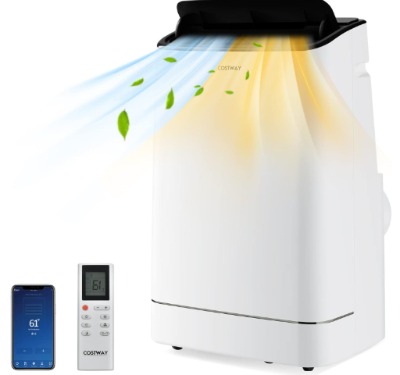
The COSTWAY 15000 BTU unit stands out as the most powerful option in this comparison. This 4-in-1 system handles cooling, heating, dehumidifying, and fan functions with impressive capability. The unit effectively manages spaces up to 800 square feet, making it suitable for large bedrooms or open-concept living areas.
Product Overview
This white ABS unit measures 17.5 x 14.5 x 30.5 inches and weighs 73 pounds. The robust construction houses a powerful compressor that delivers 15000 BTU ASHRAE cooling capacity and 11500 BTU heating capability. The actual SACC rating stands at 10800 BTU, providing honest cooling performance expectations.
Key Features
The automatic 74-degree swing function circulates air throughout the entire room. Three fan speeds offer customized airflow: high, middle, and low settings. The temperature adjusts from 61°F to 88°F, accommodating various comfort preferences. The unit includes an LED touch panel, handy remote control with 26-foot range, and Smart Life app compatibility for smartphone control.
The dehumidification capacity reaches 118 pints per day in dry mode. This powerful moisture removal helps during humid conditions. The sleep mode operates quietly while maintaining comfortable temperatures throughout the night. A 24-hour timer allows programming for energy-efficient operation.
Installation and Maintenance
The complete window kit adapts to windows measuring 25.5 to 47 inches. The 5.2-foot exhaust hose with 6-inch diameter vents hot air outside. Installation takes less than an hour for most users. The portable design features handles and universal wheels for easy room-to-room movement.
Two drainage methods provide flexibility. Manual drainage works for occasional use. Continuous drainage connects a hose for extended operation. The overflow protection automatically shuts off when the tank fills. The removable, washable filter requires regular cleaning to maintain efficiency.
Performance Analysis
Users consistently praise the cooling power and heating effectiveness. The unit cools large spaces rapidly, typically achieving set temperatures within 15 minutes. The heating function works well in moderate climates, though very cold temperatures present challenges for any portable heat pump.
The noise level ranges from 52 to 56 decibels. This falls within acceptable limits for most users, though light sleepers might notice the sound. Sleep mode reduces noise levels for nighttime operation. The unit draws 12 amps during cooling and 11 amps while heating, requiring a standard 115V outlet.
Pros
- Exceptional cooling and heating capacity for rooms up to 800 square feet
- Three control methods including smartphone app integration
- Powerful 118 pints/day dehumidification
- Auto swing promotes better air circulation
- Easy installation with complete window kit
- Removable, washable filter for simple maintenance
- Year-round functionality with heating mode
Cons
- Heavy at 73 pounds, though wheels help with mobility
- Noise level might disturb very light sleepers
- Requires regular water tank emptying without continuous drainage
- Higher power consumption than smaller units
Best For: Large bedrooms, home offices, or living spaces requiring powerful cooling and heating capabilities with smart home integration.
2. 14000 BTU Portable Air Conditioner – Best for Large Spaces
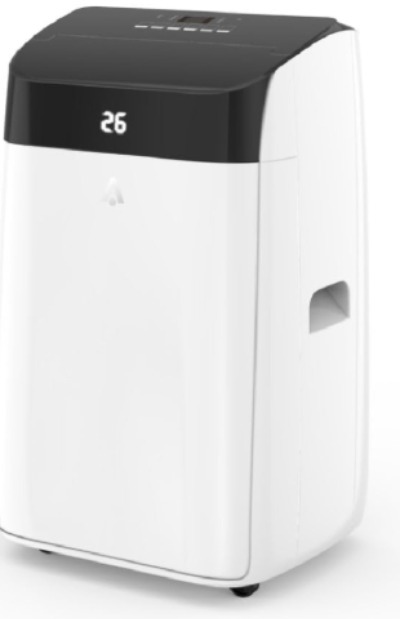
This 14000 BTU unit delivers exceptional cooling for areas up to 750 square feet. The 3-in-1 design combines air conditioning, dehumidifying, and fan functions. The sleek appearance complements modern interiors while providing robust cooling performance.
Product Overview
The unit features an ASHRAE rating of 14000 BTU with a SACC rating of 9300 BTU. This honest capacity measurement helps set realistic expectations. The airflow rate reaches 400 cubic meters per hour, ensuring rapid temperature reduction even in challenging conditions.
Key Features
Three fan speeds adjust from low to high, offering precise airflow control. The temperature range spans 61°F to 89°F, accommodating diverse preferences. The digital LED display shows current settings clearly. Remote control operation works from up to 23 feet away, eliminating the need to approach the unit.
Auto swing adjusts airflow direction both vertically (90 degrees) and horizontally (60 degrees). This wide range ensures even cooling throughout the space. Sleep mode maintains comfortable temperatures with reduced noise levels, measured at approximately 50 decibels. The 24-hour timer enables scheduled operation for energy savings.
Installation Details
The complete installation kit includes everything needed for quick setup. The window adapter fits most standard windows. The exhaust hose vents warm air outside efficiently. Caster wheels provide smooth mobility across various floor surfaces. Side handles assist with positioning and relocation.
Performance Review
This unit excels at rapid cooling. Users report rooms reaching comfortable temperatures within minutes. The dehumidifying function removes excess moisture effectively. The quiet operation during sleep mode allows peaceful rest. Energy consumption remains reasonable for the cooling capacity provided.
The three-speed fan offers flexibility. Low speed works well for gentle circulation. High speed delivers maximum cooling power when needed. The auto-shutoff feature prevents overflow from the water tank. The washable filter maintains air quality with minimal maintenance effort.
Pros
- Powerful 14000 BTU cooling for spaces up to 750 square feet
- Quiet operation at 50 decibels in sleep mode
- Wide oscillation range (90° vertical, 60° horizontal)
- Easy-to-read LED display
- Remote control with 23-foot range
- Energy-efficient operation
- Complete installation kit included
Cons
- No heating function for winter use
- Water tank requires periodic emptying
- Remote control requires line-of-sight operation
- Slightly loud at highest fan speed
Best For: Bedrooms, living rooms, or home offices needing powerful cooling without heating capability.
3. 14000 BTU Portable Air Conditioner with Heater – Best All-Season Unit
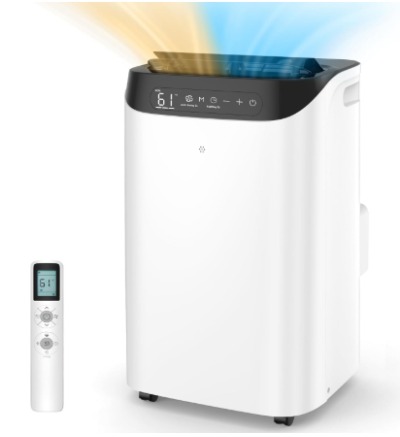
This 4-in-1 portable air conditioner excels as a year-round climate solution. The combination of cooling, heating, dehumidifying, and fan modes addresses all seasonal needs. The unit manages spaces from 550 to 700 square feet effectively.
Product Overview
The black finish gives this unit a modern, professional appearance. The compact footprint fits easily into various room layouts. The robust construction ensures durability through seasons of continuous use. Smart controls simplify operation for all family members.
Key Features
The heating mode provides warmth during cold months, eliminating the need for separate space heaters. Cooling mode delivers powerful temperature reduction during summer. Dehumidifier mode removes excess moisture without active cooling. Fan-only mode circulates air during mild weather.
Remote control offers convenient adjustments from across the room. The control panel features intuitive buttons for mode selection, temperature adjustment, and timer programming. Auto swing distributes conditioned air evenly. The timer function programs operation up to 24 hours in advance.
Installation and Setup
The included window kit adapts to various window types and sizes. Installation requires no special tools or technical knowledge. The process typically completes in 30 to 45 minutes. The flexible exhaust hose reaches windows several feet away from the unit placement.
Rolling casters enable easy movement between rooms. The side handles assist with steering and positioning. The unit plugs into standard outlets, requiring no special electrical work. The self-evaporating system minimizes water drainage maintenance during normal operation.
Performance Evaluation
The cooling performance effectively handles large rooms. The heating function provides supplemental warmth for moderate climates. Users report satisfaction with the dehumidifying capability. The multiple modes offer genuine versatility throughout the year.
Energy efficiency meets reasonable expectations for a dual-function unit. The automatic mode adjusts operation based on ambient conditions. Sleep mode operates quietly while maintaining set temperatures. The washable air filter captures dust and allergens effectively.
Pros
- Four operational modes for year-round use
- Heating capability eliminates need for separate heater
- Covers 550-700 square foot areas
- Auto swing for even air distribution
- 24-hour programmable timer
- Self-evaporating system reduces maintenance
- Modern black finish
Cons
- Heating effectiveness decreases in very cold climates
- Heavier than cooling-only models
- Higher initial cost than single-function units
- May require more frequent filter cleaning with year-round use
Best For: Users seeking one device for both summer cooling and winter heating in medium to large rooms.
4. LifeMaster 8000 BTU Portable Air Conditioner – Best Budget-Friendly Option
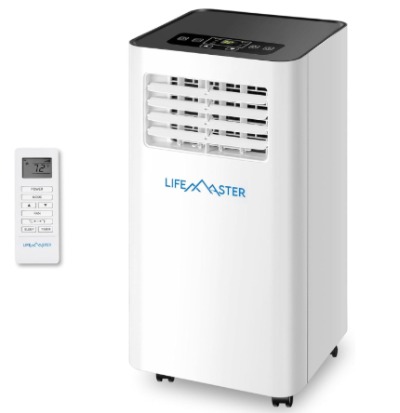
The LifeMaster 8000 BTU unit provides reliable cooling for smaller spaces at an affordable price. This 3-in-1 system handles air conditioning, dehumidifying, and fan functions. The compact size fits easily into dorms, small bedrooms, or home offices.
Product Overview
Measuring 12.8 x 11.6 x 27.6 inches, this unit saves valuable floor space. The weight of approximately 47.7 pounds makes it easier to move than larger models. The white finish blends with most decor styles. The 8000 BTU ASHRAE rating (5100 BTU DOE) suits rooms up to 350 square feet.
Key Features
Two speed settings provide basic airflow control. The adjustable fan cools air down to 65°F at the coolest setting. Digital remote control enables convenient operation from across the room. Sleep mode reduces noise levels for nighttime comfort while maintaining cooling performance.
The built-in dehumidifier removes moisture from the air. This function proves especially useful during humid conditions. Fan mode circulates air without active cooling. The combination of modes handles various comfort needs throughout the season.
Installation Process
The installation kit includes all necessary components. The window mount exhaust kit fits most standard windows. The exhaust hose connects easily to the unit and window adapter. Setup requires minimal time and no special tools. The casters allow smooth movement across floors.
Performance Assessment
This compact unit delivers adequate cooling for its intended space range. Users appreciate the straightforward operation and reliable performance. The noise level remains acceptable for most applications. Energy consumption stays reasonable for the cooling capacity provided.
The dehumidifying function works effectively in moderately humid conditions. The removable air filter cleans easily under running water. Regular maintenance keeps the unit operating efficiently. The compact size proves advantageous in smaller living spaces.
Pros
- Affordable price point for budget-conscious buyers
- Compact design suits small spaces up to 350 square feet
- Lightweight at 47.7 pounds
- Simple, intuitive controls
- Digital remote control included
- Sleep mode for quiet nighttime operation
- Easy setup and maintenance
- Energy-efficient for size
Cons
- Limited cooling capacity for larger rooms
- Only two fan speeds
- No heating function
- Basic feature set compared to premium models
- Shorter remote control range
Best For: Dorm rooms, small bedrooms, home offices, or anyone seeking affordable cooling for compact spaces.
5. NOMEY Evaporative Air Cooler – Best Eco-Friendly Alternative
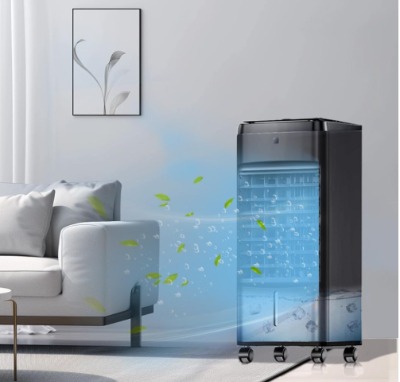
The NOMEY evaporative cooler takes a different approach to room cooling. This 3-in-1 system combines air cooling, humidifying, and fan functions. The unit works by evaporating water, consuming only 60 watts of power compared to traditional air conditioners.
Product Overview
This unit operates without a compressor or refrigerant, making it environmentally friendly. The design includes a 1-gallon detachable water tank. Four ice packs enhance cooling effectiveness. The 70-degree oscillation distributes cool air widely throughout the space. Coverage extends to approximately 300 square feet.
Key Features
Four operational modes adapt to different needs. Normal mode provides standard cooling. Natural mode mimics natural breezes. Sleep mode operates quietly for nighttime use. Cooling mode maximizes temperature reduction. Three speed settings offer low, medium, and high airflow options, creating 12 unique cooling combinations.
The top-fill design simplifies water refilling without bending. This feature particularly benefits seniors and pregnant women. The detachable tank enables easy cleaning and maintenance. The water level window allows monitoring without opening the unit. The tank provides up to 10 hours of continuous cooling.
Remote control operation works from across the room. Touch panel controls offer an alternative input method. The 12-hour timer programs automatic shutoff. The unit operates at just 60 decibels, quieter than many traditional air conditioners.
Installation and Operation
No window installation or venting required. Simply plug the unit into a standard outlet and add water. The ice packs freeze in a standard freezer. Adding ice water and frozen packs maximizes cooling effect. The unit works immediately without complex setup procedures.
The 429 CFM airflow covers substantial areas. The 70-degree automatic oscillation distributes cool air evenly. Four caster wheels enable easy mobility. The narrow safety grille protects children and pets. ETL certification ensures safety standards compliance.
Performance Analysis
Evaporative cooling works best in dry climates. Humidity levels below 50% yield optimal results. The unit adds moisture to the air while cooling, benefiting dry environments. Very humid areas see reduced cooling effectiveness since evaporation slows in saturated air.
Users in appropriate climates report satisfactory cooling and energy savings. The low power consumption translates to reduced electricity bills. The whisper-quiet operation allows use during sleep or work. Maintenance involves occasional tank cleaning and filter washing.
Pros
- Ultra-low 60-watt power consumption (75% less than traditional AC)
- No window installation or exhaust hose needed
- Operates quietly at 60 decibels
- Adds beneficial humidity in dry climates
- Top-fill design for easy water addition
- 12-hour timer for scheduled operation
- Four ice packs included for enhanced cooling
- Environmentally friendly operation
- 70-degree oscillation for wide coverage
- Remote and touch panel control
Cons
- Effectiveness decreases significantly in humid climates
- Cooling capacity less than compressor-based units
- Requires regular water refilling (10-hour capacity)
- Not true air conditioning (evaporative cooling only)
- Limited coverage area (300 square feet)
- Ice packs need frequent refreezing for best results
- May increase indoor humidity in already humid areas
Best For: Dry climate residents seeking eco-friendly cooling with low energy costs, or anyone wanting supplemental cooling without window installation.
How to Choose the Right Room Air Conditioner
Room Size Considerations
Matching cooling capacity to room size ensures optimal performance. Undersized units run constantly without achieving comfortable temperatures. Oversized units cycle on and off too frequently, wasting energy and failing to dehumidify properly.
Small rooms up to 350 square feet work well with 8000 BTU units. Medium rooms from 350 to 550 square feet benefit from 12000 to 14000 BTU capacity. Large spaces from 550 to 800 square feet require 14000 to 15000 BTU units. Calculate room area by multiplying length times width in feet.
Ceiling height affects cooling needs. Standard 8-foot ceilings match typical BTU recommendations. Higher ceilings require additional cooling capacity. As a rule, increase BTU requirements by 10% for ceilings above 8 feet.
BTU Ratings Explained
BTU stands for British Thermal Unit, measuring cooling capacity. Higher BTU ratings indicate more powerful cooling. However, the traditional ASHRAE BTU rating often overstates actual performance for portable units.
The SACC (Seasonally Adjusted Cooling Capacity) rating provides more accurate expectations. This measurement accounts for heat generated by ducting and air infiltration. SACC ratings typically run 30-40% lower than ASHRAE ratings. Check both ratings when comparing units.
DOE SACC became the standard measurement to help consumers make informed decisions. This rating reflects real-world performance more accurately than traditional BTU numbers. Always compare SACC ratings when evaluating portable air conditioners.
Energy Efficiency Factors
EER (Energy Efficiency Ratio) indicates how efficiently a unit converts electricity into cooling. Higher EER numbers mean better efficiency and lower operating costs. Look for units with EER ratings above 10 for good efficiency.
Energy-saving features reduce electricity consumption. Programmable timers prevent unnecessary operation. Sleep modes adjust temperatures gradually while reducing power use. Automatic shutoff prevents wasting energy when target temperatures are reached.
The actual power consumption varies by model and usage. Typical units draw 900 to 1400 watts during operation. Calculate daily costs by multiplying wattage by hours of use, then multiplying by your electricity rate per kilowatt-hour.
Noise Level Considerations
Sound output matters, especially for bedroom use. Manufacturers measure noise in decibels (dB). Lower numbers indicate quieter operation. Most portable air conditioners produce 50 to 65 decibels during normal operation.
For reference, 50 dB resembles quiet conversation. 60 dB compares to normal conversation volume. 70 dB approaches vacuum cleaner noise levels. Sleep modes often reduce noise by 5-10 decibels compared to maximum cooling operation.
Location affects perceived noise. Placing units away from sleeping areas reduces disturbance. Some users employ white noise machines to mask air conditioner sounds. Testing units before committing helps ensure acceptable noise levels for your situation.
Additional Features to Consider
Remote controls offer convenient operation from across the room. Smartphone app compatibility enables control from anywhere. Programmable timers schedule operation for energy savings and comfort.
Dehumidifying modes remove excess moisture without active cooling. This function proves valuable during humid conditions. Fan-only modes circulate air during mild weather. Heating functions extend usefulness into cold months.
Filter indicators remind users to clean or replace filters. Washable filters save money over disposable types. Auto-restart resumes operation after power outages. Multiple fan speeds allow customized airflow.
Installation and Maintenance Tips
Proper Installation Guidelines
Window installation requires careful attention to ensure efficiency. The exhaust hose must vent hot air completely outside. Gaps around window adapters allow hot air back inside, reducing effectiveness. Seal all openings with foam insulation or weatherstripping.
Position units away from direct sunlight when possible. Sun exposure increases workload and reduces efficiency. Place units away from heat sources like lamps or electronics. Ensure adequate clearance around the unit for proper airflow. Most manufacturers recommend at least 12 inches of clearance.
Level placement prevents water leakage from condensate tanks. Uneven surfaces cause water to pool incorrectly. Use shims or adjustable feet if needed. Verify the drain plug seals properly to prevent leaks.
Regular Maintenance Requirements
Clean or replace filters every two weeks during heavy use. Dirty filters restrict airflow and reduce efficiency. Most filters wash easily with mild soap and water. Dry filters completely before reinstalling to prevent mold growth.
Drain condensate tanks regularly unless using continuous drainage. Full tanks trigger automatic shutoff, stopping cooling. Clean tanks monthly to prevent bacteria and odor buildup. Use mild detergent and rinse thoroughly.
Inspect exhaust hoses for damage or blockages. Bent or crushed hoses reduce efficiency significantly. Replace damaged hoses promptly. Check window seals periodically and reapply foam insulation as needed.
Troubleshooting Common Issues
Insufficient cooling often stems from improper sizing or installation problems. Verify the unit matches room dimensions. Check for air leaks around window installations. Ensure filters remain clean and unobstructed.
Strange odors typically indicate mold or mildew in the unit or drain system. Clean all removable parts thoroughly. Run the fan-only mode with windows open to air out the unit. Consider using specialized air conditioner cleaning solutions.
Excessive noise may indicate loose parts or improper installation. Tighten any loose screws or panels. Ensure the unit sits level and stable. Contact manufacturer support if noises persist after basic troubleshooting.
Seasonal Storage Guidelines
Proper storage extends unit lifespan and ensures reliable operation next season. Clean the entire unit thoroughly before storage. Drain all water completely from tanks and hoses. Allow the unit to dry completely to prevent mold growth.
Store units in climate-controlled areas when possible. Extreme temperatures may damage components. Cover units with breathable fabric, not plastic, to prevent moisture accumulation. Store upright in the original box or similar protective container.
Before restarting after storage, inspect all components. Check filters, hoses, and seals for damage. Clean any accumulated dust. Test operation for a few minutes before full use.
Cost Analysis and Value Comparison
Initial Purchase Costs
Entry-level 8000 BTU units typically cost between $200 and $350. These budget-friendly options suit small spaces and limited budgets. Build quality and features remain basic but adequate for light duty.
Mid-range 12000-14000 BTU units price from $400 to $600. These models offer better construction, quieter operation, and additional features. Most include remote controls, multiple modes, and improved efficiency.
Premium 14000-15000 BTU units with heating capabilities range from $600 to $900. These comprehensive solutions deliver year-round functionality. Advanced features include smart home integration, superior build quality, and enhanced warranties.
Evaporative coolers present budget-friendly alternatives, typically costing $150 to $300. Lower upfront costs offset limited cooling capacity. Best suited for dry climates and supplemental cooling needs.
Operating Costs
Electricity consumption represents the primary ongoing expense. Typical units consume 0.9 to 1.4 kilowatts per hour. At $0.12 per kilowatt-hour (national average), operation costs approximately $0.11 to $0.17 per hour.
Running a unit 8 hours daily for 3 summer months costs roughly $80 to $125. Energy-efficient models reduce these costs by 20-30%. Timer features and proper sizing further decrease electricity bills.
Evaporative coolers consume only 60 watts, costing approximately $0.01 per hour to operate. This dramatic reduction translates to $2.40 per month for 8 hours daily use. Savings offset higher water usage in dry climates.
Long-Term Value Assessment
Quality units last 5-10 years with proper maintenance. Calculate total cost by adding purchase price and estimated electricity costs. Factor in potential repair costs, though quality units require minimal repairs.
Premium units often justify higher prices through better efficiency and durability. Smart features and heating capabilities add genuine value. Quieter operation improves quality of life significantly.
Consider resale value if upgrading later. Well-maintained units from reputable brands retain reasonable value. Keep original packaging and documentation to maximize resale potential.
Environmental Impact and Sustainability
Refrigerant Considerations
Modern units use R-32 or R-410A refrigerants. These newer refrigerants reduce ozone depletion compared to older R-22 (Freon). R-32 shows lower global warming potential than R-410A. Look for units using environmentally preferable refrigerants.
Proper disposal prevents environmental damage. Never release refrigerants into the atmosphere. Contact local recycling centers for safe disposal options. Many retailers accept old units for proper recycling.
Energy Consumption Impact
Traditional air conditioners contribute significantly to summer electricity demand. This increased load often relies on fossil fuel power generation. Higher efficiency units reduce this environmental impact substantially.
Evaporative coolers offer the lowest environmental footprint. The 75% reduction in electricity use translates directly to reduced emissions. However, effectiveness limitations restrict their application to appropriate climates.
Timer functions and smart controls minimize unnecessary operation. Cooling only when needed reduces overall energy consumption. Proper insulation and installation further improve efficiency.
Sustainable Cooling Practices
Combine air conditioning with energy-efficient practices. Close curtains during peak sun hours. Use ceiling fans to distribute cool air more effectively. Maintain reasonable temperature settings (78°F recommended).
Regular maintenance maximizes efficiency throughout the unit’s life. Clean filters ensure optimal airflow. Proper installation prevents energy waste. These practices reduce environmental impact while lowering costs.
Frequently Asked Questions
How long do portable air conditioners last?
Quality portable air conditioners typically last 5-10 years with proper care. Regular maintenance extends lifespan significantly. Keep filters clean, drain water regularly, and store properly during off-seasons. Premium units with better build quality often outlast budget models.
Can portable air conditioners cool multiple rooms?
Portable units work best for single rooms. Open doorways allow some cooling spread, but effectiveness drops sharply. Wall and furniture obstruct airflow between spaces. For multiple rooms, consider separate units or central air conditioning.
Do portable air conditioners need to be vented?
Traditional compressor-based portable air conditioners require venting through windows. The exhaust hose removes hot air from your space. Evaporative coolers need no venting but work only in dry climates. No ventless compressor-based air conditioners exist that work effectively.
How much electricity do portable air conditioners use?
Most units consume 900-1400 watts per hour. An 8000 BTU unit draws about 950 watts. A 15000 BTU unit uses approximately 1400 watts. Monthly costs range from $80-125 for 8 hours daily use at average electricity rates.
Are portable air conditioners as effective as window units?
Window units typically cool more efficiently than portable units. The entire unit sits outside, eliminating heat generation inside the room. However, portable units offer flexibility and easier installation. The convenience often outweighs the efficiency difference for many users.
What maintenance do portable air conditioners require?
Clean filters every two weeks during heavy use. Drain condensate tanks regularly. Clean the unit exterior and internal components monthly. Inspect and clean exhaust hoses. Schedule professional servicing annually for optimal performance.
Final Recommendations
The COSTWAY 15000 BTU unit earns our top overall recommendation for most users. The combination of powerful cooling, heating capability, and smart features justifies the investment. The 800-square-foot coverage handles large spaces effectively. App control adds genuine convenience for tech-savvy users.
Budget-conscious shoppers should consider the LifeMaster 8000 BTU model. This unit delivers reliable cooling for small to medium rooms at an affordable price. The straightforward operation suits users wanting simplicity without sacrificing performance.
Year-round climate control seekers benefit most from the 14000 BTU unit with heating. The dual functionality eliminates separate space heaters. The 550-700 square foot coverage suits most bedrooms and living spaces perfectly.
Eco-conscious users in dry climates should examine the NOMEY evaporative cooler. The 75% energy savings and zero emissions make compelling environmental arguments. The lack of installation requirements adds appeal for renters and those avoiding window modifications.
The standard 14000 BTU cooling-only unit provides excellent value for straightforward cooling needs. The powerful performance and quiet operation satisfy most users without extra features they might never use.
Conclusion
Single-room air conditioners provide flexible, cost-effective cooling solutions. The right choice depends on your specific needs, room size, budget, and climate. Each unit reviewed here excels in particular applications.
Consider your priorities carefully. Power and coverage matter most for large spaces. Energy efficiency and noise levels prove crucial for bedrooms. Budget constraints guide some decisions, while feature sets appeal to others.
Test potential units when possible before committing. Read additional user reviews beyond this guide. Verify warranty terms and customer service quality. Proper selection ensures comfortable summers and satisfied long-term ownership.
Remember that proper installation and maintenance significantly impact performance and longevity. Follow manufacturer guidelines carefully. Clean filters regularly and address issues promptly. These simple practices maximize your investment and ensure reliable cooling season after season.

Hi, I’m Mary, the founder of Homygear.com. I’m passionate about creating a comfortable, smart, and beautiful home. I share practical insights and real-world experience on home gear that makes everyday life easier. Behind the scenes, my dedicated research team studies products in depth, and our writers craft honest reviews using trusted, authentic sources—so you can choose home gear with confidence.