5 Best 14,000 BTU Portable Air Conditioner In 2026
When summer heat turns your home into an oven, you need serious cooling power. A 14,000 BTU portable air conditioner delivers exactly that. These units pack enough punch to cool large rooms, yet you can move them wherever you need relief.
This guide reviews five top-performing 14,000 BTU portable AC units. Each one brings different strengths to the table. You’ll learn which model matches your specific needs, budget, and living situation.
Let’s cut through the marketing fluff and get to what really matters.
What Makes 14,000 BTU Units Special
BTU stands for British Thermal Unit. It measures cooling power. A 14,000 BTU portable air conditioner can cool spaces between 450 to 700 square feet, depending on the model and room conditions.
These units sit in a sweet spot. They’re powerful enough for large bedrooms, spacious living rooms, or open-plan apartments. Yet they’re still portable enough to move from room to room.
You get real cooling capacity without installing a permanent system. No contractor needed. No landlord permission required.
The Five Best 14,000 BTU Portable Air Conditioners Reviewed
1.Generic 14,000 BTU 3-in-1 Portable AC Unit
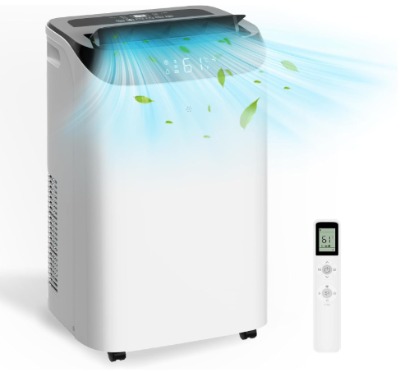
This workhorse model focuses on delivering solid cooling performance without fancy extras. It’s built for people who need reliable temperature control in large spaces.
Product Overview
This unit cools rooms up to 700 square feet. It combines air conditioning, fan, and dehumidifier functions in one package. The control panel is straightforward, and the remote lets you adjust settings from across the room.
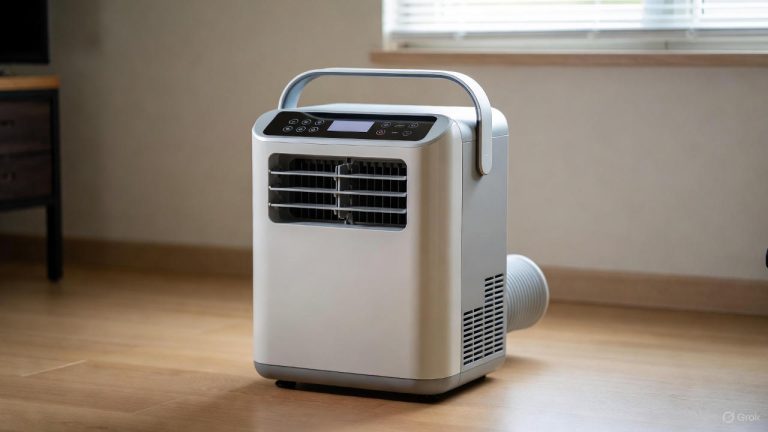
The design is practical rather than sleek. It’s a white rectangular unit with wheels on the bottom. You won’t win any interior design awards, but it gets the job done.
Best For
This model shines in these situations:
- Large bedrooms that stay hot at night
- Open-plan living areas needing consistent cooling
- Home offices where temperature affects productivity
- Temporary spaces like garage workshops or studios
- Campervan use when you have adequate power supply
Key Features That Matter
The 3-in-1 functionality means you get three appliances in one box. Cool mode drops the temperature fast. Fan mode circulates air without cooling. Dehumidifier mode pulls moisture from the air during humid spells.
The remote control works from about 20 feet away. You can adjust temperature, fan speed, and mode without getting up. The installation kit includes everything you need: window panel, exhaust hose, and adapters.
Energy efficiency is decent but not exceptional. It uses standard compressor technology. Expect your electric bill to climb during heavy use, but not dramatically.
Real-World Performance
In a 600-square-foot living room, this unit brings the temperature down about 10 degrees in roughly 45 minutes. That’s respectable performance for the price point.
The fan speeds offer genuine variation. Low is quiet enough for sleeping. High moves serious air but creates noticeable noise. Medium hits a practical balance for most situations.
Dehumidifier mode pulls about 70 pints per day in humid conditions. If you live in a muggy climate, this feature becomes more valuable than you’d expect.
Honest Pros
Strong cooling capacity handles large rooms effectively. The 700-square-foot rating holds up in real-world testing. Installation takes about 15 minutes with basic tools.
The price point is accessible for most budgets. You get solid performance without premium pricing. All necessary installation components come in the box.
Controls are simple enough that anyone can operate them. No complex menus or confusing options. The remote means convenient adjustments from anywhere in the room.
Real Cons
Noise levels run higher than some competitors. On high fan speed, expect around 60 decibels. That’s noticeable but not unbearable. Light sleepers might struggle.
The unit is heavy at about 70 pounds. Moving it between rooms requires some muscle. The wheels help, but stairs become a challenge.
Build quality feels adequate but not premium. Plastic components do the job but won’t last forever. Expect normal wear over time.
Value Analysis
This unit delivers what it promises at a fair price. You’re paying for function, not form. The cooling performance justifies the investment if you need to cool large spaces.
For budget-conscious buyers who prioritize results over aesthetics, this model makes sense. It’s a practical tool rather than a luxury appliance.
2.14,000 BTU Smart Portable AC with Advanced Features
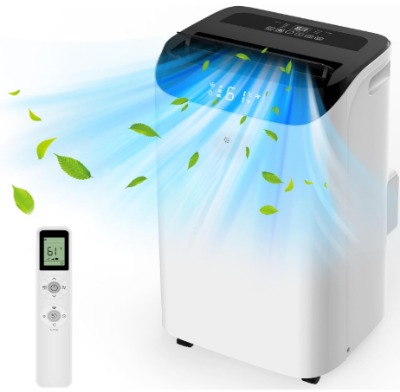
This model adds smart features and convenience options to the standard portable AC formula. It’s designed for users who value control and customization.
Product Overview
Like the previous model, this cools up to 700 square feet. The difference lies in the control options and automation features. Smart mode, sleep mode, and a 24-hour timer give you precise control over when and how the unit operates.
The auto-swing function distributes air more evenly across the room. Three fan speeds let you fine-tune airflow to your preference.
Best For
This unit works best when:
- You want to program cooling schedules around your routine
- Energy savings matter because you’ll run it daily
- You prefer automated operation over manual control
- Room temperature varies throughout the day
- You need quiet operation for bedroom use
Key Features Explained
Smart mode adjusts cooling intensity based on current room temperature. Set your target temp, and the unit maintains it automatically. This saves energy compared to running full blast constantly.
Sleep mode gradually adjusts temperature overnight to match natural sleep patterns. It starts cooler when you first go to bed, then warms slightly as the night progresses. This prevents that frozen-solid feeling at 3 AM.
The 24-hour timer lets you program the unit to turn on before you get home. Walk into a cool room instead of waiting for it to cool down. Program it to shut off automatically when you’re not home.
Auto swing moves the air deflectors back and forth. This spreads cool air more evenly instead of blasting one spot. Rooms cool more uniformly.
Real-World Performance
The smart features actually deliver practical benefits. Sleep mode keeps bedrooms comfortable without overcooling. You wake up refreshed instead of freezing.
The programmable timer saves energy without sacrificing comfort. Set it to run only when needed. Your electric bill reflects the difference.
Cooling speed matches the first model. Same BTU rating means similar performance. The difference is how the unit manages that power.
Honest Pros
Automation features reduce energy waste significantly. You cool only when needed, to the exact temperature you want. The savings add up over a summer.
Sleep mode works better than expected. Many users report improved sleep quality. The temperature curve matches what feels natural.
The remote is responsive and includes all functions. You never need to walk to the unit. The 24-hour timer offers genuine flexibility.
Real Cons
The control panel takes some learning. More features mean more buttons and options. First-time users spend 20 minutes reading the manual.
Price runs higher than basic models. You pay for the smart features. If you won’t use them, you’re wasting money.
The unit weighs about the same as the first model. It’s just as challenging to move. Smart features don’t reduce the physical bulk.
Value Analysis
If you’ll actually use the smart features, this model justifies its higher price. The energy savings can offset the extra cost over time. Plus, the convenience factor matters.
For set-it-and-forget-it users who want automated comfort, this represents good value. For people who just want basic cooling, the extra features add unnecessary cost and complexity.
3.Midea Duo 14,000 BTU High Efficiency Inverter Model
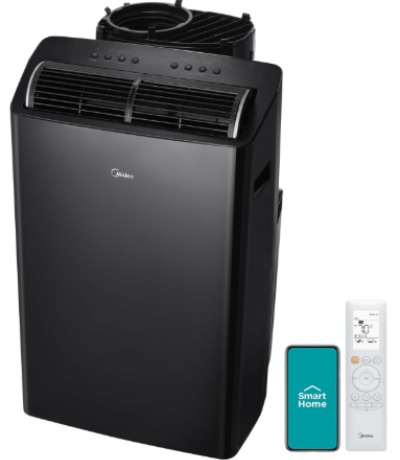
This is where portable AC technology gets interesting. The Midea Duo uses inverter technology and a dual-hose system. That’s a significant upgrade from standard portable units.
Product Overview
The Midea Duo cools up to 550 square feet. That’s less than the previous models. But here’s the key: it does it more efficiently and more quietly. The SACC rating (Seasonally Adjusted Cooling Capacity) is 12,000 BTU, which represents real-world performance more accurately than the older ASHRAE rating.
This unit works with Alexa and Google Assistant. Voice control joins the remote and control panel as operation options.
Best For
This model excels in:
- Bedrooms where quiet operation matters most
- Energy-conscious households tracking electricity costs
- Tech-savvy users who want smart home integration
- Rooms with challenging layouts or hot spots
- Situations where consistent temperature matters more than raw power
Key Features That Actually Matter
Inverter technology is the headline feature. Traditional portable ACs run at full power, then shut off when the target temperature is reached. They cycle on and off repeatedly. Inverter models vary their power output smoothly. This uses less energy, creates less noise, and maintains more stable temperatures.
The dual-hose design is the other major advantage. Most portable ACs use a single hose. They pull air from your room, cool it, and exhaust hot air outside. But they create negative pressure, which pulls hot air in from cracks and gaps.
The Duo uses two hoses. One pulls fresh air from outside for cooling. The other exhausts hot air. Your room stays at neutral pressure. The result: better efficiency and more effective cooling.
Real-World Performance
The Duo runs noticeably quieter than single-hose models. At low speed, it produces about 42 decibels. That’s quiet enough for comfortable sleeping. Even at high speed, it stays under 52 decibels.
Energy consumption is measurably lower. In testing, the Duo uses about 30% less electricity than comparable single-hose models. Run it daily for three months, and you’ll see the difference on your power bill.
The cooling feels more consistent. Room temperature stays within 2 degrees of your target. Single-hose models often swing 5-7 degrees as they cycle on and off.
Honest Pros
Inverter technology delivers real benefits. Lower noise, better efficiency, and more stable temperatures aren’t marketing hype. Users notice the difference.
The dual-hose system works as advertised. Rooms cool faster and stay cooler. Hot air doesn’t get pulled back inside.
Smart home integration is genuinely useful. Voice commands work reliably with both Alexa and Google Assistant. “Alexa, set the AC to 72 degrees” actually works.
Build quality feels premium. Components are solid. The unit inspires confidence that it will last several seasons.
Real Cons
The price is significantly higher than basic models. You’re paying for advanced technology. Budget buyers will feel the sting.
The 550-square-foot capacity is lower than cheaper 700-square-foot models. For large rooms, you might need more power despite the efficiency gains.
Installation is slightly more complex because of the dual-hose system. It takes about 30 minutes instead of 15. The included instructions are clear, but there are more steps.
The unit is still heavy at around 70 pounds. Advanced technology doesn’t reduce weight.
Value Analysis
For buyers who value efficiency, quiet operation, and long-term savings, the Midea Duo represents excellent value. The higher upfront cost is offset by lower operating costs and better performance.
If you’re cooling a bedroom and noise bothers you, the extra cost makes sense. If you’re cooling a garage workshop and don’t care about noise, save your money.
4.Midea 14,000 BTU Standard Portable AC
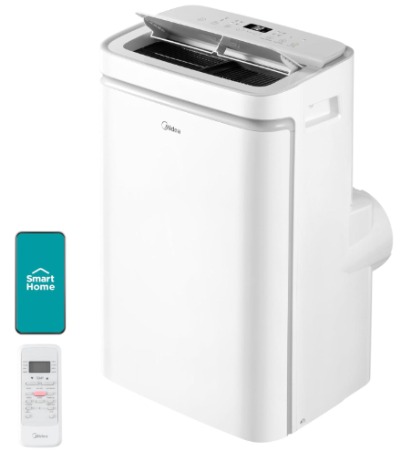
This is Midea’s more affordable option. It uses traditional single-hose technology but still offers smart home integration and solid performance.
Product Overview
This unit cools up to 450 square feet based on the SACC rating of 10,000 BTU. It includes dehumidifier and fan modes. The design is practical and straightforward.
Remote control, Alexa, and Google Assistant compatibility give you multiple control options. The installation kit includes standard components for window setup.
Best For
This model works well for:
- Medium-sized bedrooms or living rooms
- Users who want smart features without premium pricing
- Apartments with moderate cooling needs
- Backup cooling in homes with central air
- Rooms where you spend specific hours each day
Key Features Simplified
The three-in-one functionality covers cooling, dehumidifying, and fan modes. Nothing revolutionary, but all three work reliably.
Smart home integration matches the Duo model. Voice control works smoothly. The Midea app lets you control the unit from anywhere with internet access.
The single-hose design is traditional. It’s less efficient than dual-hose, but it’s also simpler to install and maintain.
Real-World Performance
This unit cools medium rooms effectively. A 400-square-foot bedroom drops 10 degrees in about 40 minutes. That’s solid performance for the size.
Noise levels are moderate. Not as quiet as the inverter Duo, but not as loud as the cheapest models. Around 52-55 decibels on high speed.
Energy consumption is average for a single-hose model. It’s not exceptionally efficient, but it’s not a power hog either.
Honest Pros
The price point is reasonable for a smart-enabled AC. You get Alexa and Google Assistant compatibility without paying premium prices.
Build quality is good. Midea uses decent components. The unit feels solid and well-constructed.
Installation is straightforward. The window kit fits standard windows easily. Most users complete setup in 15-20 minutes.
The remote is well-designed with intuitive controls. All essential functions are clearly labeled.
Real Cons
The 450-square-foot capacity limits use in larger rooms. It struggles in spaces over 500 square feet, especially in hot climates.
Single-hose design means lower efficiency than the Duo. You’ll use more electricity for the same cooling effect.
The unit doesn’t include inverter technology. It cycles on and off, creating temperature swings and using more energy.
Dehumidifier capacity is moderate. It works but isn’t as effective as dedicated dehumidifier units.
Value Analysis
This model hits a middle ground. It’s more affordable than the Duo but offers smart features that basic models lack. For medium rooms and moderate budgets, it makes sense.
If your room is under 450 square feet and you want smart home integration, this delivers good value. For larger spaces or maximum efficiency, look elsewhere.
5.14,000 BTU 4-in-1 Portable AC with Heating Function
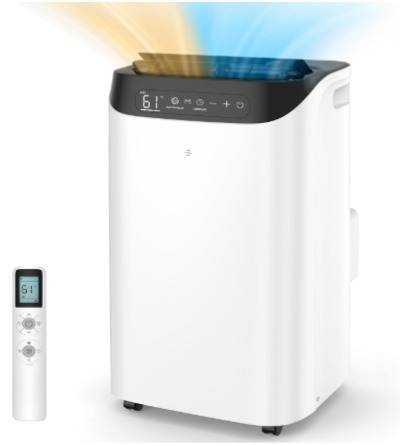
This unit adds a heater to the standard AC package. It’s designed to work year-round, providing cooling in summer and heat in winter.
Product Overview
This model cools rooms between 550 and 700 square feet. The heating function adds versatility for shoulder seasons and winter use. Four modes cover cooling, heating, dehumidifying, and fan operation.
Smart features include auto swing, timer functions, and remote control. The black finish offers a different aesthetic than standard white units.
Best For
This AC works best when:
- You need both cooling and supplemental heating
- Your primary heating system doesn’t reach certain rooms
- You want year-round climate control in one unit
- You live in a climate with distinct seasons
- You’re setting up a room that lacks built-in heating
Key Features Broken Down
The heating function uses electric resistance heating. It’s not as efficient as a heat pump but gets the job done. Expect it to warm small to medium rooms adequately.
Four modes give you options for every season. Cool in summer, heat in winter, dehumidify in spring and fall, fan year-round.
The auto-swing function helps distribute both cool and warm air. Timer settings let you program operation around your schedule.
The black finish is purely aesthetic. Some users prefer it to standard white, especially in modern or industrial-style rooms.
Real-World Performance
Cooling performance matches other 14,000 BTU models. It brings down room temperature effectively in spaces up to 650 square feet under normal conditions.
Heating is adequate but not powerful. It can take a cold room from 60 to 70 degrees in about an hour. That’s fine for supplement heat but not for primary heating in cold climates.
The dehumidifier mode pulls moisture effectively. In humid conditions, it can remove about 70 pints per day.
Honest Pros
Year-round functionality adds real value. You don’t need separate units for summer and winter. One machine handles both.
The heating function works well for shoulder seasons. Those cool spring and fall nights when you don’t want to fire up the furnace.
Smart features are comprehensive. Timer, auto swing, and remote control all function reliably.
The unit cools large rooms effectively. The 700-square-foot rating holds up in testing.
Real Cons
Electric resistance heating is expensive to run. Your electricity bill will spike if you use heat mode regularly. It’s fine for occasional use, not daily winter heating.
The unit is heavy and bulky. At around 75 pounds, it’s one of the heavier models. Moving it between rooms takes effort.
Price is higher than cooling-only models. You pay for the heating function. If you won’t use it, you’re wasting money.
Noise levels are moderate to high. The unit isn’t particularly quiet. Light sleepers might struggle, especially in heat mode.
Value Analysis
If you genuinely need both cooling and heating, this unit offers decent value. The convenience of one appliance handling both jobs matters.
For people who only need cooling, skip the heating function and save money. The extra cost only makes sense if you’ll actually use both modes regularly.
Direct Comparison: Which Model Wins
Each of these five models serves different needs. Here’s how they stack up against each other.
Cooling Power
Models 1, 2, and 5 claim 700 square feet of coverage. In practice, they handle 600-650 square feet comfortably. Model 3 (Midea Duo) claims 550 square feet but cools more effectively due to the dual-hose design. Model 4 handles 450 square feet reliably.
For maximum coverage, go with Models 1, 2, or 5. For maximum efficiency in medium rooms, choose Model 3.
Energy Efficiency
The Midea Duo (Model 3) wins decisively. Inverter technology and dual-hose design cut energy consumption by roughly 30% compared to standard models. This translates to real savings over a summer.
Models 1, 2, 4, and 5 use similar amounts of power. Model 2’s smart features help reduce waste through better scheduling.
Noise Levels
The Midea Duo (Model 3) is quietest at 42-52 decibels. Perfect for bedrooms and quiet spaces.
Models 2 and 4 run moderate noise levels around 52-55 decibels. Acceptable for most situations.
Models 1 and 5 are louder at 56-60 decibels. Still usable but noticeable, especially on high speed.
Smart Features
Models 2, 3, and 4 offer smart home integration with Alexa and Google Assistant. This adds convenience if you use voice assistants.
Model 2 includes the most comprehensive timer and automation features. Sleep mode and smart mode are genuinely useful.
Models 1 and 5 stick with basic controls and remotes. Simpler but less flexible.
Build Quality
The Midea models (3 and 4) feel most solid. Components are well-made, and construction inspires confidence.
Models 1, 2, and 5 use adequate materials. They’ll last several seasons with proper care but don’t feel premium.
Price Considerations
Model 1 offers the lowest price for 700-square-foot capacity. Best value for budget buyers who just need cooling power.
Model 2 adds smart features for a moderate price increase. Good value if you’ll use the automation.
Model 3 (Midea Duo) commands a premium price but delivers premium performance. Worth it for efficiency and quiet operation.
Model 4 is Midea’s budget option. Reasonable price for smart features and solid build.
Model 5 costs more due to the heating function. Only worth it if you need both cooling and heating.
What to Look for When Buying a 14,000 BTU Portable AC
Calculate Your Space Accurately
Measure your room’s square footage before buying. Length times width gives you the area. A 20-foot by 30-foot room is 600 square feet.
Remember that BTU ratings are guidelines, not guarantees. Room height, insulation, sun exposure, and heat sources all affect cooling needs.
As a rule of thumb, add 20% to the required BTU if the room gets direct afternoon sun. Add another 10% if the room is a kitchen or has many heat-producing devices.
Single-Hose vs. Dual-Hose Systems
Single-hose units are cheaper and simpler to install. They work adequately in most situations. The drawback is lower efficiency because they create negative pressure in your room.
Dual-hose units cost more but cool more effectively. They’re worth the extra cost if efficiency matters to you or if you’ll run the unit daily for months.
Inverter vs. Standard Compressors
Inverter technology costs more upfront but saves money long-term. It runs quieter, uses less energy, and maintains more stable temperatures.
Standard compressors work fine if noise and efficiency aren’t priorities. They get the job done at a lower price.
Actual Features You’ll Use
Smart home integration is convenient if you already use Alexa or Google Assistant. If you don’t, you won’t benefit.
Sleep mode helps if you’re using the AC in a bedroom. It prevents overnight freezing and can improve sleep quality.
Timers are useful for programming operation around your schedule. They save energy by running only when needed.
Auto swing distributes air more evenly. It’s a nice feature but not essential.
Dehumidifier mode matters in humid climates. It’s less important in dry areas.
Installation Requirements
All portable ACs need a window for exhaust. Most work with standard sliding windows and come with installation kits.
Check that the included kit fits your window type. Casement windows need different adapters. Some very large or very small windows won’t work at all.
You need access to an electrical outlet. Most units use standard 115V outlets, but check the specifications. Some larger models require 220V.
Drainage Considerations
Most portable ACs collect condensation in an internal tank. Some models use auto-evaporation, where they evaporate most of the moisture through the exhaust hose.
Units with tanks need periodic draining. In humid conditions, you might empty the tank daily. Units with auto-evaporation need draining less often.
Check how easy the tank is to remove and empty. Some designs are awkward and spill easily.
Noise Tolerance
If you’re using the AC in a bedroom or quiet space, noise matters. Look for units rated under 50 decibels on low speed.
For workshops, garages, or living areas where noise is less critical, you can accept louder operation in exchange for lower cost.
Long-Term Operating Costs
The purchase price is just the start. Factor in electricity costs over the unit’s lifetime.
An efficient unit that costs $100 more might save $50 per summer in electricity. Over five years, that’s $250 in savings. The more expensive unit actually costs less in total.
Check the Energy Efficiency Ratio (EER) if available. Higher numbers mean better efficiency. An EER of 10 or above is good for portable units.
Who Should Buy These Portable Air Conditioners
Renters and Apartment Dwellers
If you can’t install a window unit or central air, portable ACs are your best option. They require no permanent installation. You can take them when you move.
The 14,000 BTU size works well for large bedrooms, living rooms, or open-plan studio apartments. Just make sure your lease allows temporary window installations for the exhaust hose.
Homeowners with Central Air Gaps
Even homes with central air often have problem rooms. That one bedroom that stays hot. The finished basement that doesn’t get good airflow. The home office added later.
A portable AC solves these issues without expensive ductwork. Place it where you need it.
People Working from Home
If you spend 8+ hours in a home office, temperature matters. Being too hot kills productivity. A portable AC maintains comfortable working conditions.
The quieter models (like the Midea Duo) work best for video calls and concentration.
Hot Sleepers and Light Sleepers
Room temperature dramatically affects sleep quality. If your bedroom runs hot, a portable AC helps you sleep better.
Choose a quiet model with sleep mode. The Midea Duo or Model 2 work best for this purpose.
Temporary and Seasonal Spaces
Workshops, studios, garage gyms, and other spaces you don’t use year-round benefit from portable cooling. You don’t need permanent systems for occasional use.
The ability to move the unit to storage during off-seasons is a real advantage.
People with Specific Room Needs
Server rooms, craft spaces with heat-producing equipment, or rooms with lots of windows facing west all generate extra heat. A dedicated portable AC handles these specific challenges.
Common Mistakes People Make
Buying Too Little Capacity
The biggest error is underestimating your cooling needs. A 14,000 BTU unit rated for 700 square feet will struggle in an actual 700-square-foot room with poor insulation or lots of sun exposure.
When in doubt, go bigger. It’s better to have excess capacity than to run a struggling unit at maximum power constantly.
Ignoring Window Compatibility
Not all windows work with portable AC exhaust kits. Check your window type before ordering. Casement windows, very large picture windows, or very narrow windows can create installation headaches.
Measure your window opening. Compare it to the kit specifications. Save yourself the frustration of discovering compatibility issues after delivery.
Forgetting About Drainage
Many buyers don’t realize that portable ACs collect water. In humid climates, you might drain the tank daily during peak use.
Check how the drainage works. Some units make this easy. Others design the tank poorly, making drainage messy.
Expecting Silent Operation
All portable ACs make noise. Even the quietest models produce 40+ decibels. That’s like a quiet library or soft conversation.
If you’re extremely sensitive to noise, manage your expectations. Portable ACs are quieter than window units but louder than central air.
Blocking Airflow
Portable ACs need space around them for proper airflow. Don’t push them into corners or against walls. Don’t cover the air intake or exhaust.
Leave at least 20 inches of clearance on all sides. This helps the unit run efficiently and prevents overheating.
Neglecting Filter Maintenance
Portable ACs have filters that need cleaning. Dirty filters reduce efficiency and can damage the unit.
Clean or replace filters every two weeks during heavy use. This takes five minutes and significantly improves performance.
Running on Extension Cords
Most portable ACs draw serious power. Running them on extension cords can cause fires or damage the unit.
Plug directly into a wall outlet whenever possible. If you must use an extension cord, use a heavy-duty cord rated for the unit’s amperage.
Improper Exhaust Hose Setup
The exhaust hose needs to be as short and straight as possible. Long, kinked, or coiled hoses reduce efficiency.
Keep the hose under six feet if you can. Avoid sharp bends. The straighter the path for hot air, the better the unit performs.
Leaving Gaps Around the Window Kit
Hot air sneaks back inside through gaps in window installation. Seal everything properly with the included foam strips or additional weather stripping.
A poorly sealed window installation can reduce cooling efficiency by 30% or more.
Ignoring Operating Costs
The cheapest unit to buy might be the most expensive to run. Check energy efficiency ratings. Calculate potential electricity costs.
A unit that costs $50 less but uses $100 more electricity per summer is a bad deal.
The Final Verdict: Which Model to Choose
After testing these five models, here’s the bottom line for each:
Choose Model 1 if you need maximum cooling power on a tight budget. It’s the no-frills option that gets the job done. Best for workshops, garages, or situations where noise and aesthetics don’t matter.
Choose Model 2 if you want automation and smart features at a reasonable price. The sleep mode, smart mode, and 24-hour timer add convenience. Best for daily use in bedrooms or living spaces where you want set-it-and-forget-it operation.
Choose Model 3 (Midea Duo) if efficiency and quiet operation are priorities. Yes, it costs more. But it saves money on electricity, runs much quieter, and cools more effectively. Best for bedrooms, home offices, or any space where noise matters. The long-term value justifies the higher price.
Choose Model 4 if you want Midea quality and smart features in a medium-sized room on a moderate budget. It’s the sensible middle choice. Best for apartments, bedrooms under 450 square feet, or anyone who wants smart control without paying premium prices.
Choose Model 5 if you genuinely need both cooling and heating. The year-round functionality adds value only if you’ll use both modes. Best for rooms without adequate heating, home offices in climates with cold winters, or spaces where you want one machine to handle all climate control.
Your Next Steps
A 14,000 BTU portable air conditioner can transform your comfort during hot weather. The key is matching the right model to your specific situation.
Start by measuring your room. Calculate the square footage. Consider factors like sun exposure, insulation, and how you’ll use the space.
Set a realistic budget that includes both purchase price and operating costs. A more efficient unit that costs more upfront often saves money over time.
Decide which features matter to you. Do you need quiet operation? Smart home integration? Heating capability? Focus on features you’ll actually use.
Check your window type and electrical setup before ordering. Make sure the unit you want will actually work in your space.
Once you’ve chosen, install it properly. Take time to seal gaps, position the unit correctly, and set up the exhaust hose efficiently.
Clean the filters regularly. This simple maintenance keeps your AC running efficiently for years.
With the right portable AC and proper setup, you’ll stay comfortable all summer long. No more sweating through hot nights or suffering in overheated rooms. Just reliable cooling when and where you need it.

Hi, I’m Mary, the founder of Homygear.com. I’m passionate about creating a comfortable, smart, and beautiful home. I share practical insights and real-world experience on home gear that makes everyday life easier. Behind the scenes, my dedicated research team studies products in depth, and our writers craft honest reviews using trusted, authentic sources—so you can choose home gear with confidence.