Belt Sander vs Orbital Sander
So you want to sand something. Maybe it’s an old wooden table. Maybe it’s a rough piece of lumber. Maybe you just got into woodworking and someone told you to “grab a sander.” Now you’re staring at two very different machines and you have no idea which one to pick.
That’s totally fine. This guide breaks it all down for you — simply, clearly, and without the confusing jargon.
Let’s get into it.
What Is a Belt Sander?
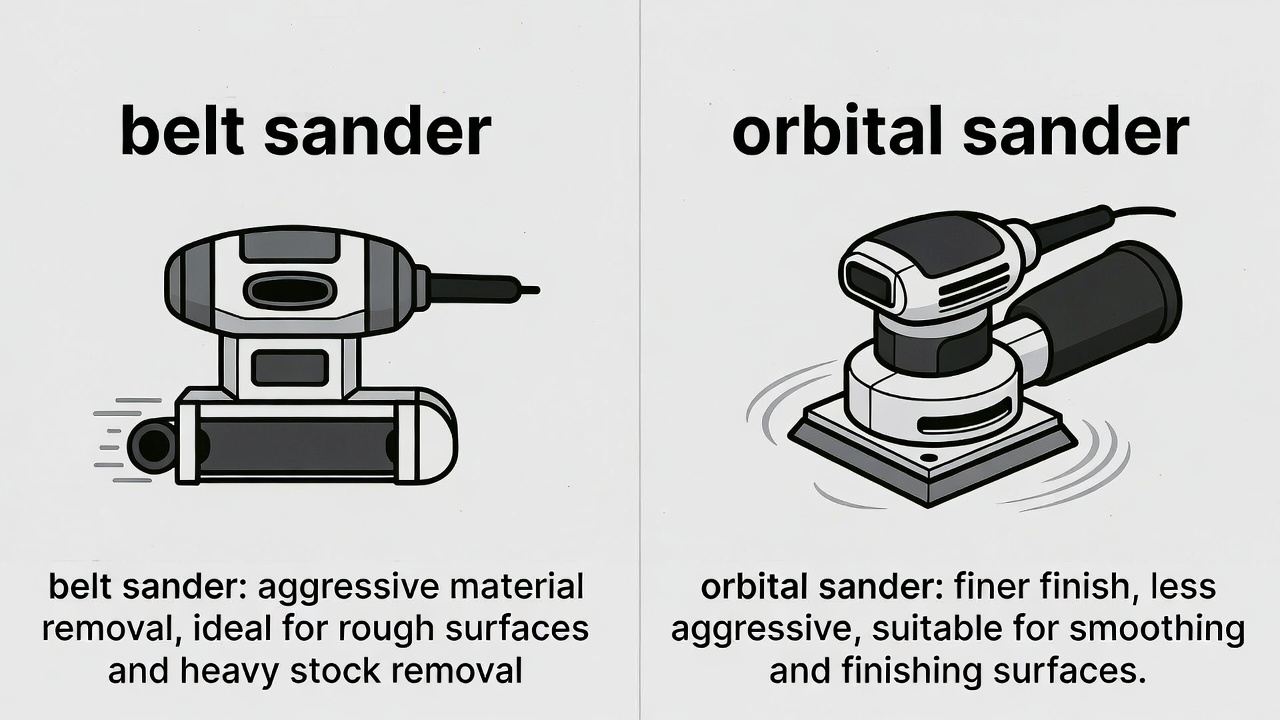
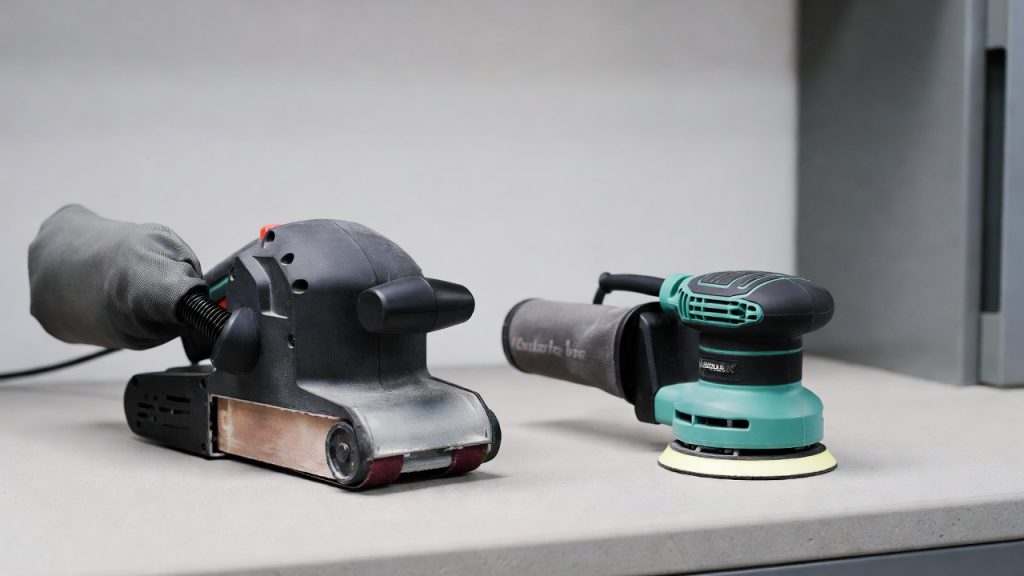
A belt sander is a power tool that uses a loop of sandpaper — called a sanding belt — that spins around two rollers. The belt moves fast in one direction, and it stays in constant motion. You press the sander against a surface, and it eats through material quickly.
Think of it like this: a belt sander is aggressive. It removes wood fast. It levels surfaces. It grinds down paint, varnish, and old finishes in a hurry.
Belt sanders come in different sizes. The most common ones use belts that are 3×21 inches or 4×24 inches. The bigger the belt, the more surface it covers per pass, and the faster it works.
These tools are loud. They’re heavy. And they require some practice to use well. But when you need raw power and speed, nothing beats a belt sander.
What Is an Orbital Sander?
An orbital sander — often called a random orbital sander — is a lighter, more forgiving tool. It has a round sanding pad that spins and moves in tiny circles at the same time. That random pattern is the key thing that makes it special.
Because the pad doesn’t move in one straight line, it doesn’t leave obvious scratches or grooves on your wood. The finish it leaves is smooth and even.
Random orbital sanders use round sanding discs. They’re easy to attach and remove. Most models have a dust collection bag or port, which keeps your workspace cleaner.
These tools are quieter than belt sanders. They’re lighter. They’re easier for beginners to use. And they work well on almost any sanding task that doesn’t require heavy material removal.
The Core Difference Between the Two
Here’s the simplest way to think about it:
- Belt sander = power and speed
- Orbital sander = smoothness and control
A belt sander rips through material. It’s used for the rough, heavy work — flattening surfaces, removing thick layers of paint, knocking down high spots, and shaping wood.
An orbital sander refines surfaces. It’s used for finishing work — smoothing out wood before staining, removing light scratches, and getting a surface ready for paint or varnish.
In many woodworking projects, you use both. You start with the belt sander to do the hard work. Then you switch to the orbital sander to make everything smooth and pretty.
Belt Sander: When Should You Use It?
A belt sander is the right tool when you need serious material removal. Here are the situations where it shines.
Flattening Large Wood Surfaces
You have a wide board that’s warped or uneven. A belt sander can flatten it quickly. Run the sander diagonally across the grain first, then along the grain. In a few passes, you’ll have a flat surface.
Stripping Old Paint or Stain
Scraping paint by hand is slow and exhausting. A belt sander does the same job in minutes. Use a coarser grit sandpaper — something like 40 or 60 grit — and the old finish comes right off.
Leveling Wood Joints
After gluing boards together, the joints are rarely perfectly flush. A belt sander levels those joints fast without a lot of effort.
Shaping Wood
Need to round off a sharp edge or taper a board? A belt sander can help with rough shaping work. It removes wood quickly, so you can get close to your desired shape in a short amount of time.
Sanding Rough Lumber
Rough-sawn lumber from the mill is not smooth. It can have saw marks, surface roughness, and other imperfections. A belt sander cleans all of that up fast.
Orbital Sander: When Should You Use It?
A random orbital sander is the right tool when you care about the final finish. Here’s where it belongs.
Final Sanding Before Finishing
Before you apply stain, paint, or varnish, the surface needs to be smooth. An orbital sander with 120, 150, or 220 grit sandpaper leaves a clean, scratch-free surface that takes finishes beautifully.
Sanding Between Coats
After your first coat of paint or varnish dries, you need to lightly sand before applying the next coat. An orbital sander is perfect for this. It smooths the surface without removing too much material.
Working on Furniture
When you’re refinishing furniture — a chair, a bookshelf, a coffee table — an orbital sander gives you control. You’re not trying to remove a lot of wood. You just want a clean, smooth surface.
Sanding Curved or Detailed Areas
The round pad of an orbital sander can navigate gentle curves and contours better than a belt sander. It’s more maneuverable and less likely to gouge the surface.
Projects That Need a Fine Finish
Anywhere you need a top-quality surface with no visible scratch marks, reach for the orbital sander. It’s the finishing tool of choice for woodworkers who care about the final look.
Comparing Key Features Side by Side
| Feature | Belt Sander | Orbital Sander |
|---|---|---|
| Material removal speed | Very fast | Slow to moderate |
| Finish quality | Rough | Very smooth |
| Ease of use | Moderate to difficult | Easy |
| Weight | Heavy | Light |
| Best for | Rough work | Finishing work |
| Risk of damage | Higher | Lower |
| Noise level | Loud | Moderate |
| Cost | Higher | Lower |
Grit Guide: What Sandpaper Should You Use?
The sandpaper grit matters just as much as the tool you use. Here’s a quick breakdown.
Coarse grits (40–60): Used for heavy material removal. Strip paint, level surfaces, remove deep scratches. Mainly used with belt sanders.
Medium grits (80–120): Used for general sanding and surface preparation. Works with both belt and orbital sanders.
Fine grits (150–220): Used for final sanding before finishing. Mainly used with orbital sanders.
Very fine grits (240–400+): Used between finish coats. Almost always used with an orbital sander.
Start with a coarser grit and work your way up. Don’t skip too many grit levels at once. If you jump from 60 grit straight to 220, the fine sandpaper won’t be able to remove the scratches left by the coarse one.
Common Mistakes Beginners Make
Learning to use these tools takes a bit of practice. Here are the mistakes most beginners make — and how to avoid them.
Pressing Too Hard
With a belt sander especially, you don’t need to push down hard. The weight of the tool does the work. Pressing too hard creates deep gouges and can ruin your workpiece.
Moving Too Slowly
Moving the sander too slowly in one spot burns the wood or creates uneven dips. Keep the tool moving at a steady pace.
Not Keeping the Sander Flat
If you tip a belt sander at an angle, you dig into one edge of the board. Keep it flat and level on the surface.
Skipping Grits
As we mentioned above, don’t skip grit levels. Going from very coarse to very fine doesn’t save time — it creates more work because the fine grit can’t remove the deep scratches.
Sanding Against the Grain Too Long
With a belt sander, sanding against the grain is fine for leveling, but you must finish with the grain. Scratches that run across the grain are very visible once you apply a finish.
Which One Is Better for Beginners?
If you’re brand new to sanding and power tools, start with an orbital sander.
Here’s why:
It’s forgiving. Even if you hold it wrong or move it slowly, it rarely causes serious damage. The random orbit motion prevents deep scratch patterns. It’s light enough to use for long periods without fatigue. And the round discs are easy to change.
A belt sander takes more skill. It can remove material so fast that a moment of distraction leaves a visible dip in your workpiece. That’s frustrating for beginners and can ruin hours of work.
Get comfortable with an orbital sander first. Then, when you take on a project that needs heavy sanding — like stripping a floor or flattening rough lumber — pick up a belt sander.
Can You Use Just One of These Tools?
It depends on the projects you work on.
If you only do finishing work — smoothing furniture, preparing surfaces for paint, light refinishing — an orbital sander can handle almost everything. You might not ever need a belt sander.
If you do heavy woodworking — building furniture from rough lumber, refinishing hardwood floors, working with large flat panels — a belt sander saves you enormous amounts of time and effort.
Most serious woodworkers own both. The belt sander handles the grunt work. The orbital sander handles the detail work. Together, they cover every stage of a sanding project.
Cost Comparison
Belt sanders generally cost more than orbital sanders. A decent entry-level belt sander runs anywhere from $60 to $150. Higher-end models from professional brands like DeWalt, Makita, or Bosch go higher than that.
Random orbital sanders are generally more affordable. Good entry-level models start around $30 to $50. Mid-range options from trusted brands like Ridgid, Porter-Cable, or Milwaukee run $60 to $100.
If you’re on a tight budget and need just one tool, go with the orbital sander. It handles more types of tasks at a beginner level, it’s cheaper, and it’s easier to use well.
A Quick Word on Safety
Both tools move fast and can cause injury if used carelessly. Keep these basic safety rules in mind.
Always wear eye protection. Both tools throw dust and small particles at high speed. Safety glasses are not optional.
Wear a dust mask. Fine wood dust is harmful to your lungs. At minimum, wear a basic dust mask. A proper respirator is even better.
Keep your work secured. If you’re sanding a small piece, clamp it down. Don’t try to hold a piece steady with one hand while sanding with the other.
Disconnect the power before changing sandpaper. Unplug corded tools or remove the battery from cordless ones before you swap out the sanding belt or disc.
Don’t wear loose clothing. Belt sanders can catch loose fabric. Wear fitted clothes and tie back long hair.
Belt Sander vs Orbital Sander for Floors
This is a common question. People want to refinish hardwood floors and aren’t sure which tool to use.
For floors, a standard belt sander or orbital sander from your toolbox isn’t the right tool at all. Floor refinishing requires a drum sander — a large, walk-behind machine. You can rent these from most home improvement stores.
That said, if you have a small floor section or need to do detail work near edges and corners, a handheld belt sander or orbital sander can handle that part of the job.
Belt Sander vs Orbital Sander for Decks
Decks are a slightly different story. If your deck boards are rough, splintery, and need heavy sanding, a belt sander works well. It moves fast and covers the wide, flat boards efficiently.
For finer prep work — smoothing before applying deck stain or sealant — an orbital sander does a great job.
On very large deck projects, some people use a floor buffer with a sanding screen. But for most residential decks, a belt sander or orbital sander gets the job done.
Corded vs Cordless: Does It Matter?
Both belt sanders and orbital sanders come in corded and cordless versions.
Corded tools give you consistent power without worrying about battery life. They’re great for long sanding sessions.
Cordless tools give you freedom of movement. Modern lithium-ion batteries are powerful enough for most sanding tasks. They’re great when you’re working away from an outlet or in tight spaces.
For heavy-duty belt sanding, corded is usually recommended. Belt sanders draw a lot of power, and some cordless models lose speed as the battery drains.
For orbital sanding, cordless models work great. The tool doesn’t need as much power, so battery life is less of a concern.
Final Thoughts: Which One Should You Get?
Here’s the short answer:
Get an orbital sander first. It’s versatile, beginner-friendly, affordable, and handles most tasks well. If you’re just getting into woodworking or DIY projects, it covers 80% of your sanding needs.
Add a belt sander when you need it. Once your projects grow in scale — or you’re working with rough lumber, refinishing floors, or stripping old finishes — a belt sander becomes your best friend.
Don’t overthink this. Both tools are useful. Both tools have their place. Start with the one that fits the work you’re doing right now.
The goal is simple: get the surface smooth, get the finish on, and enjoy the result.
Happy sanding.
Quick Reference Summary
Use a belt sander when:
- You need fast material removal
- You’re stripping paint or old finishes
- You’re flattening large, uneven surfaces
- You’re leveling glued joints
- You’re working with rough lumber
Use an orbital sander when:
- You’re doing final sanding before finishing
- You’re sanding between coats of paint or varnish
- You’re refinishing furniture
- You want a smooth, scratch-free surface
- You’re a beginner learning to sand
Both tools are worth owning. Both tools make your work easier and better. Know which one to reach for — and you’re already ahead of most beginners.