
5 Best Ceiling Fan for Cathedral Ceiling In 2026
Cathedral ceilings bring dramatic beauty and spaciousness to any home. These soaring architectural features create an open, airy atmosphere that instantly elevates your living space. However, finding the right ceiling fan for these tall, sloped ceilings presents unique challenges that standard fans simply cannot address.
High ceilings require fans with powerful motors that can effectively circulate air across greater distances. The fan must also complement the grand scale of your room while providing adequate lighting and ventilation. We tested and reviewed five exceptional ceiling fans specifically suited for cathedral ceiling applications, examining their performance, design, and value.
This comprehensive guide walks you through everything you need to know about ceiling fans for vaulted spaces. We evaluated each model based on airflow capacity, motor strength, installation ease, lighting features, and overall build quality. Our goal is to help you find the perfect fan that matches your cathedral ceiling’s height and your home’s aesthetic.
Why Cathedral Ceilings Need Special Ceiling Fans
Cathedral ceilings typically range from 12 to 20 feet high, creating specific requirements for air circulation. Standard ceiling fans lack the power needed to move air effectively in rooms with such volume. The vertical space means warm air rises and gets trapped near the peak, leaving the living area below feeling cold in winter and unevenly cooled in summer.
A quality fan designed for high ceilings solves this problem through multiple features. Strong DC motors provide consistent airflow without excessive noise. Reversible motor functions allow you to switch between downdraft cooling in summer and updraft circulation in winter. Large blade spans of 52 inches or more ensure air reaches every corner of your expansive room.
Remote controls become essential with cathedral ceilings since wall switches may be impractical at extreme heights. Smart features like app control add convenience when you cannot easily reach the fan. LED lighting with adjustable color temperatures helps illuminate the entire room adequately from the elevated position.
Installation considerations also differ for vaulted ceilings. You may need downrod extensions to position the fan at the optimal height for air circulation. Angled mounting kits accommodate sloped ceiling angles safely. The fan’s weight and mounting system must be robust enough to support secure installation on pitched ceiling structures.
Our Top Pick: ZMISHIBO 72 Inch Large Ceiling Fan
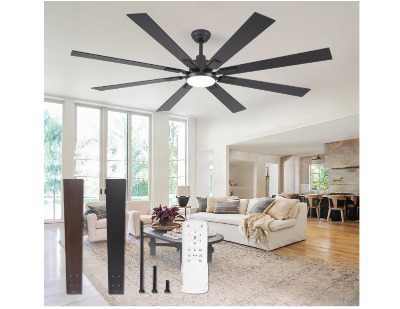
The ZMISHIBO 72 inch ceiling fan stands out as our top recommendation for cathedral ceilings. This impressive model combines exceptional power with elegant design, making it ideal for large rooms with high, vaulted ceilings.
Product Overview
ZMISHIBO engineered this fan specifically for spaces that demand superior air circulation. The 72-inch blade span covers more area than standard fans, making it perfect for great rooms, master bedrooms, and open-concept living areas with cathedral ceilings. The dual finish blade design offers versatility, with each blade featuring black on one side and wood grain on the other, allowing you to customize the look to match your decor.
The modern industrial aesthetic fits beautifully with contemporary, farmhouse, and transitional interior styles. Black finish components create a striking contrast against white or light-colored cathedral ceilings. The fan rates for both indoor and outdoor use, giving you flexibility if your vaulted ceiling extends to a covered patio or screened porch.
Performance and Features
The DC motor technology delivers whisper-quiet operation even at maximum speed settings. Six-speed options provide precise control over airflow intensity, from gentle circulation to powerful cooling. This range proves particularly valuable in rooms with cathedral ceilings where you need strong airflow to reach living areas below.
Reversible motor function switches between downdraft and updraft modes. During summer, the fan pushes cool air downward, creating a refreshing breeze throughout the room. In winter, reverse mode pulls cool air up and pushes warm air down from the ceiling peak, improving heating efficiency and comfort.
The integrated LED light kit offers three color temperature options: warm white (3000K), natural white (4000K), and cool white (5000K). This flexibility lets you adjust the ambiance from cozy and relaxing to bright and energizing. The dimmable feature allows precise lighting control via the included remote.
Remote control operation includes fan speed adjustment, light dimming, timer functions, and motor direction changes. The timer lets you set the fan to automatically shut off after your desired duration, perfect for bedroom use or energy conservation. All these functions work reliably even when the fan sits 15 or 20 feet above floor level.
Installation Considerations
The fan comes with a standard downrod, but you may need to purchase a longer downrod separately for very high cathedral ceilings. Most cathedral ceiling installations benefit from positioning the fan blades at least 7 to 9 feet above the floor for optimal air circulation and safety. The mounting system supports angled installation, accommodating sloped ceiling pitches commonly found in vaulted designs.
Eight blades provide balanced air movement with minimal wobble. The blade material combines durability with lightweight construction, reducing motor strain while maintaining structural integrity. The fan’s overall weight requires secure mounting to ceiling joists or approved ceiling fan support brackets, which is standard for any quality ceiling fan installation.
Pros
- 72-inch blade span covers large cathedral ceiling rooms effectively
- Six speed settings offer precise airflow control
- Whisper-quiet DC motor performs efficiently at all speeds
- Dual-finish blades provide two styling options
- Three adjustable color temperatures suit different moods and activities
- Reversible operation works for year-round comfort
- Indoor/outdoor rating increases installation flexibility
- Remote control manages all functions conveniently from below
Cons
- May require additional downrod purchase for very high ceilings
- Higher price point compared to standard-sized fans
- Eight blades require more cleaning maintenance
- Weight necessitates professional installation for most homeowners
Runner-Up: addlon 52 Inch Ceiling Fan with Lights
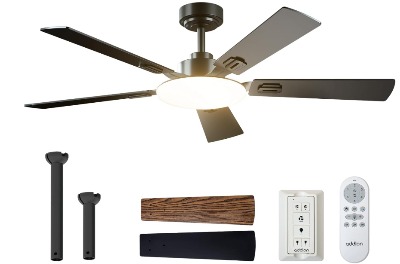
The addlon 52-inch ceiling fan offers excellent value and performance for cathedral ceiling applications. This model balances affordability with features typically found in premium fans, making it an attractive option for budget-conscious homeowners.
Product Overview
addlon designed this fan with versatility in mind, suitable for bedrooms, living rooms, and farmhouse-style spaces with high ceilings. The 52-inch blade diameter provides strong air circulation without overwhelming smaller cathedral ceiling rooms. The black finish brings modern sophistication that complements various decor styles from rustic to contemporary.
The reversible blade design features black on one side and wood grain on the other, letting you switch the appearance without purchasing new blades. This dual aesthetic works particularly well in transitional spaces where you want flexibility to update your look. The fan carries both indoor and outdoor ratings, extending your installation options to covered porches and patios with vaulted ceilings.
Performance and Features
The noiseless operation remains one of this fan’s standout features. Even at higher speeds, the motor runs smoothly without the rattling or humming that plagues lesser-quality fans. This quiet performance becomes especially important in bedrooms with cathedral ceilings where nighttime noise can disrupt sleep.
Three color temperature options (3CCT) allow you to select warm, natural, or cool white light. The dimmable LED lighting adjusts from bright task lighting to soft ambient glow. This range helps you create the right atmosphere whether you’re reading, entertaining, or relaxing.
Reversible motor function switches between summer downdraft and winter updraft modes. The remote control manages speed settings, light dimming, and motor direction from the comfort of your furniture. This convenience matters greatly when your fan sits high on a cathedral ceiling, making physical access difficult.
The fan includes five blade options with airflow optimization for high-ceiling applications. The blade pitch and motor power work together to push air effectively down from elevated positions. This engineering ensures cool air reaches your living space rather than circulating uselessly near the ceiling peak.
Installation Considerations
Standard mounting hardware accommodates most cathedral ceiling installations. The fan supports angled mounting for sloped ceilings typically found in vaulted designs. You may need to add a longer downrod depending on your ceiling height, which is sold separately by most retailers.
The lightweight design simplifies installation compared to heavier industrial fans. However, proper mounting to ceiling joists or an approved fan-rated electrical box remains essential for safety. The included instructions provide clear guidance, though professional installation is recommended for high cathedral ceiling applications.
Pros
- Affordable price point without sacrificing quality
- Truly noiseless operation enhances comfort
- Reversible blades offer two design options
- Three color temperatures adapt to different needs
- Dimmable lighting provides ambiance control
- Indoor/outdoor rating adds versatility
- Remote control offers convenient operation
- Lightweight construction eases installation
Cons
- 52-inch span may be small for very large cathedral ceiling rooms
- May require downrod extension purchase for optimal positioning
- Basic remote lacks advanced smart features
- Fewer speed options compared to premium models
Best Low-Profile Option: Ohniyou 52 Inch Flush Mount Ceiling Fan
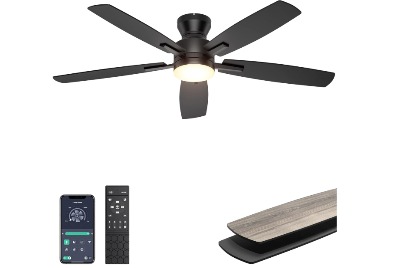
The Ohniyou 52-inch flush mount ceiling fan solves a common cathedral ceiling challenge: rooms with vaulted ceilings that aren’t extremely high. This low-profile design works beautifully when ceiling height ranges from 8 to 12 feet, providing excellent air circulation without requiring long downrods.
Product Overview
Ohniyou crafted this fan for modern homes where clean lines and minimalist design take priority. The flush mount configuration sits close to the ceiling, creating a sleek profile that doesn’t dominate visual space. Black finish and contemporary blade design complement modern, industrial, and minimalist interior styles.
The 52-inch blade span suits medium to large rooms with cathedral ceilings. Bedrooms, living rooms, and dining areas all benefit from this fan’s balanced airflow and integrated lighting. The modern aesthetic appeals to homeowners who want their ceiling fan to blend seamlessly rather than serve as a focal point.
Performance and Features
Dual control options give you flexibility in how you operate this fan. The included remote control manages all functions wirelessly from anywhere in the room. The smartphone app control adds another layer of convenience, letting you adjust settings without searching for the remote. This app connectivity proves valuable for cathedral ceilings where you want effortless control.
The quiet DC motor delivers reliable performance across multiple speed settings. Efficient power consumption reduces electricity costs compared to traditional AC motors. The motor’s longevity means fewer replacements over the fan’s lifetime, improving overall value.
Dimmable LED lighting with multiple color temperature settings illuminates your space effectively. The light output sufficiently brightens rooms even when mounted on a cathedral ceiling 10 to 12 feet high. You can adjust brightness and warmth to match activities and time of day.
Reversible motor operation switches between cooling and heating modes seasonally. The flush mount design still allows effective air circulation in both directions. Summer mode creates a comfortable downdraft breeze, while winter mode recirculates warm air from the ceiling peak.
Installation Considerations
Flush mount installation eliminates the need for downrods, simplifying the installation process. This design works best when your cathedral ceiling height falls between 8 and 12 feet. For higher ceilings, a fan with a downrod provides better air circulation at the living level.
The low-profile mounting requires an approved ceiling fan electrical box capable of supporting the fan’s weight. The fan must mount to a ceiling joist or fan-rated support bracket for safety. Installation on sloped ceilings requires an angled mounting kit, which may need separate purchase.
Pros
- Flush mount design creates clean, modern appearance
- App control adds smart home convenience
- Remote control included for wireless operation
- Quiet DC motor runs efficiently
- Dimmable lighting with color temperature options
- Reversible for year-round use
- Simplified installation without downrod
- Good airflow for medium to large rooms
Cons
- Not ideal for very high cathedral ceilings above 12 feet
- Flush mount limits airflow reach compared to downrod installations
- App setup may require troubleshooting for some users
- Black finish shows dust more readily than lighter colors
Best Value: Passky 52 Inch Sleek Ceiling Fan
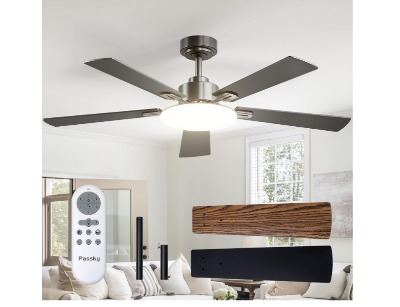
The Passky 52-inch ceiling fan delivers impressive features at a wallet-friendly price point. This model proves you don’t need to spend excessively to get quality performance for your cathedral ceiling installation.
Product Overview
Passky designed this fan with practical functionality as the priority. The sleek, straightforward aesthetic fits various decor styles without calling excessive attention to itself. The 52-inch blade span handles medium to large rooms with cathedral ceilings effectively, making it suitable for bedrooms, family rooms, and open-concept spaces.
The black finish provides a modern look that works well against light-colored cathedral ceilings. Simple blade design keeps the visual focus on your room’s architectural features rather than the fan itself. This understated approach appeals to homeowners who want function over decorative flair.
Performance and Features
Noiseless operation stands out as a key benefit of this fan. The motor runs smoothly at all speed settings without producing the mechanical sounds that cheaper fans generate. This quiet performance matters greatly in bedrooms and living spaces where noise pollution affects comfort.
Three color temperature options (3CCT) let you customize the lighting ambiance. Warm white creates a cozy atmosphere perfect for evening relaxation. Natural white provides balanced illumination for daily activities. Cool white offers bright, energizing light for tasks requiring focus and visibility.
Dimmable functionality gives you precise control over light intensity. You can set bright lighting when cleaning or working, then dim to soft illumination for movies or conversation. This flexibility maximizes the fan’s utility across different situations and times of day.
Reversible motor function switches between summer cooling and winter heating modes. The remote control provides easy access to speed settings, lighting controls, and motor direction changes. All essential functions remain accessible even when the fan sits high on a cathedral ceiling.
The fan delivers strong airflow despite its moderate price point. The blade pitch and motor power combine to push air effectively throughout rooms with elevated ceilings. You’ll feel noticeable cooling breeze at living level, not just air movement near the ceiling.
Installation Considerations
Standard installation process follows typical ceiling fan procedures. The fan includes mounting hardware for flat ceilings and can accommodate angled installation with appropriate adapters. You may need a longer downrod for very high cathedral ceilings to position the fan at optimal height.
The fan’s balanced design minimizes wobbling when properly installed. Secure mounting to ceiling joists or approved fan-rated electrical boxes ensures stable operation. The included instructions guide you through the process, though professional installation remains advisable for cathedral ceiling applications.
Pros
- Excellent value for the feature set provided
- Noiseless operation enhances comfort
- Three color temperatures suit various needs
- Dimmable lighting offers ambiance control
- Reversible for year-round functionality
- Remote control included for convenience
- Strong airflow for high-ceiling rooms
- Straightforward installation process
Cons
- Basic design lacks decorative appeal of premium fans
- 52-inch span may feel small in very large rooms
- Fewer advanced features compared to higher-priced models
- Remote has limited range in very large spaces
Premium Smart Option: Dreo 52 Inch Ceiling Fan with Advanced Features
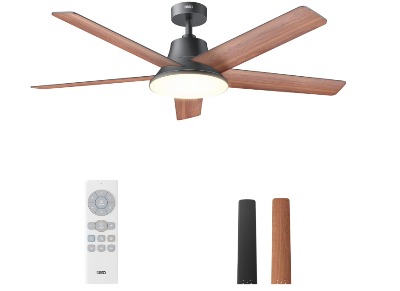
The Dreo 52-inch ceiling fan represents the cutting edge of ceiling fan technology. This smart fan combines powerful performance with advanced features that make it ideal for tech-savvy homeowners with cathedral ceilings.
Product Overview
Dreo engineered this fan with innovation as the driving principle. The 52-inch design balances effective air circulation with manageable installation requirements. Black finish and modern blade styling create a sophisticated appearance that enhances contemporary and transitional interiors.
The fan’s technology-forward approach includes features typically found only in premium models. Smart controls, extensive customization options, and energy-efficient operation combine to deliver exceptional value despite the higher price point. Homeowners who appreciate the latest technology will find this fan particularly appealing.
Performance and Features
Six-speed settings provide more precise airflow control than standard three-speed fans. You can fine-tune the air circulation to match exact comfort preferences and room conditions. This granular control proves valuable in rooms with cathedral ceilings where different areas may have varying temperature zones.
The quiet DC motor operates efficiently across all speed settings. Energy consumption remains low compared to traditional AC motors, reducing long-term electricity costs. The motor’s durability suggests years of reliable service without performance degradation.
LED lighting with five color tone options offers unprecedented customization. You can shift from warm amber glow to cool daylight white, with three intermediate settings between. This range lets you match lighting to activities, time of day, and personal preferences. Full dimmability adds another layer of control.
Eight-hour timer function lets you program the fan to shut off automatically. This feature works beautifully for bedroom use, allowing you to fall asleep with air circulation that stops later in the night. The timer also helps conserve energy when you forget to turn off the fan manually.
Remote control manages all functions wirelessly, essential for cathedral ceiling installations where physical access is limited. The remote’s intuitive design makes adjustments quick and straightforward. Clear labeling and logical button arrangement prevent confusion even in dim lighting.
Reversible motor operation switches between cooling and heating modes seasonally. The fan’s engineering ensures effective air circulation in both directions, even when mounted on high cathedral ceilings. You’ll notice improved comfort and more even temperature distribution year-round.
Installation Considerations
Easy installation ranks among this fan’s selling points. Clear instructions and logical component design simplify the mounting process. The fan includes standard mounting hardware suitable for most cathedral ceiling applications. Longer downrods are available separately if your ceiling height requires them.
The balanced blade design minimizes vibration and wobbling. Quality bearings and precise manufacturing tolerances ensure smooth, quiet rotation. Proper installation to ceiling joists or approved fan brackets provides the stable mounting necessary for long-term performance.
Pros
- Six speeds offer precise airflow control
- Five color tones provide exceptional lighting customization
- Quiet, efficient DC motor reduces energy costs
- Eight-hour timer adds convenience and energy savings
- Reversible operation works year-round
- Remote control manages all functions easily
- Easy installation process with clear instructions
- High-quality construction ensures durability
Cons
- Higher price point than budget options
- Advanced features may be unnecessary for some users
- 52-inch span may be small for very large cathedral ceiling rooms
- Remote requires line-of-sight operation unlike app-based controls
How to Choose the Right Ceiling Fan for Your Cathedral Ceiling
Selecting the perfect ceiling fan for your vaulted space requires evaluating several important factors. Your ceiling height, room size, design preferences, and feature requirements all play roles in determining the best match.
Ceiling Height and Downrod Length
Ceiling height dictates how you position your fan for optimal performance. The standard recommendation calls for fan blades to sit 8 to 9 feet above the floor. This height ensures adequate clearance for safety while positioning the fan close enough to effectively circulate air at living level.
Calculate the downrod length you need by measuring from your ceiling to 8 feet above the floor. Subtract the fan’s mounting height (the distance from the mounting bracket to the blade tips), and you’ll know what downrod length to use. Most fans include a short downrod, requiring you to purchase longer extensions for cathedral ceilings.
For sloped cathedral ceilings, you need an angled mounting adapter that allows the fan to hang vertically. The motor must hang straight down even though the ceiling slopes. This requires specialized mounting hardware that many fans include or offer as accessories.
Room Size and Blade Span
Match your fan’s blade span to your room dimensions for effective air circulation. A 52-inch fan suits rooms up to 400 square feet, making it ideal for bedrooms and moderate living spaces with cathedral ceilings. Larger rooms exceeding 400 square feet benefit from fans with 60 to 72-inch blade spans.
Cathedral ceilings often top rooms with generous floor space. The vertical volume compounds the challenge, requiring more powerful fans to move air effectively. Don’t undersize your fan, as inadequate airflow defeats the purpose of installation. When in doubt, go larger rather than smaller.
Blade pitch also affects performance. Steeper blade angles (12 to 15 degrees) move more air per rotation, which helps compensate for high ceiling installation. Quality fans balance blade pitch with motor power to deliver strong airflow without excessive noise.
Motor Type and Quality
DC motors outperform traditional AC motors in efficiency, noise level, and longevity. These brushless motors use less electricity while producing more consistent airflow. The energy savings add up over years of operation, offsetting the slightly higher initial cost.
Motor quality directly impacts long-term satisfaction. Quality motors run quietly without vibration or humming. They maintain consistent speed without fluctuation. Cheap motors develop problems over time, including bearing noise, speed variation, and eventual failure.
Look for fans with robust warranties covering the motor. Manufacturers confident in their motor quality back them with extensive warranty periods. This protection proves valuable if problems develop during the fan’s early years.
Lighting Needs
Integrated lighting serves dual purposes on cathedral ceilings. The fan provides air circulation while the light illuminates your space from an elevated position. This combination eliminates the need for separate light fixtures, simplifying your ceiling design.
LED lights offer the best performance for ceiling fan applications. They produce minimal heat, last for years, consume little electricity, and provide bright illumination. Color temperature options let you adjust the warmth or coolness of the light to match your preferences and activities.
Dimmable lighting adds valuable flexibility. Bright light works for cleaning, cooking, and detailed work. Dimmed light creates ambiance for dining, entertaining, and relaxing. This adjustability maximizes your investment by serving multiple purposes.
Control Options
Remote controls solve the access problem inherent to cathedral ceiling installations. You can adjust fan speed, light brightness, and motor direction from floor level without needing ladders or long pull chains. This convenience makes daily operation practical and safe.
Smart controls take convenience further with app-based operation and voice assistant integration. You can control your fan from anywhere in your home using your smartphone. Voice commands through Alexa or Google Assistant add hands-free operation. Scheduling and automation features optimize energy use and comfort.
Timer functions let you program automatic shutoff after a set duration. This feature prevents wasted electricity when you forget to turn off the fan. Bedroom users appreciate timers that provide initial air circulation while falling asleep, then shut off later in the night.
Installation Tips for Cathedral Ceiling Fans
Installing ceiling fans on vaulted ceilings requires careful planning and proper technique. These tips help ensure safe, successful installation.
Safety First
Turn off electrical power at the circuit breaker before beginning any installation work. Test the wires with a voltage tester to confirm power is off. Never assume a switch turning off means the circuit is dead, as switches sometimes control only one wire.
Use appropriate safety equipment when working at height. A sturdy ladder rated for your weight plus tools provides stable footing. Consider renting scaffolding for very high cathedral ceilings where ladders become unsafe. Never overreach from a ladder, as this causes loss of balance and falls.
Have a helper assist with installations on cathedral ceilings. One person can support the fan while the other makes electrical connections and secures mounting hardware. This teamwork prevents accidents and makes the job easier.
Mounting Structure
Ceiling fans require more support than standard light fixtures. The combination of weight and rotational force demands secure mounting to structural elements. Never hang a ceiling fan from a standard electrical box designed only for light fixtures.
Fan-rated electrical boxes attach directly to ceiling joists or use expandable fan-rated support bars that span between joists. These specialized boxes handle the dynamic loads ceiling fans create. Check that your existing box is fan-rated before installing a new fan.
For cathedral ceilings with exposed beams, you can mount directly to the beam using appropriate hardware. This provides excellent support but requires careful alignment to ensure the fan hangs level. Use a ceiling medallion or decorative canopy to create a finished appearance.
Electrical Connections
Follow all local electrical codes and manufacturer instructions when making connections. Most ceiling fans require standard black (hot), white (neutral), and green or bare (ground) wire connections. Some fans include separate circuits for light and fan motor, requiring an additional wire.
Wire nuts secure all connections properly. Strip wire insulation to the length specified in instructions. Twist wires together clockwise before adding the wire nut. Tug each connection to verify security before proceeding.
Organize wires neatly inside the ceiling box to prevent pinching when mounting the fan. Excess wire length should fold into the box, not dangle loosely. Proper wire management prevents interference with moving parts and reduces fire risk.
Balancing and Testing
After installation, turn on power and test all functions. Check each speed setting, verify the light works, and confirm the remote control responds correctly. Listen for unusual noises that might indicate loose parts or improper assembly.
Some wobbling is normal, but excessive movement indicates a problem. Check that all screws are tight, particularly blade mounting screws and motor housing fasteners. Verify the fan hangs level using a small spirit level placed on the motor housing.
If wobbling persists after tightening, the blades may need balancing. Many fans include a balancing kit with clip-on weights. Follow the manufacturer’s instructions to identify which blade needs weight and where to position it. This process eliminates wobble for smooth, quiet operation.
Maintenance and Care for Cathedral Ceiling Fans
Regular maintenance keeps your ceiling fan running smoothly and extends its lifespan. Cathedral ceiling installations present unique maintenance challenges due to height.
Cleaning
Dust accumulates on fan blades, reducing efficiency and creating an unsightly appearance. Clean blades every two to three months using an extendable duster or blade cleaning tool. These specialized tools let you reach high ceiling fans without ladders.
For thorough cleaning, use a slightly damp cloth to wipe each blade surface. Avoid excessive moisture that could damage the blade finish or drip onto furniture below. Work from the blade’s mounting point toward the tip to prevent loosening screws.
Clean the motor housing and light fixtures periodically using a dry microfiber cloth. Remove dust and debris that accumulate on these surfaces. Keep the motor vents clear to ensure proper cooling and prevent overheating.
Inspection
Inspect your fan regularly for loose screws, particularly blade mounting screws and motor housing fasteners. Vibration during operation can gradually loosen these connections. Tighten any loose fasteners promptly to prevent blade wobbling and potential damage.
Check electrical connections annually if accessible. Look for signs of overheating, such as discolored wire insulation or melted wire nuts. These warning signs indicate problems requiring professional attention. Never ignore electrical issues, as they present fire hazards.
Listen for unusual sounds during operation. Clicking suggests a loose blade or faulty blade bracket. Humming indicates electrical problems. Grinding means bearing wear. Address these issues promptly to prevent component failure.
Seasonal Adjustments
Switch motor direction seasonally to optimize comfort and energy efficiency. Summer operation calls for downdraft mode, where blades spin counterclockwise when viewed from below. This pushes cool air downward, creating a breeze that makes you feel cooler without lowering temperature.
Winter operation benefits from updraft mode, where blades spin clockwise. This pulls cool air up and pushes warm air down from the ceiling peak. The gentle circulation distributes heat more evenly without creating an uncomfortable breeze. This improves heating efficiency and comfort in rooms with cathedral ceilings.
Most fans include a small switch on the motor housing that reverses direction. Some remote controls and smart fans allow direction changes without physical access. Consult your manual for specific instructions for your model.
Energy Efficiency and Cost Savings
Ceiling fans help reduce heating and cooling costs when used properly. Understanding how to maximize efficiency ensures you get the full benefit from your investment.
Summer Cooling
Ceiling fans don’t lower air temperature, but they create wind chill that makes you feel cooler. This allows you to raise your thermostat setting by several degrees without sacrificing comfort. Every degree you increase your thermostat saves approximately 3% on cooling costs.
Position your fan to create airflow where people sit or sleep. The breeze effect only works when air moves across your skin. A fan running in an empty room wastes electricity without providing benefit. Turn fans off when leaving rooms to maximize savings.
Combine ceiling fans with air conditioning for optimal comfort and efficiency. The fan circulates cooled air more effectively, preventing hot spots and cold spots. This even distribution lets you use a higher thermostat setting while maintaining comfort throughout the room.
Winter Heating
Reverse your fan to updraft mode during heating season. The gentle upward airflow pulls cool air from floor level and pushes warm air down from the ceiling. This circulation prevents heat stratification common in rooms with cathedral ceilings.
Run your fan at low speed during winter to avoid creating a noticeable breeze. The goal is gentle circulation, not cooling wind chill. This subtle air movement distributes heat without making you feel cold.
The improved heat distribution lets you lower your thermostat setting slightly while maintaining comfort. This reduces heating costs significantly over the course of winter. The electricity used by the fan costs far less than the natural gas or electricity saved through improved heating efficiency.
LED Lighting Benefits
LED lights integrated into ceiling fans consume minimal electricity compared to incandescent or even CFL bulbs. A typical LED fan light uses 15 to 25 watts while producing light equivalent to a 100-watt incandescent bulb. This efficiency reduces lighting costs substantially.
LED lights last for years without replacement. Most LED fan lights provide 20,000 to 50,000 hours of operation before needing replacement. This longevity eliminates the hassle and expense of frequent bulb changes, particularly valuable for cathedral ceiling installations where access is difficult.
The minimal heat output from LED lights prevents the heat buildup that incandescent bulbs create. This reduces cooling costs in summer and prevents heat damage to fan components. LEDs also provide instant-on illumination without the warm-up period CFLs require.
Common Problems and Solutions
Even quality ceiling fans occasionally develop problems. Knowing how to troubleshoot common issues saves service call expenses and prevents unnecessary fan replacement.
Wobbling
Blade wobble stems from several possible causes. Loose blade screws are the most common culprit. Tighten all blade mounting screws and verify the blade brackets attach securely to the motor. Repeat this check every few months as vibration gradually loosens fasteners.
Bent blades cause wobbling by creating imbalance. Inspect each blade for warping or damage. Replace any bent blades rather than attempting to straighten them, as this rarely produces satisfactory results. Most manufacturers sell replacement blade sets.
Blade imbalance occurs when blades have slightly different weights or shapes. Use a balancing kit to add small weights to specific blades, correcting the imbalance. This process involves trial and error but effectively eliminates most wobbling problems.
Noise
Clicking sounds typically indicate a loose blade or blade bracket. Tighten all mounting hardware and verify blades seat properly in their brackets. Check that decorative blade irons (if present) attach securely to the blade surfaces.
Humming suggests electrical issues, often capacitor problems in AC motor fans. This requires professional diagnosis and repair. Continued operation with electrical humming risks motor damage or fire hazard. Turn off the fan and call an electrician.
Grinding noises indicate bearing wear in the motor. This typically occurs after years of operation as bearing lubricant degrades. Some motors allow bearing replacement, but most require complete motor replacement. Continuing to run a fan with grinding bearings will cause total motor failure.
Remote Control Issues
Remote controls sometimes stop communicating with the fan receiver. Replace the remote’s battery as the first troubleshooting step. Weak batteries cause intermittent operation and reduced range before failing completely.
If fresh batteries don’t solve the problem, check for interference from other devices. LED bulbs, wireless routers, and other electronics can interfere with remote signals. Test the remote with these devices turned off to identify interference sources.
Some fans require resetting the remote-receiver pairing. Consult your manual for the specific reset procedure for your model. This usually involves turning off power, pressing certain button combinations, then restoring power. The process re-establishes communication between remote and receiver.
Light Problems
LED lights rarely burn out but can develop driver failures that prevent operation. If the light stops working, verify the fan receives power and the fan motor runs. If the motor works but light doesn’t, the LED driver likely needs replacement.
Flickering LED lights often indicate voltage problems or poor electrical connections. Check that all wire connections are secure and properly installed. Loose connections create resistance that causes flickering. Correcting the connections usually solves this problem.
Some dimmable LED lights flicker when used with incompatible dimmer switches. Ceiling fans with integrated dimmable LEDs include their own dimming circuitry, so external dimmer switches can cause conflicts. Use standard on/off switches with ceiling fans and control dimming through the fan’s remote or app.
Final Thoughts
Cathedral ceilings transform ordinary rooms into extraordinary spaces with their dramatic height and openness. The right ceiling fan enhances these architectural features while providing practical air circulation and lighting. Our five reviewed fans each offer unique advantages for different situations and budgets.
The ZMISHIBO 72-inch fan delivers unmatched airflow coverage for large cathedral ceiling rooms. Its substantial blade span, powerful motor, and premium features justify the investment for homeowners prioritizing performance and quality.
The addlon 52-inch fan provides excellent value with reliable performance and quiet operation. This model suits budget-conscious buyers who want quality features without premium pricing. Its versatile design works across various room styles and ceiling heights.
The Ohniyou flush mount fan solves installation challenges for lower cathedral ceilings. The low-profile design combines modern aesthetics with smart controls, appealing to tech-savvy homeowners who want seamless integration.
The Passky 52-inch fan offers the best overall value with strong performance at an affordable price. This straightforward, reliable option serves homeowners who prioritize function over advanced features.
The Dreo 52-inch fan leads in technology and customization. Six speeds, five color tones, and convenient timer functions make this premium option worth considering for those who appreciate cutting-edge features.
Every home with cathedral ceilings deserves a quality fan that matches its unique requirements. Consider your ceiling height, room size, budget, and preferred features when making your selection. Any of these five exceptional fans will serve you well for years, providing comfort, efficiency, and style in your vaulted space.

Hi, I’m Mary, the founder of Homygear.com. I’m passionate about creating a comfortable, smart, and beautiful home. I share practical insights and real-world experience on home gear that makes everyday life easier. Behind the scenes, my dedicated research team studies products in depth, and our writers craft honest reviews using trusted, authentic sources—so you can choose home gear with confidence.