5 Best Hose Holder for Backyard In 2026
A garden hose that lies tangled on the grass is more than an eyesore. It kinks, gets run over by the mower, and wears out faster. A good hose holder fixes that problem, but the right one depends on your yard, your hose, and how often you water. In this roundup, we look at five popular hose holders that people often search for when they want a tidy backyard setup. We cover what each one is, who it fits, what works well, and where it falls short.
This article is written for beginners and for anyone who wants a plain, honest look before spending money. You will not find hype here. Instead, you will find clear descriptions, realistic expectations, and practical tips you can use right away.
Quick Look at the Top Picks
| Product | Style | Best For | Hose Capacity |
|---|---|---|---|
| Metal Wall Mounted Hose Holder | Wall mount | Patios, fences, and garage walls | Standard garden hose |
| Gayuteay Hose Holder with Storage Basket | Freestanding with basket | Small yards and tidy storage | Standard garden hose |
| Freestanding Metal Hose Rack with Hooks | Freestanding rack | Lawns and general yard use | Standard garden hose |
| Metal Wall Mount Hose Reel (Dark Bronze) | Wall mount reel | Long hoses and decorative look | 125 ft of 5/8″ hose |
| GAVISCITY Hose Holder with Stable Base | Freestanding with tool hooks | Heavy hoses and busy yards | Up to 151 ft of hose |
How This Review Was Put Together
This review is based on the product details shared in each listing, the materials and build styles used, and the general patterns that people see with these types of hose holders. Where a listing makes a claim, we explain what that claim usually means in real life. We also point out where you should check the details yourself before buying, such as exact dimensions, weight limits, and hose compatibility.
Think of this as a guide to what to expect, not a promise. Your yard, your water pressure, and your hose will all affect how well any of these products works for you.
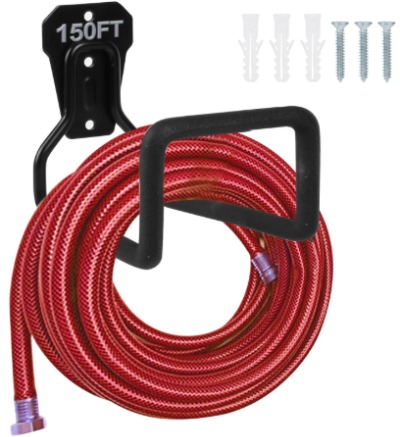
1. Metal Garden Hose Holder Wall Mounted Water Hose Holder for Outside Yard
Product Description
This is a simple wall-mounted hose holder made from metal. It attaches to a fence, a wall, or a post, and it gives your hose a fixed resting place off the ground. The design is basic on purpose. There are no moving parts to break, and there is nothing to assemble beyond mounting it to a solid surface.
Wall-mounted holders like this one have been a common choice for decades because they save floor space. Your hose hangs up and out of the way, which keeps the patio clear and stops the hose from getting stepped on.
Best Use Cases
This holder works best on a house wall, a garage wall, or a sturdy wooden fence near your main outdoor faucet. It is a good fit if your hose usually runs from one spot and you do not move it around much. It also works well on a shed wall where you want to keep the hose out of the sun.
It is less suited to a large open lawn where you drag the hose far in every direction. The fixed position limits how far you can reach without unhooking and re-coiling.
Key Features Explained Simply
The main feature is the wall mount itself. It screws or bolts into a solid surface, so the hose stays put. The metal body gives it more strength than plastic versions, which means it should hold a typical garden hose without bending under normal weight.
The design is open, so water can drain from the hose and air can reach it. This helps reduce mildew and keeps the hose from sitting in a puddle of its own moisture.
Real-Life Usage Insight
In everyday use, the biggest factor is mounting. A wall holder is only as good as the surface it is attached to. If you screw it into thin siding without solid backing, it can loosen over time, especially when the hose is full of water and pulls down. Look for a stud, a solid post, or a wall with proper wall anchors.
Another common issue is height. Mount it too low and the hose may still drag on the ground. Mount it too high and you may struggle to lift a heavy, water-filled hose onto it. Most people find that about waist to chest height works well for a standard hose.
Pros and Cons
Pros:
- Saves floor and patio space
- Simple design with few parts to fail
- Metal construction feels more solid than plastic options
- Keeps the hose off the ground and away from foot traffic
- Easy to use once mounted
Cons:
- Requires a solid mounting surface
- Fixed position limits reach across the yard
- Not ideal for very long or very heavy hoses
- Mounting takes a bit of effort and basic tools
- Does not offer extra storage for nozzles or accessories
Performance
For what it is designed to do, this holder performs well. It keeps a standard garden hose neatly off the ground and holds it firmly once installed. The metal body should resist the normal bumps that come with daily use, although heavy impacts from a mower or a bike can still dent or bend any metal product.
Performance depends a lot on the finish. Bare metal can rust in damp areas over time, so a coated or treated finish is important if your holder lives outside all year.
Ease of Use
Using it is very easy. You loop the hose over the arm or hook, and you are done. Mounting takes more effort than daily use, but a person with basic hand tools can handle it in a short time. Remember to check the level before you drill so the hose does not slide to one side.
Value for Money
This is one of the more budget-friendly options on the list. If you have a solid wall in the right spot and you want a simple, dependable way to store a standard hose, it offers good value. You are paying for a clean, basic design rather than extra features. If you need storage for accessories or plan to move the hose around the yard, a different style may serve you better.
Who This Holder Suits Best
This is a good choice for people with a single water source near a wall or fence, and for anyone who wants a simple, low-cost fix that keeps the hose tidy.
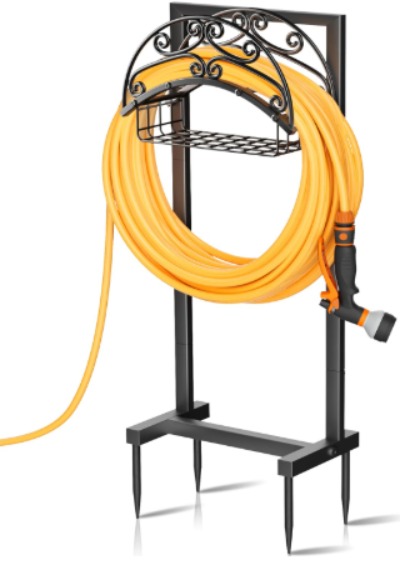
2. Gayuteay Garden Water Hose Holder with Storage Basket for Outside
Product Description
This hose holder combines a place for your hose with a storage basket. The basket is useful for items you use while watering, such as spray nozzles, gloves, small timers, or sprinkler heads. Having everything in one spot cuts down on trips back and forth to the shed.
Products like this are usually freestanding, so you can place them where the water source is without needing a wall. That makes them handy for yards that do not have a convenient wall or fence near the faucet.
Best Use Cases
This holder is a strong pick for gardeners who water beds, containers, and lawn areas and want their supplies close at hand. It also suits small yards and patios where space is limited but you still want some order. Families who use the hose for kids’ play or pet washing may also appreciate having a basket nearby for toys and cleaning tools.
It is less ideal if you need to store a very long hose or if your yard is uneven, since freestanding designs depend on a level surface.
Key Features Explained Simply
The storage basket is the main selling point. It gives you a dedicated spot for small accessories, which keeps them from getting lost in the grass. The hose holder part keeps the hose coiled and off the ground, which helps prevent kinks and damage.
Because it is freestanding, you can move it if your plans change. Just keep in mind that moving a full hose and holder together takes some effort.
Real-Life Usage Insight
In daily use, the basket turns out to be more helpful than many people expect. Small items stay in one place, and you stop searching the yard for your nozzle. The bigger question is stability. A basket adds weight and height, so the unit can tip if the ground is soft or sloped. Placing it on firm, level ground and keeping heavy items low in the basket will help.
A common mistake is loading the basket with heavy tools. Keep it for light items, and store bulky tools in a shed or on a separate hook.
Pros and Cons
Pros:
- Built-in basket keeps accessories close and organized
- Freestanding design means no wall mounting is needed
- Good for small and medium yards
- Keeps the hose off the ground and reduces tangles
- Practical for gardeners who use several watering tools
Cons:
- The basket adds weight and height, which can affect stability on uneven ground
- Not ideal for very heavy or very long hoses
- Basket space is limited for large tools
- Build quality can vary depending on the finish and materials
- Assembly may take some time
Performance
This holder performs well for light to medium use. It keeps a standard hose tidy and gives you a useful place for accessories. Under normal conditions, the structure should hold up, but freestanding units depend on a stable base. If you have a lot of hose weight on the top arm, the whole unit may lean slightly. Filling the hose gradually and coiling it evenly can help keep things balanced.
Ease of Use
Using this holder is simple. You wind the hose onto the frame, drop the nozzle in the basket, and head out to water. Assembly is the main task, and it usually takes a short time with basic tools. Check that all the connections are tight so the frame does not wobble during use.
Value for Money
This holder sits in the mid-range for price. Given the added basket, it offers good value for gardeners who want both hose storage and accessory storage in one unit. If you only need a place to hang your hose and do not care about the basket, you may find a simpler and cheaper option works just as well.
Who This Holder Suits Best
This is a good fit for gardeners with small to medium yards, anyone who uses several watering tools, and people who want a tidy, all-in-one setup without mounting anything to a wall.
3. Garden Hose Holder Stand, Freestanding Metal Water Hose Storage Rack with Hooks for Outside Yard Lawn, Heavy Duty
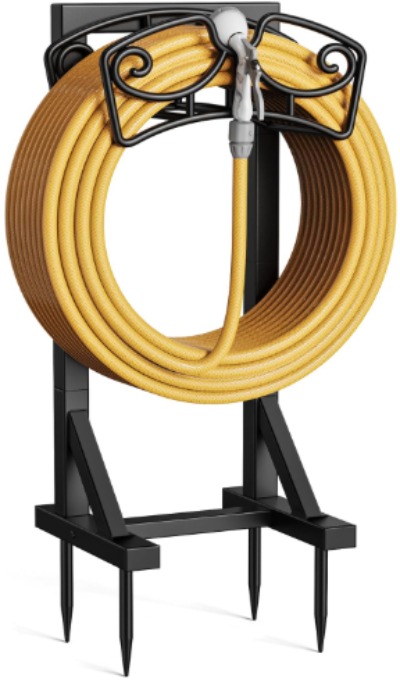
Product Description
This is a freestanding metal rack designed for outdoor use. It holds a garden hose on its frame and includes hooks for hanging extra items. The “heavy duty” label suggests a sturdier build than basic versions, and the metal frame supports that idea.
Freestanding racks like this one are popular because they let you place the hose exactly where you need it. You do not have to drill into anything, and you can move the rack if the watering area changes.
Best Use Cases
This rack works well for lawns and open yards where you need to reach several areas from one central point. It is also a good choice for renters who cannot mount things to walls, and for gardeners who want a quick place to hang a hose and a few light tools.
It is less suited to very small patios where space is tight, since the frame takes up more room than a wall unit.
Key Features Explained Simply
The metal frame is the core of the design. It gives the rack its strength and helps it stay upright when the hose is on it. The hooks are useful for hanging hand tools, gloves, or a spray wand, which keeps them off the ground.
Because the rack stands on its own, it does not rely on a wall or fence. That makes setup flexible and reduces the chance of damage to your home or fence.
Real-Life Usage Insight
Stability is the first thing to check. A freestanding rack with a heavy hose can tip if the base is narrow or the ground is soft. Positioning it on a flat, firm area helps a lot. Some people anchor the base with stakes or place it on a paver to keep it steady.
Hooks are handy but can be overloaded. Hanging too many heavy tools on one side can shift the balance. Spread the weight across the rack and keep the heaviest items low.
Pros and Cons
Pros:
- Freestanding, so no drilling or wall mounting is needed
- Metal frame gives a solid feel
- Hooks add useful storage for light tools
- Can be moved to a new spot easily
- Good for lawns and open areas
Cons:
- Takes up more floor space than a wall unit
- Can tip on soft or uneven ground if overloaded
- Hooks have limited weight capacity
- Metal parts may rust if the coating wears off
- Heavier to move when a full hose is loaded
Performance
For a heavy-duty freestanding rack, performance is solid. It holds a standard hose firmly, keeps it off the ground, and gives you a few extra hanging points. The structure should handle regular use well, especially on firm ground. Performance drops if you overload the hooks or place the rack on a slope.
Ease of Use
Using this rack is easy. You wind the hose on the frame, hang your tools, and move on. Setting it up takes some effort, but there is no drilling involved. Keep the instructions handy and tighten all parts before loading the hose.
Value for Money
This rack offers good value if you want a sturdy, freestanding option without paying for extra features like a basket or reel. The heavy-duty frame makes it a practical long-term choice for lawn use. If you have a small patio or prefer a wall setup, another style may be a better match.
Who This Holder Suits Best
This is a strong pick for lawn owners, renters who cannot mount to walls, and anyone who wants a sturdy place to keep a hose and a few tools near the watering zone.
4.Metal Wall Mount Garden Hose Reel for Outside, Holds 125 ft x 5/8″ Hose, Decorative Heavy Duty Water Hose Holder Aluminum Frame, No-Leak Aluminum Water System, Easy Assembly, Dark Bronze
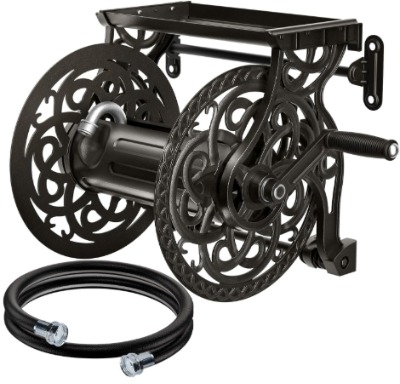
Product Description
This is a wall-mounted hose reel. Unlike a simple hook or arm, a reel lets you wind the hose onto a drum, which keeps everything neat and compact. The listing says it holds up to 125 feet of 5/8-inch hose, which is a common size for longer watering runs.
The aluminum frame and dark bronze finish give it a more finished look than a basic utility holder. Many people choose reels like this when the hose is visible from the house or patio and they want the setup to look tidy.
Best Use Cases
This reel suits homeowners with a long backyard, a patio near the faucet, or a hose that needs to reach far corners. It is also a good pick if you want a decorative look, since the dark bronze finish blends well with many home styles.
It is less ideal for people with very short hoses or those who prefer to pull the hose out and leave it lying across the lawn. A reel works best when you wind up the hose after each use.
Key Features Explained Simply
The reel is the main feature. It winds the hose onto a drum so you do not have to coil it by hand. The aluminum frame is lighter than steel, which makes the mounted unit easier to handle during installation. The dark bronze finish helps hide dirt and gives a neat appearance.
The listing describes a “no-leak aluminum water system.” This means the water connection is designed to reduce leaks. In practice, leaks usually come from the hose fittings, washers, and connections, so you should always check these parts and replace worn washers when needed.
“Easy assembly” is listed as a benefit. Most wall reels take a bit of care during mounting, but the process is usually manageable with basic tools.
Real-Life Usage Insight
A wall reel is most useful when you use it often. Reeling the hose in after watering keeps it out of the sun and stops it from getting crushed. Heavy hoses can be a bit hard to crank when they are full of water, so it is a good idea to drain the hose before rewinding.
Mounting placement matters. The reel needs a solid wall with good support, because a full hose adds noticeable weight. Make sure the reel sits level so the drum winds evenly. An uneven reel can cause the hose to bunch up on one side.
Pros and Cons
Pros:
- Holds a long hose neatly on a drum
- Reeling makes storage faster and tidier
- Aluminum frame feels solid without being very heavy
- Dark bronze finish looks clean and blends well
- Helpful for long watering runs
Cons:
- Requires a solid wall for mounting
- Can be harder to rewind when the hose is full of water
- Fixed position limits reach to some areas
- Reel mechanisms need occasional checking and cleaning
- Costs more than basic hooks or holders
Performance
In normal use, a wall reel like this performs well for organizing a long hose. It keeps the hose coiled, protects it from sun and foot traffic, and makes setup faster. Performance depends a lot on how well it is mounted and how carefully you wind the hose. Winding the hose evenly, instead of letting it pile on one side, helps the reel run smoothly.
Leak performance comes down mostly to the fittings. Check the connection each time you attach the hose to the faucet, and make sure the washer is in good shape.
Ease of Use
Using the reel is simple once it is mounted. You pull out the hose, water your area, and crank it back in. Some effort is needed to rewind a heavy, wet hose, but most people find the process quick enough. Mounting is the more involved step, so plan for a little time and make sure you have the right hardware for your wall type.
Value for Money
This reel is a mid to higher-priced option, and the value depends on how you use it. If you have a long hose, a visible patio, and a habit of winding up after each use, the reel can pay off in tidiness and hose life. If you only need a basic place to hang a short hose, a cheaper holder may be enough.
Who This Holder Suits Best
This is a good fit for homeowners with long hoses, anyone who wants a neat and decorative setup near the house, and people who prefer winding the hose after each use.
5.Garden Hose Holder with Stable Base and Tool Hooks, GAVISCITY Heavy-Duty Metal Hose Hanger Garden Hose Storage Holds 151Ft Hose, Rustproof Freestanding Water Hose Holder for Outside, Yard, Lawn, Black
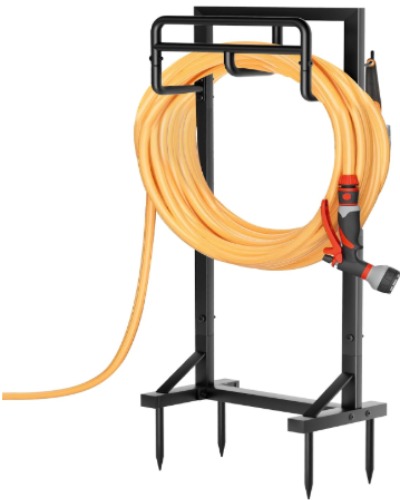
Product Description
This is a freestanding metal hose holder with a stable base and tool hooks. The listing says it holds up to 151 feet of hose, which is a generous capacity. It is also described as rustproof, and it comes in black.
The design focuses on stability and storage. A wider base helps the unit stay upright, and the hooks give you extra places to hang tools and accessories. This makes it a good match for people who have a lot of hose and need a sturdy place to keep it.
Best Use Cases
This holder suits larger yards, lawns with several watering zones, and gardeners who use a long hose across multiple beds. It is also a practical choice for people who keep several tools near the watering area and want them off the ground.
It may be more than you need for a small patio or a short hose. A simple wall holder would take less space in that case.
Key Features Explained Simply
The stable base is the main design point. A wider footprint helps prevent tipping, especially when the hose is full. The tool hooks let you hang items like a spray wand or hand tools, which keeps them easy to reach.
The listing mentions rustproof construction. In real use, “rustproof” usually means the metal has a protective coating or treatment that slows rust. No coating lasts forever, especially if it gets scratched, so checking the finish from time to time is a good habit.
The black color is a practical choice. It hides dirt and blends in with many outdoor settings.
Real-Life Usage Insight
The stable base makes a real difference on lawns. Many people find that a wider base sits more firmly than a narrow rack, especially when the hose is heavy. It is still wise to place it on flat ground. On a slope, even a stable base can lean.
Holding a full 151-foot hose takes a lot of weight. Filling the hose gradually and coiling it neatly helps keep the load balanced. Overloading the tool hooks can shift the center of weight, so keep heavier tools low and spread them across the frame.
Pros and Cons
Pros:
- Large hose capacity for long watering runs
- Stable base helps prevent tipping
- Tool hooks keep accessories within reach
- Freestanding design needs no wall mounting
- Rustproof finish helps with outdoor durability
- Black finish hides dirt and blends in
Cons:
- Large footprint may not suit small patios
- Heavy when loaded, making it harder to move
- Rustproof claims depend on the finish staying intact
- Hooks have a limited weight capacity
- Assembly takes some time
Performance
For large hoses and lawn use, this holder performs well. It keeps a long hose organized, stays upright on firm ground, and gives you useful hanging space. The base is the star of the show, since it does much of the work of keeping the unit steady. Performance is strongest on level, firm surfaces, and it becomes less reliable on soft or sloped ground.
Ease of Use
Using this holder is easy once it is assembled. You coil the hose around the frame, hang your tools, and go. Assembly takes a bit of time, but the instructions are usually straightforward. Tighten the joints well so the frame stays solid during use.
Value for Money
This holder is one of the more capable options on the list for people with long hoses. The large capacity, stable base, and tool hooks make it a practical long-term investment. If you have a short hose or a small yard, you may not get as much value from it. For a lawn with a long hose, though, it is a strong choice for the money.
Who This Holder Suits Best
This is a good fit for people with long hoses, larger lawns, and anyone who wants a sturdy freestanding unit with space for tools.
Comparison Insights
Looking at all five side by side makes the differences clearer. The two main styles are wall-mounted and freestanding, and each one solves a different problem.
Wall-mounted holders, like the first product and the reel, save floor space and keep the hose out of the way. They work best when you have a solid wall or fence near the faucet. The downside is that they fix the hose in one spot, which can limit how far you can reach without moving things around.
Freestanding holders, like the second, third, and fifth products, give you more flexibility. You can place them anywhere with a firm, level surface. They take up more room, but they let you position the hose right where you water. The basket on the second product adds storage, the rack on the third keeps tools handy, and the fifth offers the largest capacity with a stable base.
Hose capacity is another key difference. The reel and the GAVISCITY holder both handle long hoses well. The reel is designed around a specific 125-foot, 5/8-inch hose, while the GAVISCITY holder lists 151 feet. If you have a shorter hose, the simpler holders will serve you just fine and cost less.
Storage extras also vary. The second product gives you a basket. The third and fifth offer hooks. The reel and the first product focus on the hose alone. Think about what else you keep near the hose. If you carry a nozzle, gloves, and a timer every time you water, the basket may be worth more to you than a fancier finish.
Finally, consider the look. The dark bronze reel and the black GAVISCITY holder are the most polished in appearance. The wall-mounted metal holder and the freestanding rack look more utilitarian. If the hose sits in front of your house, appearance may matter more to you.
Buying Guide for Backyard Hose Holders
Before you buy, take a few minutes to think about your yard and your habits. The best hose holder is the one that fits your space and how you actually water.
Start With Your Hose Length
Measure or check the length and diameter of your hose. A short 50-foot hose will fit almost any holder. A 100-foot or longer hose needs more capacity. Check the listing for the maximum hose length and diameter, and make sure your hose fits inside those limits.
Decide Between Wall and Freestanding
Look at your yard layout. If you have a sturdy wall, fence, or post near the faucet, a wall-mounted holder can save space and stay out of the way. If you have an open lawn or no suitable wall, a freestanding holder gives you more freedom.
Check the Material and Finish
Metal holders are durable, but the finish matters. Look for coated or treated metal if the holder will sit outside all the time. Aluminum resists rust well and weighs less, while steel is heavier and often sturdier. Powder coating or a similar finish helps protect the surface from weather.
Look at the Base
For freestanding holders, the base is important. A wider, flat base keeps the unit stable when the hose is full. Avoid narrow bases on soft soil or slopes.
Think About Extra Storage
If you carry nozzles, gloves, or small tools, a basket or hooks can be very handy. If you only need a hose holder, a simpler design may be enough.
Consider Mounting Requirements
Wall-mounted products need the right hardware for your wall type. Brick, concrete, wood, and vinyl siding each need different fasteners. Check that you have the tools and anchors before you start. If you are unsure, ask for help from someone with experience.
Check the Return Policy
Even a good holder may not fit your yard perfectly. Keep the packaging and check the return policy before you start installing.
Who Should Buy Which Hose Holder
Different yards and habits call for different holders. Here is a simple way to think about it.
If you have a single faucet near a solid wall and a short to medium hose, the first product is a simple, low-cost choice. It keeps things tidy without taking up floor space.
If you have a small garden and like to keep your watering tools close, the Gayuteay holder with its storage basket is a practical pick. It suits gardeners who move between beds and containers often.
If you rent, or you do not want to drill into your home, the freestanding rack with hooks is a sturdy and flexible option. It also works well on open lawns where you need a central spot.
If you have a long hose and like the look of a tidy reel, the dark bronze wall reel is a strong fit. It suits homeowners who wind up the hose after each use and want a neat setup by the house.
If you have a large lawn, several watering zones, and a long hose, the GAVISCITY holder offers the most capacity and stability. It is built for people who use their hose often and need it to stay put.
Common Mistakes to Avoid
Many hose holder problems come from a few avoidable mistakes. Keep these in mind as you set up your system.
Mounting into weak surfaces. A wall holder screwed into thin siding or old wood can pull loose under the weight of a full hose. Always find solid backing or use proper anchors.
Ignoring the ground. Placing a freestanding holder on soft soil or a slope is a recipe for tipping. Choose firm, level ground, or add stable pads underneath.
Winding a wet hose too tightly. A hose that is full of water is heavy, and tight coils can kink the hose. Drain the hose first, then wind it loosely and evenly.
Overloading hooks and baskets. Hanging heavy tools on one side can shift the balance of the whole unit. Keep weight low and spread it out.
Leaving the hose in the sun. Constant sun exposure can make hoses stiff and brittle over time. Winding the hose onto a holder and storing it in shade helps it last longer.
Skipping connection checks. Leaks often come from worn washers or loose fittings, not from the holder itself. Check the connection regularly and replace washers when they look worn.
Forgetting to check the finish. Scratches and chips can let rust start. A quick look once in a while and a touch-up when needed will keep the holder in good shape.
Buying the wrong size. A holder that is too small for your hose will leave you frustrated. Check the listed capacity before you order.
Final Verdict
All five hose holders in this roundup have a place in a backyard, but each one fits a different kind of yard and routine. There is no single winner for everyone. The right choice depends on your space, your hose length, and how you water.
For simple, budget-friendly wall storage, the first product is a sensible choice. It is easy to understand, easy to use, and keeps the hose off the ground. It works best when you have a solid wall in the right spot.
For gardeners who want storage for both the hose and the tools, the Gayuteay holder with its basket is a practical middle-ground option. The basket keeps small accessories close, which saves time on every watering trip.
For flexible placement and a sturdy build, the freestanding rack with hooks is a dependable pick. It works well for lawns and for renters who cannot mount to walls. Just keep it on firm ground and mind the weight on the hooks.
For a neat, decorative setup and a long hose, the dark bronze wall reel stands out. It winds the hose tidily and looks good near the house. It takes a bit more effort to mount and rewind, but many people find the trade-off worthwhile.
For large yards and long hoses, the GAVISCITY holder offers the most capacity and the best stability in this group. Its stable base and tool hooks make it a strong all-around choice for serious lawn care, as long as you have the floor space for it.
In short, pick the style that matches your yard first, then check the capacity against your hose. Once those two things line up, the rest is about the extras you want. A good hose holder will save you time, protect your hose, and keep your backyard looking organized.
Frequently Asked Questions
Is a wall-mounted or freestanding hose holder better?
Neither is better for everyone. Wall-mounted holders save floor space and stay out of the way. Freestanding holders give you flexibility and do not require drilling. Choose based on your wall options and how you move around the yard.
How long of a hose can a typical holder handle?
It depends on the product. Check the listed capacity for each holder. The reel in this roundup is listed for up to 125 feet of 5/8-inch hose, and the GAVISCITY holder is listed for up to 151 feet.
Do I need to drain the hose before storing it?
Yes, it is a good habit. Draining the hose makes it lighter, easier to wind, and less likely to kink or hold water that can cause problems over time.
Will a metal hose holder rust?
Metal holders can rust if the finish gets damaged or if they stay wet for long periods. Look for coated or treated metal, and check the finish from time to time.
Can I put a hose holder on a fence?
Some wall-mounted holders can be attached to a solid wooden fence post or rail. Make sure the fence is strong enough to hold the holder and a full hose, and use the right hardware for the material.
Hi, I’m Mary, the founder of Homygear.com. I’m passionate about creating a comfortable, smart, and beautiful home. I share practical insights and real-world experience on home gear that makes everyday life easier. Behind the scenes, my dedicated research team studies products in depth, and our writers craft honest reviews using trusted, authentic sources—so you can choose home gear with confidence.