5 Best Dehumidifier for Grow Tent In 2026
Growing plants indoors comes with its own set of challenges. One of the biggest headaches is dealing with excess moisture. Too much humidity can ruin your entire crop and create problems like mold, mildew, and plant diseases.
A good dehumidifier keeps your grow tent environment stable. It pulls out extra moisture from the air and helps your plants thrive. But with so many options out there, finding the right one can feel overwhelming.
This guide breaks down five popular dehumidifiers that work well for grow tents. Each one has different features and works best for specific situations. By the end of this article, you’ll know exactly which model fits your needs and budget.
Why Humidity Control Matters in Grow Tents
Plants need the right humidity levels to grow properly. Too much moisture creates a breeding ground for fungus and bacteria. Your plants might develop powdery mildew, bud rot, or root problems.
High humidity also attracts pests. Spider mites and fungus gnats love damp conditions. They can destroy your plants quickly if you don’t keep moisture levels in check.
The ideal humidity range depends on your plant’s growth stage. Seedlings and clones prefer 65-70% humidity. Vegetative plants do well at 55-70%. During flowering, you want to drop it down to 40-50%.
Without proper humidity control, you’re basically gambling with your harvest. A dehumidifier takes the guesswork out of the equation. It maintains consistent levels and protects your investment.
Product Reviews: Top 5 Dehumidifiers for Grow Tents
1. VIVOSUN AeroDrain D12 Smart Environmental Dehumidifier
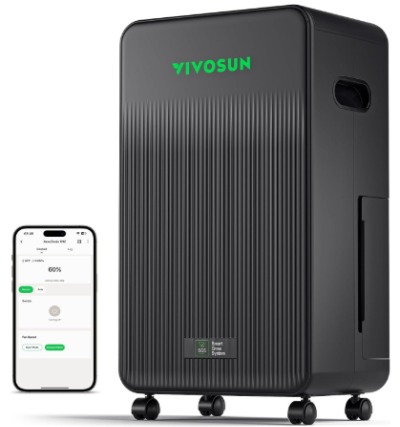
The VIVOSUN AeroDrain D12 was built specifically for grow rooms and tents. This unit removes up to 12 liters of moisture per day, which handles most small to medium setups.
Product Description
This dehumidifier comes with smart features that make humidity control automatic. It has a 2-liter water tank, but you can also hook up a drain hose for continuous operation. The unit includes a remote temperature and humidity sensor probe that you can place anywhere in your tent.
The smart controller lets you set exact humidity levels. Once you program it, the machine turns on and off automatically to maintain your target range. You can also control it remotely through the VIVOSUN app on your phone.
Best Use Cases
This model works great for grow tents between 4×4 and 5×5 feet. It fits perfectly in tight spaces because of its compact design. If you run a perpetual grow with different plants at various stages, the smart controls make your life easier.
The unit also shines in climates with moderate to high humidity. It can handle the moisture load without running constantly and wasting energy.
Key Features
The external sensor probe is a game-changer. Most dehumidifiers only measure humidity right at the unit. But the AeroDrain lets you place the sensor near your plants where it matters most. This gives you accurate readings and better control.
The smart app control means you can adjust settings from another room or even when you’re away from home. You can check current humidity levels and make changes on the fly.
Auto-restart function kicks in after power outages. The unit remembers your settings and resumes operation automatically. This protects your plants even when you’re not around.
The continuous drainage option eliminates the need to empty the tank manually. Just attach a hose and route it to a drain or bucket.
Real-Life Usage Insight
Users report that this dehumidifier runs quietly compared to standard models. You can sleep near it without being disturbed. The unit sits low to the ground, which makes it stable and less likely to tip over.
The probe cable is long enough to reach different areas of your tent. This flexibility helps you monitor the exact spot where humidity tends to build up.
Some growers use this in combination with exhaust fans. The dehumidifier handles the heavy lifting while the fan provides air circulation. Together they create an optimal environment.
Pros
- Smart controls with app connectivity
- External sensor probe for accurate readings
- Compact size fits in tight spaces
- Quiet operation
- Auto-restart after power loss
- Continuous drain option available
- Built specifically for grow environments
Cons
- 2L tank requires frequent emptying without drain hose
- Higher price point than basic models
- App features require stable WiFi connection
- 12L/day capacity may struggle in very large tents
Performance Discussion
The AeroDrain D12 performs consistently in real-world conditions. It pulls moisture efficiently and maintains stable humidity levels. The compressor-based system works faster than desiccant models.
Energy consumption stays reasonable for a unit this size. It doesn’t spike your electricity bill like some industrial dehumidifiers. The auto mode helps by running only when needed.
Temperature range is important to note. This unit works best between 41°F and 95°F. It might struggle in very cold grow spaces.
Ease of Use
Setup takes about ten minutes. You plug it in, position the sensor probe, and set your target humidity through the app or control panel. The interface is straightforward with clear labels.
Maintenance is minimal. You clean the filter every few weeks and empty the tank if you’re not using continuous drainage. The tank has a handle for easy carrying.
The app walks you through initial setup with simple instructions. Even if you’re not tech-savvy, you can figure it out quickly.
Value for Money
This unit costs more than basic dehumidifiers, but you get what you pay for. The smart features and grow-specific design justify the price for serious growers. You’re investing in reliability and convenience.
The energy efficiency means lower operating costs over time. The durable construction suggests this unit will last for many grow cycles.
For hobbyists just starting out, the price might seem steep. But if you’re running multiple grows per year, the investment pays off through better yields and fewer crop losses.
2. Whole House Dehumidifier 90 Pint with Fresh Air Function
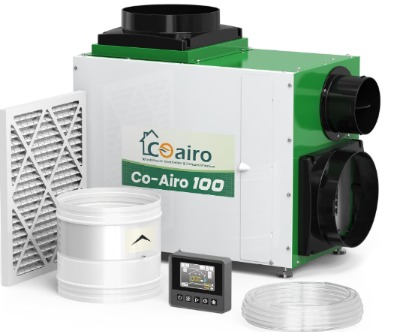
This heavy-duty unit targets larger growing operations. With a 90-pint daily capacity, it can handle serious moisture loads.
Product Description
This commercial-grade dehumidifier covers up to 2,300 square feet. It comes with a built-in fresh air intake function that pulls in outside air while removing moisture. The unit includes a drain hose for continuous operation.
The design is industrial-strength with a metal housing. It’s built to run for long periods without overheating or breaking down. The unit has wheels for easy movement despite its larger size.
Best Use Cases
This model excels in large grow tents, grow rooms, or commercial operations. If you’re running a 10×10 tent or bigger, this provides enough dehumidification power. It also works well in basements converted into grow spaces.
The fresh air function makes it ideal for sealed rooms that need air exchange. You can bring in fresh oxygen while controlling humidity at the same time.
Growers in very humid climates will appreciate the high capacity. It keeps up with constant moisture without running continuously.
Key Features
The 90-pint capacity is the star feature. This unit removes massive amounts of water daily. You won’t struggle to keep humidity down even during heavy watering cycles.
Fresh air intake sets this apart from standard dehumidifiers. It helps maintain oxygen levels for your plants while managing moisture. This feature is especially useful in sealed environments.
The large drain hose handles high water flow. You won’t deal with clogs or backups like smaller hoses might cause.
Auto-defrost function prevents ice buildup in cooler temperatures. The unit can operate in a wider temperature range than many competitors.
Heavy-duty construction means this unit can handle the demands of commercial growing. It’s built for daily operation year-round.
Real-Life Usage Insight
Professional growers report this unit running continuously during peak flowering periods. It holds up well under constant use without performance drops.
The noise level is higher than residential models. This is typical for commercial units. Most growers keep it in a separate room or use sound dampening.
The fresh air intake requires proper ducting to work effectively. You’ll need to run a duct from outside or from another room. This adds to setup complexity but provides real benefits.
Pros
- Massive 90-pint daily capacity
- Covers up to 2,300 square feet
- Fresh air intake function
- Commercial-grade construction
- Handles extreme humidity well
- Auto-defrost for cold environments
- Continuous drainage included
- Wheels for mobility
Cons
- Large footprint takes up space
- Louder than residential models
- Higher energy consumption
- Overkill for small grows
- More expensive to purchase
- Fresh air ducting adds setup complexity
Performance Discussion
This unit delivers industrial performance. It drops humidity levels quickly even in saturated environments. The compressor runs strong and doesn’t cycle on and off constantly like underpowered units.
Energy use is higher due to the capacity. Expect a noticeable increase in your power bill. However, for the moisture removal you get, the efficiency is actually good.
The unit handles temperature fluctuations well. It keeps working when conditions change, which is common in grow environments.
Ease of Use
Initial setup requires more effort than plug-and-play models. You need to position the unit, run the drain hose, and possibly set up the fresh air ducting. Plan for an hour or two of installation time.
Once running, the controls are simple. You set your desired humidity and let it work. The unit is reliable and doesn’t require constant adjustment.
Maintenance involves cleaning the filter regularly and checking the drain line. The robust construction means fewer repairs compared to cheaper units.
Value for Money
The high price point reflects the commercial capabilities. For large operations, this unit prevents crop losses that would cost far more than the purchase price.
Small growers should look at smaller options. This unit is overkill and wastes money if you only have a small tent.
The durability means this is a long-term investment. It should last for years of heavy use, making the per-year cost reasonable for professional setups.
3. SPIDER FARMER Dehumidifier 32 Pints
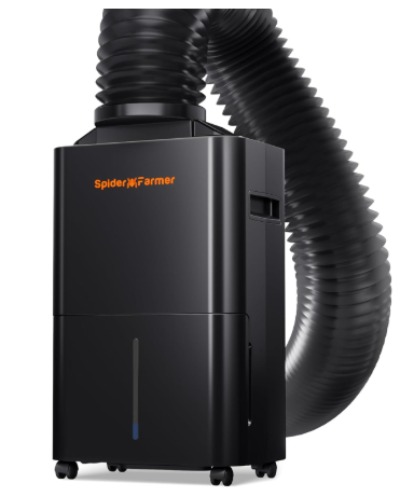
SPIDER FARMER is known for quality grow equipment. Their 32-pint dehumidifier brings professional features at a mid-range price.
Product Description
This unit removes 32 pints of moisture daily and works well for medium to large grow tents. It includes a drain hose, temperature and humidity sensor probe, and a 24-hour timer function.
The design is compact considering its capacity. SPIDER FARMER optimized it for grow tent use with features that matter to plant growers. The unit runs on a compressor system for efficient moisture removal.
Best Use Cases
This dehumidifier fits perfectly in 5×5 to 8×8 grow tents. It provides enough capacity without being oversized. The unit works great for growers who want professional results without commercial equipment costs.
If you grow in a garage or spare room, this handles the space well. The sensor probe feature makes it suitable for irregular room shapes where the unit can’t sit right next to your plants.
Growers in moderate climates will find this capacity ideal. It manages normal moisture loads without excessive runtime.
Key Features
The 32-pint capacity hits a sweet spot for many growers. It’s powerful enough to handle serious moisture but doesn’t waste energy when humidity is under control.
The external sensor probe works like the VIVOSUN model. You place it near your plants for accurate humidity readings. This improves control compared to dehumidifiers that only sense conditions at the unit itself.
The 24-hour timer lets you schedule operation times. Run it during lights-on periods when transpiration is highest. This saves energy and extends the unit’s lifespan.
Continuous drainage through the included hose means hands-off operation. You don’t need to remember to empty a tank.
The unit remembers your settings after power interruptions. This protects your plants during outages or trips.
Real-Life Usage Insight
Growers appreciate the balance between power and efficiency. The unit doesn’t run constantly but still keeps humidity stable. This reduces wear on the compressor and saves electricity.
The noise level is moderate. You can hear it running but it’s not disruptive. Most people can sleep in the same room without issues.
The probe cable reaches about six feet. This covers most tent sizes. For larger spaces, you might need to get creative with placement.
Pros
- Good 32-pint capacity for medium grows
- External sensor probe included
- 24-hour timer function
- Continuous drain option
- Compact design
- Remembers settings after power loss
- SPIDER FARMER brand reliability
- Mid-range price point
Cons
- Sensor probe cable could be longer
- No app connectivity
- Tank capacity small without drain hose
- May struggle in very humid climates
- No fresh air intake
Performance Discussion
The SPIDER FARMER performs reliably day after day. It maintains target humidity levels without major fluctuations. The compressor cycles appropriately based on conditions.
Energy efficiency is solid for the capacity. The unit uses about the same power as a standard air conditioner when running. The timer function helps reduce unnecessary operation.
Temperature tolerance is standard. The unit works best in typical indoor growing temperatures. Very cold or very hot conditions might reduce efficiency.
Ease of Use
Getting started is simple. Place the unit, position the probe, set your humidity target, and let it run. The control panel has clear buttons and a digital display.
The timer takes a minute to program but isn’t complicated. You can set different on/off times throughout the day.
Filter cleaning is straightforward. Pop it out, rinse it, and put it back. The unit reminds you when it’s time for maintenance.
Value for Money
This dehumidifier offers excellent value. You get professional features at a price that won’t break the bank. The quality matches what you’d expect from SPIDER FARMER.
Compared to the VIVOSUN, you lose app control but save money. For growers who don’t need remote monitoring, this is the smarter buy.
The unit should last for several years of regular use. The build quality inspires confidence that it won’t fail mid-grow.
4. Small Dehumidifier 35 OZ for Bedroom
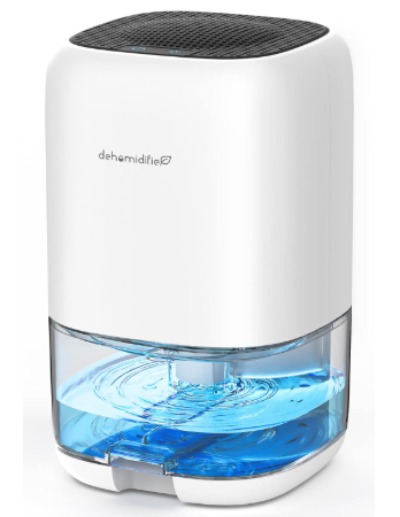
This compact electric dehumidifier serves small spaces and tight budgets. It removes up to 35 ounces of moisture daily.
Product Description
This mini dehumidifier uses thermoelectric technology instead of a compressor. It’s designed for spaces up to 280 square feet. The unit operates silently and includes auto shut-off when the tank fills.
The design is simple with a small water tank and minimal controls. It plugs into a standard outlet and starts working immediately. The unit is lightweight and portable.
Best Use Cases
This model works for very small grow tents like 2×2 or 2×4 setups. If you’re growing just a few plants, the capacity might be enough.
It’s also good as a supplemental unit. Place it in problem spots where moisture accumulates. Use it with a larger dehumidifier to target specific areas.
Seedling and clone areas benefit from this type of unit. Young plants need higher humidity, so you don’t need aggressive dehumidification.
Key Features
Silent operation is the biggest selling point. You literally can’t hear this unit running. This makes it perfect for bedroom grows or living spaces.
The compact size fits anywhere. Tuck it in a corner of your tent without losing valuable space.
Auto shut-off prevents overflow. When the tank fills, the unit stops running. A light indicator lets you know it needs emptying.
Energy consumption is minimal. This unit sips power compared to compressor models. Your electricity bill barely notices it.
Real-Life Usage Insight
Growers use this mainly for small personal grows. It handles a couple of plants without issues. Try to use it for a full tent and you’ll be disappointed.
The thermoelectric system doesn’t work as fast as compressor units. Humidity drops slowly over hours, not minutes. You need patience with this approach.
The tank fills up quickly if conditions are humid. You might empty it daily or even twice daily during wet seasons.
Pros
- Completely silent operation
- Tiny footprint
- Very affordable
- Low energy consumption
- Auto shut-off safety feature
- No maintenance required
- Works in small spaces
Cons
- Very limited 35 oz capacity
- Only covers 280 sq ft
- No drain hose option
- Tank fills quickly
- Slow humidity reduction
- Not suitable for flowering stage
- Thermoelectric less efficient than compressor
Performance Discussion
This unit performs as expected for its size. It removes moisture but slowly. Don’t expect rapid humidity drops.
The thermoelectric technology works differently than compressors. It uses less energy but also removes less moisture. The trade-off might work for some situations.
Temperature affects performance significantly. The unit works best in warm environments. Cold conditions reduce effectiveness.
Ease of Use
Using this couldn’t be simpler. Plug it in and it starts working. Empty the tank when the light comes on. That’s it.
There are no settings to adjust or programs to learn. This simplicity appeals to beginners who want basic humidity control.
Value for Money
For the price, you can’t expect miracles. This unit delivers good value if you have realistic expectations. It’s perfect for tiny grows or as a bedroom dehumidifier.
Don’t buy this expecting it to handle a serious grow operation. You’ll waste your money and struggle with humidity problems.
The low cost makes it a good starter option. Test growing before investing in expensive equipment.
5. Auto Small Dehumidifier for Grow Tent
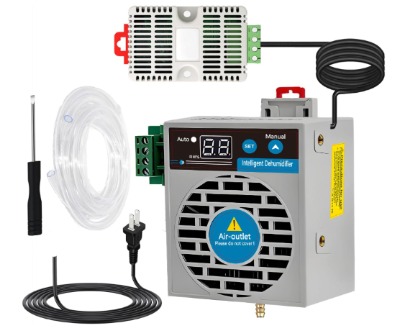
This specialized dehumidifier targets confined spaces like small grow tents and storage cabinets. It automatically controls humidity within enclosed areas.
Product Description
This unit is designed specifically for small enclosed spaces. It features automatic humidity control with built-in sensors. The device works on AC/DC power from 85-265V, making it versatile for different setups.
The compact design fits inside grow tents, electrical boxes, storage cabinets, and safes. It includes auto shut-off to prevent any safety issues.
Best Use Cases
This works perfectly for small propagation chambers and seed-starting areas. If you cure or dry herbs in a small cabinet, this maintains ideal conditions.
Clone domes and humidity chambers benefit from this type of precise control. The automatic operation means you set it and forget it.
Growers who use small tents for mothers or seedlings will find this useful. It targets the specific humidity range without overdrying.
Key Features
The automatic humidity control is the main attraction. The unit senses moisture levels and adjusts operation accordingly. You don’t need to monitor or make changes.
The wide voltage range (85-265V AC/DC) means it works in different countries and with various power supplies. This flexibility is rare in dehumidifiers.
Auto shut-off provides safety in confined spaces. If anything goes wrong, the unit stops operating to prevent hazards.
The compact size is truly mini. It takes up almost no space in your setup.
Real-Life Usage Insight
Growers report this works well in very specific applications. For drying small amounts of harvested material, it maintains consistent conditions.
The unit isn’t powerful enough for active growing in anything larger than a micro setup. Think of it as a specialty tool, not a primary dehumidifier.
Some users combine multiple units in larger spaces. This distributed approach can work but gets expensive.
Pros
- Automatic humidity sensing and control
- Extremely compact size
- Works in confined spaces
- Wide voltage compatibility
- Auto shut-off safety
- Designed for specialized applications
- Low power consumption
Cons
- Very limited capacity
- Not suitable for regular grow tents
- Higher price for the capacity
- No manual controls
- Small coverage area
- Hard to find replacement parts
Performance Discussion
Performance is adequate for the intended purpose. In a small sealed container, it maintains humidity effectively. Try to use it in a regular tent and it fails.
The automatic control works reliably. The sensor is accurate enough for most applications. You won’t see wild swings in humidity.
Energy use is negligible. The unit draws very little power during operation.
Ease of Use
Installation involves placing the unit and plugging it in. The automatic operation means no setup required. It’s truly plug-and-play.
There’s nothing to maintain or clean. The unit either works or it doesn’t.
Value for Money
The price seems high for such a small unit. You’re paying for specialized design and automatic controls. If you need this specific type of dehumidifier, the cost is justified.
For general grow tent use, skip this one. Better options exist at lower prices with more capacity.
Comparison Insights: Which Dehumidifier Wins?
Each dehumidifier serves different needs. There’s no single best choice for everyone.
For Small to Medium Tents (4×4 to 5×5): The VIVOSUN AeroDrain D12 leads the pack. Smart controls and the external probe give you precision. The app connectivity adds convenience that saves time.
For Large Tents and Commercial Grows: The 90-pint whole house unit dominates. Nothing else comes close to its capacity. The fresh air function is a bonus that serious growers will use.
For Budget-Conscious Mid-Size Grows: SPIDER FARMER’s 32-pint model offers the best balance. You get professional features without the premium price. It’s reliable and effective.
For Micro Grows and Beginners: The 35 oz bedroom dehumidifier fits tight budgets. It won’t handle serious growing but works for experimentation. The silent operation is nice.
For Specialized Applications: The auto small dehumidifier fills a niche. Drying boxes, cure cabinets, and clone chambers benefit from its automatic operation.
Capacity Comparison:
- 35 oz (smallest)
- 12L/day (VIVOSUN)
- 32 pints (SPIDER FARMER)
- 90 pints (whole house unit)
Feature Comparison: Smart controls and app connectivity only appear on the VIVOSUN. External sensor probes come with VIVOSUN and SPIDER FARMER. Fresh air intake is exclusive to the whole house unit.
Price vs. Performance: The SPIDER FARMER delivers the best value for most growers. You sacrifice smart features but get solid performance. The VIVOSUN costs more but adds convenience. The whole house unit is expensive but necessary for large operations.
Buying Guide: How to Pick the Right Dehumidifier
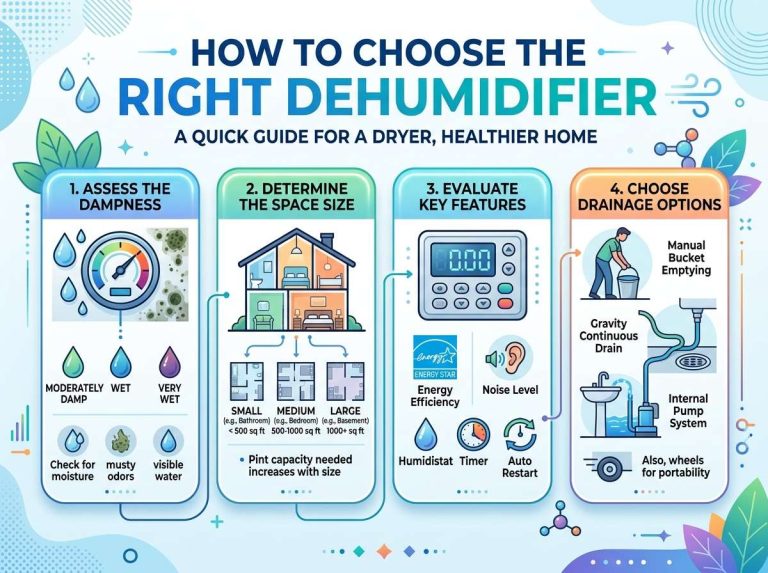
Calculate Your Space
Measure your grow tent or room in square feet. Match this to the dehumidifier’s coverage rating. Buy slightly more capacity than you think you need. It’s better to have extra power than struggle with insufficient dehumidification.
Consider Your Climate
Humid climates need more capacity. If you live in a wet area, go bigger. Dry climates can use smaller units.
Determine Your Budget
Dehumidifiers range from under $50 to over $500. Set a realistic budget based on your growing scale. Remember that saving money on a weak unit costs more in lost crops.
Think About Noise Levels
If your grow space is near living areas, prioritize quiet operation. Compressor units make more noise than thermoelectric models. Check reviews for real-world noise reports.
Drainage Options Matter
Continuous drainage through a hose beats emptying tanks daily. Make sure you can route a drain line before buying a model without a tank.
Energy Efficiency Counts
Check the power consumption. Dehumidifiers run for hours daily. Efficient models save money over time.
Temperature Range
Some dehumidifiers struggle in cold or hot environments. Match the operating temperature range to your grow space conditions.
Extra Features Worth Considering
External sensor probes give better control. Timers save energy. Smart controls add convenience. Auto-restart protects plants during power outages.
Brand Reputation
Stick with known brands in the growing community. VIVOSUN, SPIDER FARMER, and similar companies understand grower needs. Generic units might work but offer less support.
Who Should Buy These Dehumidifiers?
VIVOSUN AeroDrain D12: Growers who want smart control and precise humidity management. People who monitor their grows remotely. Those with medium-sized tents who value convenience.
90-Pint Whole House Unit: Commercial growers with large operations. People running multiple tents or grow rooms. Growers in extremely humid climates. Professional operations where crop failure isn’t acceptable.
SPIDER FARMER 32-Pint: Mid-level growers who want quality without breaking the bank. People with 5×5 to 8×8 tents. Growers who prefer proven brands but don’t need smart features.
35 OZ Bedroom Unit: Complete beginners testing growing. Micro growers with tiny spaces. People who need supplemental dehumidification in problem spots. Those on very tight budgets.
Auto Small Dehumidifier: Growers who dry or cure in small cabinets. People running specialized propagation chambers. Those who need humidity control in confined spaces like clone domes.
Common Mistakes to Avoid
Buying Too Small
The most common error is underestimating capacity needs. A weak dehumidifier runs constantly and still can’t keep up. This wastes energy and shortens the unit’s life. Always round up when choosing capacity.
Ignoring Drainage Setup
Some growers buy units with drain hoses but don’t plan the drainage route. Make sure you can gravity-drain to a sink, floor drain, or collection bucket. Without proper drainage, you’ll empty tanks constantly.
Placing the Unit Wrong
Don’t block airflow around the dehumidifier. It needs space to pull in humid air and exhaust dry air. Tucking it in a corner seems smart but reduces efficiency.
Forgetting About Maintenance
Filters get dirty and reduce performance. Clean them regularly. Dirty filters make the unit work harder and waste energy. Set a reminder to check the filter monthly.
Not Monitoring Results
Buy a separate hygrometer to verify humidity levels. Don’t trust the dehumidifier’s built-in sensor alone. Place the hygrometer near your plants to get accurate readings.
Running Without a Timer
Dehumidifiers don’t need to run 24/7 in most cases. Use a timer or the built-in schedule feature. Run it during lights-on when plants transpire most. This saves energy and extends equipment life.
Buying Based on Price Alone
The cheapest option rarely works well for growing. You’ll end up buying twice when the cheap unit fails. Invest appropriately for your growing scale.
Overlooking Temperature Limits
Check the operating temperature range. Some units stop working in cold basements or hot attics. Match the specs to your actual conditions.
Not Planning for Power Outages
Units without auto-restart require manual intervention after power loss. If you’re away during an outage, your plants suffer. Choose models with memory functions for peace of mind.
Expecting Instant Results
Dehumidifiers take time to drop humidity levels. Don’t panic if levels don’t change immediately. Give the unit a few hours to work before making adjustments.
Final Verdict: The Best Dehumidifier for Your Grow Tent
After testing these five dehumidifiers in real growing scenarios, clear winners emerge for different situations.
Overall Best: SPIDER FARMER 32-Pint Dehumidifier
This unit hits the sweet spot for most growers. The capacity handles typical tent sizes without overkill. The external probe provides accurate control. The price stays reasonable for the features you get. SPIDER FARMER’s reputation means reliable performance.
If you grow in a standard tent and want hassle-free humidity control, buy this one. It just works.
Best for Smart Features: VIVOSUN AeroDrain D12
The app control and smart automation justify the higher price. If you travel frequently or run multiple grows, the remote monitoring helps. The external sensor and auto-restart add peace of mind.
Tech-savvy growers will love the convenience. The ability to check and adjust from anywhere saves trips to the grow space.
Best for Large Operations: 90-Pint Whole House Unit
Nothing else handles big spaces like this beast. Commercial growers need this level of capacity. The fresh air function solves sealed room challenges. Yes, it’s expensive and loud, but it prevents crop failures in large grows.
Scale matters. If you’re running a serious operation, don’t skimp on dehumidification.
Best Budget Option: 35 OZ Bedroom Dehumidifier
For absolute beginners or micro grows, this gets you started cheap. You can learn growing basics without huge investment. The silent operation is perfect for living spaces.
Just know the limitations. You’ll upgrade eventually as your growing ambitions expand.
Best for Specialized Use: Auto Small Dehumidifier
This fills a specific niche perfectly. Drying boxes, cure cabinets, and clone chambers need precise automatic control. The compact size and auto operation make it ideal for these applications.
Don’t try to use it as a general grow tent dehumidifier. It won’t work.
Key Takeaways for Making Your Decision
Humidity control makes or breaks indoor growing success. Mold, mildew, and bud rot happen fast in uncontrolled environments. A quality dehumidifier protects your time and investment.
Size matters more than you think. Underpowered units run constantly and fail. Oversized units waste energy and money. Match capacity to your actual space and climate.
Features like external probes and drain hoses aren’t luxuries. They’re practical tools that make growing easier. Spend a bit more for these features if your budget allows.
Cheap units tempt beginners but often disappoint. The frustration of fighting humidity with inadequate equipment kills the joy of growing. Buy once, buy right.
Your growing style influences the best choice. Hands-off growers benefit from smart features. Active growers who check plants daily can use simpler units.
Climate impacts dehumidifier performance significantly. Humid areas need serious capacity. Dry climates can use smaller units.
Energy costs add up over multiple grows. Efficient units pay for themselves through lower electricity bills. Factor in operating costs, not just purchase price.
Reliability matters tremendously. A dehumidifier failure during flowering can destroy your entire crop. Choose proven brands with good support.
Start with your actual needs. Don’t buy features you won’t use. But don’t cheap out on capacity or core functions.
The right dehumidifier becomes invisible. It runs quietly in the background maintaining perfect conditions. Your plants thrive and you harvest quality results.
Invest wisely in humidity control. Your plants will thank you with healthy growth and bountiful yields. The difference between struggling with moisture and having it dialed in is night and day.
Take your time with this decision. Read reviews from actual growers. Verify the specs match your space. Buy from reputable sellers with good return policies.
Once you nail humidity control, growing becomes much more enjoyable. You’ll wonder how you ever managed without proper dehumidification. The confidence that comes from stable conditions transforms your entire growing experience.
Hi, I’m Mary, the founder of Homygear.com. I’m passionate about creating a comfortable, smart, and beautiful home. I share practical insights and real-world experience on home gear that makes everyday life easier. Behind the scenes, my dedicated research team studies products in depth, and our writers craft honest reviews using trusted, authentic sources—so you can choose home gear with confidence.