How Often Should You Vacuum Your House?
Let’s be honest—vacuuming isn’t the most exciting task on your to-do list. But if you want your home to stay clean and healthy, you need to know how often you really should be running that vacuum cleaner across your floors. The answer isn’t as simple as “once a week” because every home is different. Carpet cleaning needs depend on tons of factors, from how many people live with you to whether you have pets tracking dirt inside.
So let’s dig into the real answer: how often should you vacuum your house?
The Quick Answer
For most homes with regular foot traffic, you should vacuum your carpets at least once or twice a week. Hard floors like tile or wood need attention too, though vacuuming them is usually faster. The real key is understanding that your home’s unique situation might need a different schedule than your neighbor’s place.
The number one rule for floor maintenance is this: the busier your home, the more often you need to clean. That’s really the foundation of knowing when to pull out your vacuum.
Why Regular Vacuuming Matters for Your Home
Before we talk about schedules, let’s talk about why vacuuming actually matters. Your floors collect more than just visible dirt. Dust particles, pet hair, dead skin cells, and tiny bits of food sit in your carpet fibers and on hard surfaces all day long. When you don’t vacuum regularly, these things build up and create dust mites, allergens, and bacteria.
This buildup affects your air quality too. The dust in your carpet and floors gets kicked up into the air when people walk around, which is especially bad if anyone in your home has allergies or asthma. Regular carpet vacuuming helps keep the air in your house fresher and cleaner. That alone is a great reason to stick to a schedule.
Your carpet also lasts longer when you keep it clean. Dirt acts like tiny sandpaper, wearing down the fibers over time. Regular floor cleaning protects your investment. A carpet that gets vacuumed twice a week will look better and last longer than one that sits dirty for weeks.
Factors That Change Your Vacuuming Schedule
Not every home needs the same cleaning routine. Here are the big factors that affect how often you should vacuum.
Pets in Your Home
If you have dogs or cats, your vacuuming needs jump significantly. Pets shed hair constantly, and they also track dirt and dust from outside. Homes with one pet usually need vacuuming two to three times a week. Homes with multiple pets? You might need to vacuum every single day, especially if your pet has long hair or sheds a lot.
Pet hair cleanup is one of the most common reasons people increase their vacuuming schedule. This is where a good vacuum really matters—you want one designed to handle pet hair effectively.
Kids and Family Size
Kids make messes. They track dirt in from outside, spill snacks on the carpet, and generally create more dust and debris than adults. A household with young children typically needs more frequent vacuuming—probably two to three times a week. A house with just one or two adults who are neat can often get away with once a week.
The more people living in your home, the more foot traffic your floors handle. That means more dirt gets dragged inside constantly.
Allergies and Health Issues
If anyone in your home suffers from dust allergies, asthma, or other respiratory issues, you need to vacuum more often. More frequent floor cleaning reduces the dust and allergens floating around your space. Many people with allergies find that vacuuming three to four times a week—or even daily—makes a real difference in how they feel.
This is one of those health situations where cleaning floors becomes medical care, not just housework. It makes your home a healthier place to live.
Your Location and Weather
If you live somewhere dusty or sandy, you’ll track more dirt inside. Rainy areas bring mud on shoes. During certain seasons, more dust tends to blow through windows and settle on your floors. If you live on a busy road, you get more dirt settling in your home.
High traffic times of the year might call for increasing how often you vacuum. It’s normal to vacuum more during rainy seasons when muddy boots come in frequently.
Work or Life Situation
People who work outside the home or in dirty environments bring in more dirt when they come home. Construction workers, outdoor contractors, and farmers all track in significantly more debris than someone who works in an office. Your vacuuming schedule should reflect that reality.
Similarly, if you spend lots of time at home and enjoy entertaining guests, you might need to clean your floors more often to keep them looking fresh.
Vacuuming Guidelines by Room Type
Different rooms in your home have different needs. Here’s how often you should vacuum specific areas.
Living Rooms and Bedrooms
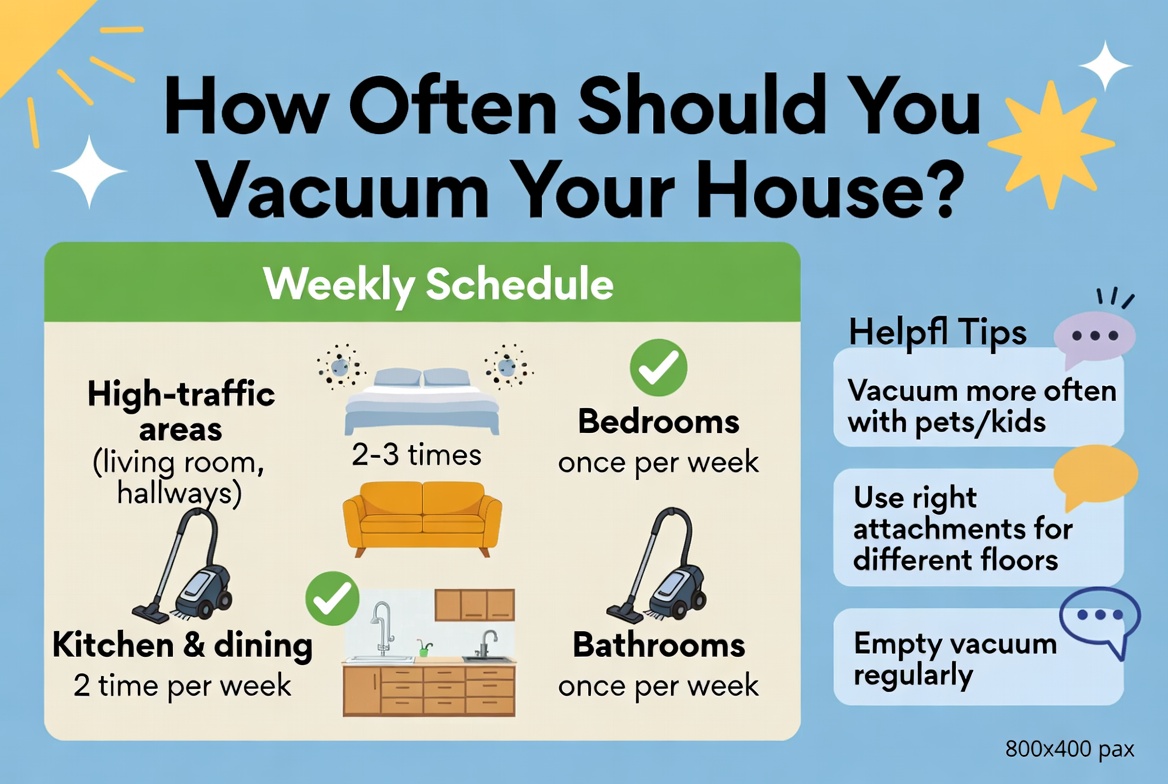
These are your high-traffic zones during typical home life. Most living rooms need vacuuming once to twice a week. Bedrooms are usually a bit less trafficked, so once a week often works fine. That said, bedrooms collect dust and dead skin cells, so even if traffic is low, the dust buildup is real.
If you or anyone in your home struggles with dust allergies, bump bedroom vacuuming up to twice a week. You spend eight hours or more sleeping there, so keeping that air clean matters.
Kitchens and Dining Areas
These rooms handle food spills and crumbs constantly. If you have hard floors in your kitchen, a quick sweep or vacuum daily or every other day keeps things tidy. Spilled food attracts bugs and creates sticky spots, so don’t let it sit.
If you have carpet in a kitchen or dining area (which is less common but happens), you might want to vacuum daily or every other day. Food debris sitting on carpet attracts pests and creates stains.
Bathrooms
Bathrooms usually get light foot traffic compared to other rooms. A weekly vacuum works fine in most cases. The main concern in a bathroom is dust and hair, which do collect but aren’t usually as heavy as in living areas.
Entryways and Hallways
These are your dirt super highways. Dirt comes in through doors and gets tracked down hallways. Entryways need vacuuming at least once a week, and more often if you have dirty outdoor activities happening at your home. Heavy-traffic hallways might need twice-weekly vacuuming.
Think about putting a mat at your entryway to catch dirt before it gets on your floors—that helps reduce how much vacuuming you need to do.
Different Flooring Types and Vacuuming
Your floor material affects both how often you should vacuum and what kind of vacuum works best.
Carpet and Vacuuming
Carpet holds onto dust, allergens, and dirt particles more than any other flooring type. That’s why carpet cleaning schedules are usually the most frequent. A typical home with carpet needs vacuuming at least weekly, and twice weekly for busier households.
Carpet also shows visible dirt faster, so you might feel like vacuuming more often just because you can see the difference. Darker carpet hides dirt better than light-colored carpet, so you might not feel the need to vacuum light-colored carpet as often—but you should.
Different carpet types need slightly different care. Thick, plush carpet traps more dirt and needs regular vacuuming to keep dirt from settling deep in the fibers. Lower pile carpet is easier to clean and doesn’t hide as much debris.
Hard Floors: Tile, Laminate, and Hardwood
Hard floors don’t trap dust like carpet does, but they still need regular cleaning. Dust and dirt sit on top and get moved around by foot traffic. You should vacuum hard floors once to twice a week, depending on traffic.
The advantage of hard floors is that they look clean longer visually, and vacuuming takes less time. You’re not fighting against trapped debris in fibers.
Laminate and hardwood floors need gentle vacuuming with the right machine to avoid scratching. Make sure your vacuum has a soft brush setting or use it without the beater bar. Hard floors also benefit from sweeping between vacuuming sessions to catch loose debris.
Rugs and Area Rugs
If you have rugs over hard floors, you need to think about both surfaces. The area rug itself should be vacuumed at least weekly, maybe twice weekly if there’s heavy traffic. The hard floor under and around the rug needs attention too, since stuff collects around the rug’s edges.
Consider rotating and flipping rugs periodically for even wear and better cleaning.
How Often People Actually Vacuum (And What Works)
Let’s talk about real life. Studies show that most people vacuum somewhere between once a week and once every two weeks. People with pets and kids often do it more frequently, while people living alone in a small space might stretch it to every two weeks.
The truth is, “normal” varies widely. What matters is finding a schedule that keeps your home feeling clean and healthy for the people living there.
Many people find that vacuuming on a set day each week works best for them. Maybe Sunday afternoon or after you do the weekend deep cleaning. Making it a habit means it gets done consistently rather than waiting until dirt is obviously piling up.
Signs Your Floors Need Vacuuming Right Now
Sometimes you can’t wait for your regular schedule. Watch for these signs that your floors need immediate attention:
Visible dirt and dust – If you can see dirt particles on your carpet or hard floors, it’s time to vacuum. This is especially true in entryways and high-traffic areas.
People with allergies are sneezing more – When allergic reactions get worse, dirty floors might be the culprit. Vacuum more often if you notice allergies flaring up.
The carpet looks matted or dull – Dirt pressing down carpet fibers makes them look flat and tired. A good vacuum freshens up the appearance.
You see pet hair piling up – Visible pet hair means it’s definitely time to clean floors. Pet hair collects allergens and dust.
The floor feels gritty underfoot – Run your hand across the carpet. If it feels rough or gritty, dirt has built up. Hard floors that feel gritty under shoes need attention.
There’s a dust cloud when people walk – If you can see dust floating up when people walk across the room, your floors are definitely too dirty.
Sticky spots appear – On hard floors, sticky spots appear from spilled food or drinks. Clean these right away before they get worse.
Tips for More Effective Vacuuming
Just vacuuming on a schedule isn’t enough. You want to actually remove the dirt. Here’s how to do it right.
Go slow. Many people rush through vacuuming, but moving the vacuum quickly doesn’t give it time to pull up dirt and debris. Slow, overlapping strokes work better.
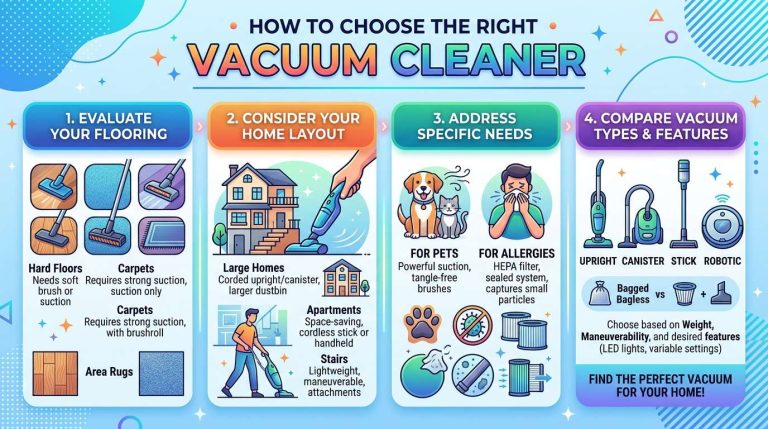
Use the right vacuum. Different floors and homes need different vacuums. Upright vacuums work well for carpet. Canister vacuums often work better on hard floors and stairs. Robot vacuums handle regular maintenance on level floors. Choose what fits your home.
Vacuum in different directions. Carpet fibers lay in different directions. Vacuuming in multiple directions—forward and backward, side to side—gets more dirt out.
Empty the bag or canister regularly. A full vacuum doesn’t work well. Empty it after every use or when it reaches half full.
Check for blockages. If your vacuum isn’t picking up as much, check the hose and brush roll for clogs. Hair wraps around the brush and blocks suction.
Use attachments for stairs and furniture. Stairs collect lots of dust and debris. Use hose attachments to clean stairs, under furniture, and around baseboards.
Consider a carpet cleaning schedule too. Regular vacuuming keeps carpet clean, but deep cleaning carpet every six to twelve months really extends its life and keeps it fresh.
Vacuuming and Your Overall Cleaning Routine
Vacuuming works best as part of a complete cleaning routine. It works together with other tasks like dusting and sweeping. Dust settles on surfaces, falls to the floor, and becomes part of the dirt your vacuum needs to pick up. So dusting before vacuuming makes sense.
Sweeping before vacuuming on hard floors helps too. A quick sweep catches loose dirt that vacuuming then picks up, and it can be faster than vacuuming alone for small messes.
Think of vacuuming as a key part of keeping your home clean, but not the only part. Combined with regular dusting, sweeping, and spot cleaning spills immediately, vacuuming keeps your floors and your air quality in great shape.
Creating Your Personal Vacuuming Schedule
Here’s how to figure out what’s right for your home:
Start with once a week if you live alone or with one other adult and have no pets. See how your floors look and feel after a week. If they look dirty, increase to twice a week.
If you have pets or kids, start with twice a week. If you still see visible dirt or notice allergies, bump it to three times a week.
High-traffic areas like entryways might need extra attention between your regular scheduled days. Keep a small handheld vacuum nearby for quick pickups.
Write down your schedule and stick to it for a few weeks. Notice how your home looks, smells, and feels. Adjust from there. Your best schedule is the one that makes your home feel clean and fresh without driving you crazy.
Final Thoughts on Keeping Your Floors Clean
The honest answer to “how often should you vacuum your house” is: enough to keep your home clean and healthy for the people living there. For most homes, that’s once or twice a week. For homes with pets, kids, or people with allergies, it’s more often. For single people in small spaces with no pets, it might be less.
What matters most is staying consistent. A regular vacuuming routine—even if it’s just once a week—beats random vacuuming when you remember. Clean floors improve your home’s appearance, keep the air fresher, and help your carpet last longer.
Start with a schedule, stick to it for a few weeks, and then adjust based on how your home actually looks and feels. You’ll find the perfect rhythm for your place. Clean floors aren’t magic, but they’re definitely worth the effort.