
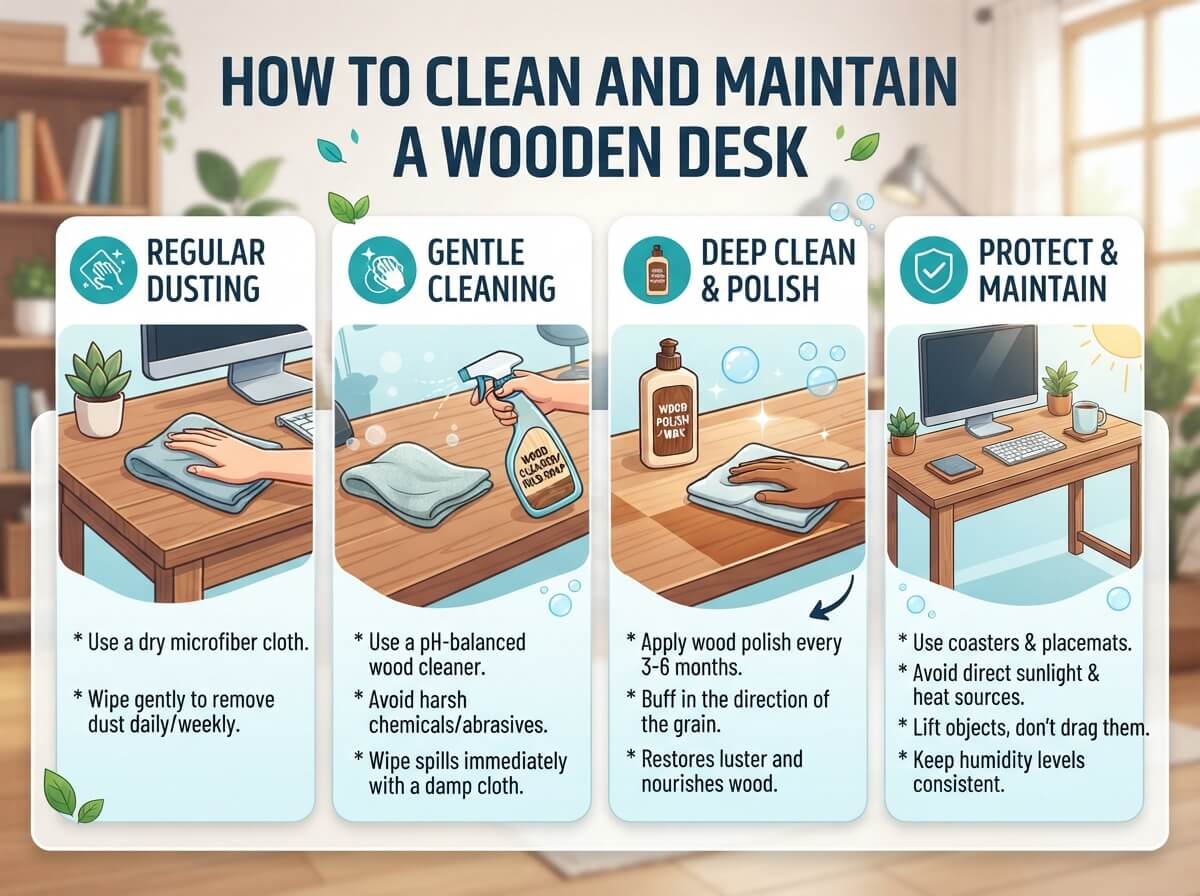
How to Clean and Maintain Your Wooden Desk?
Your wooden desk is more than just a place to work. It’s a statement piece in your office, a surface that holds your daily productivity, and an investment worth protecting. Whether you just bought your first wooden desk or you’ve had one for years, keeping it clean and well-maintained is easier than you think. This guide walks you through everything you need to know to keep your desk looking beautiful and lasting for decades.
Why Your Wooden Desk Deserves Special Care
Before we jump into the how-tos, let’s talk about why wooden desks need attention. Wood is a natural material that responds to its environment. Dust settles on it. Moisture can damage it. Scratches happen during everyday use. The good news? Most of these issues are preventable or easy to fix with the right approach.
Wooden desks develop character over time, but character works best when the desk stays intact and protected. Regular cleaning and maintenance keep your desk looking fresh and prevent serious damage that costs money to repair.
What You’ll Need to Get Started
Keep these supplies on hand for desk maintenance. You don’t need expensive products or fancy equipment.
Soft cloths are your best friend. Use microfiber cloths or old cotton t-shirts. Avoid paper towels because they can scratch the surface. Keep a few cloths dedicated just to your desk.
For dusting, get a soft-bristled brush or an old toothbrush. This helps you reach into corners and crevices without harming the wood.
Distilled water is essential. Tap water contains minerals that can leave spots on wood. If you can’t find distilled water, boil tap water and let it cool.
For actual cleaning, mix distilled water with a tiny drop of mild dish soap. This solution handles most everyday messes safely.
Wood-specific cleaners work great once a month. Buy products labeled as safe for wood furniture. Look for options made from natural ingredients.
Furniture wax or wood polish protects your desk and keeps it shiny. Get a quality product designed for wooden furniture.
A spray bottle makes applying solutions easier and keeps you from over-wetting the desk.
Daily Dusting: Your First Line of Defense
Dust is your wooden desk’s biggest enemy. It’s not just ugly—it’s abrasive and can scratch the finish over time.
Dust your desk every single day if you can. If daily dusting feels like too much, aim for at least three times per week. This keeps dust from building up and making your desk look dull.
Use a soft microfiber cloth and wipe with the grain of the wood. Moving with the grain, not against it, prevents tiny scratches. The grain runs in one direction on your desktop, so follow that pattern.
Don’t press hard when you dust. Light, gentle strokes do the job perfectly. Think of yourself as caressing the desk, not scrubbing it.
For tight spots around computer monitors, keyboards, or office supplies, use a soft brush. This gets dust out of corners without damaging the wood.
If you work at your desk all day, take thirty seconds each morning to do a quick wipe-down. This keeps dust from settling while you work.
Weekly Cleaning: Going Deeper
Once a week, give your desk a more thorough clean. This removes grime and keeps oils and finishes effective.
Mix distilled water with one drop of mild dish soap in a spray bottle. Spray this mixture lightly onto your cloth—not directly onto the desk. Over-wetting is the enemy of wood furniture.
Wring out your cloth until it’s almost dry. The cloth should feel damp but not dripping wet. This is crucial. Too much moisture seeps into the wood and causes swelling or warping.
Wipe the entire desk surface. Work with the grain, just like with dusting. Take your time and don’t rush.
For stubborn spots, let the damp cloth sit on the area for a few seconds. This softens the residue, making it easier to wipe away.
Go over the desk with a dry cloth afterward. This removes any moisture and prevents water spots.
If your desk has any carved details or decorative elements, use a soft brush dipped slightly in the soapy water. This gets into grooves without soaking them.
Pay attention to the desk’s edges and bottom surfaces. These areas collect dust and grime too. They might be out of sight, but they still need care.
Monthly Maintenance: Restoring the Shine
Once a month, use wood-specific cleaner or furniture polish. This restores shine, protects the finish, and keeps your desk looking new.
Read the product instructions carefully. Different products have different application methods. Most come as sprays, creams, or liquids.
Apply the product to a soft cloth, not directly onto the desk. Rub it into the wood surface following the grain. Use gentle circular motions.
Let the product sit for a minute or two. This gives it time to penetrate the wood and work its magic.
Buff the surface with a clean cloth. This removes excess product and creates a beautiful shine. The buffing step is what makes your desk glow.
Pay special attention to high-traffic areas. These parts of your desk get touched most and benefit from extra protection.
Use a fresh cloth for buffing. A cloth already saturated with product won’t give you that polished finish you’re looking for.
Preventing Scratches and Dents
Scratches and dents happen, but you can prevent most of them with simple habits.
Use desk pads or placemats under items you set on your desk regularly. Your computer monitor, keyboard, and mouse sit on the desk for hours. A protective pad saves the wood underneath.
Keep coasters under drinks and mugs. Water rings are stubborn and ugly. A simple coaster eliminates this problem entirely.
Don’t drag items across the desk surface. Pick things up and set them down gently. This single habit prevents countless scratches.
Place a felt pad under anything with metal legs or bases. Metal legs scratch wood easily, but felt pads protect the surface.
Be gentle when using pens or pencils at your desk. Caps and metal points can dent the wood if you press too hard.
When eating at your desk, use a placemat. Crumbs and spills happen, and you want them on a mat, not the wood.
Dealing with Stains and Spills
Accidents happen. The key is acting quickly and knowing the right response.
If you spill liquid on your desk, wipe it up immediately with a cloth. Speed is critical. The faster you remove the liquid, the less damage it does.
For fresh spills, a damp cloth handles most messes. If the spill is sticky or greasy, add a tiny drop of dish soap to your water.
Let the cleaned area dry completely. Don’t leave it wet or damp.
For water rings or stains that already set in, try rubbing the spot with a cloth dampened in distilled water mixed with a bit of vinegar. The ratio is one part vinegar to three parts water.
Rub gently with the grain. This might take several attempts, but patience pays off.
If vinegar doesn’t work, try a specialized wood stain remover. Test it on a hidden area first to make sure it doesn’t damage your desk’s finish.
Dark stains sometimes need professional help. If home remedies don’t work, talk to a furniture expert.
Coffee and tea stains need quick action. The longer they sit, the harder they are to remove. Follow the steps above as soon as you notice them.
Handling Scratches and Small Damage
Light scratches are cosmetic and don’t hurt your desk’s structure. Deep scratches that expose bare wood need attention.
For light scratches, wood polish or furniture wax sometimes makes them less visible. The products fill tiny grooves and reflect light differently, making scratches less noticeable.
For deeper scratches, wood fill products help. These come as sticks, pastes, or liquids in various wood tones.
Choose a color that matches your desk. Apply the filler according to the product instructions. Usually, you smooth it over the scratch and let it dry.
Once dry, sand the area gently with fine-grit sandpaper if needed. Apply wood stain or furniture polish to blend it in.
Dents are trickier. For small dents, moisture sometimes helps. Apply a damp cloth to the dent and let it sit. The moisture helps the wood swell back to its original shape. This works better on some wood types than others.
If dents don’t respond to moisture, wood filler works similarly to scratch repair.
For major damage, bringing in a professional furniture restorer makes sense. They have tools and skills for serious repairs.
Protecting Your Desk from Moisture
Wood and moisture don’t mix well. Too much humidity swells the wood. Too little dries it out. Both cause problems.
Keep your desk away from windows or walls where water can seep in. Don’t place it directly under air conditioning vents that drip.
Use a humidifier in dry environments. If the air in your office is very dry, adding moisture to the air helps the wood stay stable.
In humid climates, a dehumidifier helps. Excess moisture in the air transfers into the wood.
Never use a damp cloth that’s soaking wet. We’ve said this before, but it’s worth repeating. Moisture is the enemy.
During cleaning, dry your desk completely after applying any liquid.
If your desk gets wet accidentally, dry it immediately with towels. If a large area gets wet, place absorbent materials like newspaper or paper towels on it for a few hours to draw out moisture.
Seasonal Maintenance Tips
Different seasons bring different challenges to wooden furniture.
In summer, air conditioning keeps the air dry. Use a humidifier to maintain balanced moisture levels. Direct sunlight can fade and damage wood, so close curtains on very sunny days.
In winter, heating systems dry the air significantly. Run a humidifier regularly. Keep your desk away from heating vents and radiators.
In spring and fall, humidity levels fluctuate. Monitor your desk for any signs of stress like cracking or warping. These changes in seasons are when problems often start.
In very rainy seasons, ensure water can’t drip onto your desk. Check around windows and roof areas if your desk is near them.
Cleaning the Underside and Hard-to-Reach Areas
The bottom and undersides of your desk matter too. They collect dust and debris just like the top.
Turn a chair upside down (carefully) and look at the bottom of your desktop. You’ll probably see more dust and debris than you expected.
Use a soft brush to brush off the underside. This prevents dust from making its way back to the top surface.
For drawer fronts and sides, use the same cleaning methods as the desktop. Dust them regularly and clean weekly.
Inside drawers, use a cloth or vacuum with a brush attachment. Empty drawers first to clean them properly.
Desk legs get dirty and dusty too. Wipe them down with a damp cloth during your weekly cleaning.
What Not to Do With Your Wooden Desk
Knowing what to avoid is just as important as knowing what to do.
Never use harsh chemicals or bleach. These destroy the finish and damage the wood.
Avoid furniture sprays with silicone. They build up over time and make your desk look dull instead of shiny.
Don’t use scouring pads or steel wool. These scratch and gouges the surface.
Never place hot items directly on the desk without protection. Hot dishes, pans, or electronics can leave burn marks or warp the wood.
Don’t leave wet objects sitting on your desk. The moisture seeps into the wood and causes damage.
Avoid placing your desk in direct sunlight for extended periods. UV rays fade the wood and weaken the finish.
Don’t use excessive amounts of furniture wax. Buildup makes your desk look cloudy instead of shiny.
Creating a Desk Care Routine
The best approach is having a simple routine you actually follow.
Make dusting a daily habit. Spend thirty seconds wiping your desk each morning or evening.
Set a weekly reminder for deeper cleaning. Sunday evening works great for many people. It takes ten minutes and keeps your desk looking great all week.
Once a month, plan for polishing. This takes about twenty minutes and makes a big difference in how your desk looks.
Every few months, check for damage. Look for scratches, dents, or stains you might have missed. Address them early before they get worse.
Keep your supplies in a small basket or caddy near your desk. When everything is accessible, you’re more likely to maintain your desk consistently.
Final Thoughts
Your wooden desk is worth the effort it takes to maintain it. A little bit of regular care prevents big problems and keeps your desk beautiful for years to come.
Start with the basics: daily dusting, weekly cleaning, and monthly polishing. As you develop these habits, they become second nature. You won’t think about maintaining your desk anymore—it just becomes part of your routine.
Wooden desks improve with age when cared for properly. They develop a warm patina that makes them even more beautiful. Your desk can be one of those pieces that looks better every year instead of worse.
Take action today. Gather your supplies, dust your desk, and start implementing the tips in this guide. Your desk will thank you with years of reliable service and timeless beauty.

Hi, I’m Mary, the founder of Homygear.com. I’m passionate about creating a comfortable, smart, and beautiful home. I share practical insights and real-world experience on home gear that makes everyday life easier. Behind the scenes, my dedicated research team studies products in depth, and our writers craft honest reviews using trusted, authentic sources—so you can choose home gear with confidence.