
Aluminum vs Magnesium Anode Rod
Your water heater is one of those things you never think about — until it breaks. And one tiny part inside it does most of the heavy lifting to keep it alive. That part is called the anode rod.
Most people have never heard of an anode rod. But it is the reason your water heater lasts as long as it does. Skip this little rod, and your tank rusts from the inside out. Keep up with it, and you can squeeze years of extra life out of your heater.
So the big question is: should you use an aluminum anode rod or a magnesium anode rod?
Both do the same job. But they do it differently. And the right pick depends on your water type, your heater, and your budget. Let’s break it all down in plain English.
What Is an Anode Rod and Why Does It Matter?
An anode rod is a long metal rod that sits inside your water heater tank. It is usually made of magnesium, aluminum, or zinc. Some rods are a blend of two metals.
Here is how it works. When water sits in a metal tank, it causes rust. That is just chemistry. But if you put a more reactive metal in the water, that metal corrodes first. It takes the hit so the tank does not have to.
This process is called sacrificial corrosion. The anode rod literally sacrifices itself to protect the steel tank around it.
That is why it is also called a sacrificial anode rod. Over time, the rod wears down. It gets eaten up by the water. And when it is gone, the tank starts to corrode instead.
This is why you need to check and replace your anode rod every few years. Neglect it, and you are just waiting for a tank leak.
The Two Main Types: A Quick Overview
There are two metals that dominate the anode rod market — aluminum and magnesium.
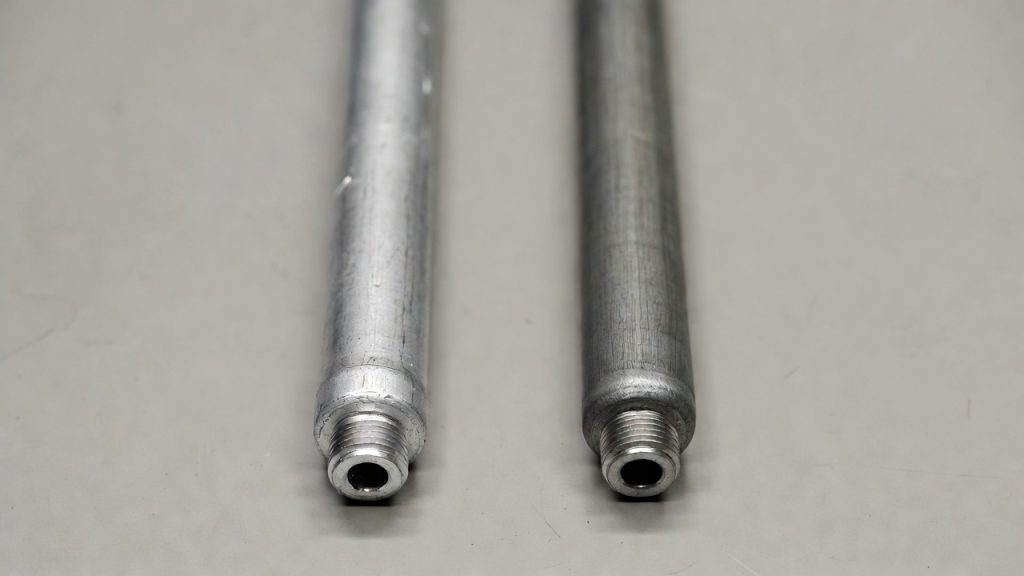
Aluminum anode rods are wrapped around a steel wire core. They are heavier duty and last longer. They work great in hard water.
Magnesium anode rods are also wrapped around a steel core. They are more reactive and work faster. They perform best in soft water.
That is the short version. Now let’s go deeper.
Aluminum Anode Rod: What You Need to Know
How It Works
Aluminum is a reactive metal, but it is less reactive than magnesium. That means it corrodes more slowly. It gives up electrons to protect the tank, but it does it at a gentler pace.
Aluminum forms a hard, crusty layer as it corrodes. This layer actually slows down further corrosion. So the rod lasts a long time.
Best For Hard Water
Hard water is water with high mineral content — things like calcium and magnesium dissolved in it. If you live in an area with hard water, an aluminum rod is usually the better fit.
The minerals in hard water can cause scale buildup inside the tank. Aluminum rods hold up well in these conditions. They do not deplete as fast. They keep doing their job without you having to replace them as often.
The Aluminum Rod and Sulfur Smell
Here is something a lot of people do not know. Aluminum reacts with sulfate-reducing bacteria in water. When this happens, it produces hydrogen sulfide gas. That is the stuff that smells like rotten eggs.
If your water already smells funky, an aluminum rod might make it worse. Some people switch to a magnesium rod and the smell goes away. Others add a zinc-aluminum combo rod, which helps reduce the odor.
So if you have smelly water, keep this in mind before you pick an aluminum rod.
Cost
Aluminum anode rods are cheaper. You can usually find them for less money than magnesium rods. For people on a tight budget, this is a real advantage.
And because they last longer, you may not need to replace them as often. That adds up over time.
Aluminum Rod Pros
- Lower cost
- Longer lifespan
- Works well in hard water
- Good for areas with high water pressure
Aluminum Rod Cons
- Can cause rotten egg smell in some water types
- Less reactive, so may not protect as aggressively in soft water
- Leaves behind a sludgy residue as it breaks down
Magnesium Anode Rod: What You Need to Know
How It Works
Magnesium is more reactive than aluminum. It gives up electrons faster and with more energy. This makes it a stronger protector for your tank — but it also means it wears out quicker.
Think of it like this. A magnesium rod is a sprinter. An aluminum rod is a long-distance runner. The magnesium rod works harder and faster but burns out sooner.
Best For Soft Water
Soft water has fewer dissolved minerals. It is more electrically conductive, which means it lets the anode rod work more efficiently.
In soft water, a magnesium rod shines. It provides strong protection and keeps the tank healthy. It also helps keep the water slightly warmer, because the rod generates a small amount of heat through its chemical reaction.
If you use a water softener at home, a magnesium rod is likely your best bet.
Better for Water Quality
Magnesium rods tend to produce cleaner, better-tasting water. They do not react the same way with sulfate-reducing bacteria. So they are much less likely to cause that rotten egg smell.
For people who notice odd tastes or odors in their hot water, switching to a magnesium rod often fixes the problem.
Shorter Lifespan
The downside is that magnesium rods do not last as long. Because they are so reactive, they deplete faster. You will need to replace them more often than aluminum rods.
This means higher long-term costs if you are not careful. But for most homeowners, the improved water quality and stronger protection are worth it.
Magnesium Rod Pros
- More reactive, so stronger protection
- Works best in soft water
- Better water taste and smell
- Less sludge buildup
Magnesium Rod Cons
- Shorter lifespan than aluminum
- Costs more upfront
- Not ideal for hard water — may deplete too fast
- Can be hard to find in some hardware stores
Side-by-Side Comparison
| Feature | Aluminum | Magnesium |
|---|---|---|
| Reactivity | Lower | Higher |
| Best for | Hard water | Soft water |
| Lifespan | Longer | Shorter |
| Cost | Less expensive | More expensive |
| Water odor | Can cause sulfur smell | Less likely to cause odor |
| Residue | More sludge | Less sludge |
| Protection strength | Moderate | Strong |
How to Know What Type of Water You Have
Before you buy an anode rod, know your water type. It is the single most important factor in your decision.
Hard water leaves white crusty deposits on faucets and showerheads. Soap does not lather well. Dishes come out of the dishwasher with spots. You may notice scale buildup in your kettle.
Soft water lathers easily. It feels almost slippery on your skin. It does not leave mineral deposits. If you use a water softener system, you have soft water.
You can also buy a simple water hardness test kit from any hardware store. They are cheap and easy to use. Just dip a test strip in your tap water and check the results.
If you are still not sure, call your local water utility. They can tell you about the water hardness in your area.
Does the Size of the Anode Rod Matter?
Yes. The rod has to fit your water heater. Most standard tanks use a rod that is about 3/4 inch in diameter and varies in length depending on the tank size.
Bigger tanks need longer rods. If your tank is in a tight space, you can buy a flexible or segmented anode rod that bends or comes in pieces. These are easier to install in cramped spots.
Always check your water heater manual before buying a replacement rod. You want the right fit.
How Often Should You Replace the Anode Rod?
A good rule of thumb is to inspect it every two to three years. Replace it when it is worn down significantly — when the steel core is exposed, or when the rod is less than half its original thickness.
If you have very hard water or very soft water, you may need to check it more often. Extremely soft water with a water softener can chew through a magnesium rod in under a year.
Do not wait until your water heater starts leaking to check the rod. By then, it is too late. The tank is already damaged.
How to Replace an Anode Rod: A Basic Overview
You do not need to be a plumber to replace an anode rod. Most handy homeowners can do it with basic tools.
Here is the general process:
- Turn off the power — shut off the circuit breaker for electric heaters, or turn the gas valve to pilot for gas heaters.
- Shut off the cold water supply — find the cold water inlet valve on top of the heater and close it.
- Relieve pressure — open a hot water faucet somewhere in the house to release pressure.
- Drain a little water — attach a hose to the drain valve at the bottom and drain a few gallons. This reduces the weight and mess.
- Find the anode rod — it is usually under a plastic cap on top of the heater, or under the hot water outlet. Check your manual.
- Unscrew the old rod — use a 1 1/16-inch socket wrench. It can be very tight. You may need a breaker bar or impact wrench.
- Check the old rod — look at how worn it is. This tells you how fast your water eats through the metal.
- Wrap the threads — use thread seal tape (plumber’s tape) on the new rod’s threads before installing.
- Screw in the new rod — hand tighten first, then use the wrench. Do not overtighten.
- Restore power and water — turn the water back on, let the tank fill, then restore power.
That is it. Takes about an hour for most people.
What About Zinc-Aluminum Anode Rods?
There is a third option worth mentioning — the zinc-aluminum anode rod.
These rods are about 90% aluminum and 10% zinc. The zinc helps fight the sulfur smell that aluminum rods can cause. If you have hard water but also have a rotten egg odor problem, a zinc-aluminum rod is a smart compromise.
They cost slightly more than pure aluminum rods, but they solve two problems at once. Good option for people who want the durability of aluminum without the smell.
Powered Anode Rods: A Different Option
Some homeowners go with a powered anode rod, also called an impressed current anode rod. These are electronic devices that do not corrode at all. They run on electricity and send a small current through the water to protect the tank.
They cost more upfront — sometimes a lot more. But they last much longer than sacrificial rods. You do not have to replace them every few years.
The downside is that they cost more and require an electrical connection. They also do not work as well in all water types.
For most homeowners, a standard aluminum or magnesium sacrificial rod is still the practical choice.
Common Mistakes People Make With Anode Rods
Forgetting about it entirely — This is the biggest one. Most people never think about the anode rod until the water heater fails.
Buying the wrong size — Always check your tank specs before buying. An ill-fitting rod does not protect properly.
Using the wrong metal for your water type — Aluminum in soft water may not protect aggressively enough. Magnesium in extremely hard water will wear out way too fast.
Over-tightening the rod — This can damage the threads and make future removal a nightmare.
Ignoring the smell — A rotten egg smell from hot water is often a sign of a depleted rod or the wrong rod type. Do not ignore it.
What Does Your Water Heater Manufacturer Say?
Here is a tip most guides leave out. Check your water heater manual or the manufacturer’s website.
Some brands, like Bradford White, use a magnesium rod by default. Others use aluminum. Some void the warranty if you use the wrong type of replacement rod.
Always check before you swap. Using the wrong rod could cost you your warranty coverage.
Aluminum vs Magnesium: Final Verdict
So which one wins?
There is no single winner. It all comes down to your situation.
Go with aluminum if:
- You have hard water
- You are on a tight budget
- You want a rod that lasts longer between replacements
- You are not dealing with a sulfur smell
Go with magnesium if:
- You have soft water or use a water softener
- Water quality and odor are a concern
- You want maximum protection for your tank
- You do not mind replacing it more often
Go with zinc-aluminum if:
- You have hard water AND a sulfur odor problem
- You want a budget-friendly fix for smelly hot water
At the end of the day, having any anode rod — and replacing it on time — is far more important than which metal you pick. A fresh, properly sized rod beats a worn-out rod of any material every single time.
Quick FAQ
Can I use a magnesium rod in hard water? You can, but it will wear out faster. Hard water is tougher on magnesium rods. You may need to replace it more often.
Can I use an aluminum rod in soft water? You can, but it may not provide as strong of protection. Soft water works best with the higher reactivity of magnesium.
How do I know my anode rod is dead? Pull it out and look. If you can see the steel wire core exposed, or if the rod looks completely eaten away, it is time for a new one.
Does a new water heater have an anode rod already? Yes. All new water heaters come with one installed. It just needs to be checked and eventually replaced as it wears down.
Will replacing the anode rod fix my smelly hot water? Often, yes. A worn-out rod or the wrong rod type is one of the most common causes of sulfur smell in hot water. Try a new magnesium or zinc-aluminum rod and see if it helps.
Wrapping It Up
Your water heater does not ask for much. It just needs a little attention every few years. And a big part of that attention is the humble anode rod.
Aluminum rods are tough, affordable, and built for hard water. Magnesium rods are reactive, powerful, and perfect for soft water. Both do the same essential job — protecting your tank so you are not stuck with a cold shower and a big repair bill.
Take five minutes to test your water hardness. Pull out your water heater manual. Get the right rod. Install it or have someone install it for you.
It is one of the cheapest, easiest maintenance tasks you can do — and it can add years to the life of one of the most important appliances in your home.
Do not wait until the tank is leaking. Act now, and your water heater will thank you for it.