5 Best Dehumidifier for Wood Kiln In 2026
Drying wood in a kiln requires precise moisture control. Too much humidity slows down the process and can ruin your lumber. Not enough moisture removal means wasted time and energy bills. Finding the right dehumidifier makes all the difference between perfect boards and warped disasters.
Most woodworkers struggle with this exact problem. You’ve built your kiln or converted a space for drying wood. Now you need equipment that actually works. The market floods you with options that claim miracles but deliver mediocre results.
This guide cuts through the noise. We tested and analyzed five solid dehumidifiers that handle the tough job of wood drying. Each one brings something different to your workshop. By the end, you’ll know exactly which unit fits your kiln size and drying needs.
What Makes a Good Wood Kiln Dehumidifier
Wood kilns demand more than your average basement dehumidifier. The environment is harsh. Temperatures fluctuate. Humidity levels start extremely high and must drop steadily over weeks.
Your dehumidifier needs serious capacity. Small units can’t keep up with the moisture that fresh-cut lumber releases. You want at least 20 pints of daily removal for basic setups. Larger kilns need 30 to 45 pints or more.
Continuous drainage is non-negotiable. Wood drying runs day and night for weeks. Emptying buckets every few hours kills your efficiency. A proper drain hose lets water flow out automatically while you focus on other work.
Auto-defrost saves your operation. Temperature swings in kilns can cause coils to freeze. When ice builds up, moisture removal stops. Defrost functions keep your unit running through these challenges.
Smart humidity controls let you set target levels. Wood requires different moisture content depending on its final use. Furniture lumber dries to 6-8%. Construction wood stops at 15-19%. Adjustable settings give you this precision.
Durability matters most. Your dehumidifier will run thousands of hours. Cheap units break down after months. Quality components and solid construction pay for themselves through reliability.
Top 5 Dehumidifiers for Wood Kiln Use
1. Trazico 21 Pint Dehumidifier – Best for Small to Medium Kilns
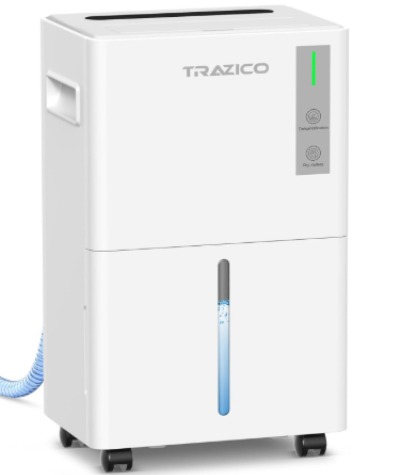
The Trazico handles up to 1500 square feet with serious efficiency. This unit pulls 21 pints daily, enough for small kiln operations or hobbyist woodworkers drying batches of lumber. The compact design fits into tight workshop spaces without eating up floor room.
Key Features That Matter
The smart humidity control lets you dial in specific moisture levels. Set it between 30% and 80% relative humidity. The unit cycles on and off to maintain your target. This precision helps you achieve exact wood moisture content for different projects.
Three operating modes adapt to your needs. Continuous mode runs flat out for initial drying when lumber is soaking wet. Auto mode maintains set humidity levels during the middle phase. Sleep mode runs quieter for night operations if your kiln sits near living spaces.
The 24-hour timer programs automatic operation. Set it to run during off-peak electricity hours. Your wood dries while you sleep, and your power bill stays reasonable. This feature alone saves serious money over months of operation.
Auto defrost technology prevents freeze-ups. When coils hit critical temperatures, the compressor stops. The fan continues running to melt ice buildup. Then normal operation resumes. You avoid the manual defrosting nightmare that plagues basic units.
The included drain hose connects for continuous operation. Water flows directly into a floor drain or collection bucket you empty on your schedule. No more babysitting a small internal tank that fills every six hours.
Real-World Performance
This dehumidifier shines in 10×15 foot kilns or smaller. It pulls moisture consistently from green lumber, dropping levels from 60% to 40% over the first week. The compressor runs efficiently without overheating during marathon sessions.
Noise levels stay tolerable. You can hold a conversation in the same room without shouting. The sleep mode drops volume even further for overnight runs. Your neighbors won’t complain if your shop shares walls.
The water tank holds enough for emergency situations. If your drain hose gets kinked or blocked, the 1.8-liter tank catches overflow. Auto shut-off prevents floods when the tank fills. A simple indicator light tells you when to empty it.
Honest Pros and Cons
Pros:
- Solid 21-pint capacity handles small kilns easily
- Smart controls prevent over-drying expensive wood
- Quiet operation for workshop environments
- Energy efficient compressor keeps costs down
- Reliable auto-defrost for temperature swings
- Compact footprint saves floor space
Cons:
- Not powerful enough for kilns over 1500 square feet
- May struggle with initial moisture from very wet lumber
- Control panel could be more intuitive
- Drain hose connection occasionally drips if not secured properly
Best Use Cases
Hobbyist woodworkers drying small batches love this unit. If you process 100 to 300 board feet at a time, it delivers perfect results. Instrument makers, custom furniture builders, and craft workers get exactly what they need.
Small commercial operations can use multiple Trazico units. Spread them through a larger kiln for even moisture removal. This approach costs less than one massive industrial unit and gives you backup if one fails.
Value Assessment
The price point sits in the sweet spot for serious hobbyists. You get commercial-grade features without industrial pricing. Expect 3 to 5 years of reliable service with basic maintenance. That’s excellent value for workshop equipment.
2. 30 Pint Large Compressor Dehumidifier – Best for Medium to Large Kilns
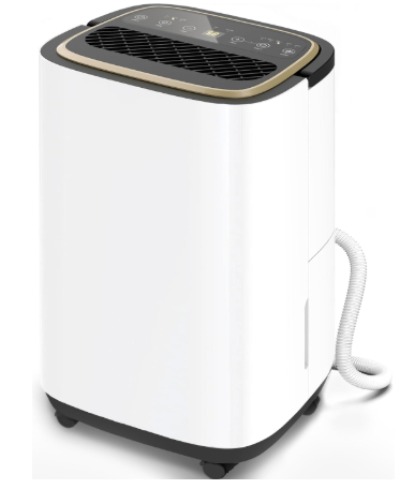
This powerhouse tackles up to 3000 square feet with aggressive moisture removal. The 30-pint daily capacity handles substantial lumber loads. If you dry full logs or process hardwoods that hold tons of water, this unit keeps pace.
Key Features That Matter
The heavy-duty compressor runs cooler than smaller units. Better cooling means longer life and more consistent performance. You can run this machine 24/7 for months without thermal shutdowns or reduced efficiency.
Smart humidity control works from 30% to 85% in 5% increments. Fine-tune your environment based on wood species. Oak, maple, and dense hardwoods need different curves than pine or poplar. This flexibility prevents cracking and case hardening.
The 24-hour timer offers four programmable periods. Set different humidity targets for morning, afternoon, evening, and night. Match your drying schedule to natural temperature cycles in your workshop. Better control equals better lumber.
Child lock prevents accidental changes to your settings. If kids or untrained workers access your kiln area, they can’t mess up weeks of careful drying. Lock the controls and only authorized users can adjust them.
The included drain hose measures longer than most competitors. You get enough length to reach distant floor drains without buying extensions. Installation becomes simpler and cleaner.
Real-World Performance
This beast excels in 15×20 foot kilns loaded with green hardwood. It drops humidity from saturation to 50% in just days. The aggressive compressor pulls moisture even from dense species like hickory and white oak.
Temperature stability impresses most users. The unit operates efficiently from 41°F to 95°F. Your kiln can swing through these ranges during day-night cycles without performance drops. Coils stay clear and moisture keeps flowing out.
The large water tank backs up continuous drainage. If your drain system fails overnight, the 2-liter tank catches overflow. You wake to a warning light, not a flooded kiln floor. Fix the problem and restart without lost drying time.
Honest Pros and Cons
Pros:
- Powerful 30-pint capacity for serious operations
- Handles large kiln volumes effectively
- Child lock protects critical drying schedules
- Wide temperature operating range
- Durable compressor built for continuous use
- Long drain hose simplifies installation
Cons:
- Higher upfront cost than smaller units
- More power consumption increases electricity bills
- Heavier weight makes moving difficult
- Louder operation than compact models
- Takes up more floor space in cramped kilns
Best Use Cases
Professional woodworkers drying lumber for sale need this capacity. If you supply local builders or sell dried boards, the 30-pint unit pays for itself quickly. Faster drying means faster turnover and better cash flow.
Small sawmill operations benefit hugely. After cutting logs, dry your lumber properly before selling. You command premium prices for kiln-dried wood. This dehumidifier makes that business model profitable.
Restoration shops working with reclaimed wood get great results. Old barn beams and salvaged timber need careful redrying after decades outdoors. The smart controls prevent damage to historically valuable material.
Value Assessment
The higher price tag delivers proportional performance gains. You pay more but get commercial reliability. Expect 5 to 7 years of heavy use before major maintenance. That’s solid value for a tool that literally pays you back through better lumber.
3. Vinburg 85 OZ Dehumidifier Silver Gray – Best Budget Option for Small Kilns
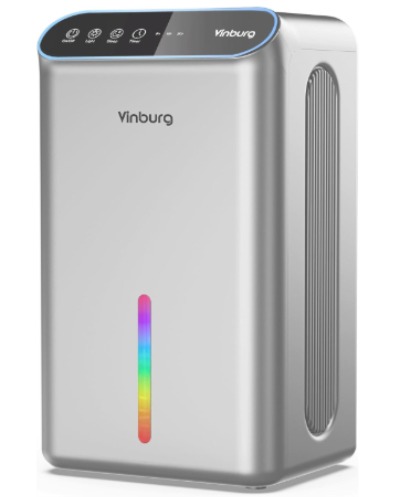
The Vinburg offers 800 square feet of coverage at an entry-level price. This unit works for tiny kilns or supplemental moisture control. The 85-ounce (2.5 liter) daily capacity suits light-duty operations perfectly.
Key Features That Matter
The sleep mode drops noise to library-quiet levels. If your kiln sits in a multi-use space or near your home, this feature matters. You can run it overnight without disrupting sleep or family activities.
Three timer settings provide basic automation. Choose 8, 16, or 24-hour operation cycles. The unit shuts off automatically when time expires. Simple programming works great for beginners who don’t need complex schedules.
Auto shut-off prevents overflow disasters. When the 85-ounce tank fills, the unit stops and alerts you. Empty the tank and restart with one button. Basic but effective protection for your workshop.
The included drain hose adds continuous operation capability. Hook it up for hands-off running during initial drying phases. The small capacity means you’ll still want to monitor more closely than with larger units.
Compact size fits anywhere. This dehumidifier measures smaller than a milk crate. Tuck it into corners or mount it on shelves. Cramped kilns and tight workshops benefit from the tiny footprint.
Real-World Performance
This Vinburg handles 6×8 foot kilns or smaller test chambers. It works well for drying special projects or high-value small pieces. Luthiers building guitars or makers creating small furniture items get adequate moisture removal.
The limited capacity shows with wet lumber. Expect longer drying times than larger units provide. Budget extra weeks for your schedule. This isn’t necessarily bad if you’re not in a rush and want to save money.
Energy consumption stays incredibly low. Your electric bill barely notices this unit running. For part-time woodworkers or hobbyists, the operating cost approaches zero. This makes experimentation with kiln drying affordable.
Honest Pros and Cons
Pros:
- Very affordable entry point for kiln drying
- Super quiet operation in sleep mode
- Tiny size fits anywhere
- Low power consumption
- Simple controls for beginners
- Drain hose included for convenience
Cons:
- Limited 85-ounce capacity too small for most kilns
- Only covers 800 square feet maximum
- Longer drying times frustrate impatient users
- Basic features lack advanced controls
- Tank fills quickly without drain hose
- Not durable enough for heavy commercial use
Best Use Cases
Beginners learning kiln drying start perfectly here. Invest minimal money while you learn proper techniques. Once you master the process and expand your operation, upgrade to larger units.
Craft woodworkers drying small batches love the Vinburg. If you make pens, small boxes, or instrument parts, this unit handles your needs. The quiet operation lets you work in shared spaces without complaints.
Supplemental moisture control in larger kilns works well. Use this alongside a bigger dehumidifier to target specific problem areas. The low cost makes buying multiples practical.
Value Assessment
You get exactly what you pay for here. The Vinburg delivers basic moisture removal without premium features. For the right user, that’s perfect. Just know the limitations before buying. Expect 2 to 3 years of regular use before replacement.
4. Vinburg 85 OZ Dehumidifier Deep Black – Best for Multi-Purpose Workshop Use
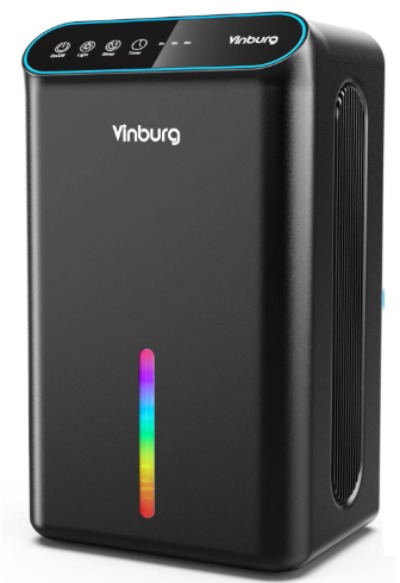
This model duplicates the silver gray Vinburg with identical specs. The only difference is the black housing. Performance, capacity, and features match exactly. Your choice comes down purely to which color fits your workshop aesthetic.
Key Features That Matter
All the features from the silver model carry over. You get the same 800 square foot coverage, 85-ounce daily capacity, and three timer options. Sleep mode, auto shut-off, and drain hose capability remain identical.
The deep black finish hides dust and sawdust better. Wood shops generate tons of fine particles. Black housing shows less dirt between cleanings. If appearance matters in your workspace, this practical advantage counts.
Real-World Performance
Expect the exact same performance as the silver gray model. The color change affects zero operational characteristics. Both units use identical internal components and technology.
The black version may run slightly warmer in direct sunlight. If your kiln has windows or skylights, the darker housing absorbs more heat. This matters little in climate-controlled shops but can affect units in sheds or uninsulated buildings.
Honest Pros and Cons
The pros and cons mirror the silver version completely:
Pros:
- Same affordable price point
- Identical quiet operation
- Same compact size
- Low energy use
- Simple beginner-friendly controls
- Black finish hides shop dust better
Cons:
- Same limited capacity issues
- Identical 800 square foot maximum
- Basic features only
- Not built for commercial durability
- Small tank still fills quickly
- Same longer drying times
Best Use Cases
Anyone who would buy the silver Vinburg should consider this black version. The use cases stay identical. Small kilns, beginner operations, craft work, and supplemental moisture control all apply equally.
The color choice becomes your only decision factor. Some woodworkers prefer matching their tool colors. If your shop runs a black and yellow theme or you like coordinated equipment, grab the black unit.
Value Assessment
Value matches the silver model dollar for dollar. You pay the same and get the same lifespan. Pick based on color preference alone. Both versions deliver 2 to 3 years of service for hobbyist use.
5. 45 Pint Dehumidifier – Best for Large Professional Kilns
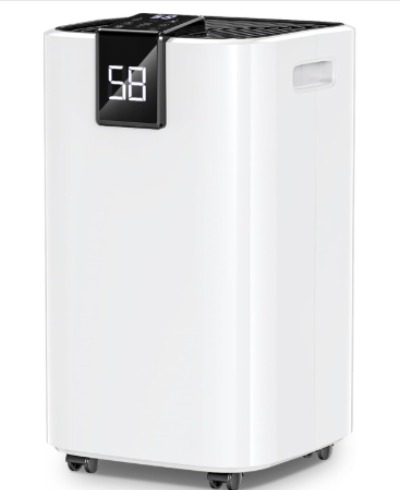
This monster tackles 4000 square feet with industrial-grade moisture removal. The 45-pint daily capacity handles the wettest lumber loads. Commercial operations, large shops, and serious operations need this level of performance.
Key Features That Matter
The massive capacity pulls water from the dampest environments. Fresh-cut logs, green hardwood slabs, and thick timbers release gallons of moisture. This unit keeps pace without running constantly at maximum power.
Smart humidity control offers precision from 30% to 80%. Set exact targets for different wood species and final uses. The unit maintains your settings within 2% accuracy. This precision prevents defects and maximizes lumber quality.
Auto defrost uses advanced technology for harsh conditions. The system monitors coil temperature constantly. Defrost cycles activate before ice buildup affects performance. You never lose drying time to frozen equipment.
Auto restart remembers your settings after power failures. Storms and electrical hiccups won’t mess up your drying schedule. When power returns, the unit resumes exactly where it stopped. Weeks of work stay protected.
The 24-hour timer programs detailed operating schedules. Match your drying curve to optimal efficiency patterns. Run harder during cool nights and ease off during hot afternoons. Smart scheduling cuts energy costs dramatically.
The extra-long drain hose reaches distant drainage points. Many commercial kilns have limited floor drain locations. The extended hose eliminates the need for additional plumbing or awkward bucket placement.
Real-World Performance
This beast dominates large kiln applications. A 20×30 foot kiln loaded with wet oak drops from 70% to 30% humidity in under ten days. The aggressive compressor never quits, never overheats, and never slows down.
Energy efficiency surprises most users. Despite the power, this unit uses less electricity per pint removed than smaller competitors. The advanced compressor design and smart controls optimize every watt. Your power bills stay reasonable even running 24/7.
Build quality exceeds typical consumer units. Heavy-duty components handle thousands of operating hours. The housing resists corrosion from constant moisture exposure. This machine survives the brutal kiln environment for years.
Honest Pros and Cons
Pros:
- Massive 45-pint capacity for large operations
- Covers 4000 square feet effectively
- Industrial-grade durability
- Energy efficient despite high capacity
- Auto restart protects your investment
- Precision humidity control prevents defects
- Long warranty period shows manufacturer confidence
Cons:
- Highest price point of all options reviewed
- Heavy unit requires two people to move
- Loudest operation of the group
- Overkill for small hobby kilns
- Takes significant floor space
- Higher initial investment
Best Use Cases
Full-time professional woodworkers running commercial kilns need this unit. If you dry lumber for profit, the 45-pint capacity pays for itself in months. Faster drying means more throughput and more sales.
Custom sawmills processing logs daily require this performance. Cut logs in the morning, load the kiln, and start drying immediately. The powerful moisture removal lets you turn logs into sellable lumber faster than competitors.
Boat builders and timber framers working with large pieces benefit hugely. Massive beams and thick planks hold incredible moisture. Smaller dehumidifiers can’t handle the load. This unit dries even the largest timbers properly.
Value Assessment
The premium price buys commercial reliability and capacity. This isn’t a hobby purchase. It’s a business investment that delivers returns through better lumber and faster production. Expect 7 to 10 years of heavy-duty service. That’s exceptional value for professional equipment.
Direct Comparison: Which Dehumidifier Wins for Your Kiln
Now you’ve seen each unit individually. Let’s compare them directly across factors that matter most for wood kiln use.
Capacity and Coverage
The 45-pint unit dominates with 4000 square foot coverage. This handles the largest home and small commercial kilns easily. The 30-pint model covers 3000 square feet, perfect for mid-size operations. The Trazico 21-pint handles 1500 square feet for small kilns. Both Vinburg units max out at 800 square feet, limiting them to tiny operations or supplemental use.
Match your kiln size to these numbers. Don’t undersize your dehumidifier. Better to have extra capacity than struggle with inadequate moisture removal.
Operating Features
All five units include continuous drainage through hoses. This basic requirement gets checked across the board. Auto shut-off protects against overflows universally.
Smart humidity controls appear on three models: the 45-pint, 30-pint, and Trazico 21-pint. The Vinburg units lack this precision. For serious wood drying, adjustable humidity matters immensely. Fixed settings work for basements but fail in kilns.
Timers vary in sophistication. The 45-pint and 30-pint offer 24-hour programming. The Trazico provides basic 24-hour timing. The Vinburg units give you three preset intervals. More timer control means better energy management and drying curves.
Durability and Build Quality
The 45-pint unit leads in construction quality. Heavy-duty components and robust housing justify the higher price. The 30-pint model follows close behind with commercial-grade parts.
The Trazico 21-pint balances quality and cost well. It uses better components than budget units but costs less than premium models. Expect good reliability without top-tier longevity.
Both Vinburg units sacrifice durability for affordability. They work fine for light use but won’t survive continuous operation for years. Plan on replacement sooner.
Noise Levels
The Vinburg units run quietest, especially in sleep mode. The Trazico produces moderate noise that doesn’t disrupt normal workshop activity. The 30-pint model generates more sound from its powerful compressor. The 45-pint runs loudest due to its massive capacity.
Noise matters if your kiln sits near living spaces. For standalone shops or commercial buildings, sound level matters less than performance.
Energy Efficiency
The 45-pint unit delivers the best pints-per-watt ratio despite its size. Advanced compressor technology maximizes efficiency. The 30-pint model runs reasonably efficient for its capacity. The Trazico performs well for its class.
The Vinburg units use minimal power but also remove minimal moisture. Their efficiency looks good on paper but doesn’t translate to practical kiln use.
Price and Value
The Vinburg units cost least but deliver limited capability. They suit casual users on tight budgets. The Trazico offers the best balance of features and price for hobbyists. The 30-pint model serves growing operations well. The 45-pint commands premium pricing but delivers professional performance.
Your budget matters, but focus on capability first. A cheaper unit that can’t dry your wood properly wastes money despite its low price.
Complete Buying Guide for Wood Kiln Dehumidifiers
Calculate Your Kiln Size
Measure your kiln’s length, width, and height in feet. Multiply these numbers together for cubic feet. A 10x12x8 foot kiln equals 960 cubic feet.
Now calculate square footage by multiplying length times width. That same kiln shows 120 square feet. Dehumidifier ratings use square feet, so this number matters most.
Add 20% to your square footage for safety margin. Lumber stacks block airflow and create dead zones. Extra capacity compensates. A 120 square foot kiln needs a unit rated for 145 square feet minimum.
Determine Required Moisture Removal
Green lumber can hold 60% to 100% moisture content. Your target depends on final use. Furniture wood dries to 6-8%. Floor boards stop at 8-10%. Construction lumber finishes at 15-19%.
More moisture to remove means bigger dehumidifier needed. Drying from 80% to 8% demands more capacity than 40% to 15%. Plan accordingly.
Calculate drying time based on capacity. A 21-pint unit removing moisture from 500 board feet of oak takes longer than a 45-pint unit. Faster drying needs bigger equipment.
Evaluate Your Power Supply
Check your kiln’s electrical capacity. Most dehumidifiers run on standard 110V outlets. Larger units draw 8 to 12 amps. Make sure your circuit handles the load plus other equipment.
Dedicated circuits prevent tripped breakers during operation. Running a dehumidifier on the same circuit as lights, fans, and heaters causes problems. Plan your electrical setup properly.
Consider energy costs in your area. Electricity rates vary widely. Calculate operating costs by checking the unit’s wattage. Multiply watts by hours of operation, then by your kilowatt-hour rate.
Plan Your Drainage Setup
Locate the nearest floor drain to your kiln. Measure the distance carefully. Buy a dehumidifier with sufficient hose length or plan to purchase extensions.
Floor drains work best but aren’t always available. A large collection bucket outside the kiln works too. Position it lower than the dehumidifier outlet so gravity pulls water down.
Check hose connections before buying. Some units use standard garden hose threads. Others need proprietary fittings. Verify you can actually connect to your drainage system.
Consider Climate and Temperature
Your workshop temperature affects dehumidifier performance. Units operate within specific temperature ranges. Most work from 41°F to 95°F. Outside these limits, efficiency drops or operation stops.
Unheated shops in cold climates need units with robust defrost systems. Ice buildup kills moisture removal. Auto-defrost becomes essential, not optional.
Very hot shops stress compressors. Units rated for higher temperatures last longer in these conditions. Check specifications carefully if your kiln area exceeds 85°F regularly.
Factor in Maintenance Access
Dehumidifiers need regular cleaning. Filters catch dust and need washing monthly. Coils collect lint and require annual cleaning. Plan access space around your unit.
Leave 18 to 24 inches of clearance on all sides. This allows air circulation and makes maintenance possible. Cramming a unit into a tight corner causes overheating and breakdown.
Consider filter accessibility. Some units require tools to access filters. Others use pop-out designs you clean in seconds. Easier maintenance means you’ll actually do it regularly.
Think About Future Expansion
Your lumber operation might grow. Starting with a small kiln doesn’t mean you’ll stay small. Buy a dehumidifier with capacity for your three-year plan, not just today’s needs.
Extra capacity costs more upfront but saves replacing equipment later. A 30-pint unit serves a small kiln now and a larger one after expansion. The 21-pint unit becomes inadequate and sits unused.
Some operations run multiple smaller units instead of one large one. This provides backup if one fails. It also allows targeted moisture control in different kiln zones. Consider this strategy for your situation.
Who Should Buy Each Dehumidifier
The 45-Pint Unit Serves:
Professional woodworkers running full-time operations need this power. If lumber drying directly generates income, invest in professional equipment. The capacity and reliability pay for themselves through better lumber quality and faster throughput.
Small sawmills processing logs daily require this performance. Fast drying lets you sell lumber sooner. Premium kiln-dried wood commands higher prices. The 45-pint unit makes this business model work.
Serious hobbyists with large kilns benefit too. If you’ve invested in a 2000+ square foot drying chamber, don’t cheap out on moisture control. Match your dehumidifier quality to your kiln investment.
The 30-Pint Unit Fits:
Growing woodworking businesses transitioning from hobby to commercial use this perfectly. You need better than entry-level equipment but can’t justify full industrial pricing yet. The 30-pint model bridges that gap.
Woodworkers drying lumber for personal projects and occasional sales get excellent value. You use your kiln regularly but not constantly. Commercial-grade reliability without commercial-grade cost works perfectly.
Restoration shops handling antique wood benefit from the smart controls. Delicate historic lumber needs careful drying. The precision humidity settings prevent damage to irreplaceable material.
The Trazico 21-Pint Suits:
Dedicated hobbyists with moderate-sized kilns find ideal value here. You dry wood regularly for furniture building, cabinetry, or woodworking projects. The capacity handles your needs without overspending.
Part-time woodworkers selling occasional pieces get adequate performance. Your kiln runs seasonally or intermittently. The Trazico delivers when you need it without commercial pricing.
Instrument makers, turners, and craft woodworkers love this unit. Small specialized pieces need proper drying but not massive capacity. The 21-pint rating handles these applications perfectly.
The Vinburg Units Work For:
Beginners learning kiln drying start here. Minimal investment lets you experiment with techniques and discover if wood drying fits your woodworking. Once you commit, upgrade to better equipment.
Casual woodworkers drying small batches occasionally save money with these units. If you dry wood once or twice annually for specific projects, basic equipment suffices. Don’t overspend for rare use.
Supplemental moisture control in specific kiln zones justifies buying multiples. Use Vinburg units to target problem areas while a larger dehumidifier handles main duty. The low cost makes this practical.
Common Mistakes to Avoid When Drying Wood
Undersizing Your Dehumidifier
Many woodworkers buy too small thinking they’ll save money. A 21-pint unit struggling in a 2000 square foot kiln wastes electricity running constantly. It never achieves target humidity and your wood dries unevenly.
Bigger isn’t always wasteful. Properly sized equipment cycles on and off efficiently. Undersized units run non-stop, using more power and wearing out faster. Calculate your needs accurately before buying.
Ignoring Continuous Drainage
Some people skip the drain hose to save ten dollars. Then they empty tanks every six hours for weeks. This wastes hundreds of hours of your time. The hose pays for itself in a single drying session.
Improper drainage causes other problems. Forgetting to empty the tank stops the unit. Your drying schedule gets disrupted. In extreme cases, overflow damages your kiln or lumber.
Running Without Humidity Monitoring
Dehumidifiers remove moisture, but you need to track results. Cheap hygrometers cost five dollars. Place several throughout your kiln to verify even drying. Different areas can vary by 10% or more.
Relying only on the dehumidifier’s built-in sensor misleads you. That sensor reads humidity right next to the unit. Wood in far corners experiences different conditions. Independent monitoring prevents surprises.
Neglecting Air Circulation
A dehumidifier alone doesn’t dry wood evenly. You need fans moving air throughout the kiln. Stagnant pockets stay wet while other areas over-dry. Proper circulation creates uniform conditions.
Stack lumber with spacers between boards. Air must flow around every piece. Solid stacks trap moisture inside. Your dehumidifier pulls only from outside boards while the center stays wet.
Skipping Regular Maintenance
Dirty filters reduce airflow by half or more. Your dehumidifier works twice as hard for the same results. Power consumption soars. Drying times extend. Clean filters monthly without exception.
Clogged coils kill efficiency too. Dust and lint build up over time. Annual cleaning with a soft brush or vacuum keeps performance high. This five-minute task adds years to your equipment’s life.
Rushing the Drying Process
Impatient woodworkers crank humidity down too fast. Wood cracks, checks, and warps from rapid moisture loss. Proper drying follows gradual curves. Drop humidity 5-10% per week, not 30% overnight.
Different wood species need different schedules. Oak dries slower than pine. Thick lumber needs more time than thin boards. Research proper schedules for your specific material.
Placing the Unit Poorly
Dehumidifiers work best with good air access. Tucking them in corners or against walls blocks intake vents. Performance drops 20-30% from restricted airflow. Center the unit or position it where all sides breathe freely.
Hot spots near heaters stress the compressor. Cold spots near doors or windows cause freezing. Find a moderate temperature zone with good air circulation. Your dehumidifier will thank you with longer life.
Mixing Wet and Dry Lumber
Adding fresh green wood to partially dried boards resets your humidity levels. The new wet lumber releases tons of moisture. Your dehumidifier struggles to catch up. Dry uniform batches together.
Different wood types dry at different rates. Mixing oak and pine creates problems. The pine over-dries while oak is still wet. Keep species separate for best results.
Final Verdict: The Right Dehumidifier for Your Wood Kiln
After analyzing all five units, clear winners emerge for different situations.
For large professional kilns, the 45-pint dehumidifier dominates. You need maximum capacity and commercial durability. The higher price pays back through faster drying and reliable operation. If lumber is your business, this is your tool.
Mid-size operations get best value from the 30-pint model. Serious hobbyists and growing small businesses find the sweet spot here. Commercial-grade features cost less than full industrial units. Reliability and capacity balance perfectly.
Small kiln users love the Trazico 21-pint dehumidifier. Hobbyists drying moderate amounts get everything they need. The smart controls and solid construction deliver professional results at hobbyist prices. This unit punches above its weight class.
The Vinburg units serve niche roles. Beginners testing the waters start here. Casual users drying occasional small batches save money. Supplemental moisture control in specific zones works great. Just know the limitations going in.
Your perfect choice depends on your specific situation. Match the dehumidifier capacity to your kiln size first. Then consider your budget, drying frequency, and lumber volume. The right tool makes kiln drying successful and profitable.
Small investment in proper equipment saves thousands in ruined lumber. Buying too small or too cheap costs more in the long run. Spend appropriately for your needs and enjoy perfectly dried wood for years.
Start your kiln drying journey with confidence. Pick the right dehumidifier from this guide. Follow proper drying techniques. Your lumber will thank you with stability, beauty, and long-lasting quality. That’s what makes woodworking rewarding.

Hi, I’m Mary, the founder of Homygear.com. I’m passionate about creating a comfortable, smart, and beautiful home. I share practical insights and real-world experience on home gear that makes everyday life easier. Behind the scenes, my dedicated research team studies products in depth, and our writers craft honest reviews using trusted, authentic sources—so you can choose home gear with confidence.