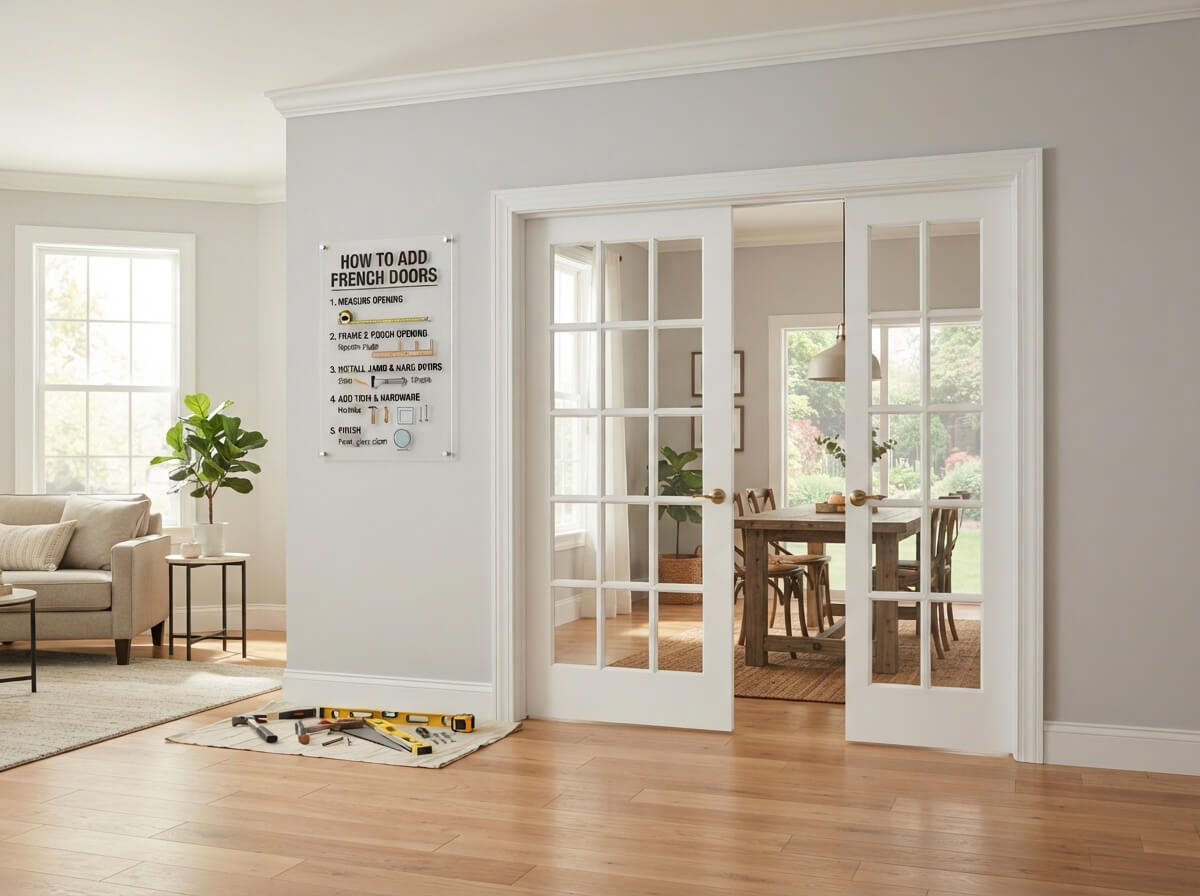
How to Add French Doors?
French doors bring elegance and light into any space. They look fancy, let natural light flood through, and they’re easier to install than you might think. If you’ve been staring at your doorway wondering how to transform it, this guide will walk you through the entire process. By the end, you’ll know exactly what to do.
What Are French Doors and Why You Need Them
French doors are double doors with glass panes running across each panel. Each door swings open separately, letting you open one side or both sides depending on what you need. They’re not just pretty—they’re practical too.
The main difference between French doors and regular doors comes down to the glass. While a standard door blocks your view, French doors keep your rooms connected visually. Light flows through naturally. You can see into the next room without walking through. They work great for bedrooms, dining areas, closets, and patios.
French patio doors take this a step further. They open up your indoor space to the outside, making your home feel bigger. The glass panels let you enjoy the view while still keeping the weather out.
Why install them now? Glass panel doors make rooms feel open and airy. You get natural lighting without paying for extra electricity. They add value to your home. Plus, they look beautiful. New homeowners especially love how these double doors transform a space.
Decide Where Your French Doors Will Go
Before you buy anything, figure out which doorway needs this upgrade. French doors work best in spots where you want to open up a space or connect two rooms.
Good places for interior French doors include:
- Between your living room and bedroom
- Separating a home office from the main bedroom
- Leading to a walk-in closet
- Between a kitchen and dining area
For patio doors, they work great replacing a regular back door or sliding door. They give you easy access to your outdoor space while looking sharp.
Measure your doorway carefully. Write down both the width and height. You need these numbers before shopping. Measure at the top, middle, and bottom since doorways aren’t always perfectly square. Use the smallest measurement. That’s the size you’ll buy.
Check if your doorway slopes or tilts. Use a level to test it. French doors need fairly straight openings to hang properly. If your doorway is really crooked, you might need to adjust the frame first. That’s fine—it just means one extra step.
Get Your Tools and Materials Ready
You don’t need fancy equipment to install French doors. Most of what you need you probably have in your garage already.
Basic tools you’ll need:
- Power drill with bits
- Circular saw or handsaw
- Level (the longer, the better)
- Tape measure
- Screwdriver set
- Hammer
- Pry bar or crowbar
- Utility knife
- Caulk gun
- Sanding block
Materials for the job:
- French door unit (with frame and hardware)
- Wood shims
- Wooden scraps for support
- Nails and screws
- Caulk (paintable or clear, your pick)
- Paint or stain (if needed)
- Packing tape
You might already own half of these items. Rent or borrow the rest. Many hardware stores let you borrow tools for free or for a small fee.
Remove Your Old Door
This step sounds harder than it really is. Take your time, and you’ll do fine.
Start by opening the door all the way. Look for the hinges on the side. Remove the pins from the hinges by tapping a nail up from below. The door will swing down and separate from the frame. Have someone help you lift it away—doors are heavy and awkward.
Now you can remove the frame. This old frame comes out next. Look around the edges for nails or screws holding it in place. Remove them all. Use your pry bar to pull the frame away from the wall.
Check what’s behind. You might find wood, metal studs, or concrete. That’s okay. You’ll work with what you’ve got.
Clean out any loose debris. Vacuum the opening. Remove old caulk and weatherstripping with your utility knife. You want a clean surface to work with.
Look at the opening now. You might see gaps or rough spots. Sand down anything rough. Fill holes with spackling compound if you want a smooth surface. Let it dry completely before moving forward.
Set Up Your New Door Frame
Your new French doors come with a frame already attached. This makes installation way simpler. The frame is the wooden or metal border that holds the doors in place.
Check that the frame is square. Place your level across the top. It should read perfectly straight. Now check from left to right. Both directions need to be level. If the frame isn’t square, you can adjust it with shims before securing it.
Position your new frame in the doorway. Center it perfectly. You want equal space on both sides. Have someone hold it in place while you work.
Grab your shims. These are little wedges of wood. You’ll place them around the frame to keep it perfectly positioned and level. Put shims near the hinges first. Keep adjusting until the level shows perfect alignment.
Install the Frame Properly
Once your frame sits exactly where it needs to be, secure it. Use screws through the frame into the wall studs. You want several attachment points for strength. Typically, you’ll use four or more screws on each side.
Drill pilot holes first. These small holes prevent the wood from splitting. Then drive your screws through these holes.
Check your level again after each screw. Sometimes tightening a screw shifts the frame slightly. Keep things level as you go.
After the frame is secure, you can remove the shims or leave them if they’re not visible. Cut off any excess shim material that sticks out.
Hang Your French Doors
Your new glass panel doors probably come pre-hung. That means the doors are already installed in the frame. If not, you need to hang them yourself.
If your doors are pre-hung, skip this step. If you need to install them, here’s the basic process:
Attach the hinges to each door if they aren’t already attached. Most doors have two or three hinges. Line them up carefully. Drill pilot holes. Screw the hinges on tight.
Now hang the first door. Have someone help you lift it and align it with the top hinge opening on the frame. Insert a pin through the top hinge. Drop the bottom into place and insert that pin too.
Test if the door swings freely. It should open and close smoothly. If it catches or binds, remove it and adjust the hinges slightly.
Hang the second door the same way. Make sure both doors swing smoothly before moving on.
Seal the Gaps
The space between your new frame and the wall needs sealing. Water and air will get in otherwise.
Fill larger gaps with expanding foam. Spray it in, let it dry, then trim the excess with your utility knife. This foam insulates too, which is nice.
For smaller gaps, use wooden shims. Pack them tight. Trim them flush with the frame.
Now comes the caulk. Run a bead of caulk along all the seams between the frame and wall. Smooth it with your finger or a caulk tool. This keeps out drafts and water.
Let the caulk dry completely before painting over it. Some caulk takes a few hours. Some takes overnight. Check the package directions.
Add the Hardware and Locks
Your doors need locks and handles. Most doors come with a lock set already, but you might want to upgrade.
The lock typically goes in a hole in the door’s edge. If the hole isn’t there, drill one. Follow the measurements that come with your lock set. Install the lock set according to the directions. Usually, it screws on from both sides and meets in the middle.
Test the lock. It should turn smoothly and hold firmly.
Add handles or knobs to the outer part of each door. These screw on from the inside. Make sure they’re tight so they don’t rattle.
Install any additional hardware like door bumpers or closers if you want them. These items let you control how fast doors close.
Paint or Stain Your Frame
If your frame is wood, you might want to paint or stain it. This is totally optional but gives your doors a finished look.
Sand the frame lightly to help paint stick. Wipe away the dust.
Choose paint or stain that matches your room. Apply thin coats. Let each coat dry before adding the next. Usually, two coats gives you good coverage.
Paint the doors if they’re wood too. Sand them first. Remove the handles and locks if they’re in the way. Paint carefully around the glass. Let everything dry completely before reinstalling hardware.
Fix Any Problems That Come Up
Sometimes things don’t go perfectly. That’s normal. Here are quick fixes for common issues:
Doors don’t swing smoothly: Adjust the hinges slightly. Loosen the screws, shift the hinges a tiny bit, and retighten. Test again.
Doors stick when closing: Your frame might not be perfectly square. Use shims to adjust it slightly. Sometimes just removing one shim fixes the issue.
Light comes through gaps: Add weatherstripping around the door edges. This rubber strip stops air and light leaks.
Frame cracks: Small cracks happen when doors move. Fill them with caulk. Larger cracks mean your wall is settling. Call a professional if cracks keep getting bigger.
Glass fogs up: This usually means the seal is broken inside the double glass. You’ll need to replace the glass panel. This is doable but requires removing the door first.
Maintain Your New Doors
French doors need basic care to stay beautiful and working well.
Clean the glass monthly. Use regular glass cleaner. Wipe it dry to avoid streaks.
Oil the hinges every few months. A little lubricating oil keeps them swinging smoothly and prevents squeaking.
Check the locks regularly. They should operate smoothly. If they stick, apply a little lubricant in the keyhole.
Inspect the weatherstripping each year. If it cracks or peels, replace it. This keeps drafts out and your heating bills down.
Look at the caulk around the frame. If it cracks, remove the old caulk and apply new stuff. This prevents water from getting inside the wall.
Test the door operation regularly. They should open and close without sticking.
Why French Doors Are Worth the Effort
Installing new glass panel doors feels like a big project. It is. But the payoff is huge.
Your home looks more sophisticated. Buyers love French doors. If you ever sell, they add real value.
Your living space feels bigger. Light moves between rooms. Walls seem to disappear.
You save money on lighting. Sunlight fills your space instead of lightbulbs.
You get better control over your space. Open the doors to connect rooms. Close them to separate spaces when you want privacy.
French doors just feel fancy. You’ll enjoy looking at them every day.
Get Started Today
Installing French doors isn’t as hard as it looks. You’ve got this. Take your time, follow these steps, and you’ll end up with beautiful new doors.
Start by measuring your doorway. Then order your doors. Clear your schedule for installation day. Get a friend to help. Follow each step carefully.
Before you know it, you’ll be opening your new glass panel doors and enjoying the light and style they bring to your home. Your space will feel completely transformed. That’s the power of good double doors.
The hardest part is getting started. Once you do, everything else flows naturally. So grab your tape measure, get your tools ready, and prepare to upgrade your space. Your new French doors are waiting.
Hi, I’m Mary, the founder of Homygear.com. I’m passionate about creating a comfortable, smart, and beautiful home. I share practical insights and real-world experience on home gear that makes everyday life easier. Behind the scenes, my dedicated research team studies products in depth, and our writers craft honest reviews using trusted, authentic sources—so you can choose home gear with confidence.