5 Best Dehumidifier for 1500 Sq Ft Basement In 2026
Dealing with a damp basement can turn into a nightmare fast. You walk downstairs and that musty smell hits you right in the face. Your stored items start getting ruined. The walls feel clammy. Mold spots appear in corners. This happens because basements naturally trap moisture, and a 1500 square foot space needs serious moisture control.
A good dehumidifier pulls that excess water right out of the air. Your basement stays dry. That awful smell goes away. Your belongings stay protected. The air feels fresher and healthier to breathe.
But here’s the thing – not all dehumidifiers work the same. Some can’t handle the job. Others cost way too much to run. You need one built specifically for basement conditions and sized right for your space.
This guide breaks down the top five dehumidifiers that actually work for 1500 square foot basements. You’ll learn what makes each one different, which problems they solve best, and how to pick the right one for your situation. No fluff, no technical jargon – just straightforward information to help you make a smart choice.
Let’s dive into what really matters when you’re protecting your basement from moisture damage.
Understanding Your 1500 Square Foot Basement Moisture Problem
Your basement faces unique challenges. It sits below ground level, surrounded by soil that holds moisture. Water seeps through concrete. Temperature differences cause condensation. Poor ventilation traps humid air.
A 1500 square foot basement represents a decent-sized space. That’s roughly 30 feet by 50 feet, or any combination that gives you that area. This size needs a dehumidifier with real power – typically 20 to 50 pints of moisture removal capacity per day.
Here’s what happens without proper moisture control. Humidity levels climb above 60 percent. Mold and mildew start growing within 24 to 48 hours. Wood furniture warps. Metal items rust. Fabrics develop that damp, musty smell. Your HVAC system works harder. Energy bills go up. Health issues can develop from breathing moldy air.
The right dehumidifier stops all this. It pulls moisture out continuously. Keeps humidity between 30 and 50 percent. Creates an environment where mold simply can’t grow. Protects everything you store down there.
1.21 Pint Dehumidifier for Basement and Large Room
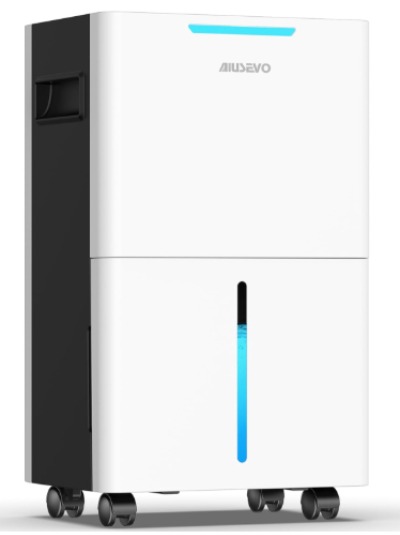
This unit handles 1500 square feet with a 21-pint daily capacity. It works quietly in the background while you go about your day.
Product Description
This dehumidifier pulls 21 pints of water from your air every 24 hours. The compact design fits easily in corners or against walls. It comes with a drain hose connection, so you don’t need to empty a bucket constantly. The control panel shows current humidity levels on a digital display. Three operating modes let you adjust based on conditions.
Best Use Cases
This works great for basements that stay moderately damp. If you live in a humid climate but don’t have standing water issues, this handles the job well. It’s also perfect for RVs during storage season, large bedrooms that feel stuffy, or bathrooms without proper ventilation.
The continuous drain feature really shines for basement use. You set it up once, and it runs on its own for weeks or months.
Key Features Explained Simply
The intelligent humidity control acts like a thermostat for moisture. You set your target humidity level – say 45 percent. The unit runs until it hits that number, then shuts off automatically. When humidity creeps back up, it kicks on again. You’re not wasting electricity running it nonstop.
Three operating modes give you flexibility. Normal mode runs continuously at medium fan speed. Sleep mode reduces noise and dims lights for nighttime operation. Laundry mode cranks up the power for faster drying after you hang clothes to dry.
The 24-hour timer lets you schedule operation. Run it only during off-peak electricity hours to save money. Or set it to turn on before you head down to your basement workshop.
The drain hose connection might be the best feature for basements. Attach the included hose, run it to a floor drain or sump pump, and forget about emptying water tanks. Gravity does all the work.
Real-Life Usage Insight
Set this up in a corner near a floor drain. Plug it in, attach the drain hose, and set your desired humidity level. Within a few hours, you’ll notice the air feels different – lighter, fresher, easier to breathe.
The unit runs fairly quietly. You can hear it operating, but it won’t drown out conversation or a TV playing nearby. The compressor cycles on and off based on humidity levels, so it’s not running constantly.
Energy consumption stays reasonable for a 21-pint unit. You’ll see a small increase in your electric bill, but the protection for your basement items makes it worthwhile.
Honest Pros and Cons
Pros:
- Handles 1500 square feet effectively in normal humidity conditions
- Continuous drain eliminates manual emptying
- Digital display makes monitoring easy
- Multiple modes suit different situations
- Timer function provides scheduling control
- Reasonably priced for the capacity offered
- Compact footprint doesn’t eat up floor space
Cons:
- May struggle in extremely humid conditions or severe water problems
- Tank capacity is small if you can’t use continuous drain
- Doesn’t include a built-in pump for upward drainage
- Control panel could be more intuitive for first-time users
- Plastic construction feels less durable than metal alternatives
Performance Discussion
In typical basement conditions with 60 to 70 percent humidity, this unit brings levels down to 45 to 50 percent within a day or two. After that initial knockdown, it maintains comfortable levels consistently.
The moisture removal rate of 21 pints per day works well for spaces without major water intrusion. If you have active leaks, standing water, or live in an extremely humid region, you might need more capacity.
Fan speed affects both noise and effectiveness. Higher speeds remove moisture faster but make more noise. Lower speeds run quieter but take longer to dry the air.
Temperature sensitivity matters. Like most dehumidifiers, this one works best above 65 degrees Fahrenheit. Performance drops in cold basements. The auto-defrost feature helps prevent frost buildup on coils, but very cold conditions still reduce efficiency.
Ease of Use
Setup takes about five minutes. Unbox it, attach the drain hose if using that feature, plug it in, and adjust settings. The control panel uses simple buttons and clear labels.
Maintenance needs stay minimal. Clean or replace the air filter every few weeks. Wipe down the exterior occasionally. Check the drain hose periodically to make sure it hasn’t kinked or clogged.
The water tank has a full indicator that lights up and stops operation when the tank fills. If you’re using continuous drain, you rarely see this.
Value for Money
For the price point, you get solid performance and useful features. The continuous drain capability alone saves you tons of hassle compared to cheaper units without this option.
Energy efficiency meets modern standards without reaching the highest tier. You pay a bit more on electricity compared to Energy Star certified models, but less than old, inefficient units.
The build quality seems adequate for several years of regular use. It’s not a premium unit that will last decades, but it should serve you well for a reasonable timeframe.
2.50 Pint Dehumidifier with Smart App Control
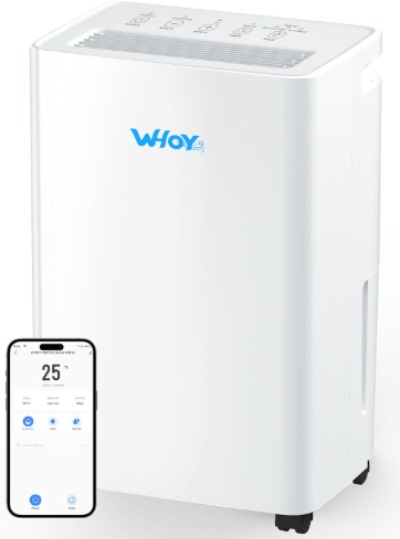
This heavy-duty option packs serious moisture removal power and modern connectivity features.
Product Description
This dehumidifier removes up to 50 pints of moisture daily. That’s more than double the first unit. It covers 1500 to 2000 square feet easily. The smart app control lets you monitor and adjust settings from your phone. It runs quietly despite the powerful capacity. The continuous drain hose connection handles extended unattended operation.
Best Use Cases
This unit shines in very humid climates or basements with significant moisture problems. If you live in the Southeast, Pacific Northwest, or other high-humidity regions, this capacity makes sense. It also works great for combination spaces – a basement that serves as a workshop, gym, and storage area all in one.
The app control proves valuable if you don’t visit your basement daily. Check humidity levels from upstairs. Adjust settings without heading down. Get alerts if something goes wrong.
Key Features Explained Simply
The 50-pint capacity means this removes serious amounts of water. On humid days, you might pull several gallons out of your air. That’s water that would otherwise soak into your stuff.
Smart app connectivity through Wi-Fi lets you control everything from your phone. You’re at work and realize you forgot to turn on the dehumidifier? Open the app and start it remotely. Want to check if humidity spiked during a rainstorm? The app shows real-time readings.
The quiet operation uses advanced fan and compressor design. Even at full power, noise stays at conversation level. You can work in your basement while it runs without shouting to be heard.
Continuous drain with the included hose means hands-free operation. The hose stretches several feet, so you have flexibility in placement. Run it to a drain, sump pit, or even outside through a basement window.
Real-Life Usage Insight
Installation takes a bit longer than simpler models because of the app setup. Download the app, connect the unit to your Wi-Fi, create an account. It adds maybe 15 minutes to initial setup but then makes operation much easier.
The app shows humidity percentage, current operating mode, and filter status. You can turn the unit on or off, change fan speed, and adjust target humidity levels. Some people love this convenience. Others never use it after the first week.
The higher capacity means this unit runs longer cycles between shut-offs. In very humid conditions, it might run for hours continuously. That’s normal and exactly what you want – it’s pulling out moisture that needs removing.
Honest Pros and Cons
Pros:
- Powerful 50-pint capacity handles severe humidity
- Covers up to 2000 square feet
- Smart app provides remote monitoring and control
- Quiet operation for such a large unit
- Continuous drain eliminates manual emptying
- Auto-restart after power outages
- Digital controls are intuitive
Cons:
- Higher price point than smaller capacity units
- Draws more electricity due to larger capacity
- Bigger physical size takes up more floor space
- App requires stable Wi-Fi connection to function
- Some users report connectivity issues with certain routers
- Overkill for basements with minimal moisture problems
Performance Discussion
This unit attacks humidity aggressively. In a 1500 square foot basement starting at 75 percent humidity, you’ll typically see levels drop to 50 percent within 12 to 18 hours. From there, it maintains your target level easily.
The large capacity means it handles moisture spikes without struggling. Heavy rainstorm causes a temporary humidity jump? This unit knocks it back down quickly. Flood in a corner after a plumbing leak? It helps dry things out faster than smaller units.
Air circulation patterns matter with any dehumidifier. This one moves a good volume of air, helping to dehumidify the entire space rather than just the area right around the unit. Placing it centrally or running a fan to circulate air improves performance.
The compressor quality affects longevity and efficiency. This model uses a rotary compressor that balances power with energy efficiency. It’s not the absolute most efficient, but it performs well for the capacity.
Ease of Use
The control panel features a clear display and well-labeled buttons. Even without the app, operation stays straightforward. Press power, set your target humidity, select fan speed, and let it run.
Filter maintenance involves popping out the washable filter every few weeks, rinsing it under tap water, letting it dry, and reinstalling. Takes five minutes. Some people set phone reminders to check monthly.
The app interface could be better designed. It’s functional but not beautiful or particularly intuitive. You’ll figure it out within a few uses, but it feels like a first-generation smart home device rather than a polished product.
Value for Money
You pay premium pricing for the high capacity and smart features. For someone with serious basement moisture issues, this investment makes sense. The powerful performance protects potentially thousands of dollars worth of stored items.
Running costs go up with the larger capacity. Expect to see a noticeable bump in your electricity bill during humid months. The protection and comfort you gain typically justify the expense.
The build quality suggests this should last for years with proper maintenance. The components feel sturdy. The housing seems durable enough to withstand basement conditions.
3.SEAVON 21 Pint Dehumidifier with Smart Controls
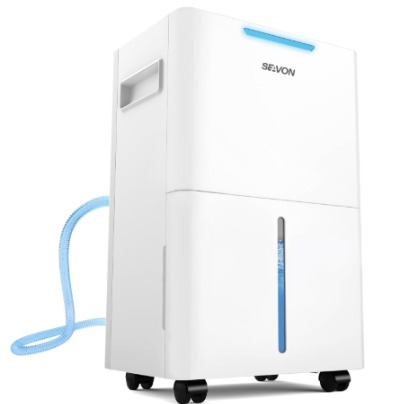
SEAVON offers a balance of capacity, features, and affordability in this 1500 square foot model.
Product Description
This 21-pint dehumidifier targets 1500 square feet of coverage. It includes a drain hose for continuous operation. The smart humidity control adjusts operation automatically. The display shows current humidity levels clearly. Three operating modes adapt to different needs. A 24-hour timer provides scheduling flexibility.
Best Use Cases
This works well for typical basements with average moisture levels. If your basement stays moderately humid but doesn’t have water intrusion problems, this capacity handles it. The unit also fits well in large bedrooms, bathrooms without fans, or enclosed porches.
The smart control features appeal to people who want some automation without paying for full app connectivity. You get intelligent operation at a more accessible price point.
Key Features Explained Simply
Powerful moisture removal at 21 pints daily keeps medium to large basements comfortable. This capacity handles normal humidity from weather, foundation seepage, and general dampness.
The smart humidity control and display work together. The display shows exact humidity percentage, not just high/medium/low indicators. You can see exactly what’s happening in your space. The smart control adjusts fan speed and compressor operation to maintain your target level efficiently.
Three modes provide operational flexibility. Continuous mode runs nonstop until the tank fills or the hose drains. Auto mode cycles on and off based on humidity readings. Dry mode runs at maximum power for rapid moisture removal.
The 24-hour timer function helps you control when the unit operates. Set it to run eight hours overnight while electricity rates are lower. Or program it to turn on an hour before you head to your basement workshop.
Drain hose capability eliminates the chore of emptying water tanks. The hose connection accepts standard drainage hose. Position the unit near a drain and you’re set for continuous, unattended operation.
Real-Life Usage Insight
Setting this up follows the standard process. Position it near a drain if possible. Attach the hose. Plug in the unit. Set your preferred humidity level – usually between 40 and 50 percent for basements.
The display provides helpful feedback. You can actually see humidity dropping over time. This helps you understand how well the unit is working and whether you need to adjust settings.
Noise levels stay moderate. You hear it operating, but it’s not objectionable. The fan creates white noise that some people find soothing. Others don’t notice it after a few days.
The unit’s compact design means it fits in tight spaces. You can tuck it behind a workbench, beside stored boxes, or in a corner without it dominating the room.
Honest Pros and Cons
Pros:
- Good capacity for the coverage area
- Smart humidity control improves efficiency
- Clear display shows exact humidity levels
- Multiple operating modes suit different needs
- Timer function adds flexibility
- Continuous drain capability
- Competitive pricing for features offered
- Compact size fits easily in most spaces
Cons:
- Basic styling won’t win design awards
- No app control or smart home integration
- Filter access could be easier
- Water tank capacity is limited without continuous drain
- Performs poorly in very cold basements
- Customer service quality varies based on user reports
Performance Discussion
In real-world use, this unit brings a 1500 square foot basement from 70 percent humidity down to 50 percent within 24 to 36 hours. After initial dehumidification, it maintains levels consistently.
The smart control proves genuinely useful. It prevents the unit from running unnecessarily when humidity is already at target levels. This saves electricity and reduces wear on components.
Air filtration remains basic. The filter catches dust and particles, protecting the coils and improving air quality slightly. Don’t expect HEPA-level filtration – this focuses on moisture removal, not air purification.
The defrost function prevents frost buildup on coils when operating in cooler conditions. This matters in basements that stay around 60 to 65 degrees. Below 60 degrees, performance drops significantly like most compressor-based dehumidifiers.
Ease of Use
The control panel layout makes sense. Buttons do what you expect. The display responds quickly to inputs. Most people figure out all functions within minutes without consulting the manual.
Moving the unit around your basement is manageable thanks to built-in handles and a relatively light weight. You can shift it to different areas if needed.
Maintenance requirements stay minimal. Clean the filter regularly. Wipe down the exterior. Empty and clean the water tank occasionally even if you use continuous drain – this prevents buildup and odors.
Value for Money
The price-to-performance ratio looks good. You get capable moisture removal, smart controls, and convenient features at a middle-tier price point. This isn’t the cheapest option, but it’s far from the most expensive.
Operating costs stay reasonable. The energy consumption lands in the normal range for a 21-pint unit. No surprises on your electric bill.
The build quality seems adequate. It’s not luxury-level construction, but it feels solid enough to last several years with normal use and proper care.
4.Midea 22 Pint Energy Star Certified Dehumidifier
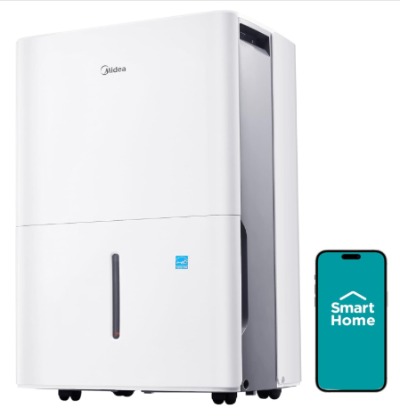
Midea brings brand recognition and energy efficiency to this 1500 square foot dehumidifier.
Product Description
This Energy Star certified dehumidifier removes 22 pints of moisture daily. It covers 1500 square feet effectively. The reusable air filter cuts down on replacement costs. The clean white design fits various basement aesthetics. Energy Star certification means it meets strict efficiency standards.
Best Use Cases
This unit works great for basements in homes where energy costs matter. The Energy Star certification translates to lower electricity bills over time. It also suits environmentally conscious users who want to reduce their carbon footprint while controlling humidity.
Medium to large rooms benefit from this capacity. Basements, large bedrooms, finished lower levels used as living space – all work well with this model.
Key Features Explained Simply
Energy Star certification matters more than many people realize. These units use roughly 15 to 30 percent less energy than standard models. Over a year of operation, this adds up to real savings on your electric bill.
The 22-pint capacity handles 1500 square feet in typical conditions. That’s slightly higher than some competitors at this price point. The extra capacity helps in humid weather or damp conditions.
The reusable air filter saves money and reduces waste. Instead of buying replacement filters, you wash this one under tap water, let it dry, and reinstall it. It lasts for the life of the unit with proper care.
The white housing design looks clean and modern. It blends into basement walls and doesn’t draw attention. For basements that serve as living or working space, appearance matters more than pure storage areas.
Real-Life Usage Insight
Setup follows the simple pattern. Unbox, position near a drain if using continuous drainage, plug in, and adjust settings. The controls are straightforward with minimal learning curve.
The unit runs efficiently and quietly. The Energy Star compliance means the compressor and fan work together to maximize moisture removal while minimizing electricity use. You notice this most in lower electricity bills over time.
The reusable filter requires attention. You need to clean it regularly – every two to three weeks depending on basement conditions. This takes a few minutes but saves money on disposable filters.
Midea’s brand reputation provides some peace of mind. They manufacture appliances globally and have established customer service networks. If issues arise, getting support tends to be easier than with unknown brands.
Honest Pros and Cons
Pros:
- Energy Star certification reduces operating costs
- Reliable brand with established support network
- Reusable filter cuts long-term expenses
- Good capacity at 22 pints daily
- Covers 1500 square feet effectively
- Clean, simple design
- Straightforward operation
- Quiet performance
Cons:
- Higher upfront cost than non-certified models
- No smart features or app control
- Basic control panel without advanced options
- Limited operating modes compared to competitors
- Continuous drain requires separate hose purchase
- Water tank capacity is average
Performance Discussion
The energy-efficient operation delivers on its promise. In typical basement use, this consumes noticeably less electricity than standard units. The compressor runs smart cycles – working hard when needed, resting when possible.
Moisture removal performance matches the rated capacity. In a 1500 square foot basement with 65 percent humidity, expect to reach 50 percent within a day or so. The unit then maintains that level consistently.
The air filter does double duty – it protects the dehumidifier’s internal components while slightly improving basement air quality. Clean air flows through the unit more efficiently, helping maintain performance.
Temperature tolerance stays typical for compressor units. Above 65 degrees, it works great. Between 60 and 65 degrees, performance decreases slightly. Below 60 degrees, efficiency drops significantly and frost may form on coils.
Ease of Use
The simple control interface appeals to users who don’t want complexity. Turn it on, set your humidity level, and forget about it. No apps to download, no Wi-Fi to configure, no confusing modes.
The water tank features a handle for easy carrying and a full indicator that stops operation before overflows occur. If you’re not using continuous drain, emptying the tank every day or two becomes routine.
Filter maintenance stays simple. Pull out the filter, rinse under water, shake off excess, let it air dry, reinstall. Set a recurring reminder on your phone and it becomes a quick, regular task.
Value for Money
The upfront cost runs higher than basic models without Energy Star certification. You’re paying for efficiency technology. Over time, lower electricity bills offset this initial premium. After a year or two of use, total cost of ownership often beats cheaper alternatives.
The Midea name carries value. Brand recognition means easier warranty service, available replacement parts, and customer support that actually responds. These factors matter when you need help.
Build quality feels solid. The unit seems engineered to last. The components appear durable. With proper maintenance, this should provide years of reliable service.
5.Midea Cube 20 Pint Smart Dehumidifier
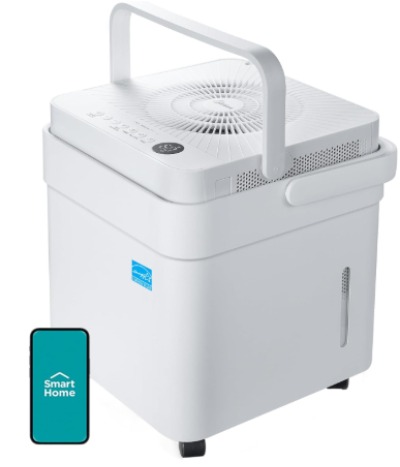
This compact unit combines modern styling, smart features, and energy efficiency in a unique package.
Product Description
The Midea Cube removes 20 pints of moisture daily while covering up to 1500 square feet. The distinctive cube design saves floor space. Energy Star certification ensures efficient operation. Smart control integrates with Alexa for voice commands. The drain hose connection enables continuous operation. Clean white styling complements modern basement spaces.
Best Use Cases
This works beautifully in finished basements where appearance matters. The cube design looks intentional rather than industrial. If your basement serves as living space, a home theater, or an office, this fits the aesthetic better than traditional rectangular units.
Smart home enthusiasts appreciate the Alexa integration. Voice control and automation routines add convenience. The energy efficiency benefits anyone paying attention to operating costs.
Key Features Explained Simply
The compact cube design measures smaller than traditional dehumidifiers. It takes up less floor space while still providing good capacity. The vertical orientation fits in corners and tight spots easily.
Energy Star certification means this runs efficiently. Lower electricity consumption compared to non-certified models. The environmental benefit matters to some buyers, while others focus purely on cost savings.
Smart control compatibility with Alexa opens up voice commands and automation. “Alexa, turn on the basement dehumidifier.” “Alexa, what’s the basement humidity level?” You can also create routines – turn the unit on automatically when you leave for work, off when you return home.
The 20-pint capacity handles 1500 square feet in normal humidity conditions. This works for basements without severe moisture problems. The continuous drain hose connection lets it run indefinitely without manual water removal.
Real-Life Usage Insight
Setting up smart features takes longer than basic plug-and-play models. You download the Midea app, create an account, connect the unit to Wi-Fi, and link it to your Alexa account. Budget 20 to 30 minutes for complete setup.
Once configured, the smart features prove handy. Voice control sounds gimmicky until you’re carrying boxes downstairs and can just tell Alexa to turn on the dehumidifier. Automation routines remove the need to remember to turn it on or off.
The cube design has practical benefits beyond looks. The vertical orientation means it doesn’t stretch as far across your floor. This matters in basements with lots of stored items or equipment.
The white color stays cleaner-looking than darker colors in basement environments. Dust shows up, prompting you to clean it regularly, which helps maintain performance.
Honest Pros and Cons
Pros:
- Unique cube design saves floor space
- Energy Star certified for lower operating costs
- Smart control with Alexa integration
- Modern appearance suits finished basements
- Good brand reputation and support
- Continuous drain capability
- Quiet operation for the capacity
- Intuitive app interface
Cons:
- 20-pint capacity is lowest in this roundup
- Smart features require stable Wi-Fi
- Higher price than basic models with same capacity
- Limited to Alexa – no Google Home support reported
- Setup complexity deters less tech-savvy users
- Cube design limits where you can place it
Performance Discussion
The 20-pint daily capacity works for maintaining comfortable humidity levels in 1500 square feet. In severe conditions or very humid climates, you might want more capacity. For typical basements, this handles the job.
The energy-efficient operation keeps electricity costs down. The smart features let you optimize running time – operate only when needed, at times when electricity rates are lowest, or when you’ll benefit most from dry air.
Air circulation patterns differ slightly due to the cube shape. The unit pulls air in from sides and exhausts from the top. Place it where air can flow freely around it for best results.
The filter system works well despite the compact size. The washable filter captures dust and particles effectively. Regular cleaning maintains airflow and efficiency.
Ease of Use
The app interface looks polished compared to some competitors. Navigation makes sense. Settings adjust easily. Monitoring humidity levels, checking filter status, and changing modes all happen with a few taps.
Voice control through Alexa works reliably once set up. The unit responds quickly to commands. The integration feels natural rather than tacked on.
Physical controls on the unit itself provide backup when you don’t want to use the app or voice commands. The touch-sensitive panel responds well and displays information clearly.
Value for Money
You pay a premium for the smart features and distinctive design. For buyers who value these elements, the price makes sense. For those focused purely on moisture removal per dollar, basic models offer better value.
The Energy Star certification helps justify the cost over time. Lower electricity consumption month after month adds up. After a couple years of use, you recoup some of the initial price difference.
The Midea brand provides confidence in quality and support. The warranty protection and available customer service add value that’s hard to quantify but matters when problems occur.
Detailed Comparison and Insights
Looking at these five dehumidifiers side by side reveals distinct patterns. Each targets slightly different needs and priorities.
Capacity Considerations
The 50-pint unit stands alone at the top for raw power. It costs more to buy and run, but handles severe humidity without breaking a sweat. The 20 to 22-pint models form a cluster suitable for normal conditions. They balance capacity, efficiency, and cost effectively.
For most 1500 square foot basements in average climates, 20 to 22 pints works fine. Very humid regions, basements with water intrusion, or spaces that stay damp year-round benefit from the 50-pint capacity.
Smart Features and Connectivity
Three units offer smart capabilities – app control, Wi-Fi connectivity, or Alexa integration. These features add convenience but also complexity and cost. They appeal to tech-comfortable users who value remote monitoring and control.
The two models without smart features cost less and work simpler. They suit users who prefer straightforward operation without apps or voice assistants.
Energy Efficiency
The Energy Star certified models cost more upfront but less over time. If you plan to run your dehumidifier heavily – say 8 to 12 hours daily for several months – efficiency matters. The electricity savings compound month after month.
For occasional use or only during the most humid weeks, standard efficiency models make more sense. The upfront savings outweigh the minimal difference in operating costs.
Design and Footprint
The Midea Cube offers the smallest footprint with its vertical design. This matters in crowded basements. Traditional horizontal units work fine if you have open floor space.
Finished basements where aesthetics matter favor the cleaner-looking designs. Industrial storage basements can use any style without concern.
Price Points
The models range from budget-friendly to premium pricing. The basic 21-pint units cost least. The 50-pint and smart models command higher prices. Energy Star certification adds cost but returns value over time.
Your budget matters, but so does total cost of ownership. A cheaper unit that costs more to run might end up more expensive after a year of use.
Reliability and Support
The Midea units benefit from established brand recognition. Getting replacement parts, warranty service, or customer support tends to be easier. Lesser-known brands sometimes offer good products but spotty support.
Read recent customer reviews for any model you consider. Look for patterns in complaints or praise. A few negative reviews happen with any product, but consistent problems signal issues to avoid.
Complete Buying Guide for Basement Dehumidifiers
Making the right choice requires understanding what matters for your specific situation.
Sizing Your Dehumidifier Correctly
Capacity needs depend on basement conditions, not just square footage. A damp basement in Georgia needs more power than a dry basement in Arizona, even at the same size.
Start with the standard recommendation – 10 pints of capacity per 500 square feet for moderately damp spaces. For 1500 square feet, that suggests 30 pints. But this assumes average dampness.
Very damp basements – those that always feel clammy or develop mold easily – need extra capacity. Bump up to 40 or 50 pints. Slightly damp basements can get by with 20 to 25 pints.
Climate and Weather Patterns
Your regional climate affects humidity levels dramatically. Coastal areas stay humid year-round. The Southeast battles high humidity for months. Desert regions rarely face basement moisture issues.
Consider your location’s typical humidity. Check historical weather data for your area. Plan for your humid season, not just average conditions.
Temperature in Your Basement
Most compressor-based dehumidifiers work best above 65 degrees Fahrenheit. Performance drops as temperature decreases. Below 60 degrees, many units struggle and frost forms on coils.
Measure your basement temperature during the season you plan to run the dehumidifier. If it stays below 65 degrees regularly, look for models designed for low-temperature operation or consider a desiccant dehumidifier instead.
Drainage Options
Continuous drainage beats manual emptying hands down. If you have a floor drain, sump pit, or can run a hose outside, use that capability. You set up the dehumidifier once and forget about it for weeks or months.
Without drain access, you’re stuck emptying the water tank regularly. This works fine if you visit your basement daily. It becomes a hassle if you forget or can’t get there often.
Some units include pumps that push water upward to higher drains or out basement windows. These cost more but solve drainage challenges in basements without floor drains.
Energy Costs
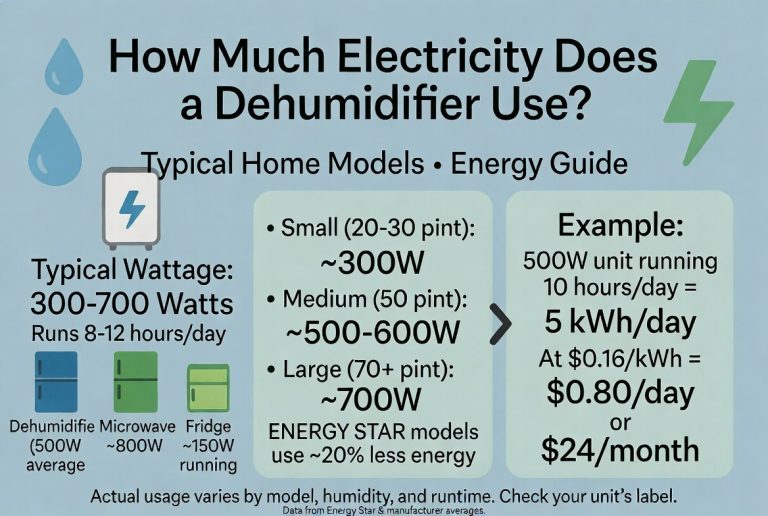
Dehumidifiers run for hours or days continuously during humid periods. Electricity costs add up. Check the energy consumption rating – usually listed in watts or amps.
Energy Star certified models use 15 to 30 percent less electricity. Over a year, this saves $20 to $50 or more depending on usage and electricity rates. The upfront premium for Energy Star models pays back over time.
Calculate approximate costs. A 50-pint unit drawing 600 watts running 8 hours daily costs roughly $15 to $25 per month at average electricity rates. A 20-pint unit drawing 300 watts costs half that.
Noise Levels
Dehumidifiers make noise – there’s no way around it. Compressors hum. Fans whir. Water drips into tanks. The question is how much noise you can tolerate.
Check decibel ratings if available. Below 50 dB is very quiet – quieter than normal conversation. 50 to 55 dB is moderate – like a quiet office. Above 60 dB gets loud – like a vacuum cleaner.
If your basement serves as living space, workspace, or entertainment area, noise matters more. Pure storage basements where you rarely spend time can handle louder units.
Maintenance Requirements
All dehumidifiers need regular filter cleaning. This takes a few minutes every few weeks. Washable filters save money over replaceable ones, but both work fine.
Water tank cleaning prevents mold and odor buildup. Even with continuous drainage, clean the tank monthly. A quick rinse with vinegar and water does the job.
Coil cleaning maintains efficiency over time. Dust and debris accumulate on coils, reducing performance. Some units have accessible coils you can vacuum or wipe. Others require professional service.
Special Features Worth Considering
Auto-restart proves valuable if you have occasional power outages. The unit remembers settings and restarts automatically when power returns. Without this, you must manually restart after each outage.
Frost protection prevents ice buildup on coils in cooler conditions. The unit detects frost and pauses operation to let it melt. This protects components and maintains performance.
Multiple fan speeds let you balance noise and performance. High speeds remove moisture faster but make more noise. Low speeds run quieter but work slower.
Digital displays show exact humidity levels rather than vague low/medium/high indicators. This helps you monitor performance and adjust settings precisely.
Who Should Buy Each Type of Dehumidifier
Different situations call for different solutions.
The 50-Pint Powerhouse
Buy this if you live in very humid climates like coastal Florida, Louisiana, or the Pacific Northwest. It’s right for basements with chronic moisture problems or those that stay damp year-round. People who’ve battled mold problems repeatedly need this capacity.
This also suits large families storing lots of items in basements – furniture, clothing, boxes of memories. The investment protects thousands of dollars worth of belongings.
Skip this if your basement stays only slightly damp or you live in moderate climates. The extra capacity costs more upfront and to operate without providing meaningful benefits.
The Smart-Enabled Models
Buy these if you’re already invested in smart home technology. Alexa users benefit from voice control integration. Tech-comfortable people who like monitoring and adjusting devices remotely get value from app control.
These work great for vacation homes where you’re not present regularly. Check humidity levels remotely. Get alerts if problems develop. Adjust settings without being physically present.
Skip these if you prefer simple, straightforward appliances. If you won’t use the smart features, you’re paying for capabilities you’ll ignore. Basic models cost less and work just as well for moisture removal.
The Energy Star Certified Options
Buy these if you plan to run your dehumidifier heavily – six or more hours daily for months at a time. The efficiency savings compound with heavy use. Environmentally conscious buyers who want to reduce energy consumption prefer these models.
They make sense in regions with high electricity costs. The percentage savings translates to bigger dollar savings when rates are high.
Skip these if your basement needs only occasional dehumidification. Light use means minimal savings that don’t justify the efficiency premium. Budget-conscious buyers doing quick calculations might prefer cheaper models for limited use.
The Compact Cube Design
Buy this if aesthetics matter in your finished basement. The modern design fits contemporary spaces better than industrial-looking traditional units. Space-constrained basements benefit from the smaller footprint.
This suits basements serving as home offices, theaters, or living areas where appearance affects comfort and enjoyment.
Skip this if you have unlimited space and don’t care about looks. Traditional designs often provide more capacity per dollar. Pure storage basements don’t need attractive units.
The Basic 21-Pint Models
Buy these if you face typical basement humidity in average climates. They handle normal dampness without overkill. Budget-conscious buyers get solid performance at reasonable prices.
These work great for first-time dehumidifier buyers testing whether they need this type of appliance. The lower investment reduces risk if you discover a dehumidifier isn’t necessary.
Skip these if you have severe moisture problems. Underpowered units run constantly without solving your problem, wasting electricity while your belongings stay at risk.
Common Mistakes to Avoid When Buying and Using Basement Dehumidifiers
Learning from others’ errors saves you money, time, and frustration.
Buying Too Little Capacity
The most common mistake is underestimating humidity problems. People buy 20-pint units for situations needing 40 or 50 pints. The small unit runs constantly, never reaching target humidity levels. It wears out faster while failing to protect your basement.
Measure your basement’s current humidity with a hygrometer. If readings consistently exceed 60 percent, budget for higher capacity than you initially thought necessary.
Ignoring Temperature Requirements
Dehumidifiers work poorly in cold basements. People buy units without checking temperature ratings, then wonder why performance suffers. Below 65 degrees, most compressor units struggle.
Measure your basement temperature during the season you’ll run the dehumidifier. If it stays below 60 degrees, research low-temperature models specifically designed for cool operation.
Poor Placement
Tucking a dehumidifier into a cramped corner blocks airflow. Placing it against walls reduces circulation. Positioning it in one corner of an L-shaped basement leaves the other section damp.
Place your unit centrally when possible. Leave several inches of clearance on all sides. In oddly shaped basements, consider running a fan to circulate air throughout the space.
Forgetting About Drainage
Buying a dehumidifier without continuous drain capability, then getting frustrated with daily tank emptying. This leads to skipped days, allowing humidity to climb back up.
Prioritize models with drain hose connections if you have access to a drain. Plan drainage routes before buying. Make sure you can position the unit where gravity will move water to your drain.
Neglecting Maintenance
Dirty filters restrict airflow and reduce performance. People ignore filter cleaning until the unit barely works. Coils get caked with dust. Water tanks develop mold and odors.
Set phone reminders for monthly maintenance tasks. Make it a habit like changing your HVAC filters. A few minutes monthly prevents performance degradation and extends unit life.
Running It Wrong
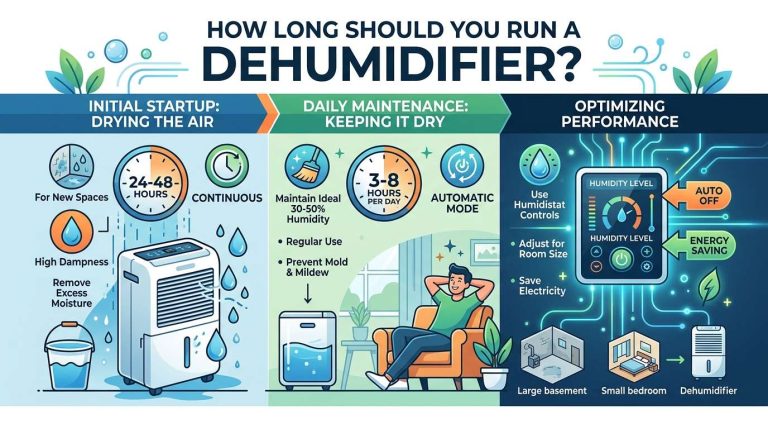
Setting humidity too low – say 30 percent – makes the unit run constantly without benefit. Basements don’t need desert-dry air. Setting it too high – 60 percent or more – allows mold growth despite running a dehumidifier.
Target 45 to 50 percent humidity for basements. This prevents mold growth while not over-drying. Adjust based on comfort and conditions, but stay in the safe zone.
Ignoring Safety Warnings
Running dehumidifiers with damaged cords risks electrical fires. Operating units without proper grounding causes shocks. Blocking vents creates fire hazards.
Inspect your unit regularly for damage. Use properly grounded outlets. Follow manufacturer guidelines for clearances and safety. Replace damaged units rather than risking safety issues.
Expecting Instant Results
People turn on their new dehumidifier and expect immediate transformation. Dehumidification takes time – often 24 to 48 hours to see significant improvement. Impatience leads to unnecessary returns or complaints.
Give your unit time to work. Monitor humidity levels over several days. Allow it to complete initial knockdown of excess moisture before judging performance.
Final Verdict and Recommendations
After examining these five dehumidifiers thoroughly, clear patterns emerge about which suits different situations best.
For Severe Humidity and Maximum Power
The 50-pint dehumidifier with smart app control wins for serious moisture problems. It attacks humidity aggressively. The high capacity handles wet basements, very humid climates, or larger spaces up to 2000 square feet. The app control adds convenience for monitoring and adjustments. This costs more initially and to operate, but protects your investment in stored items and your home itself. If mold keeps coming back or you smell mustiness constantly despite other efforts, invest in this capacity.
For Energy-Conscious Buyers
The Midea 22-pint Energy Star certified model delivers the best efficiency. It removes moisture effectively while consuming less electricity than standard units. Over years of operation, the lower running costs offset the higher purchase price. The reliable Midea brand and reusable filter add value. This suits moderate humidity conditions in 1500 square foot basements where operating cost matters long-term. You’ll appreciate the savings every month when your electric bill arrives.
For Smart Home Enthusiasts
The Midea Cube 20-pint smart dehumidifier combines modern design with Alexa integration. The compact cube saves floor space. Voice control and automation routines add genuine convenience once set up. The Energy Star rating keeps costs reasonable. This works beautifully in finished basements serving as living or working space where appearance matters. Smart home users who already rely on Alexa for other functions will appreciate the seamless integration.
For Best Overall Value
The basic 21-pint dehumidifiers offer excellent performance per dollar. They handle typical basement humidity in 1500 square feet without fancy features or premium pricing. The SEAVON model edges ahead slightly with its smart humidity control and clear display, providing some advanced functionality at a budget-friendly cost. These suit most homeowners facing normal basement dampness who want reliable moisture control without overspending.
For Specific Situations
Very small budgets with minimal humidity – grab the most basic 20 to 21-pint model on sale. Large basements exceeding 1500 square feet – go for the 50-pint capacity. Basements colder than 65 degrees – research desiccant models instead of these compressor units. Basements without floor drains – prioritize models with pumps or plan to empty tanks manually.
Making Your Final Choice
Start by measuring your basement’s square footage and current humidity level. Consider your climate and how damp your basement typically gets. Determine your budget for both purchase and operation. Decide which features you’ll actually use versus which sound nice but you’ll ignore.
Match your situation to the recommendations above. Read recent customer reviews for your chosen model. Verify warranty coverage and return policies. Buy from reputable sellers that handle returns and exchanges easily.
Set up your new dehumidifier properly. Position it well, connect drainage if available, and set appropriate humidity targets. Give it time to work. Monitor performance over the first week or two. Make adjustments as needed.
Your basement deserves protection from moisture damage. These dehumidifiers all work – they just excel in different circumstances. Pick the right one for your needs, and you’ll enjoy a dry, comfortable, protected basement for years to come. The investment pays off in preserved belongings, better air quality, and peace of mind knowing your space stays healthy and safe.

Hi, I’m Mary, the founder of Homygear.com. I’m passionate about creating a comfortable, smart, and beautiful home. I share practical insights and real-world experience on home gear that makes everyday life easier. Behind the scenes, my dedicated research team studies products in depth, and our writers craft honest reviews using trusted, authentic sources—so you can choose home gear with confidence.