How to Choose the Right Dehumidifier?
Does your home feel sticky or smell a bit musty? You might have too much moisture in the air. A good dehumidifier can fix this, making your home feel much better. But how do you find the perfect one for your space? This guide will walk you through everything you need to know. We will help you pick a machine that truly works for you. Let’s make your indoor air fresh and dry again.
Do You Really Need a Dehumidifier? Signs to Look For
You might notice some clear signs if your home has too much humidity. Your windows might fog up with condensation. Walls can feel damp to the touch. These are strong hints that a dehumidifier could help a lot. Excessive moisture can make your home feel sticky and uncomfortable.
Another big sign is a musty smell. This smell often comes from mold or mildew growth. You might see dark spots on walls, ceilings, or in damp corners. People with allergies or asthma can feel worse in humid homes. Reducing humidity improves air quality for everyone living there.
Think about areas like your basement, laundry room, or bathroom. These spots often get very damp. If clothes take a long time to dry indoors, that’s another clue. A dehumidifier works to pull extra water out of the air. This protects your home from damage and makes it feel much healthier.
Learning About the Different Kinds of Dehumidifiers
There are two main kinds of dehumidifiers you will find. The most common type uses a compressor. These machines work like a tiny refrigerator. They pull in warm, moist air over cold coils. The moisture then turns into water droplets. This water collects in a bucket.
The other main type is called a desiccant dehumidifier. These machines use a special material that absorbs moisture. They do not have a compressor. Desiccant units are often quieter than compressor models. They also work very well in colder places.
Each type has its strong points. Compressor models are usually better for warmer, very humid rooms. Desiccant models shine in cooler areas, like a chilly basement or garage. Knowing this helps you find the right tool for your specific needs.
Matching Dehumidifier Capacity to Your Room Size
Dehumidifiers are rated by how much water they can remove. This is measured in “pints per day.” A small machine might remove 30 pints. A bigger one might handle 50 or 70 pints. The right size depends on how big your room is and how damp it gets.
For a small room, like a bathroom or a tight bedroom, a 30-pint unit might be enough. A medium-sized room or a slightly damp basement needs a 50-pint model. Very large spaces or extremely wet areas, especially basements with water issues, require a 70-pint machine or even larger. Always check the square footage the unit covers.
It is always better to get a slightly larger capacity than too small. A bigger unit will run less often and use less energy overall. It will also do a better job of keeping humidity low. Make sure the unit can handle the whole area where you plan to use it.
Considering Your Climate: Temperature and Performance
The climate where you live plays a big role in dehumidifier performance. Compressor dehumidifiers work best in warmer conditions. If your home stays above 65 degrees Fahrenheit, a compressor model is often a good fit. They struggle in very cold rooms, as the coils can ice up.
If you need to dry out a cold basement or a garage that gets chilly, a desiccant dehumidifier is a better idea. These machines are designed to perform well in lower temperatures. They do not have coils that can freeze. This makes them perfect for unheated spaces.
Some compressor models have a “low temperature” setting. This helps prevent icing in cooler rooms. Still, a desiccant unit usually performs more reliably in truly cold spots. Think about the typical temperature of the room you need to dehumidify before you buy.
Exploring Drainage Options: Manual Bucket or Continuous
Dehumidifiers collect water in a bucket. You must empty this bucket regularly. This manual task can be annoying if your unit fills up fast. Some smaller units only offer this bucket option. Plan to empty it every day or even more often in very damp conditions.
Many dehumidifiers offer a continuous drainage option. This means you can attach a hose to the unit. The water then flows directly into a floor drain or a sink. This is a great feature for basements or rooms where you do not want to empty a bucket all the time. It offers hands-free operation.
For areas without a nearby drain, some units have a built-in pump. This pump can push water upward or across a longer distance to a drain. This offers the most flexibility for placement. Think about where you will place the unit and how you want to get rid of the collected water.
Evaluating Energy Efficiency for Long-Term Savings
Running a dehumidifier can use a fair amount of electricity. Looking for an energy-efficient model can save you money over time. Machines with the “Energy Star” label meet strict guidelines for efficiency. This means they use less power to remove the same amount of moisture.
An Energy Star unit might cost a bit more upfront. However, the savings on your electric bill can quickly add up. Over months and years, these savings can be quite significant. It makes good sense to invest in a machine that is gentle on your wallet in the long run.
Check the estimated energy consumption listed on the unit’s specifications. A more efficient unit also helps the environment by using less power. A good dehumidifier not only improves your home but also helps keep your utility costs down.
Assessing Noise Levels for a Peaceful Home Environment
Dehumidifiers make some noise when they run. The sound comes from the fan and the compressor. Some units are louder than others. If you plan to use the dehumidifier in a living area or a bedroom, noise level is very important. You want a unit that won’t disturb you.
Many manufacturers list the noise level in decibels (dB). A lower decibel number means a quieter machine. For a bedroom, look for units around 45-50 dB or less. Units for basements or utility rooms can be a bit louder without causing problems.
Desiccant dehumidifiers tend to be quieter than compressor models. Some modern compressor units are also designed to be very quiet. Read reviews from other buyers about noise. This helps you get a real idea of how loud a unit is before you buy it.
Deciphering Smart Features and Connectivity Benefits
Many newer dehumidifiers come with smart features. These additions can make using your unit much easier. A built-in humidistat is very common. This lets you set a target humidity level, like 50%. The machine will then turn on and off automatically to maintain that level.
Some advanced models offer Wi-Fi connectivity. This lets you control the dehumidifier from your phone. You can turn it on or off, change settings, and check the humidity from anywhere. This is super handy if you are away from home.
Other helpful features include auto-defrost for colder rooms, a timer, and an auto-restart function after a power outage. These small conveniences can make a big difference in how much you enjoy your dehumidifier. Think about which smart features would be most useful for your daily life.
Setting Your Budget: Finding the Right Value for You
Dehumidifiers come in a wide range of prices. Small, basic units can be quite affordable. Larger, feature-rich, or Energy Star models will cost more. Set a budget before you start looking seriously. This helps narrow down your options.
Remember that the cheapest option is not always the best value. A slightly more expensive unit might be more energy-efficient, quieter, or have better features. These benefits can save you money or provide more comfort over time. Consider the total cost of ownership.
Balance your needs with your budget. If you only need to dry a small, rarely used room, a simple model might be fine. For a main living area or a long-term solution, investing a bit more in a higher quality unit makes good sense.
Optimal Placement: Where to Position Your Dehumidifier
Where you put your dehumidifier matters a lot for its performance. Place it in the center of the dampest room if possible. This allows it to pull moisture from all directions. Do not push it right against a wall. It needs space for air to flow freely.
Keep the unit away from furniture or curtains that might block its air intake or exhaust. Clear space around it helps it work better and more efficiently. Also, avoid placing it in a closet or a very small, enclosed space. It needs open air to operate correctly.
If you have a large open area or an entire floor that needs drying, one central unit might not be enough. You might need two smaller units placed strategically. Always follow the manufacturer’s placement guidelines for the best results.
Essential Maintenance Tips for Lasting Performance
To keep your dehumidifier working well, regular care is important. The air filter is a key part. It catches dust and dirt. Clean or replace the filter every few weeks or months, depending on how much you use the unit. A dirty filter makes the machine work harder and less efficiently.
If your unit has a water bucket, clean it regularly to prevent mold or mildew growth. Use a mild soap and water solution. Also, check the coils on the unit now and then. Dust can build up on them, reducing performance. Gently wipe them clean if needed.
Proper maintenance extends the life of your dehumidifier. It also ensures it keeps removing moisture effectively. Treat your unit well, and it will keep your home dry and comfortable for a long time.
Making Your Final Decision: A Summary of Key Factors
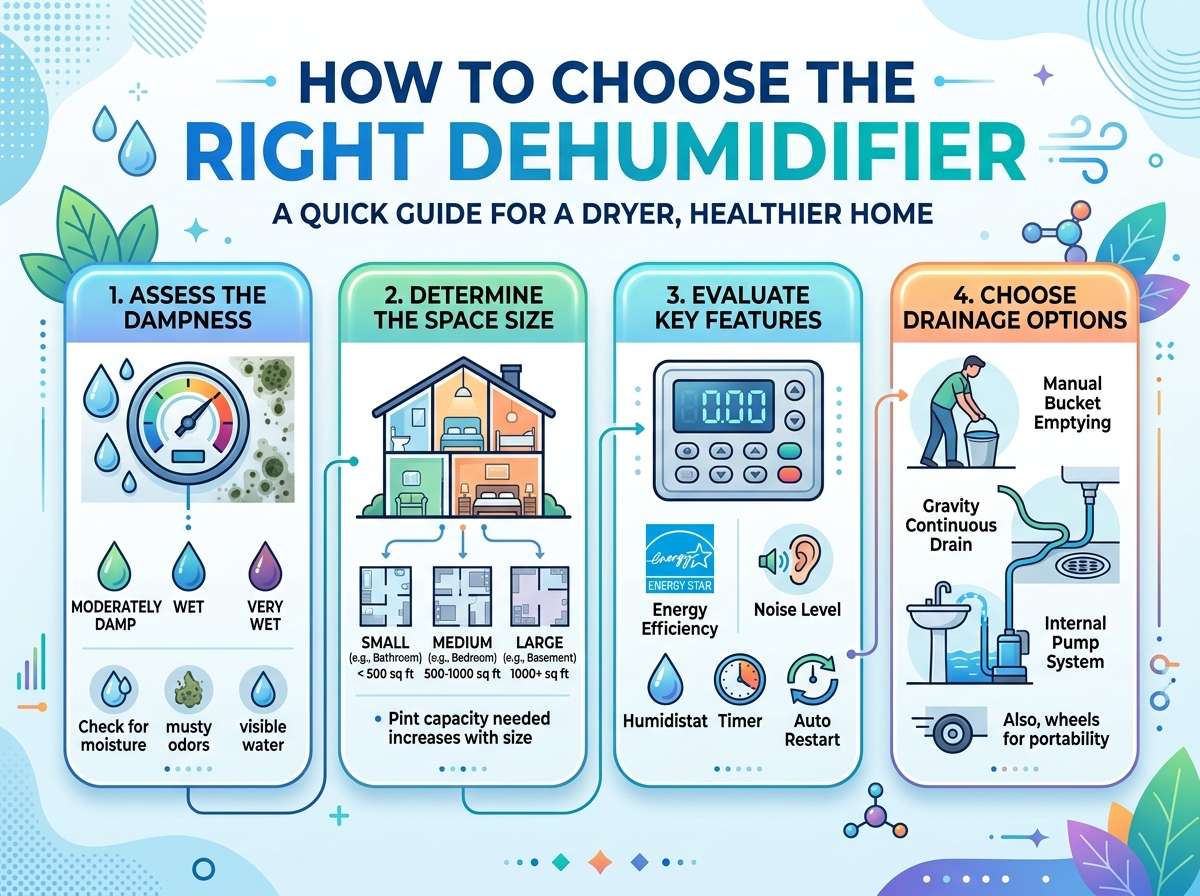
You have learned about many important things to consider. First, confirm you truly need a dehumidifier by checking for signs of dampness. Then, think about the type that suits your temperature needs. Compressor models are good for warm places, while desiccant units shine in cold ones.
Next, match the unit’s capacity to your room size. A larger unit usually works better. Decide on your preferred drainage method—manual bucket, continuous drain, or pump. Look for Energy Star ratings to save money on electricity. Also, check the noise level, especially for living areas.
Finally, consider smart features that add convenience and set a realistic budget. Remember proper placement and regular maintenance are key for long life. By thinking through all these points, you will find the perfect dehumidifier to make your home fresh, dry, and healthy.
Final Thoughts
Finding the right dehumidifier does not have to be hard. By following these simple steps, you can make a smart choice. A good dehumidifier will improve your air quality. It will also protect your home from moisture damage. Enjoy a drier, more comfortable living space soon!

Hi, I’m Mary, the founder of Homygear.com. I’m passionate about creating a comfortable, smart, and beautiful home. I share practical insights and real-world experience on home gear that makes everyday life easier. Behind the scenes, my dedicated research team studies products in depth, and our writers craft honest reviews using trusted, authentic sources—so you can choose home gear with confidence.