Where to Place a Dehumidifier in Your House?
Humidity levels in your home matter more than you might think. When moisture sits in the air for too long, your space becomes uncomfortable. Mold grows on walls. Your furniture starts to smell off. Dust mites multiply faster. Your allergies get worse. But a dehumidifier can fix all of this—if you put it in the right spot.
Many people buy a dehumidifier and just plop it in the nearest corner. That’s a mistake. Where you place your dehumidifier makes a huge difference in how well it works. The right location helps it pull moisture out fast. The wrong location means it struggles, uses more power, and costs you money.
This guide walks you through everything you need to know about dehumidifier placement. You’ll learn where to put it for the best results and where to avoid. By the end, you’ll feel confident placing your unit exactly where it needs to go.
Why Location Matters for Your Dehumidifier
Your dehumidifier works by pulling moist air into itself, removing the water, and pushing dry air back out. But it can only work with the air around it. If you stick it in a corner where air barely moves, it can’t reach the moisture hiding in other rooms.
Think of your dehumidifier like a helper that needs space to do its job. When you trap it in a tight spot, it gets frustrated and works twice as hard for half the results. When you give it room to breathe and access to humid air, it cruises through its job.
The best spot for your dehumidifier lets air flow freely around it. It sits in a central location where moisture tends to gather. It’s far enough from walls and furniture so air can move in and out without obstacles. These simple rules make a world of difference.
The Best Rooms for Dehumidifier Placement
Not all rooms need a dehumidifier. Dry rooms like living rooms usually don’t hold much moisture. But some rooms are moisture magnets. Focus your efforts on these spaces.
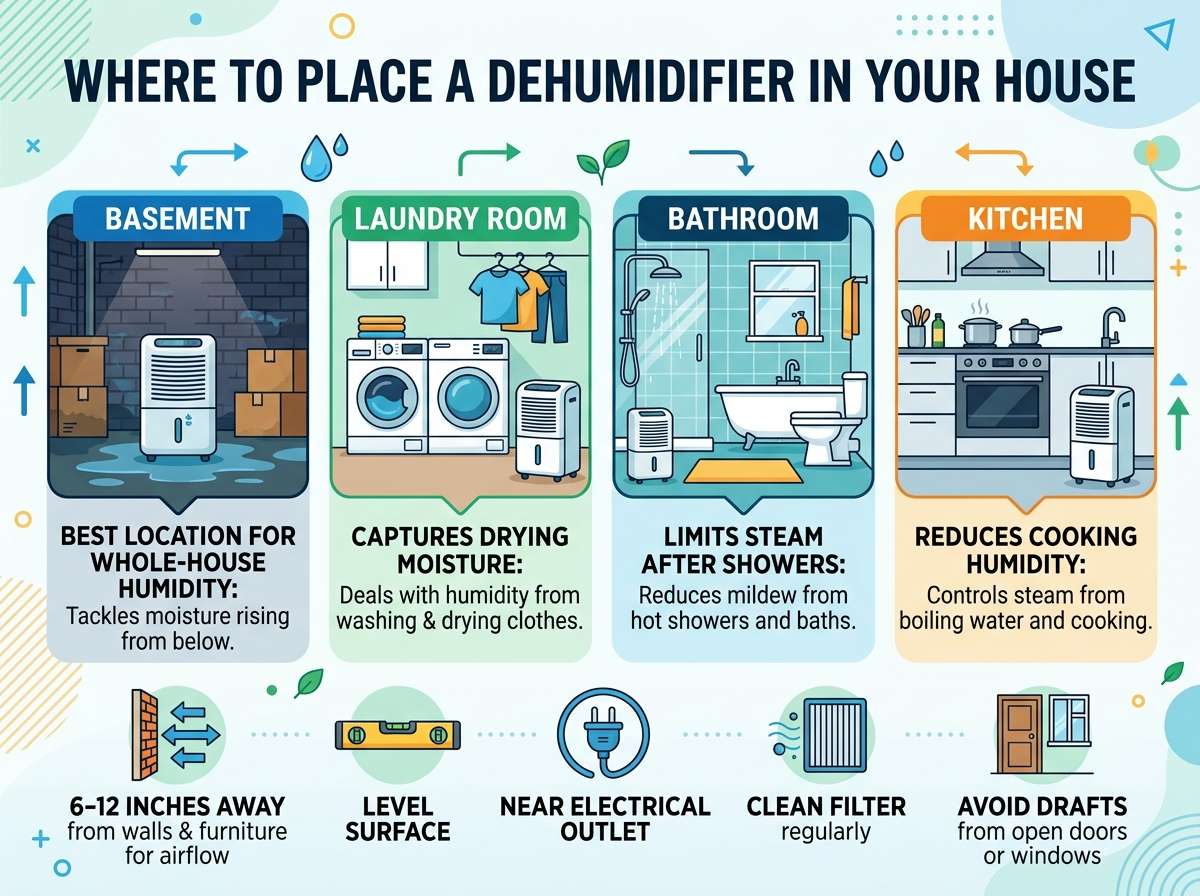
Basements Are Prime Real Estate
Basements are the number one place where moisture collects. They sit below ground level, surrounded by soil and water. Rain seeps in. Groundwater creeps through cracks. The foundation stays damp. Even if your basement looks dry, the air is often heavy with moisture.
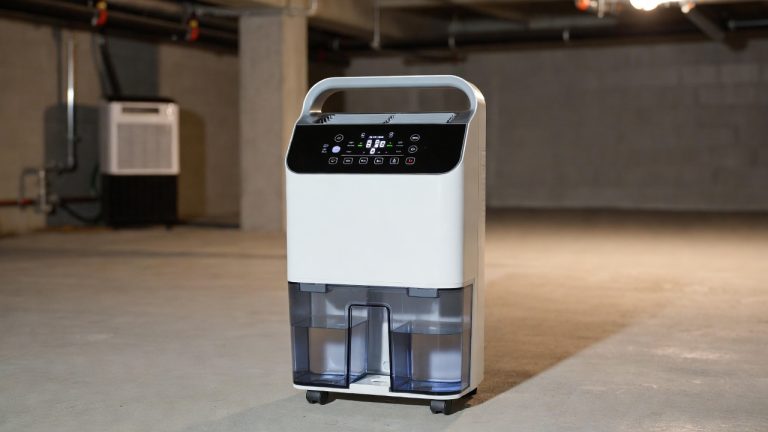
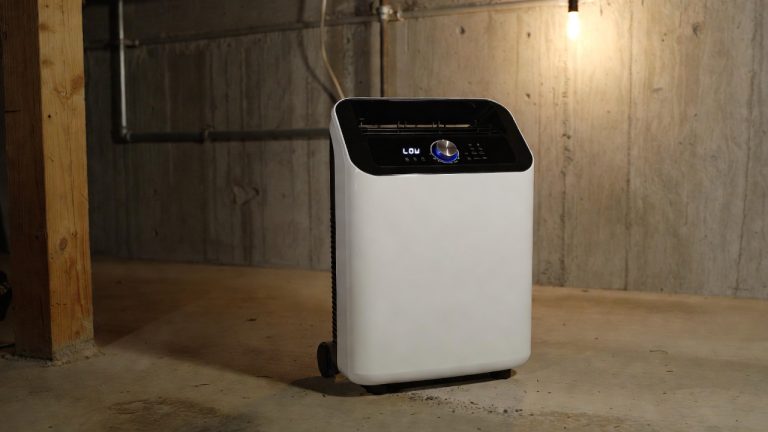
Place your dehumidifier near the center of your basement rather than shoved against the walls. A basement dehumidifier works best when it can pull air from all sides. If you have a finished basement with furniture and rooms, put the unit in the main open area. If your basement is just storage and utility space, stick it somewhere central and away from walls.
Basements also tend to be cooler, which actually helps dehumidifiers work better. They run more efficiently in cooler temps. So your basement dehumidifier gets a bonus boost just from the temperature.
Bathrooms Hold Tons of Moisture
Every time you take a shower or bath, moisture floods your bathroom. Even with a bathroom exhaust fan running, some water vapor stays behind. That moisture spreads into your hallway and bedroom if the door stays open.
The best spot for a bathroom dehumidifier is on the floor opposite the shower or bathtub. This lets it catch moisture right at the source. Keep the bathroom door closed while the dehumidifier runs. This traps the humid air inside so the unit can remove it before it spreads to the rest of your home. Open the door once the air feels drier.
If your bathroom is tiny, you might not have room for a large dehumidifier. Pick a compact model instead. Even a small unit makes a difference in a confined space like a bathroom.
Laundry Rooms Can’t Be Ignored
Your laundry room is another moisture producer. The dryer pumps moisture into the air if the vent hose isn’t hooked up right or leaks. Even when working perfectly, some moisture sneaks out. Plus, wet clothes hanging up to dry add tons of humidity.
Put your dehumidifier in the corner of your laundry room that’s farthest from the dryer. This gives it a good vantage point to catch moisture drifting across the room. Make sure the dehumidifier doesn’t sit right next to the dryer though. Warm air from the dryer can affect how well the dehumidifier works.
Bedrooms Need Love Too
Bedrooms build up humidity from your body heat and breath while you sleep. If your bedroom feels clammy or smells musty when you wake up, that’s high humidity. Moisture can also sneak in from the bathroom nearby if you run the shower with the door open.
Place your bedroom dehumidifier away from the bed itself. Put it in a corner near the door or by a window. This keeps it out of the way while letting it pull humid air from across the room. A smaller dehumidifier works well in a bedroom since you need less coverage than in a basement.
Crawl Spaces Often Get Forgotten
If your home has a crawl space instead of a basement, don’t skip putting a dehumidifier there. Crawl spaces get damp fast because air barely moves through them. The ground underneath is moist. Water pools in certain spots. All this creates a moisture trap.
You’ll need to make the crawl space accessible though. If it’s too tight, consider a very small dehumidifier or just focus on the areas of your home directly above the crawl space. A musty smell in your living room might actually come from a damp crawl space below.
The Ideal Placement Location Within Each Room
Now that you know which rooms need dehumidifiers, let’s talk about where in the room to put them.
Stay Away From Walls and Corners
This is the number one placement mistake people make. They push the dehumidifier into a corner or right against a wall. Don’t do this. Your dehumidifier needs clear space on all sides to pull air in.
When a dehumidifier sits against a wall, it creates a dead zone. The air right next to the wall barely moves. Your unit pulls in mostly the same air over and over again. The humidity in the rest of the room stays high while your dehumidifier wastes energy working on the same small patch of air.
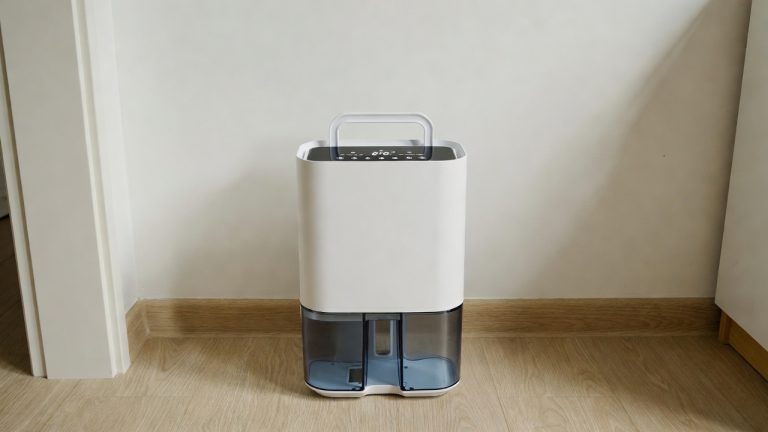
Give your dehumidifier at least twelve inches of space from any wall or large furniture. This gap lets air flow freely. Your dehumidifier can pull moist air from across the entire room instead of just from a tiny pocket next to the wall.
Keep It Away From Windows and Doors
Windows and doors are places where your home exchanges air with the outside. In humid climates, placing your dehumidifier right by a window or door means it spends all its energy fighting outside moisture. It’s like trying to bail out a boat while the hole is still open. You’re working against yourself.
Position your dehumidifier away from windows and exterior doors. This lets it focus on the moisture already inside your home. Once that moisture level drops, it can help block moisture trying to sneak in through those openings. But first things first: dry out the interior air.
Choose a Central, Open Location
The ideal spot is the middle of the room with space all around. This is where your dehumidifier can grab air from every direction. In a basement, that might be the center of the floor space. In a bedroom, it might be near the center of the room but against one wall for practicality. In a bathroom, the opposite side from the shower works well.
Central placement lets air circulate around the unit naturally. Warm, moist air rises toward the ceiling. Your dehumidifier takes it in, cools it, and releases dry air. That dry air sinks. This natural cycle works best when nothing blocks the flow.
Check For Airflow Patterns
Every room has natural airflow patterns. Air moves from the furnace. It flows across the ceiling. It gets pulled toward windows and doors. Fans push air around. Your dehumidifier works with these patterns, not against them.
Observe how air moves in your room. Notice where dust settles. Feel where drafts happen. Place your dehumidifier where it can catch moist air coming from the problem areas. In a basement, that might be near a corner where moisture tends to gather. In a bathroom, that’s away from the shower. In a bedroom, that’s near the door where humid air from the bathroom enters.
Dehumidifier Placement Rules to Follow
These placement rules apply to almost any space where you set up a dehumidifier.
Elevation Matters
Don’t put your dehumidifier on the floor in a basement that has standing water or puddles. Moisture might pool there, and you don’t want your unit sitting in water. Elevate it on a shelf or platform a few inches above the ground.
In other rooms, putting your dehumidifier on the floor is fine and actually recommended. It catches moist air right where it forms. Just make sure the floor is dry and the area won’t flood.
Ensure Good Ventilation Around the Unit
Your dehumidifier has an intake and output. Air gets pulled in from one side and pushed out from another. If you block either end, the unit can’t work right. Make sure nothing covers these areas.
Don’t put boxes, furniture, or curtains in front of the intake. Don’t block the output with a wall or cabinet. Let air move freely into and out of the dehumidifier. This is true for any location you pick.
Keep It Away From Heat Sources
Your dehumidifier works by cooling air and removing moisture. If you place it right next to a space heater, furnace, or radiator, it fights against the heat. The hot air makes the unit work harder. It also reduces how much moisture it can pull out.
Leave space between your dehumidifier and any heat source. This helps it run efficiently and removes more moisture in less time.
Avoid Direct Sunlight
If your dehumidifier gets blasted by direct sunlight through a window, it gets too warm. Warm dehumidifiers don’t remove moisture as well. The heat also makes the unit work harder than it should.
Pick a spot that’s shaded or gets indirect light. This keeps your unit at a good operating temperature.
Special Situations and How to Handle Them
Some homes have unique situations that call for special placement strategies.
Multiple Story Homes
In a two-story or three-story home, humidity can be a problem on multiple levels. You might need more than one dehumidifier. Place one in the basement or crawl space to handle moisture coming from the ground. Place another on an upper floor if that area has high humidity, like near a bathroom or laundry room.
Don’t put the upstairs dehumidifier in the basement and expect it to dry everything. Each unit works best in the area where humidity is actually building up.
Humid Climates
If you live in a very humid climate, you might need to be more aggressive with dehumidifier placement. Place units in multiple rooms, not just the problem areas. Focus on any room where people spend time, like bedrooms and living areas. This keeps your entire home feeling comfortable.
Homes With Poor Insulation
Homes with old or missing insulation get humid faster. More moisture seeps in from the outside. Place your dehumidifier in a central location where it can service multiple rooms. You might also need a more powerful unit or multiple units than someone with better insulation.
Finished Basements With Rooms
If your basement is finished with separate rooms, place a dehumidifier in the main common area rather than inside individual rooms. This lets one unit serve multiple spaces. If the basement is very large, you might need two smaller units instead of one big one.
How Dehumidifier Size Affects Placement
Your dehumidifier’s size influences where you can put it.
Large Units Need More Space
Big dehumidifiers pull moisture fast and cover large areas. They need adequate space around them to work well. Don’t cram a large unit into a small corner or tight closet. Give it room to breathe.
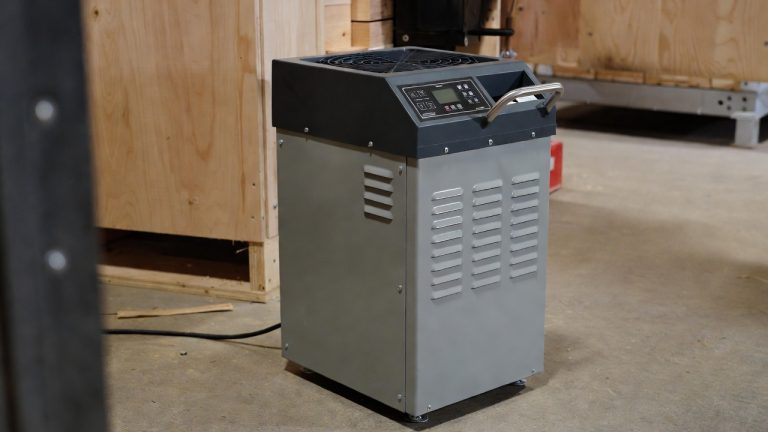
Large units are best in basements, crawl spaces, and large rooms where you have space. They work well in central locations where they can pull air from wide areas.
Small and Compact Units
Small dehumidifiers work in tight spaces like bathrooms, closets, or small bedrooms. You can place these in corners or tight spots easier than large units. But they still work better with some space around them.
Portable Dehumidifiers
Portable units on wheels are flexible. You can move them from room to room as needed. This is great if humidity levels change seasonally or if you need to dry out a specific area. Move your portable unit to wherever humidity is highest today.
Common Dehumidifier Placement Mistakes
Let’s talk about what not to do.
Mistake One: Putting It in an Unused Room
Some people put their dehumidifier in a spare room or closet thinking it doesn’t matter. But you want your dehumidifier where humidity is actually building up. Closets and unused rooms don’t accumulate much moisture unless they’re very cold or damp. Place it where people live, bathe, and wash clothes. That’s where moisture forms.
Mistake Two: Blocking the Air Intake
If you push a dehumidifier against a wall or into a corner, you block its intake. The unit can’t pull moist air from around the room. It just recirculates the same tiny pocket of air. This wastes energy and removes very little moisture.
Mistake Three: Placing It Right Next to the Bathroom
Some people put a dehumidifier just outside the bathroom door, thinking it’ll catch moisture as it escapes. But bathrooms have doors for a reason. Close the door while you shower to keep moisture inside. Then a dehumidifier inside the bathroom catches that moisture before it spreads. A unit outside the bathroom might catch some moisture, but you lose the benefit of containing the humid air.
Mistake Four: Ignoring the Condensation Drain
Dehumidifiers pull moisture from the air and collect it as liquid. This water needs to go somewhere. Some units have a drain hose. Some have collection buckets. If you place your dehumidifier where you can’t access the drain bucket or connect a hose, you’ll get frustrated.
Make sure you can reach your dehumidifier to empty the bucket regularly or hook up a drain hose to a nearby sink or floor drain.
Mistake Five: Forgetting About Noise
Dehumidifiers make noise while they run. Some are quieter than others, but they all produce sound. If you place a loud dehumidifier in your bedroom, right next to where you sleep, you’ll hate it.
Put bedroom dehumidifiers in a corner away from your bed. Better yet, use a quieter unit in your bedroom and save the bigger, louder units for basements and laundry rooms where noise bothers you less.
Testing Your Dehumidifier Placement
Once you place your dehumidifier, you don’t have to keep it there forever. Test it out and adjust if needed.
Run your dehumidifier for a few days in your chosen location. Check the humidity level using a humidity meter or hygrometer. These cheap tools show you if your dehumidifier is actually lowering humidity. If the level drops, your placement is working.
If humidity stays high, try moving your dehumidifier. Maybe it needs to be more central. Maybe it needs to be in a different room. Give each location a few days before judging.
Watch how much water your dehumidifier collects. A dehumidifier removing lots of moisture will fill its collection bucket fast. If your bucket barely gets water, the unit isn’t catching much humidity. That means either your placement is poor, or your home isn’t very humid to begin with.
Optimizing Placement for Better Results
Once you have your dehumidifier placed, a few tricks can help it work even better.
Keep doors open between rooms where possible. This lets your dehumidifier pull moisture from multiple spaces. Close doors only in problem areas like bathrooms while you shower. This traps the moisture so the dehumidifier can catch it.
Use fans to help move air around your dehumidifier. A small fan pointed toward the unit helps pull more humid air into it. Just don’t block the dehumidifier’s output with the fan.
Make sure your home gets fresh air. Open windows on dry days to let stale, moist air escape. This works hand in hand with your dehumidifier. As the dehumidifier removes moisture, fresh outside air replaces it. On very humid days, keep windows closed so you don’t fight against the humidity coming in.
Seasonal Placement Adjustments
Humidity levels change with the seasons. Your placement strategy might need tweaks depending on the time of year.
In warm, humid seasons, moisture builds up everywhere. You might need to move your dehumidifier to different rooms more often. Focus on living spaces where people spend time during the day. Run it in the basement at night to catch moisture seeping up from the ground.
In cool, dry seasons, humidity often drops naturally. You might run your dehumidifier less often or move it to a single problem room like a basement. Your dehumidifier works better in cooler temps anyway, so winter placement might be in a cooler area of your home.
In spring and fall, watch your humidity levels closely. They fluctuate more during these seasons as weather patterns change. Adjust your dehumidifier placement to wherever humidity spikes.
When to Use Multiple Dehumidifiers
One dehumidifier won’t solve humidity problems in every home. You might need multiples.
Get more than one dehumidifier if your home is large, very humid, or has multiple problem areas far apart. A basement unit, a bathroom unit, and a bedroom unit might all make sense for a big house in a humid climate.
Place each dehumidifier in the room where humidity is highest. Don’t try to make one unit serve a huge area. Multiple smaller units spread throughout your home work better than one giant unit in a central location.
If you have a dehumidifier in your basement and another upstairs, they won’t fight each other. They’ll both work toward bringing your whole home’s humidity down. As long as the basement unit keeps ground moisture from rising, and the upstairs unit handles moisture from daily activities, your home stays comfortable.
The Bottom Line on Dehumidifier Placement
Where you place your dehumidifier matters more than most people realize. The right spot means your dehumidifier works efficiently, removes lots of moisture, and costs less to run. The wrong spot means you waste energy and still deal with humidity problems.
Remember these key points: place your dehumidifier where humidity builds up, give it space around all sides, keep it away from walls and heat sources, and make sure air can flow freely through it. Test your placement and adjust if your humidity levels aren’t dropping.
Most homes benefit from at least one dehumidifier placed in the basement or crawlspace. If certain rooms feel extra humid, add units there too. In very wet climates or very large homes, multiple units spread throughout work best.
Start by placing your dehumidifier in your most humid room using the guidelines above. Run it for a few days and measure the results. If it’s working, great. If humidity is still high, move it and try again. Once you find the sweet spot, your dehumidifier becomes an invisible helper that keeps your home comfortable and dry. And that makes all the difference.

Hi, I’m Mary, the founder of Homygear.com. I’m passionate about creating a comfortable, smart, and beautiful home. I share practical insights and real-world experience on home gear that makes everyday life easier. Behind the scenes, my dedicated research team studies products in depth, and our writers craft honest reviews using trusted, authentic sources—so you can choose home gear with confidence.