

Arc Fault vs GFCI
If you’ve ever been confused about the difference between an arc fault circuit interrupter and a ground fault circuit interrupter, you’re not alone. These two devices both protect your home from electrical hazards, but they work in completely different ways. The good news? Once you understand what each one does, it all makes sense.
Let’s dive into the world of electrical protection and break down exactly what arc faults and GFCIs are, how they differ, and why you need both in your home.
What’s the Big Deal About Electrical Safety?
Before we talk about the specific devices, let’s back up for a second. Your home runs on electricity. Electricity is amazing. It powers your lights, your appliances, and your devices. But electricity is also dangerous when something goes wrong.
Electrical fires, shocks, and injuries happen when the electrical system isn’t working the way it should. That’s where protection devices come in. They’re like security guards for your home’s electrical system. They watch for problems and shut things down before something bad happens.
Arc faults and GFCIs are two different types of electrical guards. They protect against different types of problems.
Understanding Arc Faults
Let’s start with arc faults, since this one confuses most people.
An arc fault is a dangerous electrical problem that happens inside wires and connections. Imagine a tiny spark jumping across a gap inside your wall. That spark is called an arc. It gets extremely hot. We’re talking thousands of degrees. That heat can ignite the insulation around the wire. The insulation catches fire. Your walls catch fire. Your home catches fire.
Arc faults can happen for many reasons. Wires get damaged inside walls. Nails and screws puncture through them. Rodents chew on them. Plugs get loose in outlets. Old appliances have worn-out cords. All of these problems can create those dangerous little sparks.
Here’s the scary part: arc faults can happen inside your walls where you can’t see them. A fire could be starting in your walls right now, and you’d have no idea until it’s too late.
How Arc Fault Circuit Interrupters Work
An arc fault circuit interrupter (AFCI) is a device that detects these dangerous arcs and stops them. AFCIs look similar to regular circuit breakers or outlets, but they’re much smarter.
AFCIs constantly monitor the electrical current flowing through the circuit. They’re looking for the specific patterns that an arc creates. Real arcs have a unique electrical signature. It’s different from the normal pattern of electricity flowing to power your devices.
When an AFCI detects an arc, it immediately cuts the power to that circuit. It happens in milliseconds. The power shuts off before the arc has a chance to build up heat and start a fire.
Think of it like a smoke detector, but for electrical arcs. A smoke detector waits to smell smoke. An AFCI waits to sense an arc. Once it detects the danger, it takes action.
Where You Need Arc Fault Protection
Building codes now require AFCIs in specific places around your home. Most bedrooms need arc fault protection. Kitchens need it. Living rooms need it. Basically, anywhere people sleep or spend time needs protection from arc faults.
Some homes also use whole-house arc fault protection at the main panel. This protects the entire electrical system instead of just individual circuits.
If you live in an older home, you might not have arc fault protection yet. Many homes built before AFCIs became popular don’t have them. If you’re renovating or rewiring, adding AFCIs is a smart safety upgrade.
Understanding Ground Faults
Now let’s talk about ground faults. This is a completely different problem from an arc fault.
A ground fault happens when electrical current takes an unintended path to the ground. Think of it this way: electricity wants to flow in a complete circuit. Current goes from the power source, through your device, and back to the power source. That’s normal and safe.
But sometimes electricity escapes. Maybe your device is wet. Maybe the insulation is damaged. The electricity finds a shortcut. It goes directly to the ground instead of completing its normal path. That electrical current can flow through you on its way to the ground.
And that’s dangerous. A small amount of electrical current—even 5 milliamps (a milliamp is one thousandth of an amp)—can cause serious injury. It can cause your heart to stop. It can cause severe burns.
Ground faults happen most often in wet locations. Bathrooms are dangerous. Kitchens are dangerous. Anywhere near water is dangerous. Outdoor outlets are dangerous. Garages are dangerous. Any place where water and electricity could meet together.
How GFCI Outlets and Breakers Work
A ground fault circuit interrupter (GFCI) is a device that detects ground faults and protects you from electrocution.
GFCIs work by comparing the current flowing out of the outlet with the current flowing back. In a normal situation, these currents should be perfectly balanced. The same amount of electricity that goes out should come back.
But when a ground fault happens, some current escapes. The current going out is bigger than the current coming back. The GFCI notices this imbalance instantly. It cuts the power in about one-tenth of a second.
That’s fast enough to save your life. You might feel a tingle. You won’t get seriously hurt.
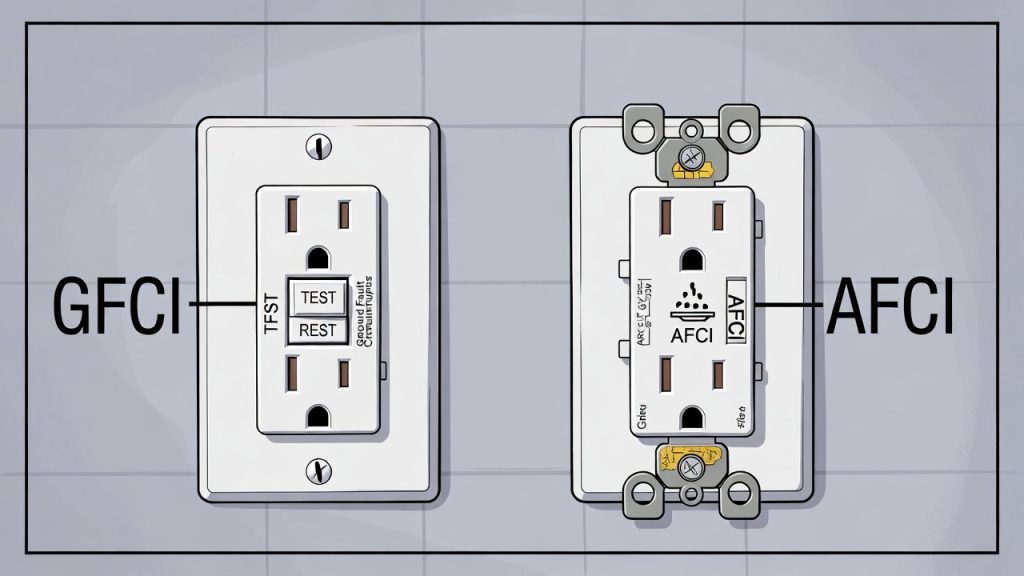
GFCIs come in two styles. There are GFCI outlets that replace your regular outlets. You can see them in your bathroom or kitchen. They have two buttons in the middle: one says “Test” and one says “Reset.” These outlets protect everything plugged into them.
There are also GFCI circuit breakers installed at your electrical panel. These protect an entire circuit, similar to how a regular circuit breaker works.
Where You Need Ground Fault Protection
You need GFCIs anywhere there’s a chance of water and electricity meeting. Building codes require GFCIs in bathrooms. You need them in kitchens. Outdoor outlets need GFCI protection. Laundry rooms need them. Basements and garages need them. Anywhere near a water source needs GFCI protection.
The rule is simple: if water could reasonably come into contact with an outlet or appliance, it needs GFCI protection.
Arc Faults vs Ground Faults: The Key Differences
Now that you understand both, let’s compare them side by side.
What they protect against:
- Arc faults protect against electrical fires caused by dangerous sparks
- Ground faults protect against electrocution from electricity finding an alternate path to the ground
How they work:
- AFCIs monitor for the electrical pattern of an arc and cut power when one is detected
- GFCIs compare current flowing in and out and cut power when the amounts don’t match
When they trigger:
- An AFCI might trigger if you have a damaged appliance cord or loose outlet
- A GFCI triggers when water gets involved with electricity
Where you need them:
- AFCIs are required in bedrooms and living areas where fires could spread and trap people
- GFCIs are required in bathrooms, kitchens, and other wet areas where electrocution is a risk
Cost and installation:
- Both are reasonably affordable, but AFCIs are sometimes a bit more expensive
- Both can be installed as outlets or circuit breakers
- Hiring an electrician costs the same for either type
The bottom line is simple: arc faults and ground faults are different dangers. They need different protection. You can’t use a GFCI to protect against an arc fault. You can’t use an AFCI to protect against a ground fault. Your home needs both types of protection.
Why Your Home Needs Both
This is the most important point to understand. Your electrical system has many dangers lurking inside. Fires, shocks, and injuries can happen in different ways.
Only an AFCI can stop an arc fault before it starts a fire. Only a GFCI can stop a ground fault before it shocks you. If you only have one type of protection, your home has serious gaps in safety.
Think of it like fire safety in your home. You have a fire extinguisher in your kitchen to handle cooking fires. You have smoke detectors to catch fires that start elsewhere. You have a fire escape plan. You need multiple layers of protection because different fires need different responses.
Your electrical system is the same. Multiple types of protection mean you’re covered no matter what goes wrong.
Modern Electrical Code Requirements
Building codes keep changing as we learn more about electrical safety. Current electrical code (like the National Electrical Code) requires arc fault protection in many areas of the home.
Bedrooms almost always need AFCI protection on all outlets. Living rooms, dining rooms, and other sleeping areas need it. Kitchens need it. Hallways need it. The list keeps growing as codes get stricter.
Ground fault protection requirements have been around longer. Every bathroom outlet needs a GFCI. Every kitchen counter outlet needs protection. Outdoor outlets need it. Outlets within six feet of a sink need it.
If you’re building a new home or renovating, your electrician should know all the current code requirements. If you’re in an older home, you might not have everything you need. You can add GFCI outlets and AFCI outlets fairly easily. It’s not a massive expense to upgrade.
Testing Your Devices
Both AFCIs and GFCIs can fail. That’s why they have test buttons.
Testing a GFCI outlet:
- Plug in a lamp or nightlight
- Press the “Test” button on the outlet
- The lamp should go dark (the power shuts off)
- Press “Reset” to turn it back on
- If it doesn’t work, the outlet is broken and needs replacement
Testing an AFCI outlet:
- Plug in a lamp or nightlight
- Press the “Test” button
- The lamp should go dark
- Press “Reset” to turn it back on
- If it doesn’t work, replace the outlet
You should test your GFCI outlets every three months or so. Test your AFCI outlets at least once a year. Regular testing makes sure these devices are actually protecting you when you need them.
If the test button doesn’t work on either device, stop using that outlet. Call an electrician to replace it. A broken protective device is useless. It gives you false confidence that you’re protected when you’re not.
Common Misconceptions About These Devices
People get confused about arc fault and ground fault protection all the time. Let me clear up some common myths.
Myth #1: “I have a GFCI outlet in my bathroom, so I’m protected from everything.”
False. A GFCI protects you from ground faults (electrocution). It doesn’t protect against arc faults (electrical fires). You also need AFCI protection in your bedroom to be fully protected.
Myth #2: “AFCI outlets are the same thing as GFCI outlets.”
False. They look similar and both have test buttons, but they detect different problems and work in different ways. You need both types in your home.
Myth #3: “One GFCI outlet protects everything plugged into that outlet.”
True! This is correct. A GFCI outlet protects anything plugged into it. Some people don’t realize this.
Myth #4: “I don’t need GFCI outlets if I have GFCI circuit breakers.”
True, you don’t need both on the same circuit, but most homes use GFCI outlets instead of breakers for convenience. You can just replace a broken outlet instead of dealing with the circuit breaker panel.
Myth #5: “AFCI outlets are required everywhere.”
False. Only specific areas require them by code. But adding them in more places is a smart safety choice.
Installation and Cost
If you’re comfortable working with electricity, you can replace an outlet yourself. Both AFCI and GFCI outlets look similar to regular outlets. They have two slots for plugs and a ground hole, just like a normal outlet. They have two buttons in the middle for testing and resetting.
Turning off the breaker, unscrewing the old outlet, and screwing in the new one takes about fifteen minutes. If you’re not comfortable doing it yourself, an electrician can do it quickly. Usually just the cost of the outlet itself, plus maybe a small service call charge.
Circuit breaker replacements are trickier. You have to open the main electrical panel. If you’re not experienced with this, definitely call an electrician. Working inside the main panel is dangerous. You could electrocute yourself even with the main breaker off. Pay the money to have a professional do it.
Real-World Examples
Let’s look at some situations where each device matters.
Arc Fault Example: You’re asleep in your bedroom. Your phone charger is plugged into an outlet next to your bed. Inside the outlet, a connection has gotten loose over time. The loose connection causes small arcs to jump. An AFCI detects the arcs and cuts power to the outlet. The arcs stop before they generate enough heat to ignite the outlet housing or the wire insulation inside the wall. You wake up safe. Your home is safe. Without the AFCI, those arcs could have started a fire that spreads through your wall while you’re sleeping.
Ground Fault Example: You’re in your bathroom. Your wife is using a hair dryer. She accidentally drops it into the sink while it’s plugged in and running. The water inside the sink touches the electrical components inside the hair dryer. Current flows through the water. The GFCI detects the imbalance between current flowing in and out. It cuts power in about one-tenth of a second. She gets a quick shock but nothing serious. She’s not killed by electrocution. Without the GFCI, that current would flow through her body while holding the wet hair dryer, likely causing serious injury or death.
These real-world scenarios show why both types of protection matter.
Maintenance and Longevity
Arc fault and ground fault devices don’t last forever. Over time, they can wear out. Most last about 10-15 years before they start having trouble.
Signs that a GFCI or AFCI is failing:
- The test button doesn’t work
- The reset button keeps popping on its own
- You hear buzzing or humming from the outlet
- The outlet feels hot to the touch
- The outlet is visibly burned or damaged
If you see any of these signs, replace the outlet or breaker right away. Don’t wait. A failing protective device is worse than no protection at all. It gives you false confidence that you’re safe when you’re not.
Some newer AFCIs and GFCIs have built-in indicators that show when the device is functioning properly. These are nice because you can see at a glance that the protection is working.
Combination AFCI/GFCI Outlets
Here’s something cool: you can get outlets that combine both protections. A combination AFCI/GFCI outlet gives you both types of protection in one device.
These outlets are really useful in areas that need both protections. A kitchen outlet could use a combination device. A laundry room could use one. A bathroom outlet could use one, though bathrooms usually only need GFCI.
Combination outlets cost a bit more than individual outlets, but they’re worth it if you need both protections in one spot.
Hiring an Electrician
If you decide to hire a professional to install or upgrade your AFCI and GFCI protection, here’s what to expect.
A licensed electrician should:
- Know current electrical code requirements
- Know exactly where protection is needed in your home
- Install devices properly without damaging wires or connections
- Test everything before leaving
- Provide documentation of what was done
Before hiring someone, ask if they’re licensed and insured. Get a quote in writing. Ask how long the work will take. A simple outlet replacement should only take 15-30 minutes. Don’t pay someone hundreds of dollars to do something that should cost $100-$200.
Upgrading Older Homes
If you live in an older home, you probably don’t have adequate AFCI and GFCI protection. Building codes didn’t always require these devices.
Upgrading is absolutely worth doing. Here’s why:
- Older wiring has had decades to degrade
- Old appliances with damaged cords are more likely to create arcs
- Adding protection is relatively inexpensive
- The safety benefit is huge
You don’t have to do everything at once. Prioritize areas where people sleep (bedrooms need AFCIs) and wet areas (bathrooms and kitchens need GFCIs). Then work your way through the rest of the house.
Many homeowners upgrade as they need to replace outlets anyway. You swap out a regular outlet for a GFCI outlet when the regular one stops working. Over time, you build up protection throughout your home.
Working with Your Insurance
Some homeowners insurance companies offer discounts for homes with proper electrical protection. It’s worth asking your insurance agent if upgrading to AFCIs and GFCIs would lower your premium.
Even if they don’t offer a discount, the protection is worth it. You’re protecting your family and your home from serious danger.
Troubleshooting Problems
Sometimes protective outlets cause frustration. You plug something in and it immediately trips. Sometimes they trip randomly and you don’t know why.
If a GFCI keeps tripping:
- You might have a device with a ground fault (leaking current)
- Try unplugging everything from that outlet and slowly plugging devices back in one at a time
- When it trips again, you’ve found the problem device
- Either repair the device or stop using it
- Sometimes moisture in the outlet itself causes problems, especially in bathrooms
- Replace the outlet if drying it out doesn’t help
If an AFCI keeps tripping:
- You might have a device with an arc fault
- Again, unplug everything and slowly plug back in one at a time
- Identify the problem device
- Some devices naturally generate electrical noise that can confuse AFCIs
- If unplugging it solves the problem, stop using the device
- AFCIs sometimes trip on devices that generate a lot of electrical noise, even if they’re safe
The Bottom Line
Arc fault and ground fault protection are two different but equally important safety features in your home. An AFCI protects against dangerous electrical arcs that can start fires. A GFCI protects against electrocution from ground faults.
You need both types of protection. You can’t substitute one for the other. Modern building codes require both in specific locations. Even if you’re in an older home without them, adding both types of protection is a smart, affordable safety upgrade.
Test your devices regularly. Replace them if they stop working. Keep them maintained. These small devices stand between your family and serious electrical danger every single day.
Electrical safety might not be exciting, but it’s absolutely essential. Take it seriously. Make sure your home has proper AFCI and GFCI protection. Sleep better knowing that your electrical system is protected by devices that watch for danger 24/7 and cut power before bad things happen.
Your family’s safety is worth it.