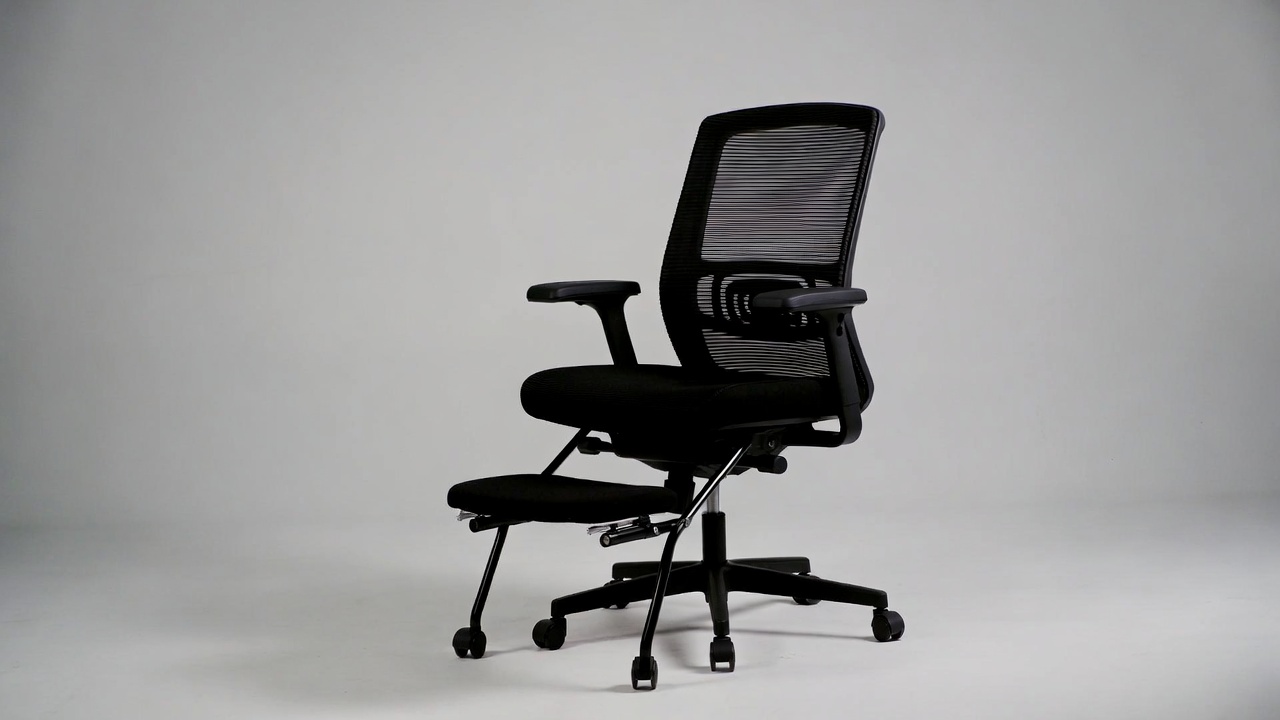
5 Best Desk Chair for Leg Circulation In 2026
If your legs feel numb, tingly, or just plain awful after a long day at your desk, you are not alone. Poor leg circulation from sitting is a real problem that millions of people deal with every single day. And the bad news? Your chair is probably a big part of the problem.
The good news is that the right chair — or even the right chair accessory — can make a huge difference. Better blood flow to your legs means less pain, less fatigue, and a lot more focus during your workday.
In this roundup, I looked closely at five products that are specifically designed to help with leg circulation, cross-legged sitting, and overall ergonomic comfort at the desk. From a simple footrest attachment to a full high-back reclining office chair, there is something here for every type of sitter.
Let me break them all down for you — clearly, honestly, and without any fluff.
Why Leg Circulation Matters When You Sit
Before jumping into the reviews, it helps to understand what is actually happening when you sit for hours in a standard chair.
When you sit with your knees bent at a 90-degree angle and your feet flat on the floor, your thighs press down against the seat edge. That pressure restricts blood flow through the femoral artery — the main blood vessel running through your thigh. Over time, this leads to that familiar “dead leg” feeling, swelling in the ankles, or even pain behind the knees.
Poor circulation in the legs while sitting is also linked to higher risks of deep vein thrombosis, varicose veins, and chronic lower limb discomfort. Ergonomic experts and physical therapists often recommend changing your sitting position frequently, elevating your feet, or using chairs that reduce thigh pressure as practical ways to combat this.
The five products in this review target these exact problems. Some let you sit cross-legged. Some raise your feet. Some combine support with full ergonomic design. All of them are worth your attention if leg circulation is something you want to improve.
Quick Comparison at a Glance
| Product | Type | Best For |
|---|---|---|
| VIVO Height Adjustable Retrofit Footrest | Footrest Attachment | Budget-friendly fix for existing chairs |
| Sleekform East Austin Kneeling Chair | Kneeling Chair | Posture and circulation without wheels |
| EROMMY Criss Cross Chair | Cross-Legged Chair | ADHD, yoga-style sitting, casual use |
| AreShark Criss Cross Office Chair | Cross-Legged Swivel Chair | Home office with flexibility needs |
| Criss Cross High Back Reclining Chair | High Back Cross-Legged Chair | Comfort seekers who want it all |
Product Reviews
1. VIVO Height Adjustable Retrofit Footrest (Chair-REST1)
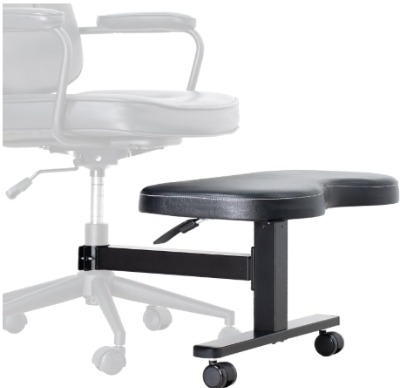
The Short Version: A simple, smart add-on that converts your existing chair into a cross-legged sitting option — without buying a whole new chair.
What Is It?
The VIVO Chair-REST1 is not a chair. It is a footrest attachment that bolts directly onto the cylinder of your current office chair. It gives you a platform to rest your feet or legs in different positions, including cross-legged, which naturally takes pressure off the backs of your thighs.
It fits chair cylinders that are 2 inches in diameter — which covers the vast majority of standard office chairs on the market. The cushioned platform holds up to 242 lbs, so it works for a wide range of body types. The height is adjustable, so you can raise or lower it to match your comfort level and chair height.
Who Is This Best For?
This is ideal for people who already have a chair they like and do not want to spend money on an entirely new one. It is also a great starting point for someone new to ergonomic sitting who wants to test cross-legged positioning before committing to a specialty chair.
It works well for:
- Budget-conscious office workers
- People in shared office spaces who cannot replace their chair
- Remote workers who want a quick upgrade without a full furniture purchase
- Anyone who tends to tuck their feet up while working but has no surface to rest them on
Key Features Explained Simply
Cylinder Compatibility: It clamps around the 2-inch cylinder (the post that connects your seat to the base). Most office chairs use this size. You just need to double-check your chair’s cylinder diameter before ordering.
Cushioned Platform: The footrest pad is soft enough to sit on comfortably in cross-legged positions. This is not a hard plastic shelf — it has actual padding, which matters a lot when your legs are resting on it for hours.
242 lb Weight Capacity: This is a generous limit. The attachment is built to handle real use, not just light occasional resting.
Adjustable Height: You can raise or lower the platform to find the sweet spot for your body height and chair seat height. This is a nice touch that keeps it from feeling like a one-size-fits-all accessory.
Real-Life Usage Insight
In practice, this kind of footrest attachment works best when you already have a habit of sitting cross-legged or tucking your feet. If you tend to sit straight with feet flat, you might not use it as much. But for leg circulation, crossing your legs on a raised cushioned surface actually shifts the pressure points away from the backs of your thighs, which is exactly what you want.
The installation process takes about ten minutes. You do not need any tools beyond what comes in the box. Once it is on, it feels secure and does not wobble during normal use.
One thing to keep in mind: the footrest adds height to your setup. If you are already sitting at the right keyboard height, you may need to raise your monitor or lower your desk slightly after adding this attachment.
Pros
- Very affordable compared to buying a full ergonomic chair
- Easy to install on most existing office chairs
- Cushioned surface is comfortable for extended use
- Helps reduce thigh pressure and improve leg blood flow
- Holds up to 242 lbs — solid weight capacity
- Adjustable height adds flexibility
Cons
- Only fits 2-inch cylinders — you must check your chair first
- Does not address back support or seat cushioning
- Adds height to your sitting position, which may require desk adjustments
- Not suitable if your chair cylinder is a non-standard size
Performance
For what it is — a simple retrofit accessory — the VIVO footrest performs well. It is sturdy, the cushion holds up over time, and the adjustability makes it feel less like a gimmick and more like a real ergonomic tool. It will not transform your chair into a luxury seat, but it solves the specific problem of leg pressure and circulation in a practical, low-cost way.
Ease of Use
Very easy. Install it once, set the height, and forget about it. No complex adjustments needed day to day.
Value for Money
Excellent. This is one of the most cost-effective ways to address leg circulation at a desk without replacing your entire chair. If you are on a tight budget or renting office space, this is a smart first move.
Rating: 4.2 / 5
2.Sleekform East Austin Ergonomic Kneeling Chair with Back Support
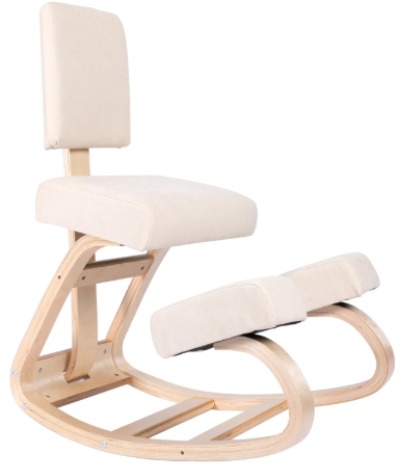
The Short Version: A kneeling chair that goes beyond the basic design by adding back support and a stylish aesthetic — a genuinely comfortable ergonomic option for posture and circulation.
What Is It?
The Sleekform East Austin is an ergonomic kneeling chair made from Winter Linen fabric with a wood frame. It is designed to change your entire sitting posture by dropping you into a forward-leaning, kneeling position that takes the load off your lower back and distributes your body weight more evenly between your seat and your shins.
Unlike many basic kneeling chairs that are just two pads on a tilting frame, this one includes back support — a significant upgrade that makes longer sessions much more manageable.
Who Is This Best For?
Kneeling chairs are not for everyone, but they are excellent for:
- People with chronic lower back pain who want to try an alternative to a traditional chair
- Desk workers who struggle with poor posture and want a structural solution
- Those dealing with restricted leg circulation from sitting with thighs compressed against a seat edge
- Creative professionals or anyone who sits at a fixed-height desk for focused work
It is also a good pick for people who want something that looks good in a home office. The linen and wood aesthetic is genuinely attractive.
Key Features Explained Simply
Kneeling Design: By tilting your pelvis forward and resting your shins on the lower pad, your spine naturally aligns into a more neutral curve. This removes the slouching that happens in standard chairs and takes compression off your spinal discs.
Back Support: Most kneeling chairs have zero back support, which makes them tiring after a while. The East Austin adds a lumbar or lower back pad. This makes it far more accessible for people who are not yet conditioned for pure kneeling chair use.
Winter Linen Fabric: The linen upholstery is breathable and does not trap heat the way leather or vinyl does. It also gives the chair a soft, premium feel.
Wood Frame: The frame looks beautiful and is sturdy. It lacks the cold, industrial look of most office chairs, making it a great fit for home office setups.
Leg Circulation Benefit: Because your thighs are not pressed down against a hard seat edge, the femoral artery compression that causes poor leg circulation is significantly reduced. Your blood flows more freely through your lower body.
Real-Life Usage Insight
Kneeling chairs have a learning curve. For the first few days, your shins and knees will feel the pressure of an unfamiliar position. Most people need about one to two weeks to fully adapt. Once you do, the posture improvement is noticeable and the leg circulation benefit becomes very real.
The East Austin makes this transition easier than most kneeling chairs because of the back support. You can lean back slightly when you need a break from the full kneeling posture without having to stand up.
The wood frame is beautiful but does not make the chair significantly heavier than standard alternatives. It rolls or moves reasonably well on hard floors, though it is not a wheeled chair, so you will need to lift it to reposition in most cases.
Pros
- Dramatically reduces thigh and hip compression compared to standard chairs
- Back support makes kneeling more accessible and comfortable
- Beautiful linen and wood aesthetic suits home office environments
- Promotes a natural spinal curve and better posture
- Breathable fabric keeps you cool during long sessions
- Strong, durable build quality
Cons
- Takes time to adjust to — not comfortable from day one for most people
- Not ideal for tasks that require frequent standing and sitting
- The kneeling position is not suitable for people with existing knee or shin issues
- No wheels, so repositioning requires lifting the chair
Performance
Once you get past the adjustment period, the East Austin performs very well. Posture improves noticeably, the lower back pain that comes from slouching disappears for many users, and the improved leg circulation is a genuine benefit of the kneeling design. The back support keeps it comfortable for full workday use, which puts it ahead of most kneeling chairs.
Ease of Use
Moderate. The setup is straightforward, but the sitting style itself requires adaptation. Not difficult once you get used to it, but not an instant comfortable fit on day one.
Value for Money
Good. It is priced higher than a basic footrest or budget kneeling stool, but the quality of materials, the added back support, and the ergonomic benefits justify the cost for anyone serious about improving their sitting health.
Rating: 4.4 / 5
3.EROMMY Criss Cross Chair with Wheels and Retractable Footrest
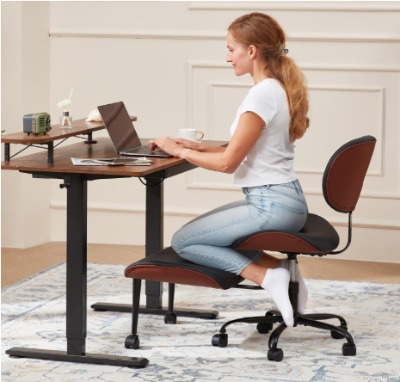
The Short Version: A wide, thickly padded cross-legged chair with wheels and a built-in retractable footrest — a genuinely comfortable option for people who sit in unconventional positions all day.
What Is It?
The EROMMY Criss Cross Chair is a desk chair specifically designed for people who sit cross-legged, lotus-style, or in other non-standard positions. It has a wide, extra-thick seat cushion, a retractable footrest, caster wheels for mobility, and a design that accommodates meditation-style or yoga-style sitting at a desk.
It comes in a black and brown color combination with a mesh or padded back for support.
Who Is This Best For?
This chair was practically made for:
- People with ADHD who fidget and cannot stay in one rigid sitting position
- Anyone who naturally sits cross-legged and wants a chair that supports rather than fights that habit
- Remote workers who want more casual, flexible seating during long work sessions
- People interested in meditation or yoga who want to bring that energy into their workspace
- Those who want to improve leg circulation by changing their sitting position frequently
Key Features Explained Simply
Wide, Thick Seat Cushion: The seat is noticeably wider and more thickly padded than a standard office chair. This is the feature that makes cross-legged sitting actually comfortable. A narrow seat makes crossing your legs cramped and uncomfortable — a wide seat gives your legs room to breathe.
Retractable Footrest: When you are not sitting cross-legged, you can pull out the footrest to elevate your feet slightly. Elevated feet reduce ankle swelling and take pressure off your calves and lower legs. This is a dual-purpose feature that helps circulation whether you are sitting cross-legged or in a more traditional position.
Caster Wheels: Full mobility on smooth floors. This is a practical feature that keeps the chair functional in a real office environment, not just as a meditation prop.
Ergonomic Design: Despite its unconventional look, the EROMMY chair includes back support, seat height adjustment, and a design that keeps you from slouching. It is a proper desk chair, not just a cushioned box.
ADHD-Friendly Design: The wide seat and the freedom to shift positions frequently is a genuine benefit for people who struggle to stay still in a standard chair. Movement is encouraged rather than restricted.
Real-Life Usage Insight
In real use, the EROMMY stands out for its comfort. The thick seat cushion is soft without being mushy — it holds its shape well over time. The retractable footrest is smooth to extend and retract, and it locks in place so it does not droop down unexpectedly.
The chair is comfortable for cross-legged sitting for several hours, which is more than most office chairs can claim. The back support is not as robust as a full ergonomic chair with lumbar adjustment, so if you have serious lower back issues, you may want to add a lumbar pillow. But for general use and circulation improvement, it does the job well.
The wheels move smoothly on hard floors and are passable on thin carpet. On thick carpet, they may not roll as freely.
Pros
- Wide, thick seat is genuinely comfortable for cross-legged sitting
- Retractable footrest is a handy bonus for traditional sitting positions too
- Wheels make it practical for real office use
- ADHD-friendly design allows natural position shifting
- Supports meditation-style sitting at a desk
- Reduces thigh compression and improves blood flow to the legs
Cons
- Back support is adequate but not outstanding
- May feel too wide or bulky for small desk spaces
- Wheels may struggle on thick carpets
- Not the most aesthetically refined option for formal office environments
- Limited lumbar adjustment
Performance
The EROMMY delivers on its core promise: it is a comfortable, practical cross-legged chair that genuinely helps with leg circulation. The combination of the wide seat, retractable footrest, and mobility make it a well-rounded option for home office use. It is not a high-end ergonomic chair, but it does not pretend to be — it is a functional, comfortable solution for people who sit differently.
Ease of Use
Very easy. Assembly is straightforward, adjustments are simple, and the retractable footrest is intuitive to use. No learning curve here.
Value for Money
Good. The EROMMY is priced fairly for what it offers. The combination of the wide cushion, footrest, and wheels at this price point is genuinely competitive.
Rating: 4.1 / 5
4. AreShark Criss Cross Office Chair with Armrest, Wheels, and Stretchable Rotating Footrest
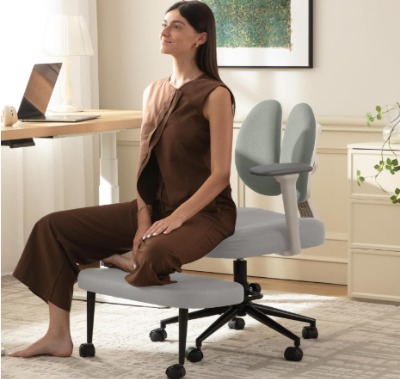
The Short Version: A versatile cross-legged swivel chair that adds armrests, a rotating footrest, and adjustable height to the criss-cross concept — giving you more customization than most chairs in this category.
What Is It?
The AreShark Criss Cross Chair is a full-featured cross-legged office chair with wheels, armrests, a height-adjustable seat, and a stretchable rotating footrest. It is designed for people who want to sit in yoga or meditation-style positions at their desk, but who also need proper office chair functionality like swivel, mobility, and arm support.
The rotating footrest is one of its most distinctive features — it can extend outward and rotate, giving you more freedom to position your legs in the way that feels most comfortable.
Who Is This Best For?
This chair works well for:
- Home office workers who want the flexibility of cross-legged sitting with the comfort of armrests
- People dealing with poor leg circulation who want to shift positions frequently throughout the day
- Yoga practitioners who want to carry that flexibility into their work setup
- Remote workers who do long hours and need a chair that adapts to their sitting style
- Those who kneel, lotus sit, or prefer a wide open seat
Key Features Explained Simply
Stretchable Rotating Footrest: This is the standout feature. The footrest extends further than a standard retractable footrest, and it can rotate to different angles. This means you can stretch your legs forward, angle them to the side, or simply rest them in a slightly elevated position — all from the same chair. Each configuration changes where the pressure sits on your legs, which directly benefits circulation.
Armrests: Many criss-cross chairs skip armrests entirely because they assume you are always sitting with your legs folded up. The AreShark includes them, and they are removable or flippable if you do not want them. This makes the chair feel more like a proper office chair rather than just a novelty seat.
Adjustable Height: Standard pneumatic height adjustment lets you set the seat to your preferred level relative to your desk. This matters for making sure your arms, wrists, and screens are all aligned properly.
Swivel Base with Wheels: Full 360-degree swivel and smooth caster wheels. You can move around your workspace freely without getting up.
Back Support: The chair includes a backrest with a slight curve for lumbar support. It is not a fully adjustable lumbar system, but it provides adequate support for most seated positions.
Wide Seat: Like the EROMMY, the AreShark seat is wide enough to accommodate cross-legged sitting comfortably without your knees hanging off the edge.
Real-Life Usage Insight
The rotating footrest is genuinely useful in practice. Most footrests on criss-cross chairs just pull straight out and stay there. The rotation adds a meaningful layer of flexibility — you can angle it to support one leg while the other tucks in, which is a natural sitting variation many people use without even thinking about it.
The armrests are a welcome addition for anyone who does a lot of typing or uses a mouse for extended periods. Without armrests, your shoulders tend to creep up over time, which creates tension in the neck and upper back. Having that arm support makes the AreShark a more complete ergonomic option.
One thing to note: the chair is fairly large. It takes up more floor space than a standard task chair. If you have a compact desk setup or a small room, measure before buying.
Pros
- Stretchable rotating footrest is unique and genuinely useful
- Armrests add meaningful comfort and are removable if not needed
- Full swivel and wheel mobility for real office use
- Wide seat comfortably supports cross-legged and kneeling positions
- Adjustable height suits a range of desk heights
- Helps reduce leg pressure and improve circulation through position variety
Cons
- Bulkier and heavier than simpler criss-cross chairs
- Back support is functional but not outstanding
- Takes up more space in small home offices
- Assembly can take a bit longer than simpler chairs due to more parts
- Not a great fit for very formal corporate environments aesthetically
Performance
The AreShark performs well as an all-around criss-cross chair with extra features. The rotating footrest works smoothly, the armrests add real comfort, and the swivel and wheel base make it practical for daily use. If you want more versatility than basic criss-cross chairs offer, this is the one to consider.
Ease of Use
Moderate — more components means slightly more complex assembly, but day-to-day use is simple and intuitive. The footrest extension and rotation mechanisms are smooth and easy to operate.
Value for Money
Very good. Given the feature set — armrests, rotating footrest, swivel base, wide seat — the AreShark offers a strong package for the price. It competes well against chairs that cost significantly more.
Rating: 4.3 / 5
The Short Version: The most complete and comfort-focused option in this roundup — a high-back, reclining criss-cross chair that gives you ergonomic support, style, and flexibility all in one.
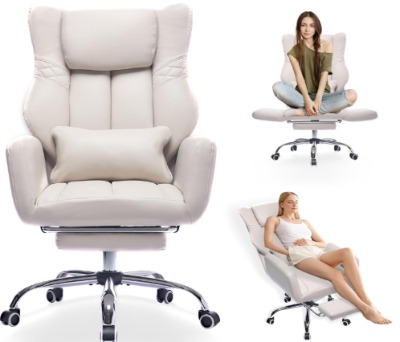
5. Criss Cross High Back Office Chair with Footrest and 155° Reclining (Beige)
What Is It?
This is a high-back criss-cross desk chair in a beige colorway with a wide cushioned seat, flip-up armrests, a built-in footrest, a 155-degree recline, and full swivel capability. It is designed for users who want to sit cross-legged or in relaxed positions but also want a chair that looks and feels premium.
The high back and deep recline make it stand out from every other chair in this review. It is more of a lifestyle office chair than a pure ergonomic tool — though it still delivers real benefits for leg circulation.
Who Is This Best For?
This chair is a strong match for:
- People who want to work, relax, and even take a short rest in the same chair
- Home office workers who want a comfortable and stylish chair for long hours
- People who need to sit cross-legged for comfort and circulation but also want lumbar and upper back support
- Those who want flexibility to recline while watching content, taking calls, or just taking a break
- Users who want a chair that looks like a piece of furniture, not just office equipment
Key Features Explained Simply
High Back: The tall backrest supports not just your lower back but also your mid and upper back. This is a meaningful upgrade over chairs with short or mid-height backs, especially if you tend to lean back during long sessions.
155-Degree Recline: You can push this chair back to almost a horizontal position. This is far beyond the 120 or 130 degrees that most reclining office chairs offer. At 155 degrees, you are close to lying down, which is excellent for taking the pressure off your spine and legs during breaks.
Flip-Up Armrests: The armrests flip up out of the way, which is essential for cross-legged sitting. When your legs are folded on the seat, fixed armrests can get in the way. Flip-ups solve this cleanly.
Built-In Footrest: A pull-out footrest lets you elevate your feet when in a reclined position. Combined with the 155-degree recline, this transforms the chair into something close to a recliner — useful for decompressing without leaving your workspace.
Wide Cushioned Seat: Like the other criss-cross chairs in this review, the seat is wide enough to sit comfortably with your legs crossed. The cushioning is plush and the beige fabric has a soft, comfortable feel.
Swivel Base with Wheels: Standard 360-degree swivel and smooth wheels for mobility at your desk.
Leg Circulation Benefit: The wide seat reduces thigh compression, the footrest elevates feet to reduce ankle and calf pressure, and the recline takes spinal compression off — together, these features create a more circulation-friendly sitting environment than almost any standard office chair.
Real-Life Usage Insight
This chair earns its place at the top of this list in terms of sheer comfort. The recline is buttery smooth and locks at different angles, so you are not forced to choose between upright and fully reclined. The flip-up armrests are practical and well-built — they do not feel flimsy or like an afterthought.
The footrest that deploys from the seat bottom is firm enough to support your feet without feeling uncomfortable, and it pairs well with the recline for true rest-mode use during breaks.
The beige fabric is attractive and gives the chair a warm, residential feel. It is a strong choice if your home office doubles as a living space where you want your furniture to look good.
One consideration: because of the recline and high back, this chair needs a bit more clearance behind it. Make sure you have enough space for the back to tilt without hitting a wall.
The plush cushioning is comfortable immediately — no adaptation period needed, unlike the kneeling chair.
Pros
- High back provides full upper, mid, and lower back support
- 155-degree recline is one of the deepest available in this category
- Flip-up armrests make cross-legged sitting practical and unobstructed
- Built-in footrest pairs perfectly with the recline
- Wide cushioned seat is immediately comfortable for cross-legged positions
- Attractive beige colorway suits home office aesthetics
- Helps with leg circulation through position variety and elevated foot options
Cons
- Requires more floor clearance behind the chair for full recline
- Plush cushioning may compress over time with heavy daily use
- Larger and heavier than simpler task chairs
- Premium look comes with a higher price point than basic options in this roundup
- Not ideal for formal corporate offices due to its relaxed aesthetic
Performance
This is the most comfortable, versatile, and feature-rich product in this roundup. It performs exceptionally well for home office use, long-hour sessions, and anyone who wants a chair that handles both focused work and comfortable breaks. The combination of cross-legged seating support, high back, deep recline, and flip-up armrests makes it a very complete product.
Ease of Use
Very easy once assembled. All the adjustable features are intuitive. The recline mechanism is smooth and the armrests flip with a simple motion. Assembly is moderate in complexity due to the high back and reclining mechanism, but the instructions are clear.
Value for Money
Good overall, though it sits at the higher end of the price range in this category. You are paying for a more complete feature set, a premium aesthetic, and the deep recline that most chairs in this space do not offer. If budget is a concern, there are better value options in this list — but if you want the most comfortable and fully-featured option, this chair delivers.
Rating: 4.5 / 5
Comparison: How Do These Five Stack Up?
Let me put them side by side in a way that makes the differences clear.
Best Budget Option: VIVO Retrofit Footrest. It costs a fraction of what a new chair costs, installs on your existing chair, and genuinely helps with leg circulation by enabling cross-legged sitting. If money is tight, start here.
Best for Posture: Sleekform East Austin Kneeling Chair. No other product in this list does as much for your spine. The kneeling position is a structural fix for poor posture, and the added back support makes it more accessible than traditional kneeling chairs.
Best for ADHD or Fidgeting: EROMMY Criss Cross Chair. The wide seat, the freedom to shift positions, and the retractable footrest combine to create a chair that works with restless bodies rather than against them.
Best for Versatility: AreShark Criss Cross Chair. The rotating footrest, armrests, and full swivel base make this the most adaptable chair in the lineup. It handles the widest range of sitting styles and preferences.
Best for Overall Comfort: Criss Cross High Back Reclining Chair. The 155-degree recline, flip-up armrests, high back, and plush cushioning make this the most comfortable option for long hours at the desk.
Buying Guide: What to Look for in the Best Desk Chair for Leg Circulation
If you are shopping for a chair or accessory specifically to help with leg circulation, here are the most important factors to keep in mind.
Seat Width
A narrow seat forces your legs into a compressed position that restricts blood flow. A wider seat gives you room to cross your legs, shift your position, and reduce pressure on the underside of your thighs. Look for seats that are at least 19 to 22 inches wide if you plan to sit cross-legged.
Seat Depth
Seat depth affects how much the front edge of the seat presses into the backs of your knees and thighs. A seat that is too deep pushes the edge into your legs and cuts off circulation. A seat that is too shallow does not support your thighs enough. Look for adjustable seat depth or seats in the 17 to 20 inch range for most adults.
Seat Cushion Quality
The material and thickness of the cushion affects how much pressure builds up under your thighs. High-density foam holds its shape and distributes weight evenly. Cheap foam compresses quickly and creates hard spots that press into your legs. Look for chairs with high-density foam rated for extended daily use.
Footrest Options
Elevating your feet slightly relieves pressure on your calves and ankles. Built-in footrests, retractable footrests, or footrest attachments all accomplish this. A good footrest should be firm enough to support your weight without being uncomfortable.
Back Support
Good lumbar support keeps your spine in a neutral position, which prevents the slumped posture that puts extra pressure on your lower body. Look for chairs with adjustable lumbar support or at minimum a well-shaped backrest that follows the natural curve of your spine.
Adjustability
Height adjustment is a basic requirement. Beyond that, the more you can adjust, the better you can dial in the setup for your specific body and desk height. Chairs with seat height, seat tilt, lumbar depth, and armrest adjustments give you more control over your comfort.
Mobility
Wheels and a swivel base are practical for real office use. They let you move around your desk without getting up, which reduces the kind of static sitting that hurts circulation most.
Material and Breathability
Mesh backs and breathable fabric seats reduce heat buildup. Trapped heat makes sitting uncomfortable faster and tends to make you shift into poor positions to find relief. Breathable materials help you stay comfortable and maintain good posture longer.
Who Should Buy These Products?
Desk workers with sedentary jobs — Anyone who sits for more than five or six hours a day is at risk of developing circulation problems in their legs. Every product in this review is relevant to you.
People with a history of leg swelling or ankle puffiness — If your ankles swell after long sitting sessions, a chair or footrest that elevates your feet and reduces thigh compression can make a noticeable difference.
Remote workers — Home office setups tend to be less ergonomically optimized than corporate offices. These products give you the tools to build a healthier sitting environment at home.
People with ADHD or sensory sensitivities — Chairs that allow position changes, cross-legged sitting, and movement suit people who cannot sit still in rigid positions.
Students doing long study sessions — Long periods of concentration in a standard chair take a toll on the legs. A cross-legged chair or footrest attachment can make long study sessions more comfortable.
People recovering from lower back injury — The kneeling chair and the high-back reclining chair both offer ways to reduce spinal compression, which is often a priority during recovery.
Common Mistakes to Avoid
Buying for Looks Only
A chair that looks great in a product photo but fits your body poorly is not going to help your leg circulation. Always check seat dimensions, weight capacity, and adjustability range before buying based on appearance.
Ignoring Seat Width
This is the single most important dimension for cross-legged sitting comfort. A seat that is even two or three inches too narrow makes cross-legged sitting uncomfortable and impractical. Always check the seat width measurement.
Skipping the Break-In Period for Kneeling Chairs
Kneeling chairs feel awkward for the first one to two weeks. Many people give up too quickly. If you try a kneeling chair and it feels uncomfortable in the first three days, that is normal. Give it two weeks before forming a final opinion.
Sitting in Any Single Position All Day
No chair — regardless of how ergonomic or expensive — is meant to be used in one static position for eight hours straight. Movement is critical. Shift your position every 30 to 45 minutes, stand up regularly, and use your footrest or cross-legged option as a rotation, not a permanent setting.
Forgetting to Check Cylinder Size for the VIVO Footrest
The VIVO retrofit footrest fits 2-inch cylinders. If your chair has a non-standard cylinder, it will not fit. Check before buying.
Buying a Chair That Is Too Large for Your Space
The high-back reclining chair and the AreShark both require more floor clearance than standard task chairs, especially when reclined. Measure your available space and the chair’s footprint before purchasing.
Not Adjusting Your Desk Height
Adding a cross-legged chair or a footrest attachment often raises your seated height. If you do not adjust your desk or monitor accordingly, you may end up with neck strain or wrist issues even if your leg circulation improves. Ergonomics is a whole-body system, not just about the chair.
Final Verdict
All five products in this review address leg circulation from different angles, and each one has a legitimate place depending on your needs and budget.
If you want the most affordable entry point, the VIVO retrofit footrest is the smart first step. It upgrades your existing chair without a big investment.
If posture correction alongside leg circulation is your goal, the Sleekform East Austin Kneeling Chair is the strongest structural solution in this roundup.
If you fidget, have ADHD, or just love sitting cross-legged, the EROMMY Criss Cross Chair is wide, comfortable, and designed exactly for you.
If you want maximum flexibility and a chair that does more than one thing well, the AreShark Criss Cross Chair with its rotating footrest and armrests is the most versatile pick.
And if you want the best overall comfort and the most complete feature set, the Criss Cross High Back Reclining Chair in beige is the clear winner. The 155-degree recline, flip-up armrests, high back, and built-in footrest make it the most well-rounded option for long-hour home office use.
Leg circulation is not just a comfort issue — it is a health issue. The right seating solution makes a real difference. Any of these five products is a step in the right direction. Pick the one that fits your situation, your budget, and your sitting style, and your legs will thank you.
Frequently Asked Questions
Can a chair really improve leg circulation? Yes. The main cause of poor leg circulation while sitting is pressure on the underside of your thighs and the backs of your knees. Chairs that allow cross-legged positions, elevate your feet, or reduce seat edge pressure directly reduce this compression. Better design equals better blood flow.
How often should I change my sitting position? Ergonomists generally recommend shifting your position or standing up every 30 to 45 minutes. Even small changes — crossing and uncrossing your legs, extending the footrest, or reclining slightly — help keep blood moving.
Are kneeling chairs good for leg circulation? Kneeling chairs are excellent for leg circulation because they distribute body weight between your seat and your shins, removing almost all pressure from the underside of your thighs. The trade-off is that your shins and knees take on more load, so it requires an adaptation period.
Is sitting cross-legged at a desk healthy? In moderation, yes. Sitting cross-legged reduces thigh compression and can relieve lower back tension. The key is not to stay in any one position for too long. Alternate between cross-legged, standard, and other positions throughout your day.
What is the best chair for people with varicose veins? Any chair that elevates your feet, allows frequent position changes, and reduces the compression on your thigh veins is beneficial. Look for chairs with footrests and wide seats. Combining any of these chairs with compression socks and regular movement breaks is the most effective approach.

Hi, I’m Mary, the founder of Homygear.com. I’m passionate about creating a comfortable, smart, and beautiful home. I share practical insights and real-world experience on home gear that makes everyday life easier. Behind the scenes, my dedicated research team studies products in depth, and our writers craft honest reviews using trusted, authentic sources—so you can choose home gear with confidence.