How to Clean Outdoor Cushions?
Your outdoor cushions take a beating. Rain, sun, dust, and dirt pile up over time. They start looking dull and dingy. But here’s the good news—cleaning them is not as hard as you think. This guide will walk you through every step to make your cushions look fresh and new again.
Why Clean Your Outdoor Cushions?
Let’s start with the basics. Your outdoor furniture cushions sit outside all day. They face the elements. Sun rays fade the fabric. Rain brings moisture and mold. Dust settles in the fibers. Bugs leave their marks. Leaves and pollen stick to the surface.
Dirty cushions don’t just look bad. They can develop mold and mildew. These fungi can damage the fabric and harm your health. Stains get worse over time if you don’t treat them early. Regular cleaning keeps your cushions in great shape and extends their life.
Clean cushions also make your outdoor space more inviting. When your patio or deck looks fresh and tidy, you want to spend time out there. Family gatherings feel nicer. Guests feel welcome. It’s worth the effort.
What You’ll Need Before You Start
Let’s gather your supplies. You don’t need fancy equipment. Most items are in your home already.
For Basic Cleaning:
- A soft brush with gentle bristles
- A bucket
- Mild dish soap
- Water
- Towels
- A sponge or soft cloth
For Tough Stains:
- White vinegar
- Baking soda
- Lemon juice
- Hydrogen peroxide
- A spray bottle
- A soft bristle brush
For Drying:
- Clean towels
- A sunny spot
- A fan (optional)
You don’t need bleach or harsh chemicals. They can damage the fabric and cause fading. Stick with gentle, natural cleaners that work just as well.
When Should You Clean Your Outdoor Cushions?
The best time to clean is spring and fall. These seasons have mild weather. Your cushions won’t dry too fast in the heat. They won’t sit wet in the cold.
That said, don’t wait for a specific season. Clean your cushions whenever they look dirty. A quick spot clean takes just minutes. Deep cleaning takes a couple of hours.
Many people clean their cushions before storing them for winter. This prevents mold growth during the off-season. Others do a light clean every month during the summer. Find a routine that works for your lifestyle and your climate.
Step-by-Step Guide to Clean Outdoor Cushions
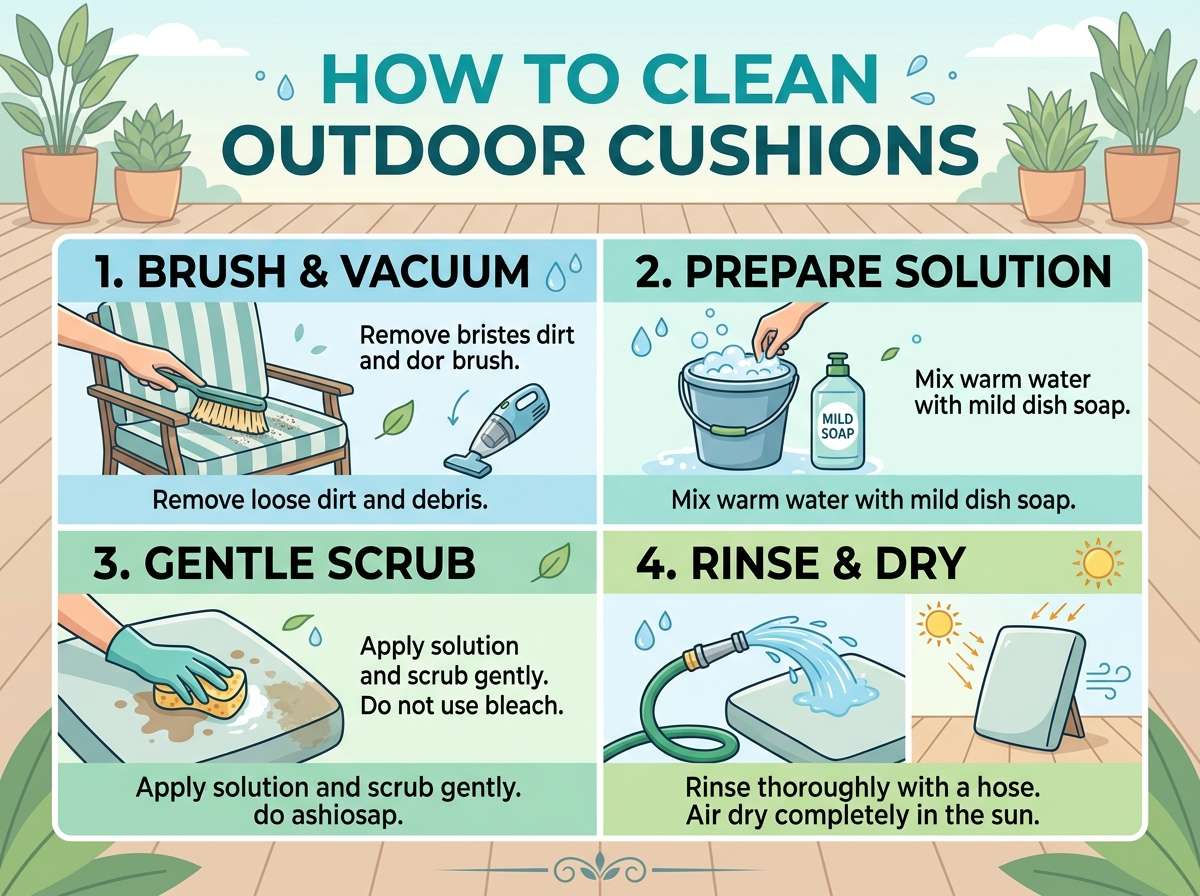
Step 1: Remove Loose Debris
Start simple. Take your cushions off your chairs or benches. Tap them together over the trash. This removes loose dirt and leaves.
Now grab a soft brush. Brush both sides of each cushion. Work in sections. Move the brush in one direction. Don’t scrub hard. Gentle strokes work better and won’t damage the fabric.
Pay special attention to the seams and edges. Dirt loves to hide there. Use the brush bristles to work into the seams. Get out all that trapped dust.
This first step makes the rest easier. You’re removing the surface layer of grime. The cleaning solutions will work better on a pre-brushed cushion.
Step 2: Mix Your Cleaning Solution
Fill a bucket with cool water. Don’t use hot water. Heat can set stains and damage certain fabrics.
Add a few drops of mild dish soap. The water should look slightly soapy. Less soap is better. Too much soap leaves residue on your cushions.
If you’re dealing with stains, add a splash of white vinegar. Vinegar cuts through grime without harsh chemicals. It also kills odors and helps prevent mold.
For stubborn stains, make a paste with baking soda and water. Mix them until you get a thick, spreadable consistency.
Step 3: Test on a Hidden Spot
Before you clean the whole cushion, test your solution on a small area. Pick a corner or seam where it won’t show. Let it sit for a minute. Wipe it away. Make sure the fabric doesn’t discolor or bleed.
This step saves you from accidents. Different fabrics react differently to cleaners. Testing first gives you peace of mind.
Step 4: Sponge Down the Cushions
Dip your sponge into the soapy water. Squeeze out excess water. The sponge should be damp, not dripping.
Work on one cushion at a time. Wipe the entire surface. Go over both sides. Don’t forget the edges and piping.
For textured fabrics, gently dab rather than wipe. Dabbing works better on cushions with ridges or patterns. For smooth fabrics, gentle wiping works fine.
Pay extra attention to stained areas. Go over them a few times. The soap breaks down dirt. Patience pays off here.
Step 5: Tackle Tough Stains
Stubborn marks need special treatment. Don’t give up after one pass. These stains need time to break down.
For Mold or Mildew Spots:
Mix equal parts white vinegar and water in a spray bottle. Spray the affected area. Let it sit for 10 minutes. The vinegar kills the spores. Scrub gently with a soft brush. Wipe clean.
For Grass Stains or Dirt:
Make a paste with baking soda and water. Apply it to the stain. Let it sit for 15 minutes. Scrub with a soft brush. Wipe with a damp sponge.
For Ink or Marker:
Dab the stain with rubbing alcohol on a clean cloth. Don’t pour the alcohol directly on the cushion. Work in small circles. Wipe with a damp cloth to remove residue.
For Rust Spots:
Squeeze lemon juice on the spot. Let it sit for a few minutes. The citric acid breaks down rust. Scrub gently. Wipe clean. Repeat if needed.
For Grease or Oil:
Sprinkle baking soda on the spot. Let it sit for 30 minutes. It absorbs the oil. Brush it away. Then wash with soapy water.
Step 6: Rinse Thoroughly
This step matters more than people think. Soap residue attracts dirt. It leaves your cushions feeling stiff. Thorough rinsing prevents this.
Fill your bucket with clean water. No soap this time. Dip your sponge and wipe down every cushion again. You might need two or three water changes. Keep going until the water stays clear after you wring out your sponge.
Pay attention to the seams again. Water sits in seams. Make sure you rinse them well.
Step 7: Remove Excess Water
Gently squeeze each cushion to remove excess water. Don’t wring them out like you’re twisting a towel. This can damage the fabric and the filling inside.
Lay each cushion on a clean, dry towel. Roll the cushion in the towel. The towel absorbs the moisture. Unroll and place on a flat surface for drying.
How to Dry Your Cushions Properly
Drying matters. Wet cushions can develop mold and mildew. Proper drying prevents this problem.
Sunlight and Air:
The best drying method is sunshine and fresh air. Lay your cushions in a sunny spot. Position them flat or lean them against a wall. Air circulation helps moisture escape.
In warm weather, your cushions dry in a few hours. In humid climates, it might take a full day. Don’t rush this step.
Fans:
A fan speeds up drying. Point a portable fan at your cushions. The moving air carries moisture away. Indoor fans work in a covered porch. Outdoor fans work anywhere.
Do Not Use Heat:
Avoid using dryers, hair dryers, or heat lamps. Direct heat can damage fabrics. Some materials can melt or shrink.
Check for Moisture:
Press on the cushion to check. It should feel dry to the touch. Squeeze gently. No water should come out.
The inside might still feel slightly damp even when the outside is dry. This is normal. Place the cushions in a warm, breezy spot for a few more hours.
Cleaning Different Cushion Materials
Not all cushions are alike. Different fabrics need different care.
Outdoor Acrylic Fabric
This is the most common cushion material. It’s tough and weather resistant. It’s also the easiest to clean.
Use the basic cleaning method. Soapy water and a soft sponge work great. Acrylic fabric can handle gentle scrubbing. Don’t be afraid to put a little elbow grease into it.
Acrylic fabric resists fading and mildew. This is why it’s so popular for outdoor furniture. You can clean it often without worry.
Polyester Cushions
Polyester is another common choice. It’s affordable and durable. It cleans much like acrylic.
Use mild soap and water. Keep the brush soft. Polyester can stain if you don’t address spills quickly. Treat stains right away for best results.
Polyester is less mildew-resistant than acrylic. If you live in a humid area, pay extra attention to drying.
Cotton Canvas
Some cushions use cotton canvas. This natural material is soft but needs careful care.
Use very mild soap. Let solutions sit a bit longer to work. Avoid scrubbing hard. Cotton can shred if you’re too rough.
Cotton stains easily and mildews faster. Clean spills right away. Dry thoroughly after washing.
Leather or Faux Leather
Real leather needs special care. Use a leather cleaner made for outdoor leather. Follow the product directions.
Faux leather is more forgiving. Use gentle soap and water. Avoid excessive moisture. Leather doesn’t like staying wet.
Condition leather after cleaning. This keeps it supple and weather-resistant.
Sunbrella and Technical Fabrics
These specialty fabrics resist stains and moisture. They’re designed for outdoor use. Clean them with mild soap and water.
These fabrics are tough. You can scrub a little harder if needed. They’ll bounce back.
Dealing with Mold and Mildew
Mold and mildew love damp places. They grow on cushions that don’t dry well. They cause dark spots and musty smells.
Prevention is Key:
Store cushions in a dry place during off-season. Use a breathable storage cover. Never store damp cushions.
Don’t leave cushions sitting in shade all day. Damp, dark places encourage mold growth. Keep them in open air or direct sun.
Treating Mold and Mildew:
Mix equal parts white vinegar and water. Spray affected areas. Let it sit for 15 minutes. Scrub gently. Rinse well.
For stubborn mold, use a solution of one part bleach to ten parts water. Use this only on light-colored fabrics. Bleach can damage colors.
Dry thoroughly after treatment. Make sure no moisture remains. Place in full sun if possible. Sunlight kills mold spores.
When to Replace:
If mold runs deep into the cushion, cleaning won’t help. You’ll need new cushions. Deep mold can’t be fully removed. It comes back quickly.
Quick Spot Cleaning Tips
You don’t always have time for deep cleaning. Spot cleaning handles small messes quickly.
Spills:
Act fast. Blot the spill with a clean cloth. Don’t wipe—blot. Wiping spreads the stain. Blotting lifts it away.
Once you blot up the liquid, rinse the spot with cool water. Squeeze out the cloth. Blot again. Let it air dry.
Dust and Light Dirt:
Use your soft brush. A quick brushing removes dust without water. This works great for weekly maintenance.
Food or Grease Stains:
Sprinkle baking soda on the stain. Wait 30 minutes. Brush it away. Then spray with a light mist of water. Blot dry.
Bug Droppings:
Don’t wipe them away dry. This can damage the fabric. Spray with a light mist of water first. Let it soften for a minute. Gently wipe away. Rinse and blot dry.
How Often Should You Clean Cushions?
Frequency depends on use and climate.
Light Cleaning:
Brush away dust and debris weekly. This takes five minutes. It keeps dirt from building up.
Spot Cleaning:
Address spills and stains right away. Don’t wait days. Fresh stains are easier to remove.
Deep Cleaning:
Clean cushions thoroughly every two to three months during use. Every month if you use them heavily or live in a humid area.
Seasonal Cleaning:
Give cushions a thorough cleaning before storing for winter. This prevents mold during storage.
Storage Tips for Outdoor Cushions
Proper storage keeps cushions in great shape between seasons.
Before Storage:
Clean and dry cushions completely. Any moisture invites mold. Make sure they’re bone dry.
Storage Containers:
Use breathable containers. Plastic bins trap moisture. Use canvas storage bags instead. They let air circulate while protecting from dust.
Location:
Store in a cool, dry place. A basement, garage, or shed works well. Keep them off the floor if the space gets damp. Shelves or pallets elevate cushions.
Stack Wisely:
Don’t stack cushions too high. Weight can compress the filling. Stack no more than four or five high. Separate layers with cardboard or towels.
Cover Protection:
Add a breathable cover to your stack. This keeps dust out. Breathable fabric is key. Plastic covers trap moisture.
Troubleshooting Common Cushion Problems
Odors:
Musty or stale smells mean moisture is trapped inside. Clean thoroughly. Dry in full sun. Sprinkle baking soda on dry cushions. Let it sit for an hour. Brush away. The baking soda absorbs odors.
Fading:
Sun fades all outdoor fabrics eventually. This is normal aging. Prevention is limited. Use cushion covers when not in use. Bring cushions indoors in off-season.
Pilling or Fuzzing:
Some fabrics pill with wear. Rubbing creates small balls of fiber. Don’t pick them off. Use a fabric shaver designed for furniture. This removes pills gently.
Flat or Lumpy Filling:
Over time, filling compresses. This is normal wear. New cushions are your only fix. Some people add thin foam underneath. This isn’t a perfect solution but helps.
Seam Separation:
If seams start splitting, the cushion is near the end. Sewing repairs help. A professional upholsterer can fix seams. But aging is natural. New cushions might be cheaper than repairs.
Preventing Future Damage
Keep cushions in great shape with prevention.
Use Covers:
Decorative cushion covers add style. They protect the main cushion underneath. Remove covers for cleaning. They’re often machine washable.
Rotate Regularly:
Change cushion positions. This prevents one side from fading or compressing more than others.
Remove When Not Using:
Store cushions indoors when not in use. This is the best protection. It keeps them away from harsh sun, rain, and cold.
Use Furniture Covers:
When cushions stay outside, use furniture covers. These protect cushions without storing them. Make sure covers fit well. Loose covers trap moisture.
Clear Debris:
Brush off leaves, pollen, and debris regularly. Don’t let them accumulate. Regular light cleaning prevents deep buildup.
Final Thoughts on Outdoor Cushion Care
Your outdoor cushions are an investment. They make your outdoor space comfortable and inviting. Treating them well extends their life.
Cleaning outdoor cushions doesn’t require special skills or expensive equipment. Regular maintenance with simple tools and mild cleaners keeps them looking fresh. A little effort now prevents bigger problems later.
Start with a basic routine. Brush away debris each week. Spot clean spills right away. Do a deep clean every few months. These simple steps keep cushions in excellent condition.
Pay attention to your specific climate and cushion materials. Humid areas need more frequent drying. Delicate fabrics need gentler care. Adjust your routine to match your situation.
Don’t wait until cushions look terrible to clean them. Regular care is easier than deep restoration. Your cushions—and your outdoor space—will thank you.
Get out there and enjoy your clean, fresh cushions. You’ve earned it. Your patio or deck is now the perfect place to relax and spend time with people you care about. Clean cushions make all the difference.
Hi, I’m Mary, the founder of Homygear.com. I’m passionate about creating a comfortable, smart, and beautiful home. I share practical insights and real-world experience on home gear that makes everyday life easier. Behind the scenes, my dedicated research team studies products in depth, and our writers craft honest reviews using trusted, authentic sources—so you can choose home gear with confidence.