Office Desk vs Computer Desk
If you’re shopping for new furniture and scrolling through desk options, you’ve probably seen both “office desks” and “computer desks” listed. They look similar, right? But here’s the thing—they’re actually built with different purposes in mind, and knowing the difference can save you from making an expensive mistake.
Let me break down everything you need to know about these two workspace solutions. By the time you finish reading, you’ll understand exactly which one fits your needs.
What Exactly is an Office Desk?
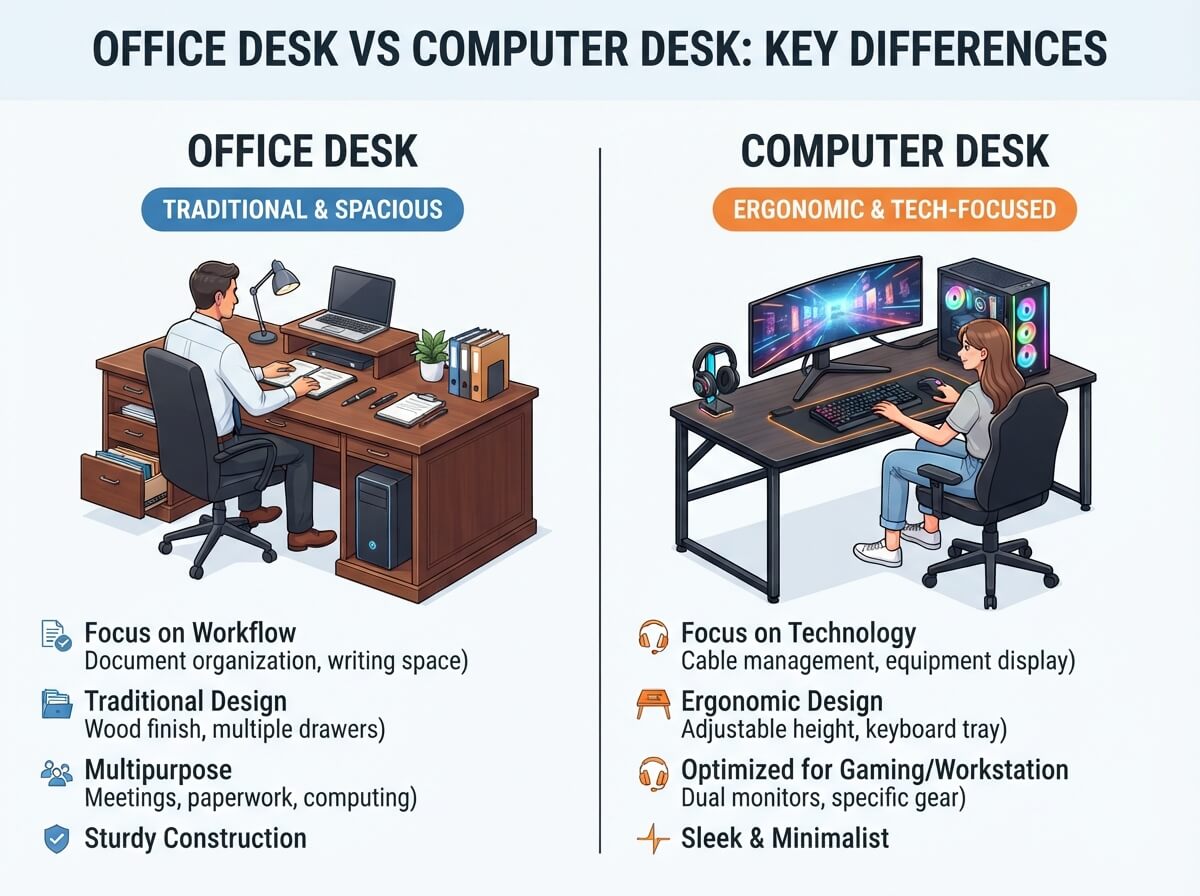
An office desk is the traditional workhorse of professional environments. This is the furniture you find in corporate offices, law firms, and business headquarters. Companies invest in these desks because they need to handle a lot of different tasks throughout the day.
Office desks come in all shapes and sizes. Some are massive executive styles with tons of surface space. Others are sleek, minimalist designs that fit into modern office spaces. The key thing about office desks is that they’re built to handle anything you throw at them—paperwork, documents, multiple monitors, phones, desk lamps, and pens.
These desks typically have a large work surface. You get plenty of room to spread out your materials. They often feature built-in filing cabinets, drawers, and shelving units. Some have return sections that create an L-shape or U-shape workspace. This design lets workers keep everything they need within arm’s reach.
The construction of office desks is usually robust. Manufacturers use solid materials like wood, steel, or high-quality composite materials. They build them to last for years of heavy daily use. The typical office desk worker might use the same furniture for five, ten, or even fifteen years.
What Exactly is a Computer Desk?
A computer desk is specifically designed for people who spend most of their time working with a computer. These desks focus on accommodating your monitor, keyboard, mouse, and other tech equipment. They’re smaller and more compact than traditional office desks.
Computer desks come in many styles too. You’ll find gaming desks, standing desks, corner desks, and minimal designs. But they all share one thing in common—they prioritize computer work above everything else.
The surface area on a computer desk tends to be smaller, but it’s organized specifically for digital work. Many computer desks have a dedicated spot for your monitor, with enough depth so your screen sits at the right distance from your eyes. They often include keyboard trays, cable management systems, and monitor stands.
Computer desks are popular for work-from-home setups, students, gamers, and anyone whose job revolves around screen time. They take up less floor space, which makes them perfect for apartments, dorm rooms, and smaller home office areas. The price tag is usually lower than a full office desk too.
Key Differences Between These Two Workspace Solutions
Now let’s get into the real differences. Understanding these distinctions helps you make the right choice for your situation.
Size and Footprint
Office desks are big. Really big. A standard office desk might be five feet wide, two and a half feet deep, and about thirty inches tall. When you add a return section or additional storage, the footprint grows significantly.
Computer desks are compact. A typical computer desk measures around forty-eight inches wide and twenty inches deep. Some are even smaller. This makes computer desks ideal if you have limited floor space. Your bedroom, small apartment, or cozy home office won’t feel cramped with a computer desk.
The size difference matters. If you live in a tight space, an office desk might feel like furniture overkill. On the flip side, if you have a large room and need room to spread out, a computer desk might feel too small.
Surface Space for Work
An office desk gives you tons of surface space. You can lay out documents, notebooks, multiple projects, a phone, a lamp, and decorative items all at the same time. Professionals appreciate this because they often juggle multiple tasks. You might review paperwork while listening to a call and having reference materials visible.
A computer desk gives you focused surface space. There’s room for your keyboard, mouse, and monitor. Some have a little extra for a notebook or phone. But you won’t fit much beyond that. The desk surface stays relatively clear, which some people love because it keeps them focused and eliminates distractions.
Think about how you work. Do you need to spread out lots of materials? You want an office desk. Do you work primarily on your computer with minimal physical materials? A computer desk works perfectly.
Ergonomics and Comfort
Here’s where things get interesting. Office desks prioritize general work comfort. They have a standard height of about thirty inches, which works for most people sitting in typical office chairs. The desk is sturdy so it won’t wobble when you lean on it.
Computer desks take ergonomic considerations seriously because people spend hours staring at screens. Many computer desks include adjustable features. You’ll find keyboard trays that pull out, allowing you to type at the perfect angle. Monitor stands help position your screen at eye level, reducing neck strain. Some computer desks have adjustable height settings so you can switch between sitting and standing throughout the day.
Quality computer desks also focus on reducing glare on your screen and providing good cable management to prevent tangled messes. These features all support long hours of computer work without causing pain or fatigue.
If you have back pain, neck problems, or spend eight-plus hours daily at your workspace, a computer desk built with ergonomic features might be worth the investment.
Storage and Organization
Office desks typically include built-in storage. You get drawers for pens, documents, and supplies. Many have filing cabinets underneath or attached to the side. Some include shelving units on top. All this storage keeps your workspace organized and your materials accessible.
Computer desks usually have minimal built-in storage. You might get one or two small drawers for keyboard and mouse cables or writing supplies. The focus is on keeping the desk surface clear for optimal computer work. If you need storage, you add a separate filing cabinet or shelving unit to your workspace.
This difference matters if you work with physical documents regularly. Lawyers, architects, designers, and accountants need robust storage. They should lean toward an office desk. If you work entirely digitally and don’t need to keep physical files nearby, minimal storage isn’t a problem.
Cable Management
Computer desks are designed with cable management in mind. You’ll find built-in cable channels, grommets, and management boxes. These features let you run power cables, internet cables, and USB cables cleanly behind or underneath your desk. Your workspace looks organized and professional.
Office desks don’t typically include cable management features. Sure, you can run cables behind them, but there’s no built-in system to organize them. This works fine if you have minimal cables, but if you have multiple monitors, printers, and equipment, cables can become a messy problem.
Height Adjustability
Many modern computer desks offer height adjustment. Some have electric motors with buttons you press to move the desk surface up and down. Others use manual crank systems. This feature lets you switch between sitting and standing throughout your workday, which health experts say is good for your body.
Most office desks have fixed heights. They sit at the standard thirty-inch level and don’t adjust. If you want a sitting-standing setup with an office desk, you need to buy one specifically designed for that purpose, which costs significantly more.
Aesthetic Design
Office desks come in classic, professional styles. You’ll find executive desks with dark wood and metal accents, modern minimalist designs with clean lines, and everything in between. They’re built to look professional in a workplace setting.
Computer desks offer more variety. Gaming desks come in aggressive styles with RGB lighting. Standing desks look sleek and modern. Compact computer desks fit any home decor style. You have more options to match your personal taste and your room’s decoration.
Price Comparison
Computer desks are generally cheaper. You can find solid computer desks starting around one hundred to three hundred dollars. Even high-end gaming desks and quality standing desks rarely exceed one thousand dollars.
Office desks cost more because of their size and construction. A basic office desk starts around two to three hundred dollars, but quality executive desks can easily cost one thousand to three thousand dollars or more. If you add a return section and filing cabinets, prices climb higher.
Budget matters. If you need to keep costs low, a computer desk makes sense. If you can invest more and want a large, robust workspace that lasts forever, an office desk is a better long-term choice.
Built-In Features That Matter
Both desk types can include special features that make them more useful.
Computer desks might have monitor arms that clamp to the desk surface, USB charging ports built into the surface or legs, headphone holders, cup holders, and pull-out keyboard trays. Some gaming desks include cable management boxes and mouse pad surfaces.
Office desks might have built-in power strips, charging stations, task lighting, desktop organizers, and monitor arms. Some executive desks include phone holders and document holders. Shared office desks often have privacy screens or dividers.
Think about what features actually improve your daily work. Don’t pay for features you won’t use, but do invest in ones that make your job easier.
Which Desk Type Fits Your Life?
Let’s talk about who should buy what.
You should choose a computer desk if you work primarily on a computer, have limited space, work from home, need something budget-friendly, spend long hours at your desk and want ergonomic features, or frequently change your workspace setup.
You should choose an office desk if you work with lots of physical documents, have a large room with plenty of space, want robust built-in storage, appreciate professional aesthetics, need a workspace that handles multiple tasks, or plan to keep the same desk for many years.
Think about your actual work habits. Are you typing most of the time? Computer desk. Are you switching between documents, calls, and paperwork? Office desk. Are you somewhere in between? You might do fine with either one, and your space and budget become the deciding factors.
Creating Your Perfect Workspace
Remember that a desk is just one piece of your workspace. The chair matters just as much. Your lighting setup affects how you feel after eight hours of work. The temperature and noise level of your space matter too.
You can buy the perfect desk and still feel uncomfortable if your chair gives you back pain or your lighting causes eye strain. Budget for multiple components when you’re setting up a productive workspace. A less expensive desk paired with a high-quality ergonomic chair might serve you better than an expensive desk with a cheap chair.
Also think about future changes. If you expect to work from home more, invest in a better workspace now. If you might switch jobs or move soon, a flexible computer desk might beat a heavy office desk that’s hard to transport.
Final Thoughts on Making Your Decision
The difference between an office desk and a computer desk comes down to purpose, space, and budget. Neither is inherently better or worse. They’re designed for different working styles.
Office desks are the traditional choice for people who need large, organized workspaces with robust storage. Computer desks are the modern choice for people who work digitally and value space-saving design and ergonomic features.
Take time to evaluate your actual needs. Walk through an office supply store or browse online options. Sit at desks if you can. Think about how you spend your time. Then make your choice based on what truly serves your work style.
The right desk is the one that makes you comfortable, organized, and productive. When you find it, you’ll know. Happy desk hunting.