Cordless vs Corded Vacuum Cleaner?
When you stand in the vacuum aisle at your local store, you face a tough decision. Should you grab that sleek wireless vacuum or stick with the reliable plug-in model? Both have fans, and both get dirt off your floors. But they work in totally different ways, and picking the wrong one can leave you frustrated with your purchase.
Let me break down everything you need to know about both vacuum types so you can make the best choice for your home and lifestyle.
What’s The Real Difference Between These Two?
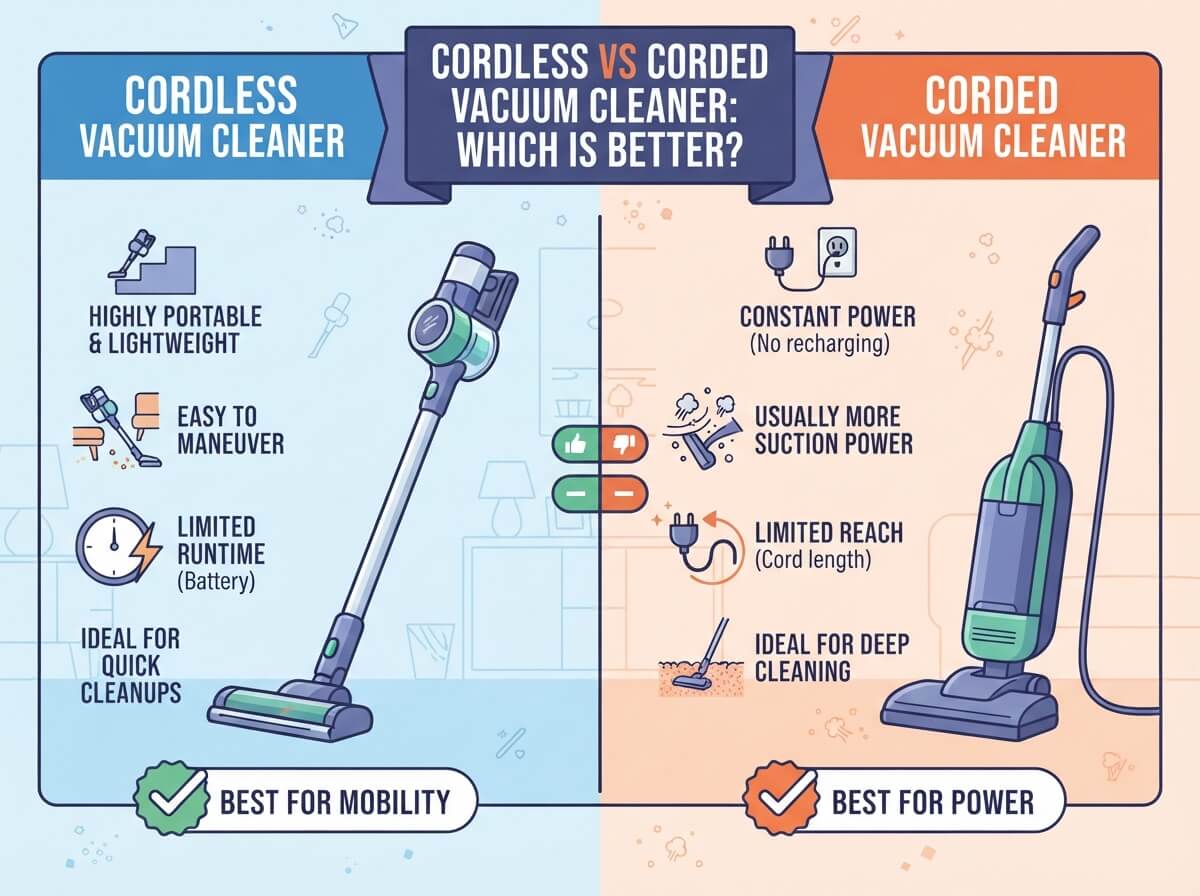
The main difference is simple: one needs electricity from a wall outlet, and the other runs on a rechargeable battery. That single difference changes everything about how you clean.
A corded vacuum gets constant power from your wall socket. You plug it in, and it keeps running as long as the cord reaches and you stay connected. A cordless vacuum or wireless vacuum charges up beforehand, then runs on battery power. Once the battery dies, you have to wait for it to recharge before using it again.
But this basic difference creates a ripple effect across price, performance, convenience, and how long the vacuum actually lasts.
The Power Story: Raw Cleaning Force
Let’s talk about suction power first, because this matters for cleaning performance.
Corded vacuums deliver consistent, powerful suction from the second you turn them on. Since they pull electricity directly from your wall, they never run out of juice. You can vacuum your entire house without losing strength. This is huge if you have thick carpets or heavy-duty cleaning jobs.
Most corded models offer deeper suction and better carpet cleaning because they maintain full power the entire time. If you spill something and need to clean right away, the corded vacuum springs to life at full strength immediately.
Cordless vacuums have come a long way, though. Modern battery-powered vacuum models pack way more power than they used to. But here’s the catch: as the battery drains, so does your suction power. By the time you’re down to 20% battery, you might feel a noticeable drop in cleaning ability.
This means cordless vacuums work best for quick clean-ups and routine maintenance. For deep, aggressive carpet cleaning or heavy-duty debris, a corded vacuum often wins out.
Runtime: How Long Can You Actually Clean?
This is where cordless struggles the most.
Most wireless vacuum models give you between 20 to 60 minutes of runtime, depending on the brand and model you pick. Fancy brands might promise more, but the actual time varies based on the floor type and suction setting you use.
Want to know what that means in real life? If you have a three-bedroom house with hallways, you might burn through most of your battery before finishing the whole space. Many people end up charging their cordless vacuum between rooms or clearing multiple areas in stages.
Corded vacuums have zero runtime limits. Plug in, clean for as long as you want, and unplug when done. If you have a large house or like to do deep cleaning sessions, this endless power is a massive advantage.
That said, cordless technology keeps improving. Newer models offer better batteries that last longer. Just know that when you buy cordless, you’re getting a set time limit on each cleaning session.
Convenience and Portability Matter
Here’s where cordless vacuums shine.
A wireless, battery-powered vacuum is light and easy to move around. No cord to drag behind you or untangle from furniture. You can grab it quickly for a fast cleanup without fussing with cords. Want to clean your car interior? Take it with you. Need to vacuum the stairs? Just pick it up and go.
Cordless vacuums are also great for quick jobs. Your kid spilled crackers? Grab the lightweight vacuum and handle it in two minutes. This convenience factor makes people love cordless models, especially busy families who do many small cleaning jobs throughout the day.
Corded vacuums are heavier and bulkier to move. That thick cord can get in your way, tangle around chair legs, or wrap around doorframes. If you need to clean multiple rooms, you’ll be unplugging and replugging constantly. This is annoying.
But here’s the flip side: because corded vacuums are heavier, they often stay put better while you clean. That weight also usually means more powerful motors and better build quality.
Maintenance and Care
Cordless vacuums need battery maintenance. Over time, batteries lose their ability to hold a charge. Most lithium-ion batteries (the type cordless vacuums use) degrade after 300 to 500 charge cycles. That might sound like a lot, but if you charge your vacuum twice a week, you’re looking at just a few years before battery performance drops noticeably.
When the battery dies, replacing it can cost $100 to $300 or more, depending on the brand. Some vacuums let you swap out the battery yourself, which is convenient. Others require professional replacement, which costs time and money.
Corded vacuums have no batteries to worry about. Just plug it in and use it. The only maintenance you need is typical stuff: emptying the dirt container, cleaning filters, and checking the brush roll. Most corded models last 5 to 10 years with basic care, and they maintain their power output the entire time.
If you want a vacuum that requires minimal fussing and keeps working strong for many years, corded is the simpler choice.
Price: What Will This Cost You?
Budget-friendly cordless vacuums start around $150 to $300. But quality wireless vacuum models that offer better performance run $400 to $700 or more. Premium cordless vacuums can cost over $1,000.
Corded vacuums are generally cheaper upfront. You can find solid plug-in models for $100 to $300. Even quality corded vacuums rarely exceed $500.
But factor in long-term costs. If your cordless battery dies in three years and costs $200 to replace, your “affordable” $300 vacuum ends up costing $500. A $200 corded vacuum that lasts 7 years is actually cheaper over time.
On a pure value basis, corded vacuums win for budget-conscious shoppers. But if your cordless vacuum’s battery lasts a long time and the brand offers cheap replacements, the math works differently.
Noise Level: How Loud Do They Get?
Both types make noise, but cordless vacuums tend to be quieter. Because they use smaller motors and run on batteries, they typically produce less sound. This matters if you have sleeping kids or live in an apartment.
Corded vacuums usually run louder because they pack more powerful motors. If noise bothers you, a cordless vacuum might be the better fit.
Storage and Space
Cordless vacuums are compact and easy to store. You can tuck them in a closet, hang them on a wall mount, or slide them into a corner without taking up much room. Many people love this about wireless models.
Corded vacuums take up more space. That power cable needs room too, and many corded models are bulkier. If you have a small apartment or limited storage, this can be frustrating.
Cleaning Stairs and Tight Spaces
Stairs and tight corners are where cordless vacuums dominate.
No cord means you can move freely and pivot without getting tangled. You can hold the vacuum easily while going up and down stairs. Furniture undersides and hard-to-reach areas become much easier to clean.
Corded vacuums struggle with stairs. That cord is always in the way, and you’re constantly unplugging and moving to a new outlet to reach different stair sections. If stairs are a big part of your cleaning routine, cordless is the smart pick.
Pet Hair and Debris Handling
Both types can handle pet hair, but they excel in different situations.
Corded vacuums with strong suction pull pet hair from deep in carpet fibers. If you have large dogs or multiple pets, the extra power helps. You can also clean for as long as needed without worrying about battery life.
Cordless vacuums work well for regular pet maintenance and picking up surface hair. But for heavy pet shedding, you might run out of battery before finishing.
Hard Floors vs. Carpets
Some cordless vacuums work on hard floors and carpets, but they don’t always excel at both. You might need to buy attachments or make adjustments.
Corded vacuums handle both floor types well. Many models let you adjust brush roll settings for different surfaces, and their consistent power works equally well on hardwood and tile.
If your home is all hard floors, cordless is fine. Mixed flooring types? Corded gives you more reliable performance.
The Backup Vacuum Problem
Here’s something nobody talks about: what happens when your main vacuum is charging?
With cordless models, while the battery charges, you can’t vacuum. If you have guests coming or a big mess appears, you’re stuck waiting. Many cordless vacuum owners buy a second smaller cordless unit or keep an old corded vacuum as backup.
With corded vacuums, you just unplug from one outlet and plug into another. If something breaks, the fix is usually simple and cheap.
Real-Life Scenarios: Which Should You Pick?
You should get a cordless vacuum if:
- You live in a small apartment or house
- You do quick, frequent cleaning jobs
- You have mostly stairs or tight spaces to clean
- You want easy portability and convenience
- Noise bothers you or your family
- You prefer lightweight, easy-to-handle equipment
- Your home has mainly hard floors
You should get a corded vacuum if:
- You have a large house with lots of square footage
- You do deep cleaning sessions regularly
- You have thick carpets throughout
- Budget is your main concern
- You want long-lasting equipment that maintains power
- Your home stays clean between uses
- You want zero runtime limitations
- You don’t mind dealing with cords
You might want both if:
- You have multiple floor types
- You want cordless convenience plus corded power
- You have the budget and storage space
- You live with family members who disagree on cleaning
The Hybrid Approach
Some smart people buy one cordless vacuum for quick daily cleanups and keep a corded model for deep cleaning weekly. Cordless handles the small stuff, and corded tackles the big jobs. This combo gives you convenience plus power, though it costs more upfront.
Battery Technology Is Evolving
Battery technology improves every year. New cordless vacuums offer longer runtimes and faster charging than older models. If you’re shopping, look for lithium-ion batteries (the standard now) and real runtime specs from user reviews, not just manufacturer claims.
Some brands now offer hot-swappable batteries, meaning you can instantly switch to a charged battery and keep cleaning. This solves the runtime problem for some people.
Dirt Container Size Matters
Cordless vacuums often have smaller dirt containers because weight is an issue. You might empty it more frequently during cleaning sessions.
Corded vacuums usually have larger containers, so you clean fewer stops to dump dirt. This matters if you have a lot of debris or pets.
Cord Length Considerations
If you go corded, check the cord length. A 25-foot cord reaches most rooms without constant unplugging. Some models have 30 or 35-foot cords, which gives you more freedom to move around your space.
Making Your Final Decision
The better vacuum isn’t about which type wins overall. It’s about which type fits your specific life.
Think about your home size, how often you clean, what floors you have, and how much you’re willing to spend. Consider whether portability matters more than power for your situation.
Test different models if you can. Sit in the product weight in your hands. Check how the cord manages (if corded). See how easy it is to switch attachments.
Also read real customer reviews from people with lifestyles similar to yours. Someone vacuuming a small apartment has different needs than someone managing a large house full of pets.
The Bottom Line
Cordless vacuums offer convenience, portability, and quiet operation. They’re perfect for smaller spaces and quick cleanups. But they cost more, offer limited runtime, and lose power as batteries drain.
Corded vacuums deliver consistent power, work longer without limits, and cost less upfront. They’re ideal for large homes, deep cleaning, and long-term value. But they’re heavier and less convenient to maneuver.
Neither is objectively “better.” The best vacuum for you is the one that matches how you actually clean your home. Pick the type that eliminates your biggest cleaning frustrations, fits your space, and works within your budget.
Your home will stay cleaner, and you’ll actually enjoy using your vacuum when it’s the right choice for your situation.