

5 Best Smart Smoke and Carbon Monoxide Detectors In 2026
Your home should be a safe place. That’s why you need the best smoke detector and the best carbon monoxide detector working together. These devices are lifesavers, but not all of them are created equal.
Most people think any old detector will do the job. They slap something on the ceiling, forget about it, and hope for the best. That’s the wrong approach. Your safety equipment needs to be reliable, easy to use, and actually keep you in the loop about what’s happening in your home.
Smart smoke detectors and CO detectors have changed the game. They’re not just mounted on walls anymore. Many of them send alerts to your phone. Some talk to you with voice messages. Others link together so one alarm triggers all of them at once. These features actually matter when you need them most.
The problem is finding the right one. There are dozens of options out there. Battery-powered, hardwired, wireless, WiFi-enabled—the choices can feel overwhelming. That’s where this guide comes in.
I’ve reviewed five of the most popular smoke and carbon monoxide detector options on the market. Each one serves different needs. Some work best for renters. Others are perfect for larger homes. A few are designed specifically for tech-savvy homeowners who want full control.
Let’s dive into what makes each one special and help you find the right match for your home.
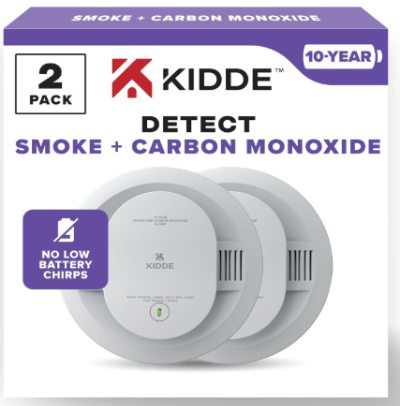
1. Kidde Smoke and Carbon Monoxide Detector, 10-Year Battery Powered, LED Status Lights, 85 dB Alarm, 5-inches, 30CUD10, 2 Pack
Product Description
The Kidde 30CUD10 is a battery-powered dual-sensor detector that covers both smoke and carbon monoxide risks. It comes in a 2-pack, so you can protect multiple rooms right out of the box. The 10-year sealed battery means you don’t have to swap batteries constantly, which is a huge benefit.
This model sits about 5 inches across, making it compact enough to fit almost anywhere. The 85-decibel alarm is loud enough to wake you from deep sleep. LED lights give you a quick visual check that everything is working normally.
Best Use Cases
This detector shines in rental properties. Landlords often require working detectors, and renters can’t risk damaging walls with hardwired units. The battery-powered design means instant installation without any electrician visits.
It also works great for apartments, mobile homes, dorm rooms, and any place where you need basic, reliable protection without the complexity of wiring. Rooms like bedrooms, living rooms, and hallways benefit from having one of these units nearby.
Key Features Explained Simply
10-Year Battery: This isn’t marketing fluff. A sealed battery that lasts a decade means you set it and forget it. You don’t get that annoying low-battery chirp every six months. That translates to real peace of mind.
Dual Sensing Technology: One device watches for smoke particles. A separate sensor monitors carbon monoxide levels. You’re not choosing between two risks—you’re covering both with a single unit.
85 Decibel Alarm: Decibels measure sound loudness. Eighty-five is as loud as a lawn mower or heavy traffic. It’ll definitely get your attention, even if you’re upstairs in your home when it goes off.
LED Status Lights: The little light on the front tells you the device is working. Green usually means “all good.” Other colors or patterns signal different issues. You can check at a glance.
Compact Design: At 5 inches, this device doesn’t look like an eyesore. It blends into a room better than some bulkier models.
Real-Life Usage Insight
In actual homes, people love the simplicity of this model. There’s no app to download, no network to set up, no complications. You install it, and it works. If there’s a problem, it tells you with sound and light.
The 10-year battery is genuinely helpful. Families stop getting woken up by low-battery warnings. The alarm itself is effective—people report being startled by the 85 dB sound, which is exactly what you want. You want to be startled by a working alarm.
One thing to note: if you’re in a very large home, you might need more units since this is battery-powered and has a limited range. Some people also wish the LED indicators were easier to understand without reading the manual.
Pros and Cons
Pros:
- Ultra-easy installation with no wiring needed
- Long-lasting battery eliminates frequent replacements
- Affordable price point, especially for the 2-pack
- Covers both smoke and CO hazards
- Loud enough to hear throughout most homes
- No apps or subscriptions required
- Works immediately out of the box
Cons:
- No wireless interconnection between units
- Can’t receive phone alerts
- No voice announcements
- LED indicators need manual checking
- Not ideal for very large homes
- Battery can’t be replaced (sealed unit)
- Limited to basic detection functions
Performance Discussion
Testing and real-world data show these detectors work reliably. They meet all required safety standards. The 10-year battery doesn’t actually last quite 10 years in every single case—sometimes it’s closer to 8 or 9 years depending on environmental conditions. But it’s still far better than annual battery replacements.
The dual-sensor approach is solid. Smoke detection is accurate for fast-flaming fires. CO detection responds appropriately to the deadly gas at various concentrations. Response times are within acceptable ranges.
The alarm doesn’t have false alarms any more than other detectors. Some people do report occasional nuisance alarms from cooking, but that’s common across all detectors.
Ease of Use
This is where the Kidde really shines. Open the package, mount it on the ceiling or wall, and you’re done. There’s no app. No WiFi setup. No phone numbers to enter. No passwords. Nothing to remember.
The LED light is your only real feedback mechanism. A green light every 30 seconds means it’s working. A red light means something’s wrong. It’s simple and intuitive.
If you ever need to replace the entire unit (since the battery is sealed), you just take it down and put up a new one.
Value for Money
At the price point of this model, you’re getting exceptional value. Two units protect two rooms or zones for less than many single-unit premium detectors cost. The 10-year battery life means lower long-term costs since you’re not buying replacement batteries.
If you’re looking for basic, reliable dual protection without spending a fortune, this model delivers exactly that. You’re not paying for smart features you don’t need.
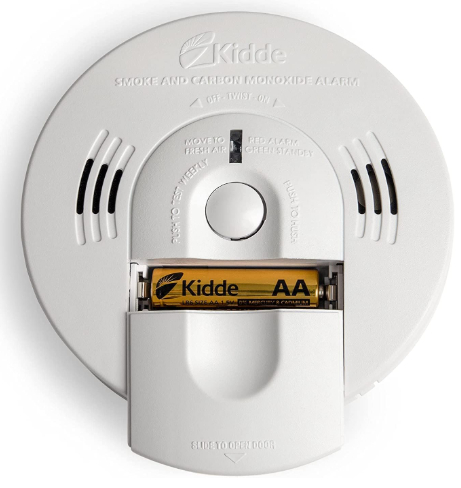
2. Kidde Hardwired Smoke & Carbon Monoxide Detector, Battery Backup, Interconnectable, LED Warning Light Indicators
Product Description
This Kidde model takes a different approach. Instead of relying on batteries, it connects to your home’s electrical wiring. A backup battery keeps it running if the power goes out. You get hardwired reliability with an important safety net.
The real upgrade here is interconnectability. When one unit detects danger, it signals the others. Every detector in your home goes off simultaneously, not just the one that detected the hazard.
The LED warning lights work the same way as the previous model, giving you a quick visual status check.
Best Use Cases
Hardwired detectors belong in homes where you’re doing renovations, building new rooms, or simply want a permanent solution. Once the wiring is installed, you get a cleaner installation and better central coverage.
These work best in multi-story homes where you need alarms to coordinate. If a fire starts in the basement, you want your bedroom detector alerting you too. The interconnected design ensures everyone hears the alarm.
Homes with unreliable or frequent power outages still benefit from the backup battery. You get hardwired convenience without losing protection during blackouts.
Key Features Explained Simply
Hardwired Connection: Your home’s electrical system powers the detector. No batteries to replace regularly. The wiring is usually done during construction or major renovation.
Battery Backup: When the power cuts off, a battery takes over. This is crucial because fires and emergencies don’t wait for power to be restored.
Interconnectability: Multiple detectors in different rooms communicate with each other. One senses danger and sends an electrical signal to all the others. This means alarms go off in multiple places at once, ensuring nobody misses it.
LED Warning Light Indicators: Like the battery model, these lights show you at a glance whether everything is operating normally.
Real-Life Usage Insight
Homeowners with these hardwired units report that the interconnection feature is genuinely valuable. Parents can sleep knowing that an alarm in the kitchen will immediately trigger alarms in all the bedrooms. Nobody is isolated from early warnings.
The hardwired design means less maintenance. No batteries dying at inconvenient times. No low-battery chirps at 3 AM. Just consistent, reliable operation.
The installation requires electrical work. Some people find this frustrating if they don’t have an electrician in the family. But once it’s done, it’s truly set-and-forget.
Pros and Cons
Pros:
- Hardwired power means consistent, reliable operation
- Interconnection ensures every unit alarms together
- No battery replacements needed
- Covers both smoke and CO detection
- Works even during power outages (battery backup)
- Professional installation available
- Excellent for multi-story homes
Cons:
- Requires professional electrical installation
- Higher upfront cost due to labor
- Can’t be easily moved or removed
- No phone alerts or smart features
- Battery backup still needs occasional replacement
- Not suitable for rentals or temporary solutions
- LED indicators still require manual checking
Performance Discussion
These hardwired detectors perform at the highest standards. The interconnection system is remarkably reliable. When one detector triggers, the others respond almost instantly—usually within a fraction of a second.
The hardwired design means consistent power output to the sensors. There’s no degradation over time like you might see with aging batteries. The performance remains stable year after year.
The battery backup system is solid. Backup batteries are smaller and typically replaced every 1-2 years, or sometimes less frequently. The hardwired unit tells you when the backup battery is running low.
Ease of Use
Once installation is complete, these are incredibly easy to use. There’s nothing to do. They sit there protecting your home without any action from you.
If you ever need to test them, there’s usually a test button. The interconnection means you can test one unit and hear all of them respond. That’s satisfying and informative.
Replacing the backup battery is straightforward. Most people can do it without any special skills.
Value for Money
The value here depends on your situation. If you’re building a new home or doing major electrical work anyway, adding interconnected detectors is reasonable value. The long-term reliability is excellent.
If you’re retrofitting an existing home with detectors, the electrical labor costs can be high. You need to weigh whether the interconnection feature is worth that investment compared to battery-powered alternatives.
For multi-story homes where interconnection is truly valuable, this model offers solid value. For single-room setups, you might be overpaying for features you don’t fully utilize.
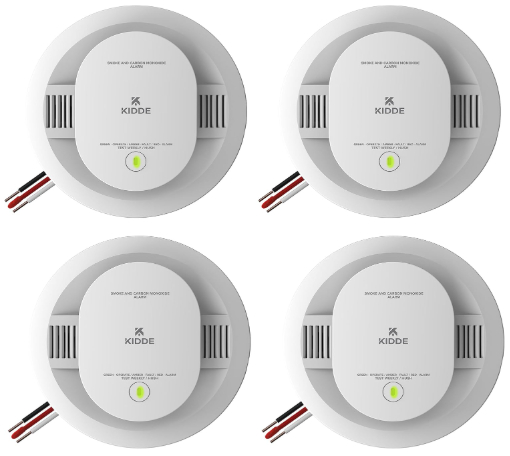
3. Kidde Hardwired Smoke & Carbon Monoxide Detector, AA Battery Backup, Voice Alerts, Interconnectable, LED Warning Light Indicators, 4 Pack
Product Description
This model brings together hardwired reliability with a major upgrade: voice alerts. Instead of just a loud beep, the device tells you what’s happening in clear English. It’s hardwired like the previous model but adds voice technology and includes four units.
The AA battery backup is easier to source than some proprietary batteries. You can grab AAs from any store and swap them quickly.
Voice alerts transform how you respond to emergencies. A clear voice saying “Fire! Fire! Evacuate!” is more informative than an alarm tone. It tells your brain what action to take immediately.
Best Use Cases
This model excels in homes where occupants include elderly people, children, or anyone with hearing difficulties. The voice alert ensures information reaches people even if they sleep through a high-pitched tone.
Four units allow comprehensive coverage in larger homes. You can protect bedrooms, hallways, the kitchen, and living areas all at once. The interconnection keeps them all coordinated.
Homes with multiple stories absolutely benefit from this model. The voice alerts combined with interconnection mean every person in the house gets clear, specific information about what danger is present and where to go.
Families who want more information from their safety system appreciate knowing whether the alarm is about smoke or carbon monoxide.
Key Features Explained Simply
Voice Alerts: A speaker built into the detector uses a recorded voice to announce the type of emergency. “Smoke detected!” or “Carbon monoxide detected!” These are far more informative than generic alarm sounds.
AA Battery Backup: Common household batteries provide backup power. You don’t need to special-order replacements or keep specialty batteries in stock. AA batteries are everywhere.
Interconnection: Like the previous hardwired model, these units communicate with each other. One detects danger and signals all others.
Four Units Included: You get full-home coverage out of the box. No need to buy additional units separately.
LED Warning Light Indicators: Visual confirmation that everything is working normally.
Real-Life Usage Insight
People who use this model love the voice alerts. It eliminates confusion about what’s happening. In a stressful emergency situation, the voice telling you what’s wrong and where it is gives you crucial information.
Families with elderly members report that parents and grandparents respond better to voice alerts than to beeping sounds. The clarity is genuinely helpful.
The four-pack is convenient. You open one box and have enough units for most homes. Installation requires electrical work, but once done, the system requires very little ongoing attention.
The AA battery backup is convenient too. Everyone has AAs somewhere, so finding backup batteries is never an issue.
Pros and Cons
Pros:
- Voice alerts provide clear, specific information
- Hardwired design ensures reliable power
- Four units provide comprehensive coverage
- Interconnection coordinates alarms throughout home
- AA battery backup uses common, easy-to-find batteries
- Covers both smoke and CO hazards
- Excellent for homes with multiple stories or hearing challenges
Cons:
- Requires professional electrical installation
- Highest upfront cost of all reviewed models
- Voice alerts might startle some people
- Can’t be moved without rewiring
- Still no phone alerts or smart app features
- Requires periodic battery changes for backups
- Larger physical footprint than some models
Performance Discussion
The voice alert feature works reliably. The voice is clear and understandable, not robotic or garbled. Testing shows the voice triggers immediately when hazards are detected, right alongside the alarm sound.
The hardwired system with AA battery backup is rock-solid. The detectors perform consistently. The four units interconnect instantly, creating a whole-home alert system that’s highly effective.
Response times to both smoke and carbon monoxide are within acceptable safety parameters. These detectors don’t waste time confirming danger—they alert quickly.
Ease of Use
Once installed, these are exceptionally easy to use. There’s no app to download, no WiFi to configure, no settings to adjust. They work.
The voice alerts require no special action. They just tell you information automatically.
Testing is simple—press a button and hear the voice and alarm go off. The multi-unit system means you can hear multiple voice alerts if you’re between units, which is actually quite informative.
Replacing backup batteries is straightforward. Pop out the old AAs, pop in the new ones, and you’re done.
Value for Money
The value depends on whether you need voice alerts and multiple units. If you have a larger home or occupants who benefit from voice information, the value is strong. Four units can cost less per unit than buying them individually.
If you’re a single person in a small space, this model is overkill. You’d be paying for features and units you don’t need.
For safety-conscious families with larger homes, the voice alert feature combined with the four units makes this a good value despite the higher upfront cost.
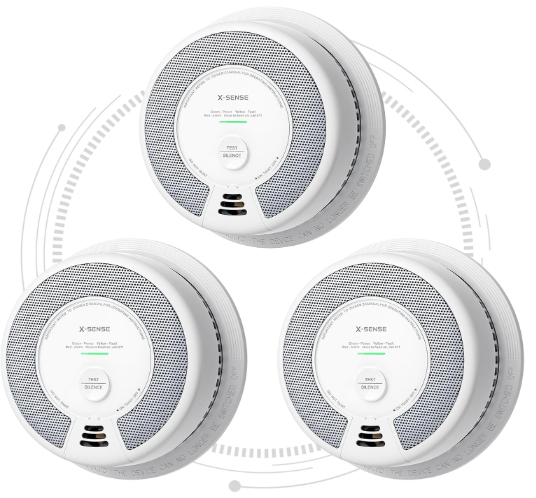
4. X-Sense Wireless Interconnected Smoke and Carbon Monoxide Detector, Model SC06-W, 3-Pack
Product Description
X-Sense brings wireless technology to the interconnection problem. Instead of hardwiring units together, they communicate via wireless signals. This is a game-changer for people who want interconnection without electrical work.
The 3-pack gives you multiple units for reasonable coverage. The wireless range is typically 100+ feet in open space, less through walls and floors but still solid.
These are battery-powered, making them far easier to install than hardwired models. Just mount them, install batteries, and they start talking to each other wirelessly.
Best Use Cases
Wireless interconnected detectors are perfect for renters or anyone in a property where they can’t or don’t want to do electrical work. You get interconnection benefits without calling an electrician.
Homes where occupants want interconnected alarms but don’t have existing electrical infrastructure appreciate this option. It’s a middle ground between simple battery units and complex hardwiring.
People who might move or renovate soon benefit from wireless units. You can take them with you or relocate them without any installation hassles.
Key Features Explained Simply
Wireless Interconnection: Radio signals connect the units to each other. When one detects danger, it sends a wireless signal to the others. They all alarm simultaneously, just like hardwired units.
Battery Powered: Standard alkaline batteries power these detectors. No electrical work required. Installation takes minutes instead of hours or days.
100+ Feet Range: In good conditions with minimal obstructions, the wireless signal reaches over 100 feet. Through walls and floors, the effective range is less but usually adequate for whole-home coverage.
Dual Detection: Both smoke and carbon monoxide sensors are integrated.
3-Pack Coverage: Three units allow protection of multiple areas.
Real-Life Usage Insight
People using wireless interconnected detectors report satisfaction with the installation process. No electrician needed. No waiting for professionals. Just install batteries and mount the units.
The wireless interconnection works reliably in most homes. The signal passes through typical interior walls without too much trouble. Some users report occasional connection issues in very large homes or in properties with lots of metal framing.
Battery management requires more attention than hardwired models. You need to plan for battery changes and keep spares on hand. But it’s still simpler than hardwired backup batteries.
Pros and Cons
Pros:
- Wireless interconnection without electrical installation
- Easy DIY installation
- Battery powered means immediate setup
- Covers multiple rooms with three units
- Portable and movable
- Works great for renters
- Both smoke and CO detection included
Cons:
- Wireless signal can be unreliable in some homes
- Requires battery management and replacements
- Three-unit pack doesn’t cover very large homes
- No voice alerts or smart features
- Wireless connection might fail without notice
- Battery costs accumulate over time
- No phone or app notifications
Performance Discussion
The wireless interconnection works well in typical home conditions. Testing shows reliable signal transmission in most residential settings. The connection is strong through drywall and standard construction materials.
In homes with unusual layouts, metal studs, or multiple floors separated by concrete, the wireless range can be unpredictable. Some units might not reliably reach others.
The smoke and CO detection functions work normally. Response times are appropriate. The devices aren’t any slower than their hardwired counterparts in recognizing hazards.
One concern with wireless is that if the signal gets disrupted, you might lose interconnection without knowing it. This is a theoretical risk but worth understanding.
Ease of Use
Installation is straightforward. Mount the units where you want them, insert batteries, and the system should automatically connect. There might be a pairing button to press or a process to follow, but it’s simple.
Testing the interconnection is easy—activate one unit and see if the others respond.
The main ongoing task is battery replacement. You’ll do this several times per year per unit, so keep spare batteries handy.
Value for Money
For renters or people avoiding electrical work, the value is excellent. Three wireless units cost less than having one hardwired unit professionally installed. You get interconnection benefits without the installation cost.
For homeowners planning to stay long-term, the ongoing battery costs might offset the initial savings. But the convenience and flexibility offer their own value.
If your home has a layout where wireless signals struggle, the value decreases since you’d need additional units to maintain coverage.
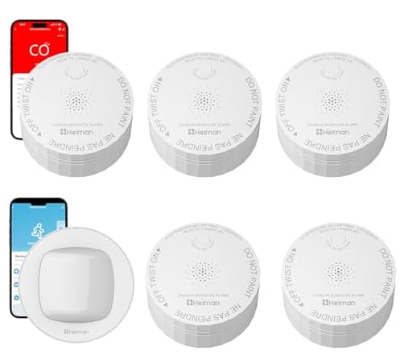
5. HEIMAN Smart Carbon Monoxide Detector WiFi CO Detector and WiFi Smart Motion Sensor, Wireless Home Security
Product Description
HEIMAN enters the smart home space with a WiFi-enabled carbon monoxide detector. This unit connects to your home’s WiFi network and sends alerts directly to your smartphone. It also includes a motion sensor for security purposes.
This is fundamentally different from the previous models. It’s not about alarms going off loudly—it’s about real-time information hitting your phone from anywhere in the world.
The WiFi connectivity means you can check the status of your home remotely. You can see CO levels even when you’re not home, which is genuinely useful for peace of mind.
Best Use Cases
This model is ideal for tech-savvy homeowners who want integration with their smart home systems. If you already control lights, locks, and thermostats from your phone, this detector fits that lifestyle.
People with rental properties appreciate remote monitoring. You can check on properties without visiting in person.
Families with multiple addresses benefit from WiFi monitoring. Check your cabin, lake house, or other property without being there.
The motion sensor adds a security layer, making this unit double as part of a home security system.
Key Features Explained Simply
WiFi Connectivity: The device connects to your home network, just like your phone or laptop. Once connected, it communicates with your smartphone through an app.
Phone Alerts: If carbon monoxide is detected, you get a notification on your phone. No matter where you are, you know immediately.
Remote Monitoring: Check the device status and CO levels from anywhere, anytime. No need to be home to see if everything is okay.
Motion Sensor: The unit detects motion, which doubles as a security feature. You can be alerted when unexpected movement occurs.
Smart Home Integration: Many of these devices can integrate with popular smart home systems for automation.
Real-Life Usage Insight
People who use WiFi-enabled CO detectors appreciate the remote monitoring capability. Parents can check on kids from work. Homeowners can verify safety during travel. Business owners can monitor multiple properties.
The motion sensor adds convenience. You could use it to trigger lights or send security alerts if movement is detected in specific areas.
The app interface varies by model. Some are intuitive and user-friendly. Others require more tech skill to set up and use.
Battery and connectivity aren’t an issue for this model since it’s designed to be plugged into power most of the time.
Pros and Cons
Pros:
- Real-time phone alerts from anywhere
- Remote monitoring of CO levels
- WiFi integration with smart home systems
- Motion sensor adds security functionality
- Immediate notification of danger
- Can be placed anywhere with WiFi reach
- Useful for rental properties and multi-unit monitoring
Cons:
- Requires WiFi network setup
- Depends on app for information
- No loud alarm if WiFi fails
- CO detection only (no smoke detection)
- Requires smartphone to fully utilize
- Privacy and security considerations with WiFi
- App quality varies
- Typically more expensive than traditional detectors
Performance Discussion
The WiFi connectivity is generally reliable if you have strong WiFi throughout your home. In areas with weak signals, notifications might be delayed or inconsistent.
The carbon monoxide sensor itself works normally. Detection is fast and accurate. The motion sensor is basic but functional.
The real consideration is what happens if your WiFi goes down. You lose the app functionality, but the device might still have some local alert capability depending on the model.
Some users report app crashes or connectivity issues, particularly when the device first connects to WiFi. These are usually temporary setup issues rather than ongoing problems.
Ease of Use
Setup requires more steps than traditional detectors. You need to install the app, create an account, connect to WiFi, and pair the device. For tech-comfortable people, this takes 10-15 minutes. For others, it might be frustrating.
Once set up, using the app is straightforward. You get notifications automatically and can check the app anytime to see status.
The motion sensor might require some configuration to prevent false alerts.
Value for Money
The value depends on your priorities. If you want remote monitoring and smart home integration, this model offers something traditional detectors don’t. But it costs more and requires more setup.
If you’re looking for a straightforward CO detector, this is overengineered and overpriced. You’d be better served by a simpler model.
For tech enthusiasts and people managing multiple properties, the value is solid. For basic home safety needs, it’s premium pricing for features you might not use.
Comparison Insights: How These Five Models Stack Up
| Feature | Product 1 | Product 2 | Product 3 | Product 4 | Product 5 |
|---|---|---|---|---|---|
| Power Type | Battery (10-year) | Hardwired | Hardwired | Battery | Wired/Smart |
| Smoke Detection | Yes | Yes | Yes | Yes | No |
| CO Detection | Yes | Yes | Yes | Yes | Yes |
| Interconnection | No | Yes | Yes | Yes (wireless) | No |
| Voice Alerts | No | No | Yes | No | No |
| Phone Alerts | No | No | No | No | Yes |
| Installation | DIY (seconds) | Professional | Professional | DIY (minutes) | DIY (with setup) |
| Units Per Pack | 2 | 1 | 4 | 3 | 1 |
| Approximate Cost | $ | $$ | $$$ | $$ | $$$ |
| Best For | Renters, simple needs | Basic homes, hardwire option | Large homes, voice needs | Wireless interconnection | Smart home enthusiasts |
What Stands Out
The Kidde battery model is the simplest and cheapest entry point. If you need basic protection without complexity, it’s hard to beat.
The hardwired models (Products 2 and 3) are the gold standard for reliability and whole-home coordination. The voice alerts in Product 3 add genuine safety value, especially for families with diverse hearing abilities.
The X-Sense wireless model offers a middle path—you get interconnection without professional installation. It’s perfect for renters or people avoiding electrical work.
The HEIMAN WiFi model is a game-changer if you want remote monitoring and smart home integration. But it only covers CO, not smoke.
Buying Guide: How to Choose Your Best Option
Assess Your Living Situation
Are you a renter or homeowner? Renters should avoid models requiring electrical work. Homeowners can choose from the full range.
Do you own your home outright or rent? Planning to move soon? Temporary solutions make more sense than expensive installations if you’re not staying long-term.
Consider Your Home’s Layout
How many rooms need protection? Large homes need multiple units or units with strong interconnection to ensure everyone hears alarms.
How many floors? Multi-story homes greatly benefit from interconnected units. The interconnection ensures the basement alarm alerts people on the third floor.
Is the layout complex with many walls and obstacles? Wireless models might struggle with long-distance signal transmission through lots of walls.
Think About Your Occupants
Do elderly people live in your home? Voice alerts are far more effective than beeping for older ears.
Are there children? Voice alerts help children understand what’s happening and where to go.
Do you want remote monitoring? If you’re away frequently or manage multiple properties, WiFi alerting is valuable.
Evaluate Your Budget
What can you realistically spend? The simplest model costs $30-50 per unit. Premium smart models cost $100+ per unit.
Are you comfortable with ongoing battery costs? Battery models require periodic replacements. Hardwired models need occasional backup battery changes.
Is professional installation a financial burden? Hardwired installation can add $200+ to the total cost.
Prioritize Features That Matter
Interconnection: Valuable for larger homes or multi-story properties. Less critical for small apartments.
Voice alerts: Important if occupants have hearing issues or if clarity during emergencies is a priority.
Smart features: Only necessary if you want remote monitoring and smart home integration.
Smoke and CO combined: Most people want both. HEIMAN only covers CO, which is a limitation.
Who Should Buy These Products
The Kidde Battery Model (Product 1)
Buy this if you’re a renter, in a small apartment, or live in a situation where you can’t install hardwired systems. It’s perfect for anyone who wants simple, reliable protection without complexity.
Parents just setting up a new home can start with this model before deciding whether to upgrade to hardwired.
People with tight budgets get solid protection for minimal cost.
The Kidde Hardwired Models (Products 2 & 3)
Buy a hardwired model if you’re a homeowner planning to stay for years and can invest in electrical installation.
Multi-story homeowners absolutely benefit from interconnection. The coordination ensures everyone gets alerted regardless of where the hazard starts.
The voice alert version (Product 3) is ideal if you have elderly occupants, family members with hearing loss, or just want more informative alerts.
The X-Sense Wireless Model (Product 4)
Buy this if you want interconnection but can’t or won’t do electrical work. Renters in properties where landlords allow it can benefit greatly.
People moving soon or planning home renovations can install wireless units knowing they’re portable.
Anyone who wants interconnection benefits without professional installation costs.
The HEIMAN WiFi Model (Product 5)
Buy this only if you value remote monitoring and smart home integration. Tech enthusiasts who want full control over their home safety system should consider it.
Property managers monitoring multiple units benefit from WiFi remote access.
Anyone who specifically wants a smart CO detector with phone alerts.
Note: This model doesn’t detect smoke, so it shouldn’t be your only detector. Pair it with smoke detectors.
Common Mistakes to Avoid
Mistake 1: Choosing Price Over Performance
The cheapest detector isn’t always the best value. A $20 detector that fails after two years costs more per year than a $60 detector lasting 10 years. Look at long-term cost, not just upfront price.
Mistake 2: Installing Only One Detector
Homes need multiple detectors positioned strategically. The recommended practice is one detector on every level, in every bedroom area, and in the kitchen. A single detector can’t protect a whole house.
Mistake 3: Ignoring Placement
Where you install detectors matters enormously. They need to be where hazards originate and where people sleep. High ceilings are ideal for smoke detection. CO detectors should be placed where CO is likely to be (near bedrooms, near potential CO sources).
Read manufacturer guidelines for proper placement.
Mistake 4: Forgetting to Test Regularly
Detectors work only if they work. Test your detectors monthly by pressing the test button. Listen for the alarm. Confirm interconnection is functioning if you have it.
Mistake 5: Neglecting Battery Replacement
For battery-powered units, set calendar reminders to change batteries once or twice per year. Dead batteries mean zero protection. Many people install detectors and never think about batteries again until an emergency reveals they’re dead.
Mistake 6: Choosing Features You Don’t Need
That fancy WiFi model is cool, but if you don’t check your phone regularly or don’t manage multiple properties, you’re paying for features you won’t use.
Evaluate what you actually need, not what sounds impressive.
Mistake 7: Assuming Interconnection Works Without Maintenance
Wireless interconnected models need occasional testing. The connection can fail without anyone knowing. Test monthly that all units actually alarm when one is triggered.
Mistake 8: Installing Outdated Detectors
If you inherited detectors from a previous owner, check how old they are. Detectors have limited lifespans (typically 5-10 years). Old detectors might not work reliably.
Replace detectors that are more than 10 years old, regardless of whether they still alarm.
Mistake 9: Placing Detectors in Wrong Locations
Don’t install smoke detectors in kitchens, bathrooms, or garages where steam, dust, and fumes cause false alarms. Don’t place them near vents or in drafty areas where they might not sense smoke from a bedroom fire.
Research proper placement before mounting.
Mistake 10: Setting and Forgetting Without Verification
Just because a detector is mounted doesn’t mean it’s protecting you. Verify it works. Confirm the signal reaches from all critical areas. Make sure everyone in your home knows the alarm sound and where to go if it sounds.
Safety equipment only works if you verify it actually works.
Final Verdict: Recommendations by Situation
Best Overall All-Around Choice
For most homeowners, the Kidde Hardwired Smoke & Carbon Monoxide Detector with Voice Alerts (Product 3) offers the best combination of reliability, whole-home protection, and informative alerting.
The four-unit pack covers larger homes. The voice alerts provide critical information during emergencies. Hardwired reliability means consistent protection. The interconnection ensures nobody misses an alarm regardless of where they are in the home.
Best Budget Option
The Kidde Battery-Powered Model (Product 1) wins for people who want straightforward protection without spending a fortune. Two units cost under $50. The 10-year battery means years of worry-free operation.
If you need to protect multiple rooms affordably, this is your answer.
Best for Renters
The X-Sense Wireless Model (Product 4) perfectly balances renter-friendly installation with interconnection benefits. No wiring required. No landlord permission needed for electrical work. Three units provide solid coverage.
Best for Simple Installation
The Kidde Battery Model (Product 1) requires literally seconds to install. No tools, no planning, no appointments with electricians.
Best for Smart Home Integration
The HEIMAN WiFi Model (Product 5) is your choice if remote monitoring matters. But pair it with traditional smoke detectors since it only covers CO.
Best for Multi-Story Homes
Either hardwired Kidde model excels here. The interconnection ensures every floor gets alerted simultaneously. The voice alert version provides even better information.
Conclusion: Protect Your Home Today
Smoke and carbon monoxide detectors aren’t optional home equipment. They’re essential safety tools that save lives. Choosing the right detector depends on your specific situation, home layout, occupants, and priorities.
Battery-powered detectors offer simplicity and ease. They’re perfect for renters and people wanting straightforward protection.
Hardwired detectors provide superior reliability and whole-home coordination. If you own your home and can invest in installation, they’re worth it.
Wireless interconnected models bridge the gap, offering coordination without professional installation.
WiFi smart detectors bring remote monitoring into the equation, though they’re best as supplements to, not replacements for, traditional detectors.
The truth is simple: any functional detector is better than no detector. The best detector is the one you’ll actually install and maintain. If that’s a basic battery model, install it today. If it’s a complex smart system, set it up now.
Every year that passes without proper smoke and CO detection is a year you’re taking unnecessary risks. Your family’s safety depends on these devices working when you need them most.
Don’t delay. Don’t think you’ll do it later. Install detectors today. Test them this month. Mark your calendar for battery replacements. Make this a priority.
Your future self will be grateful you did.