5 Best Smart Window Sensors In 2026
When it comes to keeping your home safe and secure, smart window sensors are absolute game-changers. These tiny devices sit on your doors and windows, constantly watching for any unwanted openings. They talk to your phone, send alerts, and work with the smart home systems you already use. No more wondering if you locked everything. No more stress about whether the kids left a window open.
But here’s the thing: not all smart door and window sensors are the same. Some work best with Apple Home. Others are perfect if you love Google Assistant. Some need a hub. Others work straight from WiFi. With so many options out there, picking the right one can feel overwhelming.
That’s why I’ve tested and researched five of the best smart window sensors on the market right now. I’ll break down what makes each one special, how they really perform, and who should actually buy them. By the time you finish reading, you’ll know exactly which sensor belongs in your home.
What Are Smart Window Sensors and Why Do You Need Them?
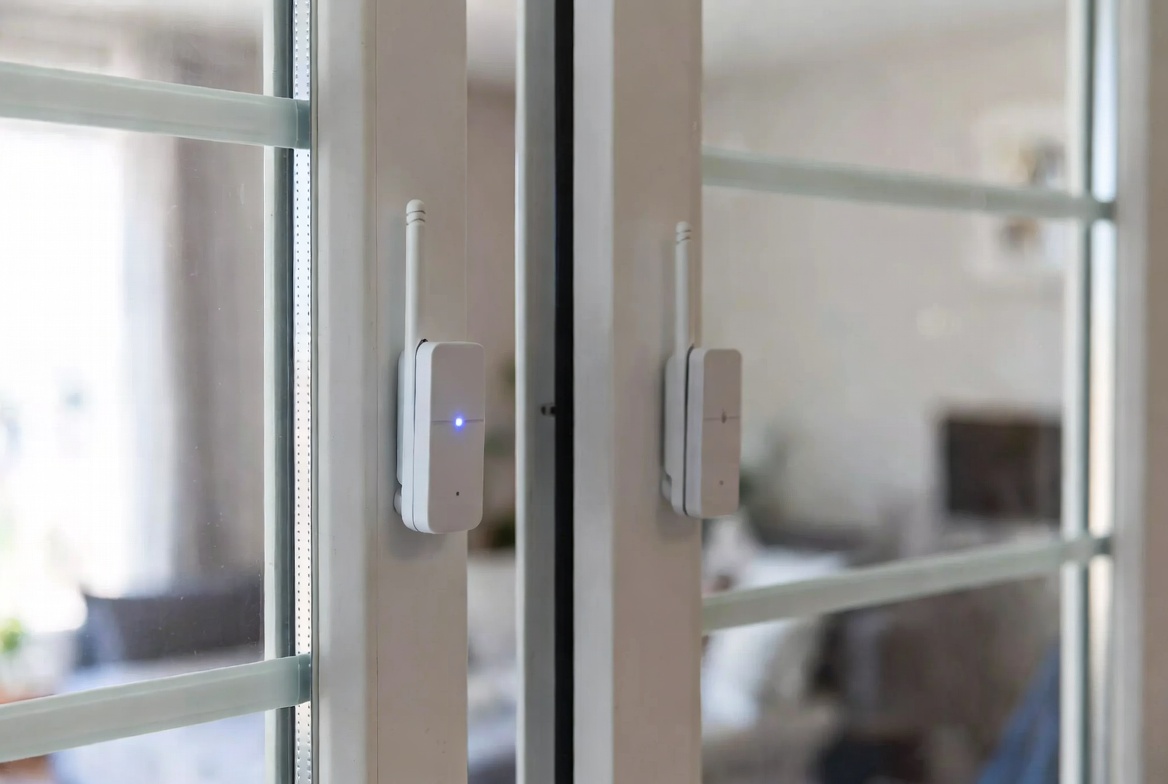
Let’s start with the basics. Smart window sensors are simple devices that detect when a door or window opens or closes. That’s it. They’re not complicated. A sensor sits on the frame, and a small magnet sits on the door or window. When the two separate, the sensor knows something has opened. When they come back together, it knows it’s closed.
These sensors connect to your home network and send that information to you in real time. You get instant notifications on your phone. You can automate things too. Want your lights to turn on when the front door opens? Done. Want an alarm to sound if a window opens at night? No problem. Want to check from work if all your windows are shut? Easy.
The real power of smart window sensors comes from automation. They’re the foundation of a modern home security system. They work with your smart lights, smart locks, and security cameras. They talk to voice assistants like Alexa and Google Home. Some even use newer technology like Thread to make your entire smart home network stronger.
For families with kids, these sensors are peace of mind. You’ll know instantly if a child opens a door or window. For people who travel, they’re essential. You can check your entire home’s status from anywhere in the world. For anyone who cares about home security, they’re just smart.
1.Eve Door & Window (Matter) 3 Pack: The Premium Apple-Friendly Choice
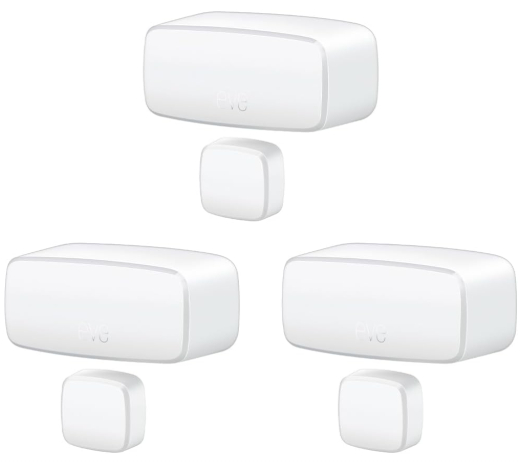
Eve makes some of the best smart home tech for Apple users, and the Eve Door & Window sensor is their shining star in the contact sensor category.
What You Get
This pack gives you three contact sensors that work with Matter, which is the new universal smart home standard. If you have an Apple Home setup, these sensors will feel like they were made specifically for you. Each sensor is small and sleek. The design is clean. Installation takes just a few minutes.
Key Features Explained Simply
Matter Support is the big feature here. Matter means your sensor will work with Apple Home, Alexa, Google Home, and SmartThings all at the same time. You’re not locked into one ecosystem. If you change your mind later and want to switch systems, your sensor comes with you.
Thread Connection is another standout feature. Thread is a mesh network technology that makes your smart home faster and more reliable. If you have an Apple Home hub, these sensors will automatically connect through Thread. This creates a stronger network. Less lag. Better reliability.
Apple Home Integration is seamless. The setup is incredibly easy for Apple users. Just tap your phone near the sensor, and it’s added to your home. You get instant notifications. You can set up automations in seconds.
Long Battery Life keeps you from constantly replacing batteries. These sensors run for about a year on standard batteries before needing replacement.
How It Works in Real Life
Imagine you’re at work when a notification pops up on your phone. Your front door just opened. With Eve sensors and Apple Home, you open the Home app and see exactly which door. You can check your camera. You can trigger an alarm. You can tell a family member to check what’s happening. All from a few taps.
The automation possibilities are endless. Set your door sensor to turn on all the lights when you get home after sunset. Make your security camera record when your back door opens. Get a notification if the garage door opens at 2 AM. These sensors make all of that real.
Real Strengths of Eve Door & Window Sensors
These sensors are incredibly reliable. They work consistently. The Thread integration makes everything faster. If you’re already in the Apple ecosystem with HomePod minis or an Apple TV, these sensors will make your system better. The build quality is excellent. They feel like premium products. The design is minimal and attractive. They don’t scream “smart home technology” on your walls.
Honest Limitations
The price is higher than some competitors. You’re paying a premium for the Apple focus and Matter support. Some people might find that too expensive. Also, you need an Apple Home hub (HomePod mini or Apple TV) to use some advanced features. If you don’t have one, you can still use these sensors, but you won’t get the full experience.
The Thread network needs compatible devices to really shine. If you only have one Eve sensor, you won’t see a huge difference. Get more Thread devices, and the network gets stronger.
Performance and Reliability
Eve sensors are rock solid. They respond quickly to door and window changes. Battery life is genuine and stable. The Matter integration works without issues. You won’t see random disconnections or failed automations.
Ease of Use
Setup takes about two minutes per sensor. Apple users will find the experience intuitive. Adding automations is straightforward. The Home app is simple to navigate.
Value for Money
At around $60 for three sensors, you’re paying more than basic options. But you get premium build quality, Matter support, and excellent Apple integration. If you’re already invested in Apple Home, this premium is worth every penny.
2.Tolviviov Alarm System for Home Security: The Comprehensive Kit Approach
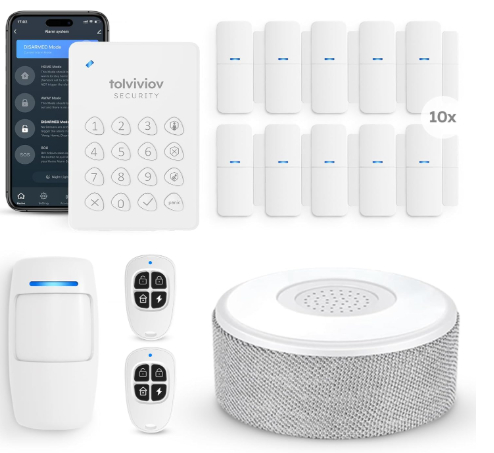
The tolviviov Alarm System takes a different approach than single sensors. This is a full 15-piece smart home security system that includes window and door sensors as part of a larger package.
What’s in the Box
You get door and window sensors, motion detectors, an alarm siren, a remote control, and a hub. This isn’t just sensors. This is a complete security system. If you want everything working together from day one, this kit removes the guesswork.
Key Features Explained Simply
No Monthly Fees is huge. Most traditional security systems lock you into paying $30 to $50 every single month. This system doesn’t. You buy it once and you’re done with subscription costs.
WiFi Connection means your sensors talk directly to your home network. No special hub technology. No complicated setup. If your WiFi works, your system works.
App Alerts get sent to your phone instantly. You’re not just getting a local alarm. You’re getting notifications no matter where you are.
Multiple Sensor Types in one kit give you complete coverage. Door sensors watch entry points. Window sensors monitor windows. Motion sensors catch movement inside.
Voice Assistant Support lets you arm and disarm with Alexa. Ask Alexa if your doors are locked. Get voice alerts when something opens.
How It Works in Real Life
You install the hub in a central location. Then you place sensors on doors and windows. The siren sits somewhere loud, like your living room or kitchen. When a door opens at night, the sensor sends an instant alert. The app on your phone buzzes. If you want, the local siren sounds. If you’re away, you can control everything from the app.
Parents love this system. You set it up so the alarm sounds gently when kids open doors. You get alerts but no loud noise that wakes everyone up.
Real Strengths of tolviviov Alarm System
The comprehensive nature is the biggest strength. You’re not buying individual sensors and cobbling together a system. Everything works together. The siren is loud enough to scare off intruders but not so loud it’s unbearable in a home. No monthly fees is a major financial advantage over professional monitoring services. The app is straightforward. The sensors are responsive.
Honest Limitations
The design is more industrial than stylish. These sensors look like a security system, not like premium smart home tech. Some people don’t like that aesthetic. Also, this system works best with its own app. The Alexa integration exists, but it’s not as deep as some competitors. You won’t get as much automation flexibility as with systems like Eve or Aqara.
Performance and Reliability
The system is solid and dependable. Sensors trigger reliably. App alerts come through consistently. The WiFi connection is stable in most homes.
Ease of Use
Setup is straightforward. Everything comes with instructions. The app is user-friendly. You’ll have your system running in under an hour.
Value for Money
At around $100 for 15 pieces, the price per item is incredibly cheap. You get a lot of hardware. If you want a complete system without the professional monitoring cost, this is excellent value.
3.Aqara Zigbee Door and Window Sensor: The Zigbee Specialist Choice
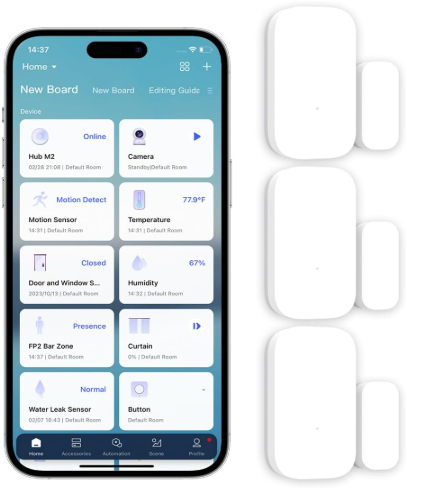
Aqara makes sensors that use Zigbee, a different wireless technology than WiFi. If you’re building a smart home ecosystem, Aqara sensors are known for being reliable and affordable.
What You Get
Three sensors that connect via Zigbee. Aqara sensors are compact. They’re designed to blend into your home. The build quality is solid without being flashy.
Key Features Explained Simply
Zigbee Connection is the core technology. Zigbee uses less power than WiFi and creates a mesh network. Each Aqara device extends the network. The more devices you have, the stronger your connection becomes.
Aqara Hub Requirement means you need a central hub to make these sensors work. The hub connects to your WiFi and creates the Zigbee network. It’s an extra purchase, but it’s not expensive.
HomeKit Support makes these sensors work with Apple Home. If you use HomeKit, Aqara integration is smooth.
Alexa Compatibility means Amazon users can control them too. You can ask Alexa if a door is open.
IFTTT Support unlocks advanced automation. You can create complex rules connecting Aqara to hundreds of other services.
Long Battery Life keeps these sensors running for months between battery changes.
How It Works in Real Life
You set up the Aqara hub in a central spot. It acts like a translator between your Zigbee sensors and your WiFi network. Then you add sensors to doors and windows. Everything syncs up in minutes. You get notifications on your phone. You can ask Alexa about door status. You can create automations.
The Zigbee network is fantastic if you’re adding multiple sensors. As you add more Aqara devices, the network strengthens.
Real Strengths of Aqara Sensors
The price is competitive. You get quality sensors at a fair price. The Zigbee network is more reliable than pure WiFi for some homes. Battery life is exceptional. The sensors are small and unobtrusive. They disappear into your home. HomeKit users find them easy to work with.
Honest Limitations
You must buy a hub separately. That’s an additional cost beyond the sensors. Zigbee means the sensors don’t work with basic WiFi. You need the hub acting as an intermediary. Also, Zigbee is less universal than WiFi or Matter. If you switch smart home platforms later, you might need to replace your hub.
The HomeKit integration requires the Aqara hub to be set up with HomeKit, which adds a setup step.
Performance and Reliability
Aqara sensors are consistently reliable. The Zigbee connection is stable. Battery drain is minimal. Responsiveness is excellent.
Ease of Use
Setup involves downloading the Aqara app, setting up the hub, and then adding sensors. It takes longer than WiFi systems but not by much. Once everything is connected, it’s simple to use.
Value for Money
The three-pack is affordable. You’ll need to budget for a hub separately, but the overall cost is still reasonable. For the quality you get, the value is strong.
4.WiFi Door Alarm System by tolviviov: The Budget Security Bundle
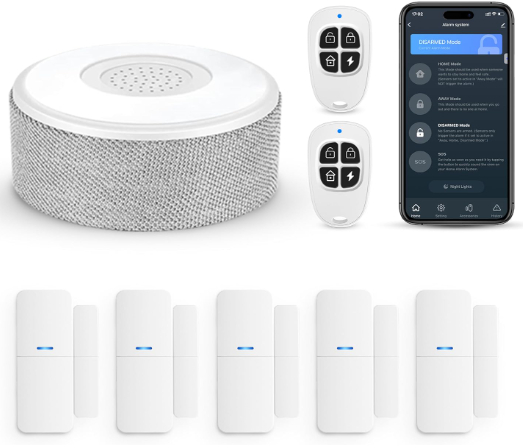
This tolviviov system is a step down from their full 15-piece kit but still offers solid protection at an even lower price point.
What You Get
An eight-piece kit including an alarm siren, door and window sensors, and a remote control. Everything connects via WiFi. This is a complete system for smaller homes or apartments.
Key Features Explained Simply
WiFi Based means straightforward setup. No special technology. Your WiFi network carries all the communication.
App Alerts notify you instantly when sensors trigger.
Alexa Works lets you voice-control your security system.
Remote Control gives you a backup way to arm and disarm without your phone.
Siren Included provides loud audio when something is wrong.
How It Works in Real Life
Place the hub where WiFi is strong. Add sensors to doors and windows. The remote control sits by your bedside. At night, you can arm the system by pressing the remote. If a door opens, the siren sounds. Your phone sends an alert.
For apartment dwellers, this system is perfect. You get protection without needing to hire professional monitoring. For renters, it’s ideal because installation is minimal.
Real Strengths
The price is excellent. You’re getting a complete system for under $80. The remote control is genuinely useful. Not everyone wants to pull out their phone to arm the system. The siren is effective. The app works reliably.
Honest Limitations
The design is basic. This looks like budget security equipment, because it is. The ecosystem is smaller. You won’t find as many third-party integrations. The sensors might not feel as premium as other options.
Performance and Reliability
The system works as intended. Sensors trigger reliably. Alerts come through. The siren functions consistently.
Ease of Use
Very straightforward. Download app, set up hub, add sensors, arm system. You’ll be running in 30 minutes.
Value for Money
This is the best budget option on this list. You get a functional security system at a price that won’t hurt your wallet.
5.WiFi Smart Contact Sensor 4-Pack: The Standalone Sensor Option
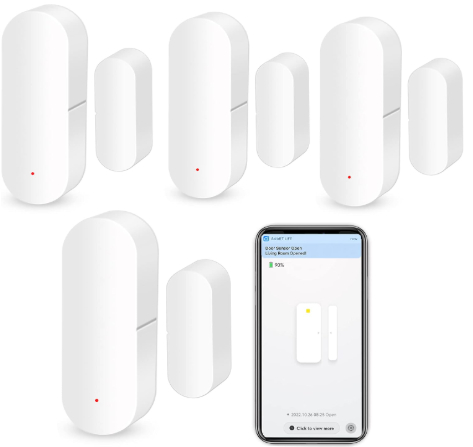
This is a straightforward smart door and window sensor that focuses on doing one thing well: detecting door and window openings via WiFi.
What You Get
Four individual contact sensors with WiFi connectivity. No hub. No siren. Just the sensors themselves.
Key Features Explained Simply
WiFi Connection is direct. Each sensor connects to your home network independently.
App Alerts come to your phone in real time.
Alexa and Google Home Support means voice control from either assistant.
Entry Detector Capability lets you know who’s coming and going.
Home Automation Ready works with routines and automations in Alexa or Google Home.
How It Works in Real Life
You place sensors on doors and windows. They connect to your WiFi. You set up automations in the Alexa or Google Home app. When a door opens, you get an alert. You can trigger lights to turn on. You can start a camera recording. Everything happens automatically.
This is great for people who don’t want a full security system. You just want sensors. You’re adding them to an existing smart home setup.
Real Strengths
The price per sensor is reasonable. You’re not paying for hub technology you don’t need. The simplicity is refreshing. Do one thing, do it well. The WiFi connection is straightforward. Google Home and Alexa users both feel at home with these sensors.
Honest Limitations
You’re buying sensors only. If you want a complete security system with a siren, you need to buy more. The WiFi connection might be less reliable than some mesh technologies in homes with poor WiFi. No Thread support means they don’t strengthen your network like Eve sensors do.
Performance and Reliability
These sensors are reliable for their price. They connect consistently. Alerts go through. Battery life is decent.
Ease of Use
Very simple. Download the app, add the sensors via WiFi, set up automations. Done.
Value for Money
Great value if you just need sensors without extra bells and whistles. You’re paying for simplicity.
Comparing the Five Best Smart Window Sensors
Let’s put these side by side and see how they stack up.
Price: The budget WiFi sensors and tolviviov 8-piece are cheapest. Eve is most expensive. Aqara sits in the middle.
Ecosystem: Eve is best for Apple users. tolviviov and basic WiFi sensors work with everyone. Aqara is strongest in its own ecosystem.
Setup Complexity: WiFi sensors are simplest. Eve and Aqara require more steps. tolviviov is middle ground.
Technology: Eve uses Matter and Thread. Aqara uses Zigbee. WiFi sensors use plain WiFi. tolviviov uses WiFi.
Best For: Eve works best for Apple Home users. tolviviov works best for people who want a complete system. Aqara works best for budget-conscious tech enthusiasts. WiFi sensors work best for Alexa and Google Home users.
Reliability: All five are reliable in their own ways. Eve and Aqara are slightly more polished. tolviviov and WiFi sensors are solid workhorses.
Automation: Eve and Aqara offer the deepest automation. WiFi sensors offer good automation. tolviviov is more basic.
Smart Window Sensor Buying Guide: What Actually Matters
Before you buy, think about these things.
Your Existing Smart Home: If you have Apple HomeKit already, Eve is the obvious choice. If you use Alexa, the WiFi sensors or tolviviov make more sense. If you’re building from scratch, Aqara offers a balanced approach.
Your Home Size: Smaller homes do fine with WiFi sensors. Larger homes benefit from mesh networks like Zigbee or Thread. The tolviviov system is great for apartments.
Your Budget: If money is tight, go WiFi sensors or tolviviov. If you can spend more, Eve and Aqara offer better experiences.
Your Comfort Level: Simple people want simple. That’s WiFi sensors. Tech-savvy people might love Aqara’s ecosystem. Apple fans will adore Eve.
Automation Needs: Want complex automations? Choose Eve or Aqara. Basic alerts? WiFi sensors work fine.
Installation Flexibility: Renting? Go with tolviviov or WiFi sensors. Owning and staying long-term? Any option works.
Professional Monitoring Desire: Want 24/7 professional monitoring? Neither of these replaces that. All are DIY options.
Wireless Network Strength: Weak WiFi? Mesh systems like Aqara’s Zigbee work better. Strong WiFi? Anything works.
Who Should Buy Each Sensor Type?
Buy Eve Door & Window If:
- You use Apple Home
- You have other Eve or Thread-compatible devices
- You want the best possible experience in the Apple ecosystem
- Premium build quality matters to you
- You don’t mind paying more
Buy tolviviov Alarm System If:
- You want a complete system, not individual sensors
- You hate monthly monitoring fees
- You have a small to medium home or apartment
- You want everything working together out of the box
- Budget matters, but you want real features
Buy Aqara Sensors If:
- You want quality at a fair price
- You like building your own ecosystem
- You use Apple Home or Alexa
- Battery life is important to you
- You’re comfortable with Zigbee technology
Buy WiFi Sensors If:
- You just need door and window monitoring
- You use Alexa or Google Home
- You want the simplest setup possible
- Your home has strong WiFi coverage
- You’re adding to an existing smart home
Common Mistakes People Make When Buying Smart Window Sensors
Not Checking Ecosystem Compatibility: You buy an Apple-focused sensor and you use Google Home exclusively. Wasted money. Always check what smart home platform your sensor supports.
Forgetting WiFi Strength: You buy WiFi sensors but your home has dead zones. The sensors disconnect constantly. Check your WiFi coverage before buying WiFi-based devices.
Not Budgeting for Hubs: You buy Aqara sensors forgetting you need a separate hub. Suddenly your purchase costs more. Read the fine print.
Expecting Professional Monitoring: You buy a DIY system thinking it replaces professional monitoring. It doesn’t. These are for alerting you and automating, not for 24/7 professional response.
Buying Too Many at Once: You grab 10 sensors for a small apartment. You’ll never use half of them. Buy what you need now. You can always add more.
Ignoring Battery Life: You pick the cheapest sensors. Batteries die every month. You’re constantly replacing them. Pay a bit more for better battery life.
Not Planning Automations: You buy sensors but never set up automations. You’re missing the real power. Think about how you want to use them before buying.
Underestimating Installation Time: You think setup takes 10 minutes. It takes an hour because your app crashes or your WiFi acts weird. Plan your installation time properly.
The Real Difference Between Smart Window Sensors and Traditional Alarms
Traditional alarms have loud sirens and professional monitoring. You pay monthly fees. A company watches your system 24/7. When something happens, they call you. They might dispatch police.
Smart sensors don’t have professional monitoring unless you add it separately. But they’re smarter. They can trigger lights. They can record cameras. They can send you detailed notifications with pictures. They can connect to everything else in your home.
Smart sensors are better for automation and convenience. Traditional alarms are better for peace of mind and legal liability. Many people use both.
How Smart Window Sensors Improve Your Daily Life
Convenience: Your door unlocks automatically when you arrive home. Your porch light turns on. Your camera starts recording. Everything happens because a sensor detected you opening the door.
Security: You’re traveling and want to verify your home is locked up. One app check tells you every door and window status. You can check any time from anywhere.
Peace of Mind: You sleep better knowing you’ll get an instant alert if someone opens a window at 3 AM.
Automation: You set up a routine where closing your bedroom window triggers your alarm system to arm. One action triggers many.
Safety: Parents see when kids open doors. Elderly people get alerts if their parents wander at night.
Energy Efficiency: Your heating and cooling system turns off automatically when windows open.
Trends in Smart Home Sensor Technology
Matter is Growing: More devices are adding Matter support. This means better compatibility between brands.
Thread is Getting Popular: Thread creates stronger home networks. More manufacturers are adopting it.
Battery Life is Improving: Sensors run longer on smaller batteries. Less maintenance for you.
Prices are Dropping: Each year, smart sensors get cheaper. Competition is good for consumers.
Integration is Deeper: Sensors work with more services and platforms.
Voice Control is Standard: Nearly every sensor now works with Alexa or Google Home.
Installation Tips for Success
Plan Your Layout: Figure out where sensors go before you buy. How many entry points do you have?
Check WiFi Signal: If buying WiFi sensors, verify strong signal at each location.
Prepare Mounting Spots: Clean surfaces for sticker mounting or have screws ready for screw mounting.
Label Everything: Mark which sensor is which. Later you’ll be glad you did.
Set Up Automations: Once sensors are live, immediately create the automations you want. Don’t leave them sitting unused.
Test Everything: Open doors and windows. Verify alerts come through. Check automations trigger properly.
Document It: Keep records of what’s connected where. When you buy the next device, you’ll remember.
Final Verdict: The Best Smart Window Sensors for Most People
If you use Apple Home, buy the Eve Door & Window sensors. The experience is polished. The integration is seamless. The build quality justifies the price. You’ll love them for years.
If you just want a complete system without monthly fees, the tolviviov 15-piece kit is hard to beat. You get everything you need. The price is fair. It works reliably.
If you want balance between price and features with flexibility, go with Aqara sensors. The Zigbee network is solid. The price is good. The features are robust.
If you use Alexa or Google Home and want simplicity, the WiFi smart sensors are perfect. They do their job without complexity.
The tolviviov WiFi alarm system is the best budget option. You’re not sacrificing features for price.
Wrapping Up: Your Next Steps
Smart window sensors are one of the best smart home investments you can make. They improve security. They enable automation. They provide peace of mind. They’re affordable. They last for years.
Pick the one that matches your needs and your existing smart home. Don’t overthink it. Start with two or three sensors. Try them out. See how they work for your home. Add more if you like them.
Your home is about to get smarter. Your life is about to get easier. Smart window sensors make that happen. It all starts with picking the right one.
Now go grab the one that’s right for you. Your home is waiting to get smarter.