How to Clean a Wool Rug?
Wool rugs are beautiful. They feel soft under your feet. They add warmth to any room. But keeping them clean can seem tricky. Don’t worry. This guide will show you exactly how to clean your wool rug without damaging it.
Wool is a natural fiber. It needs special care. Unlike synthetic rugs, wool rugs can shrink or get damaged if you use the wrong cleaning methods. The good news? Cleaning a wool rug is not hard. You just need to know the right steps.
Why Wool Rugs Need Special Care
Your wool rug is an investment. It can last for decades if you treat it right. Wool has special properties that make it different from other rug materials.
Wool fibers are naturally elastic. They bounce back. This is why wool rugs look good for years. Wool also resists stains naturally. It repels liquid at first. This gives you time to clean spills before they set in.
But wool also absorbs moisture. If you use too much water, your rug will take forever to dry. Wet wool can develop odors. It can also grow mold or mildew. This is why you must use care when cleaning wool rugs.
Wool is also sensitive to heat. Hot water can damage wool fibers. It can cause shrinking. It can make the colors fade. That’s why temperature matters when you clean your wool rug.
Vacuum Your Wool Rug Regularly
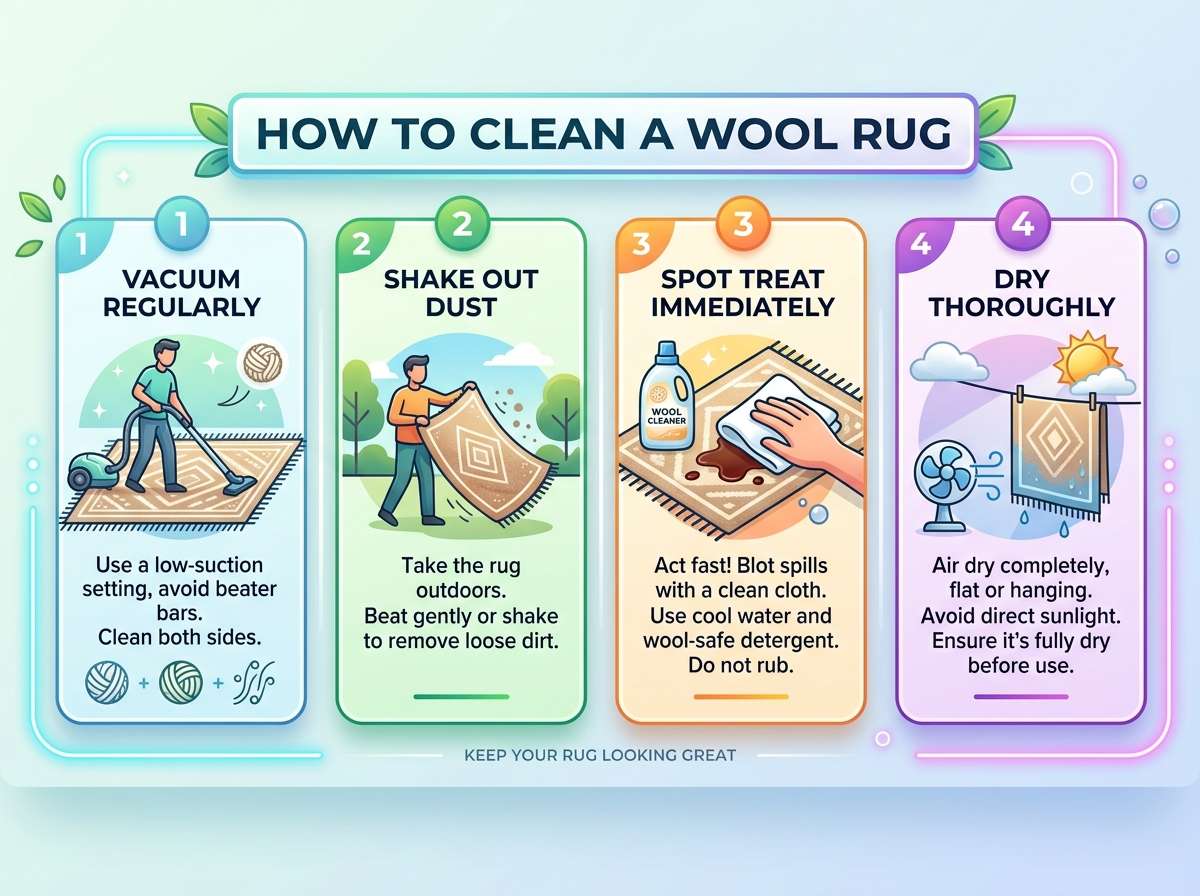
The best way to keep your wool rug clean is to vacuum it often. Vacuuming removes dirt before it gets deep into the fibers.
You should vacuum your wool rug once or twice a week. If your rug gets heavy foot traffic, vacuum it more often. If you have pets, vacuum it even more.
Use a vacuum with a beater bar. The beater bar shakes the rug fibers. This helps dirt fall out. Make sure the beater bar is not too aggressive. Some vacuums have settings for delicate rugs. Use that setting for your wool rug.
Vacuum in the direction of the nap. The nap is the direction the fibers lay. You can feel the nap by running your hand across the rug. One direction feels smooth. The other feels rough. Go with the smooth direction.
Don’t vacuum the fringe. The fringe is the loose threads at the ends. Use scissors or a separate attachment if your vacuum has one. Better yet, use a handheld vacuum just for the fringe.
Vacuuming is cheap. It’s easy. It keeps your rug looking fresh. Most rug problems can be prevented with regular vacuuming.
Spot Clean Fresh Spills Right Away
Accidents happen. Someone spills coffee. A child drops food. The key is acting fast.
The sooner you clean a spill, the better. Fresh spills are easy to remove. Old stains are hard to get out.
Here’s what to do when something spills on your wool rug:
Step 1: Don’t panic. Panicking won’t help. Take a breath. You can fix this.
Step 2: Stop the spill from spreading. If liquid spilled, use paper towels or a white cloth. Blot the spill. Don’t rub. Rubbing pushes the spill deeper into the fibers. Blotting lifts it up.
Step 3: Work from the outside in. Start at the edge of the spill. Work toward the center. This stops the stain from getting bigger.
Step 4: Use cold water. Get a spray bottle of cold water. Spray the stained area lightly. Blot with a clean white cloth. Repeat until the stain is gone.
Step 5: Dry it fast. Use towels to soak up any extra moisture. Open windows. Turn on fans. Get air flowing to dry the rug.
For solid spills like food, pick up the big pieces first. Use a dull knife or spoon. Be gentle. Scrape toward yourself. Then spray with cold water and blot as described above.
Some stains need special treatment. We’ll cover those next.
Clean Common Stains on Wool Rugs
Different stains need different solutions. But remember one rule: always test your cleaning solution on a hidden part of your rug first. This makes sure the solution won’t damage the colors or fibers.
Wine and Juice Stains
Wine and juice are tough stains. But you can remove them.
Mix one part white vinegar with three parts water. Spray it on the stain. Let it sit for five minutes. Blot with a white cloth. Rinse with cold water. Blot again until dry.
White vinegar is gentle. It removes stains without damaging wool. The smell fades as the rug dries.
Grease and Oil Stains
Grease is slippery. Don’t use too much water. Water will spread the grease around.
Sprinkle baking soda on the grease. Let it sit for one hour. The baking soda will absorb the oil. Vacuum it up. If grease remains, sprinkle again.
For stubborn grease, mix one tablespoon of dish soap with two cups of water. Spray lightly. Blot well. Rinse with cold water. Blot again.
Mud and Dirt Stains
Let mud dry first. Dried mud is easier to remove than wet mud.
Vacuum up all the dried mud. If any stain remains, use cold water and blot. Don’t try to scrub. Scrubbing will work the mud into the fibers.
Pet Accidents
Pet accidents happen. The smell can linger if you don’t clean properly.
First, blot up as much liquid as possible. Mix one part white vinegar with one part water. Spray the area. Let it sit for ten minutes. This kills the smell. Blot well.
Then sprinkle baking soda over the spot. Leave it overnight. Vacuum it up the next day.
Chocolate and Candy Stains
Let chocolate harden. Scrape off what you can with a dull knife. Use cold water to remove the rest. Hot water will melt the chocolate and make it worse.
For sticky candy, first remove what you can by hand. Then use cold water and blot.
Deep Clean Your Wool Rug the Right Way
Sometimes spot cleaning is not enough. Your wool rug needs a deep clean. This removes dirt that sits deep in the fibers.
You can hire a professional cleaner. Professionals have special equipment. They know how to handle wool rugs. But this costs money.
You can also deep clean your rug at home. It takes more work. But it’s cheaper.
Use the Dry Cleaning Method
The dry cleaning method is safest for wool rugs. It uses very little water. This means your rug won’t stay wet for days.
You need a wool rug dry cleaning powder. You can find these at any store that sells cleaning supplies.
Here’s how to use it:
Step 1: Vacuum thoroughly. Remove all loose dirt first. Vacuum in both directions.
Step 2: Test the powder. Always test on a hidden area. Make sure the powder doesn’t change the color.
Step 3: Sprinkle the powder. Spread the powder evenly across your rug. Don’t use too much. The instructions on the package will tell you how much to use.
Step 4: Let it sit. Leave the powder on your rug for the time the package recommends. Usually this is thirty minutes to one hour. The powder will absorb dirt and odors.
Step 5: Vacuum it up. Use your vacuum with the beater bar. Vacuum thoroughly to remove all the powder.
Step 6: Brush the rug. Use a soft brush to fluff up the fibers. Brush in the direction of the nap.
Your rug should smell fresh and look cleaner. The dry method is gentle. It’s perfect for wool rugs.
Use the Foam Cleaning Method
Some people prefer foam cleaning. Foam uses a little water. But not as much as wet shampooing.
You’ll need a foam cleaner made for wool rugs. You’ll also need a soft brush.
Step 1: Vacuum first. Always start with a thorough vacuum.
Step 2: Test the foam. Test it on a hidden area to make sure it’s safe for your rug.
Step 3: Apply the foam. Spray the foam evenly across your rug. Don’t soak it. You want foam, not liquid.
Step 4: Let it work. Wait the time recommended on the package. The foam works to lift dirt from the fibers.
Step 5: Scrub gently. Use a soft brush to scrub in circular motions. Don’t scrub hard. Be gentle.
Step 6: Wipe it up. Use a damp white cloth to wipe away the foam. Go over the area several times. You want to remove all the foam residue.
Step 7: Dry thoroughly. Use towels to soak up moisture. Open windows. Turn on fans. Make sure the rug dries completely.
The foam method works well for light dirt and odors. It’s gentler than wet shampooing.
Avoid Wet Shampooing If Possible
Wet shampooing floods your rug with water. This can damage wool fibers. It takes a long time to dry. It can cause mold or mildew. It can make colors run.
If you must shampoo your rug, hire a professional. Professionals have equipment that removes water properly. They know how to handle different rug types. They can dry your rug fast.
If you insist on shampooing at home, use very little water. Use only cool water. Never use hot water. Make sure your rug dries completely within two days. Use fans, open windows, and dehumidifiers to speed drying.
Honestly, dry cleaning or foam cleaning is better for wool rugs. Save wet shampooing for rugs made of synthetic material.
Remove Odors from Wool Rugs
Wool rugs can trap smells. Pets, food, spills, and mold can all create odors.
Baking soda is your friend. Sprinkle it over your entire rug. Let it sit overnight. Vacuum it up in the morning. Baking soda absorbs odors naturally.
For strong odors, spray white vinegar mixed with water. One part vinegar to three parts water. Spray lightly. Don’t soak the rug. Let it dry completely. The vinegar smell will fade. The odor beneath should be gone too.
Open windows. Let fresh air flow through your home. Sunlight also helps kill odors. If it’s safe to put your rug in the sun for an hour, do it.
If you have a dehumidifier, use it. Mold and mildew love moisture. Removing moisture removes the source of bad smells.
Prevent Damage to Your Wool Rug
Prevention is easier than cure. Here are ways to keep your wool rug in great shape.
Rotate Your Rug
Rotate your rug every six months. Turn it around. Flip it end to end. This spreads wear evenly. One area won’t get worn out while another stays fresh.
If your rug gets sun exposure, rotating also helps colors fade evenly. Otherwise one side might look different from the other.
Use a Rug Pad
Put a rug pad under your wool rug. A rug pad protects your floor. It also stops the rug from sliding. A non-slip rug pad is especially important if you have kids or pets.
Rug pads are cheap. They’re easy to install. They make a big difference.
Block Sunlight
Direct sunlight fades colors. Close curtains or blinds during the brightest parts of the day. If you can’t block sunlight, rotate your rug more often. This spreads fading evenly.
Keep Pets Off the Rug
Pets love soft rugs. But pets also bring dirt. They shed hair. Accidents happen.
Train your pets to stay off your wool rug. Or use a pet gate to block their access. If your pets do use the rug, vacuum more often. Be quick to clean accidents.
Don’t Place Heavy Furniture Directly on Your Rug
Heavy furniture crushes fibers. It leaves dents. It can wear through the backing.
If you must place furniture on your rug, use furniture pads. Pads distribute the weight. They prevent damage.
Keep Away from Heat and Moisture
Don’t place your wool rug near radiators. Don’t put it in a steamy bathroom. Heat and moisture can damage wool.
Keep the room where your rug lives at moderate temperature. Avoid sudden temperature changes. Room temperature between 60 and 75 degrees is ideal.
Fix Common Problems
Sometimes problems develop even with careful care. Here’s how to fix them.
Moth Holes
Moths eat wool. If you see small holes in your rug, moths might be the cause.
Vacuum your rug thoroughly. This removes moth larvae. Then treat your rug with a moth prevention product. You can find these at hardware stores.
Store your rug in a cool, dry place. Moths don’t like cool areas. Cedar blocks and mothballs also help prevent moths.
Pilling
Pilling happens when short fibers ball up on the surface. It looks fuzzy. Pilling is normal. It doesn’t mean your rug is low quality.
Don’t pull the pills. That damages the rug. Instead, use a fabric shaver or pill remover. These tools carefully remove the balls without harming the rug beneath.
Use the tool gently. Don’t press hard. Make slow passes over the affected area.
Fraying Edges
The fringe at the edges can fray. This happens with normal wear.
Trim stray threads with scissors. Cut them level with the other fringe threads. Be careful not to cut the main rug backing.
If fraying is bad, a professional can refringe your rug. This costs money but looks great.
Wrinkles and Bunching
Wrinkles happen when a rug gets wet. They also happen during storage.
Smooth the rug flat. Place heavy objects on the edges. Leave them for a few days. The weight flattens the wrinkles.
For stubborn wrinkles, place damp towels on top. Let them sit for a few hours. Then remove the towels and smooth the rug.
If your rug wrinkles during storage, roll it the right way. Roll it with the pile facing inward. This protects the fibers.
Know When to Call a Professional
Sometimes your wool rug needs professional care. Professionals have skills and equipment you don’t have at home.
Call a professional if:
- Your rug has deep stains you can’t remove
- Your rug smells really bad despite your efforts
- Your rug has been flooded or has water damage
- Your rug has moth damage
- You need to refringe or repair a damaged edge
- Your rug is very old or very valuable
- You want a deep clean and don’t have time to do it yourself
Professional cleaners use industrial equipment. They know how to handle different rug types. They can restore your rug to like-new condition.
Look for cleaners who specialize in wool rugs. Ask for references. Check online reviews. Make sure they guarantee their work.
Seasonal Care for Wool Rugs
Different seasons bring different challenges.
Spring
Spring cleaning is a great time to deep clean your wool rug. Use the dry cleaning method or foam method. Open windows for fresh air. The mild weather is perfect for drying.
Rotate your rug. Check for winter damage like mold or mildew.
Summer
Summer brings sunlight. Sunlight fades colors. Use curtains or blinds to block harsh afternoon light.
Humidity can be high in summer. Use a dehumidifier if needed. Make sure your rug dries fast if you spill something.
Fall
Fall is a good time to prepare your rug for winter. Vacuum thoroughly. Check for pest damage like moths. Treat your rug with moth prevention if needed.
Clean any stains before winter. Dirt from fall leaves can be tracked onto your rug.
Winter
Winter brings dry air. Dry air can make wool brittle. Use a humidifier if your home gets very dry.
Track in dirt and salt from outside. Vacuum more often during winter. This removes salt that can damage wool and your floors.
Quick Tips to Remember
Let’s recap the most important points:
- Vacuum often. This is the best defense against dirty rugs.
- Act fast on spills. The sooner you clean, the easier it is.
- Use cold water. Never use hot water on wool.
- Blot, don’t rub. Rubbing pushes stains deeper.
- Test first. Always test cleaning solutions on a hidden area.
- Use gentle methods. Dry cleaning and foam cleaning are safer than wet shampooing.
- Dry completely. Make sure your rug dries all the way through.
- Rotate regularly. This spreads wear and fading evenly.
- Use a rug pad. This protects your rug and your floor.
- Block sunlight. Sunlight fades colors over time.
- Call a professional when needed. Sometimes the best choice is professional cleaning.
Final Thoughts
Your wool rug is beautiful. It deserves good care. But caring for wool rugs is not mysterious. You don’t need fancy products or special equipment. You just need to follow simple steps.
Regular vacuuming keeps dirt away. Quick action on spills stops stains from setting. Gentle cleaning methods preserve your rug’s beauty. Simple prevention stops problems before they start.
Most wool rug care is common sense. Treat your rug like you’d treat a delicate sweater. Use cool water. Be gentle. Let things dry completely.
Start with the basics. Vacuum your rug weekly. When spills happen, blot immediately. Use the dry cleaning method when you need a deeper clean. Rotate your rug twice a year.
These simple habits will keep your wool rug looking beautiful for decades. Your rug will feel soft. It will look fresh. Your home will smell clean.
Wool rugs are worth the effort. They’re not hard to care for. You’ve got this. Clean your wool rug with confidence. Your beautiful rug will thank you by lasting a lifetime.
Want to keep your rug looking perfect? Start with these steps today. Your wool rug will reward you with beauty and comfort for years to come.

Hi, I’m Mary, the founder of Homygear.com. I’m passionate about creating a comfortable, smart, and beautiful home. I share practical insights and real-world experience on home gear that makes everyday life easier. Behind the scenes, my dedicated research team studies products in depth, and our writers craft honest reviews using trusted, authentic sources—so you can choose home gear with confidence.