5 Best Smart Thermostat No C Wire In 2026
As an Amazon Associate we earn from qualifying purchases.
Finding the right smart thermostat for a home without a common wire, or C-wire, can feel like a challenge. Many modern climate control devices rely on this extra wire to provide constant power, but several options exist for those who need to upgrade their system. This guide reviews the best smart thermostat no c wire options to help simplify your search.
These devices share common goals, such as helping homeowners manage energy usage and providing remote control through a smartphone. The features vary, yet the core purpose remains the same: making your indoor environment more comfortable while potentially reducing monthly utility costs. This comparison relies on product data and typical user features rather than personal testing.
Most smart thermostats require a C-wire to keep the Wi-Fi radio and display powered continuously. When your home lacks this wire, you may look for models that include a power adapter kit. This small accessory connects to your furnace control board to provide the necessary electricity. Other devices use internal batteries or power-stealing technology to function without an additional wire.



1. Amazon Smart Thermostat: best for Alexa users
Overview and Functionality
The Amazon Smart Thermostat acts as a bridge between traditional home heating systems and modern smart home living. It is designed for those already invested in the Alexa ecosystem. By replacing an older unit, it offers a simple path toward better energy management.
Key Features
This model integrates with Echo devices and the Amazon Smart Air Quality Monitor. These connections allow the system to adjust heating and cooling based on the presence of people in a room. It also supports automatic temperature scheduling, which helps maintain comfort while you are home or asleep. The device relies on the Alexa app to manage settings and schedules. It uses your phone’s location to shift the temperature when you leave or return home. You can also view energy usage reports within the app to see how your heating and cooling patterns affect your overall consumption.
Daily Operation
Users can control the temperature through the Alexa app or by using voice commands. Because it is built for the Amazon ecosystem, it functions smoothly when paired with other compatible devices. It provides a straightforward interface for anyone comfortable with voice-activated technology. The screen displays the current temperature and allows for manual adjustments. If you prefer to change the temperature without using your phone, you can simply tap the buttons on the face of the unit. The display remains clear and easy to read from across the room.
Performance and Value
The device is one of the top sellers in its category, which often reflects its ease of use for beginners. It helps reduce energy usage, and the brand often provides information on potential rebates from local energy providers. It is a practical choice for those who prioritize simplicity and ecosystem integration. Installation requires careful attention to your existing wiring. If you do not have a C-wire, you will need to install the included power adapter kit. This kit ensures the thermostat receives a steady flow of power throughout the day. It is a reliable solution for homes that lack the standard four or five-wire configuration.
Pros
- Seamless integration with Alexa and Ring devices.
- Automatic adjustments based on presence detection.
- Clear guidance on potential energy utility rebates.
- User-friendly design for those new to smart home tech.
Cons
- Requires a C-wire or a power adapter kit for installation.
- Functionality is best when paired with other Amazon devices.
- Limited compatibility with non-Alexa smart home systems.
- Lacks a touchscreen interface for manual control.
2. meross Matter Smart Thermostats: best for diverse smart home platforms
Overview and Functionality
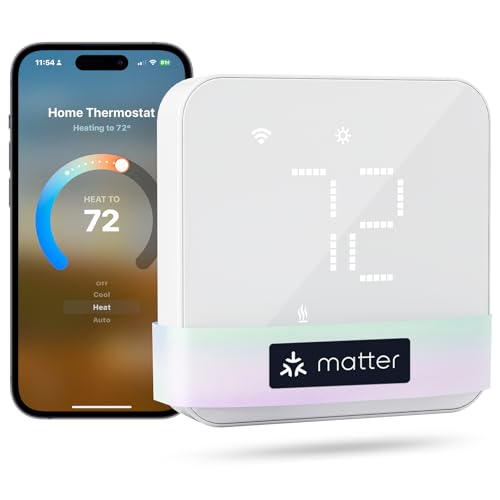
The meross Matter Smart Thermostat is built to work across various platforms. It is compatible with Apple Home, Google Home, and Samsung SmartThings. This flexibility makes it a strong contender for households that use a mix of smart devices. It bridges the gap between different manufacturers by using the universal Matter protocol. This design ensures that the thermostat interacts reliably with your existing smart home hub. It removes the need to rely on a single ecosystem for your climate control.
Key Features
The standout feature is its native support for the Matter standard. This allows it to communicate locally with different systems, which can reduce the need for multiple apps. It supports a wide range of HVAC systems, including furnaces, boilers, and heat pumps. Local control means your thermostat remains functional even if your internet connection experiences a temporary outage. The device handles standard heating and cooling stages, including multi-stage systems. It also works with systems that utilize forced air, radiant heat, or central air conditioning.
Daily Operation
The device features 24/7 flexible scheduling. You can set specific routines for when you are at home, away, or sleeping. The accompanying mobile app allows for remote monitoring, and it sends alerts regarding filter life and system status to help keep your HVAC running well. You can modify temperatures from anywhere using your smartphone. The interface displays current indoor temperatures and humidity levels clearly. If the system detects an unusual temperature change, it notifies you immediately to prevent potential frozen pipes or overheating.
Performance and Value
This model is designed to be accessible for beginners. The installation process is guided by step-by-step instructions in the app. It provides a reliable way to manage energy consumption by tracking usage through the interface, helping users identify ways to lower their bills. The app presents your usage history in simple graphs. By reviewing these charts, you can see exactly when your system runs the most. This data helps you optimize your schedule to avoid unnecessary heating or cooling while you are away at work.
Pros
- Broad compatibility with major smart home platforms.
- Includes helpful alerts for system maintenance.
- Flexible 24/7 scheduling options.
- Supports most common HVAC system types.
Cons
- Requires a C-wire for some configurations.
- Not suitable for high-voltage baseboard heaters.
- Setup requires verification of existing wiring.
- Moderate market presence compared to major tech brands.
3. Honeywell Home T5 Smart Wi-Fi Thermostat: best for energy savings
Overview and Functionality
The Honeywell Home T5 is a well-known option for those who want a blend of traditional programming and smart connectivity. It is designed to help users save on heating and cooling costs through efficient scheduling and geofencing technology. This model fits well into homes that prioritize consistent performance. It provides a clear digital display that is easy to read from across the room. The hardware is built for durability and long-term use in various residential environments.
Key Features
Geofencing is a primary benefit of this model. It uses the location of your smartphone to determine if you are home or away, adjusting the temperature accordingly. This ensures that you are not heating or cooling an empty house, which is an effective way to save energy. The device also supports smart alerts. These notifications can warn you if your indoor temperature drops too low or rises too high. It also provides reminders to change your air filter, which keeps your HVAC system running efficiently throughout the seasons.
Daily Operation
The T5 offers 7-day flexible scheduling, giving users total control over their weekly routine. It also provides monthly energy reports, which offer tips on how to reduce consumption further. The touchscreen display is intuitive and allows for quick manual adjustments when needed. You can customize each day of the week to match your personal schedule. If your plans change, the app lets you override the current schedule with a single tap. The display remains dark when not in use to reduce light pollution in bedrooms or hallways.
Performance and Value
This unit is ENERGY STAR certified, indicating its focus on efficiency. Many users find the demand response programs offered by local utilities to be a significant value add. It is a robust choice for those who want a reliable, energy-conscious thermostat. The thermostat integrates with various utility incentives that reward you for reducing energy use during peak demand hours. By participating, you can potentially lower your monthly utility costs. It provides a balance between advanced technology and simple, reliable climate management.
Pros
- Effective geofencing technology for automatic savings.
- Detailed monthly energy reports provided.
- Supports demand response programs for utility rewards.
- Intuitive touchscreen interface for easy manual use.
Cons
- Requires a C-wire or a power adapter kit.
- Installation can be complex for older wiring systems.
- Requires a stable 2.4GHz Wi-Fi connection.
- Geofencing requires location permissions on your phone.
4. meross Matter Smart Thermostat: best for simple installation
Overview and Functionality
Similar to other meross models, this version focuses on broad compatibility and ease of use. It is a solid choice for those who want a smart thermostat that works with their existing voice assistants and home automation setups. The device aims to bridge the gap between complex smart home technology and everyday home comfort. Its design prioritizes a clean aesthetic that fits well in most modern living spaces. The hardware setup is designed to be intuitive for homeowners who prefer a DIY approach rather than hiring a professional technician. By prioritizing standard wiring configurations, this thermostat reduces the time spent on the installation process.
Key Features
The device supports Matter, making it future-proof for many smart home setups. This standard allows the thermostat to communicate across different ecosystems without needing multiple bridges or hubs. It is designed to work with 95% of residential HVAC systems, covering most common gas, oil, and electric furnaces. The ability to monitor usage in the app helps users keep track of their heating and cooling habits over time. You can view historical data to see when your system runs most often. This visibility encourages more efficient energy consumption throughout the seasons.
Daily Operation
Daily use is straightforward thanks to the app-based control. You can adjust the temperature from anywhere, which is helpful if your schedule changes unexpectedly. If you head home early, you can warm up or cool down the house before you arrive. The smart alerts regarding system malfunctions provide peace of mind that your equipment is working correctly. If the temperature hits an unusual threshold, the app sends a notification to your phone. This early warning system can help prevent frozen pipes or overheating issues before they become major repairs.
Performance and Value
The value lies in its balance of features and cost. It offers professional-grade scheduling and remote access without the complexity found in some high-end units. The software interface remains responsive and avoids unnecessary lag during temperature adjustments. For beginners, the customer support options like live chat and phone assistance are helpful resources. You can troubleshoot common installation hurdles or configuration questions quickly. This level of support adds significant value for those new to smart home upgrades.
Pros
- Matter support ensures easy platform integration.
- Helpful customer support channels available.
- Comprehensive app-based usage tracking.
- Wide compatibility with residential HVAC systems.
Cons
- Does not support high-voltage line systems.
- Requires a C-wire for consistent power.
- Needs a 2.4GHz network for initial setup.
- Limited to single-zone control setups.
5. Riseem WiFi Thermostat: best for budget-conscious buyers
Overview and Functionality
The Riseem WiFi Thermostat is a focused, no-frills option for those who want basic smart control without paying for advanced features they might not use. It is designed for conventional single-stage heating and cooling systems. The minimalist build focuses on core functionality rather than decorative extras. It serves as a functional upgrade for older, non-connected wall units. By keeping the feature set slim, the manufacturer provides a reliable tool for basic temperature management. It is a practical choice for rental properties or smaller homes where complex automation is not required.
Key Features
This model features an accurate temperature control system that keeps variations within 2 degrees. The internal sensor reacts quickly to changes in ambient air to keep your environment stable. The backlit LCD screen is clear and easy to read, making it a good choice for hallways or darker areas of the home. The display provides essential information at a glance, including current temperature and active mode status. It also supports 7-day programming through a dedicated app. This allows you to set specific schedules for weekdays and weekends to match your typical daily routine.
Daily Operation
Users can manage their temperatures remotely or set schedules that match their weekly routine. The interface is simple, focusing on the basics of temperature adjustment and scheduling. It is meant to be a direct, functional replacement for standard manual thermostats. The physical buttons on the unit provide a tactile way to change settings if you do not have your smartphone nearby. This dual-control method ensures that all household members can adjust the heat or air conditioning easily. The app synchronization happens quickly, ensuring your remote changes reflect on the wall display almost instantly.
Performance and Value
This thermostat is priced lower than many competitors, making it a strong option for those on a budget. It is very specific about which systems it supports, which helps prevent compatibility issues if you check your wiring first. It provides the essential benefits of smart control at an accessible price point. The hardware is built to be durable for long-term wall mounting. It avoids the high cost associated with color touchscreens and voice-command hardware. By stripping away non-essential components, this model delivers reliable temperature regulation at a fraction of the cost of premium units.
Pros
- Budget-friendly pricing for smart features.
- Accurate temperature regulation within 2 degrees.
- Simple, readable backlit LCD display.
- Easy-to-follow 7-day programming schedule.
Cons
- Not compatible with multi-stage systems or heat pumps.
- Requires a C-wire; no battery-only operation.
- Limited to 2.4GHz Wi-Fi networks.
- Fewer advanced smart features than premium models.
Comparison Insights
When comparing these models, performance often hinges on how well they integrate with your home. The Amazon Smart Thermostat leads for those already in the Alexa ecosystem, while the meross models offer the broadest compatibility through Matter.
The Honeywell Home T5 stands out for those who want data-driven energy savings. Ease of use is another major differentiator. Some models provide simple, app-based setups that walk you through every step of the installation.
Others focus on the user interface, offering large touchscreens or clear displays that make manual operation simple. For a beginner, the app-guided installation is usually the most helpful factor. Value for money depends on your specific needs.
If you want advanced features like geofencing or demand response, the Honeywell T5 is a strong choice. If you simply want a reliable, connected thermostat at a lower cost, the Riseem or meross options provide excellent utility without extra expenses.
Buying Guide for Beginners
A smart thermostat is a device that connects to your Wi-Fi network and allows you to control your home’s heating and cooling from an app. Most modern units also learn your schedule to save energy. Before you buy, you must identify your current HVAC system type. The most important factor is the C-wire, or common wire.
This wire provides constant 24-volt power to the thermostat. Many older homes do not have this wire, which is why checking your wiring terminals is a mandatory first step. If you do not have a C-wire, you may need to add a power adapter or check if your chosen model supports a specific workaround. Another factor is your Wi-Fi network.
Most smart thermostats require a 2.4GHz signal to stay connected. If your router only uses a 5GHz band, you may face connection issues. Always check your router settings before you begin the physical installation to ensure your network is compatible with the device you choose.
Think about how you prefer to control your home. Some people enjoy using voice commands, while others prefer using a dedicated mobile app. If you already use a smart home hub like Apple Home or Google Home, look for a thermostat that supports those specific platforms.
This ensures that your new device integrates seamlessly with the technology you already use. Energy savings are a primary reason to upgrade, but the amount you save depends on how you use the device. Features like automatic scheduling and geofencing help ensure you are not paying to heat or cool an empty home. Review the energy reports provided by the app to see how your daily habits influence your utility bills over time.
Finally, consider the display and physical interface. Even though you will likely use an app for most adjustments, there will be times when you want to change the temperature manually as you walk past the device. A clear, backlit screen is a great feature to have, especially if the thermostat is located in a hallway or a darker area of your house.
Who Should Buy These Products
The Amazon Smart Thermostat is ideal for households that rely heavily on Alexa and Ring devices. If your home is already set up with Echo speakers, this model will feel like a natural extension of your existing setup. It is a reliable choice for beginners who want a straightforward, no-nonsense upgrade. The meross Matter Smart Thermostats are best for people who want flexibility and future-proofing.
If you use a mix of smart home platforms, or if you want to avoid being locked into one ecosystem, the Matter support makes these models a smart investment. They are excellent for those who want a modern, app-driven experience with broad compatibility.
The Honeywell Home T5 is the right choice for homeowners who want to prioritize energy efficiency. If you are interested in tracking your usage and want features like geofencing to manage your home’s climate automatically, this is a top-tier option. It is well-suited for families with busy schedules who want their home to be comfortable exactly when they arrive.
The Riseem WiFi Thermostat is perfect for budget-conscious buyers who need a reliable, basic smart upgrade. If you have a simple single-stage HVAC system and just want remote control and scheduling, there is no need to pay for advanced features you will not use. This model provides the essential benefits of connectivity at an accessible price point.
Final Verdict
Finding the right smart thermostat requires balancing your specific HVAC setup with your smart home goals. While all the models listed require a C-wire, they offer different paths to energy efficiency and convenience. The Amazon Smart Thermostat excels in ecosystem integration, while meross provides universal compatibility through Matter.
The Honeywell Home T5 offers the most robust tools for those focused on saving money through data and automation. The Riseem model serves as a practical, low-cost entry point for basic smart control. Before making your final decision, confirm your system’s wiring and decide which platform best serves your daily needs.
By picking a model that matches your existing technology and your heating system requirements, you can enjoy a more comfortable home and potentially lower energy bills. Each of these devices provides a reliable way to modernize your home’s climate control without unnecessary complexity.
Frequently Asked Questions
What is a C-wire and why do I need it?
A C-wire, or common wire, provides a continuous flow of 24-volt power to your smart thermostat. Unlike traditional thermostats that use batteries or power-stealing methods, smart units need this constant connection to run their Wi-Fi radios and displays. Without it, the device may not turn on or could experience frequent connection drops.
Can I install a smart thermostat if I do not have a C-wire?
If you do not have a C-wire, you cannot simply install these specific models without a solution. Some homeowners hire a professional to add a C-wire, while others use a C-wire power adapter kit. Always check if your chosen thermostat model includes an adapter or if it is compatible with one before you start the installation process.
Do these smart thermostats work with all HVAC systems?
No, compatibility varies by model. Most smart thermostats are designed for conventional single-stage systems, but they often struggle with multi-stage systems, heat pumps, or high-voltage electric baseboard heaters. Always verify your current wiring terminals and system type against the manufacturer’s compatibility list before you finalize your purchase.
How do I know if my Wi-Fi network is compatible?
Most smart thermostats operate exclusively on 2.4GHz Wi-Fi networks. While many modern routers broadcast both 2.4GHz and 5GHz signals, some thermostats cannot connect to the 5GHz band. Ensure your home router supports the 2.4GHz frequency and that you have the network name and password ready during the setup process.
Will a smart thermostat really save me money on energy bills?
Yes, a smart thermostat can help reduce your energy costs by optimizing your heating and cooling usage. By using features like 7-day scheduling, geofencing, and remote control, you ensure your system only runs when it is needed. While actual savings depend on your home and local utility rates, many users see a noticeable reduction in their monthly bills.

Hi, I’m Mary, the founder of Homygear.com. I’m passionate about creating a comfortable, smart, and beautiful home. I share practical insights and real-world experience on home gear that makes everyday life easier. Behind the scenes, my dedicated research team studies products in depth, and our writers craft honest reviews using trusted, authentic sources—so you can choose home gear with confidence.